Nadine Akkerman - Böcker
Visar alla böcker från författaren Nadine Akkerman. Handla med fri frakt och snabb leverans.
7 produkter
7 produkter
168 kr
Skickas
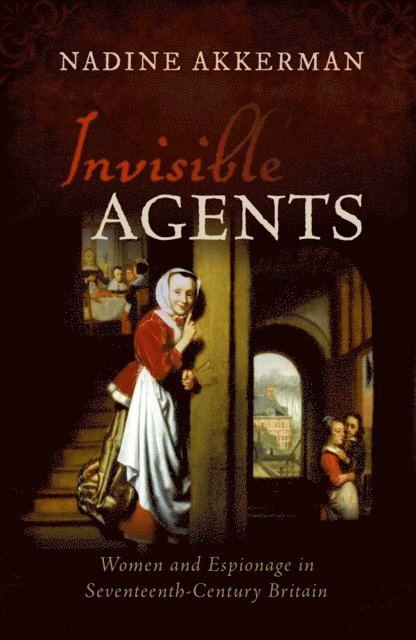
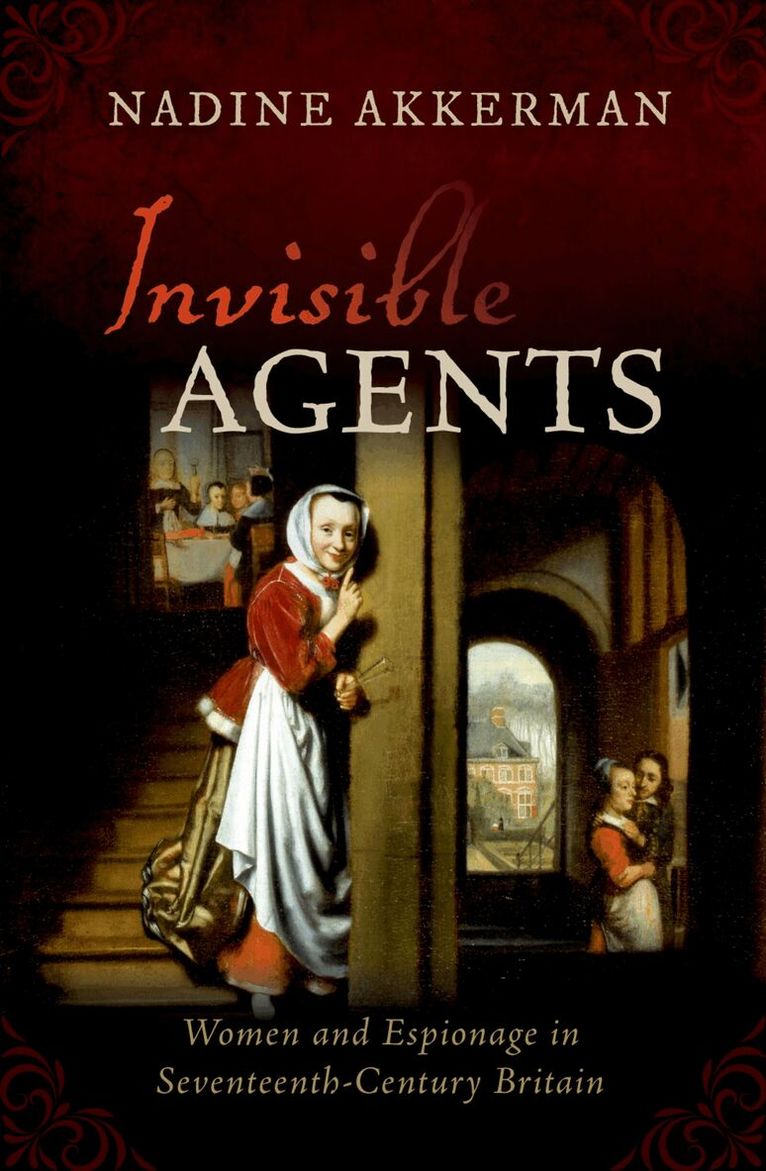
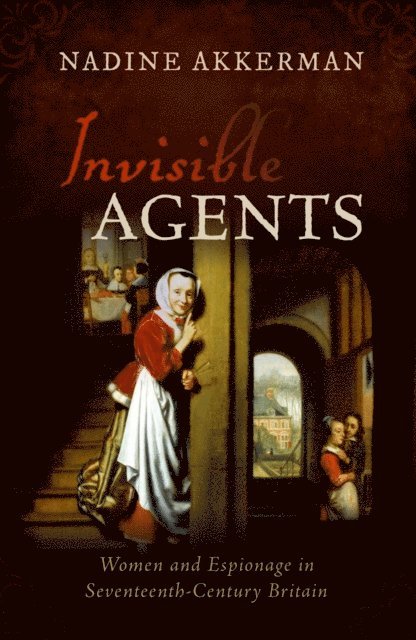
It would be easy for the modern reader to conclude that women had no place in the world of early modern espionage, with a few seventeenth-century women spies identified and then relegated to the footnotes of history. If even the espionage carried out by Susan Hyde, sister of Edward Hyde, Earl of Clarendon, during the turbulent decades of civil strife in Britain can escape the historiographer's gaze, then how many more like her lurk in the archives? Nadine Akkerman's search for an answer to this question has led to the writing of Invisible Agents, the very first study to analyse the role of early modern women spies, demonstrating that the allegedly-male world of the spy was more than merely infiltrated by women. This compelling and ground-breaking contribution to the history of espionage details a series of case studies in which women -- from playwright to postmistress, from lady-in-waiting to laundry woman -- acted as spies, sourcing and passing on confidential information on account of political and religious convictions or to obtain money or power. The struggle of the She-Intelligencers to construct credibility in their own time is mirrored in their invisibility in modern historiography. Akkerman has immersed herself in archives, libraries, and private collections, transcribing hundreds of letters, breaking cipher codes and their keys, studying invisible inks, and interpreting riddles, acting as a modern-day Spymistress to unearth plots and conspiracies that have long remained hidden by history.
4 951 kr
Skickas inom 3-6 vardagar
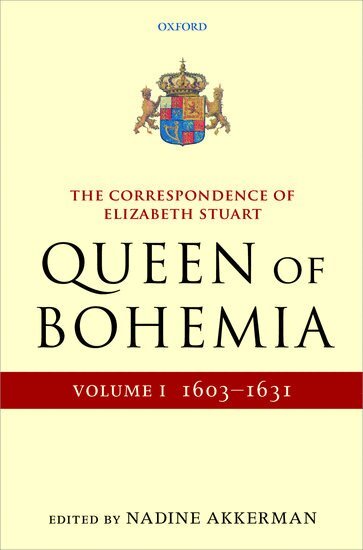
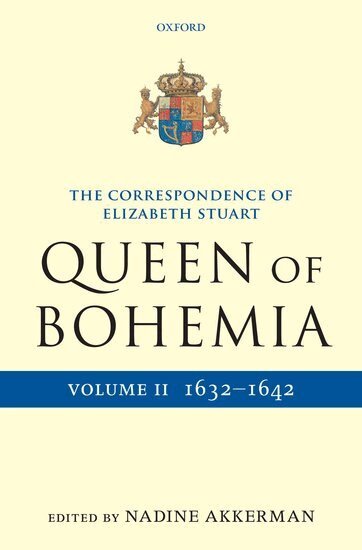
The Correspondence of Elizabeth Stuart is the first complete edition of the letters of Elizabeth Stuart (1596-1662), Electress Palatine of the Rhine and Queen of Bohemia, daughter of King James I of England and Anna of Denmark. Volume I covers Elizabeth's life as princess and consort in the years between 1603 and 1631. It includes letters exchanged with her brother, Henry Frederick, the courtship letters of Frederick V, Elector Palatine, and Elizabeth's experiences of both marital and court life in Heidelberg, especially her struggle with Germanic culture and her arguments with both her husband and mother-in-law over rights of precedence. From 1619 her letters become increasingly political as she begs her father, the Duke of Buckingham, and others for assistance in the desperate struggle for the Crown of Bohemia. Deposed in 1620, Elizabeth spends her time in exile devising ploys to gain further financial, moral, and military support from statesmen and military leaders such as Sir Dudley Carleton, the 'Mad Halberstadter' Christian of Brunswick, Count Ernest of Mansfeld, King Christian IV of Denmark, and Bethlen Gabor, Prince of Transylvania, behaviour increasingly in defiance of her father's wishes and demands.Elizabeth's letters evidence her slow transformation from political ingenue to independent stateswoman, a position cemented as her husband fell victim to the war they had precipitated. The diplomatic writing skills she developed in this period were to become her only weapon for securing both the inheritance of her many children and her own position as a key religious, political, and cultural figure in early-modern Europe.
4 633 kr
Skickas inom 7-10 vardagar
The Correspondence of Elizabeth Stuart, Queen of Bohemia is the first edition, in three volumes, of Elizabeth Stuart's complete letters ever published. Elizabeth Stuart (1596-1662), also known as Electress Palatine of the Rhine or Queen of Bohemia, was the daughter of King James VI & I and Anna of Denmark, and a key religious, political, and cultural figure in early modern Europe. Volume II, tracing the years between 1632 and 1642, covers Elizabeth's life as a widow controlling the regency during her eldest son's minority and imprisonment. It opens with her husband Frederick V's departure from their court-in-exile in The Hague to the battlefield in Germany, and his unexpected death from the plague in Mainz a few days before Elizabeth and he would have regained the Palatinate. Elizabeth is forced to take Palatine affairs firmly into her own hands as the restitution slips away from her. Her brother King Charles I tries to lure her back to the British Isles, apparently in order to pacify her, but Elizabeth chooses a life of voluntary exile to expedite the restitution. In this most political period of her life, Elizabeth devises, often unsuccessfully, ploys to gain financial, moral, and military support for the Palatine cause, frequently in direct opposition to her brother's wishes and demands. Her letters were the principal means by which she could exert her power on statesmen and military leaders, such as Archbishop Laud, Charles I, Christian IV of Denmark, the Swedish chancellor Axel Oxenstierna, Cardinal Richelieu of France, and Wladislaw IV of Poland. Elizabeth's eldest son Charles Louis, set free by the French in April 1641, ultimately took over the regency of the Palatine government in November 1642. Elizabeth at this point jadedly relinquished her role as stateswoman.
264 kr
Skickas
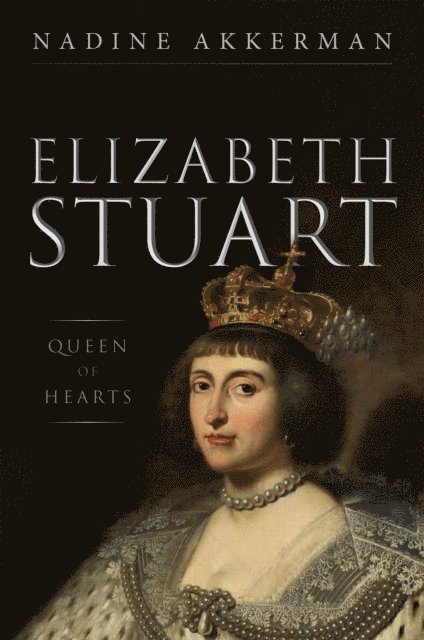
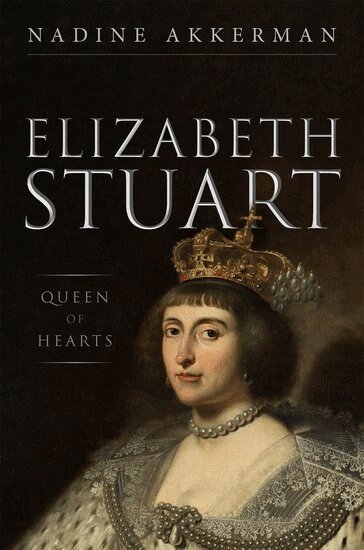
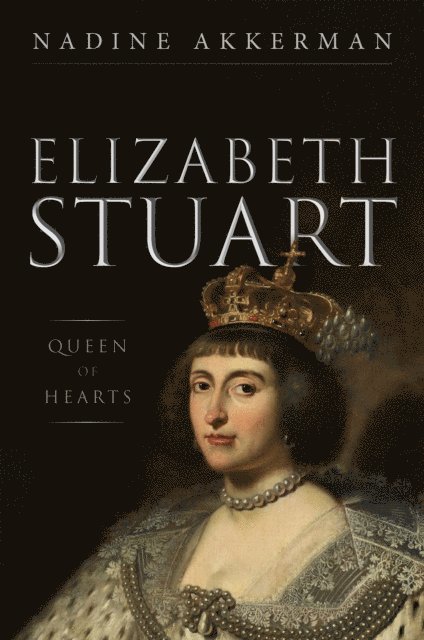
The dazzling new biography of one of history's most misunderstood queensElizabeth Stuart is one the most misrepresented - and underestimated - figures of the seventeenth century. Labelled a spendthrift more interested in the theatre and her pet monkeys than politics or her children, and long pitied as 'The Winter Queen', the direct ancestor of Elizabeth II was widely misunderstood. Nadine Akkerman's biography reveals an altogether different woman, painting a vivid picture of a queen forged in the white heat of European conflict.Elizabeth Stuart, daughter of James VI and I, was married to Frederick V, Elector Palatine in 1613. The couple were crowned King and Queen of Bohemia in 1619, only to be deposed and exiled to the Dutch Republic in 1620. Elizabeth then found herself at the epicentre of the Thirty Years' War and the Civil Wars, political and military struggles that defined seventeenth-century Europe. Following her husband's death in 1632, Elizabeth fostered a cult of widowhood, dressing herself and her apartments in black, and conducted a long and fierce political campaign to regain her children's birthright - by force, if possible - wielding her pen with the same deft precision with which she once speared boars from horseback. Through deep immersion in the archives and masterful detective work, Akkerman overturns the received view of Elizabeth Stuart, showing her to be a patron of the arts and canny stateswoman with a sharp wit and a long memory.On returning to England in 1661, Elizabeth Stuart found a country whose people still considered her their 'Queen of Hearts'. Akkerman's biography reveals the impact Elizabeth Stuart had on both England and Europe, demonstrating that she was more than just the grandmother of George I.
Spycraft
Tricks and Tools of the Dangerous Trade from Elizabeth I to the Restoration
Inbunden, Engelska, 2024
304 kr
Skickas inom 3-6 vardagar
A fascinating exploration of the devious tricks and ingenious tools used by early modern spies—from ciphers to counterfeiting, invisible inks to assassination Early modern Europe was a hotbed of espionage, where spies, spy-catchers, and conspirators pitted their wits against each other in deadly games of hide and seek. Theirs was a dangerous trade—only those who mastered the latest techniques would survive. In this engaging, accessible account, Nadine Akkerman and Pete Langman explore the methods spies actually used in the period, including disguises, invisible inks, and even poisons. Drawing on a vast array of archival sources, they show how understanding the tricks and tools of espionage allows us to re-imagine well-known stories such as the Babington and Gunpowder plots. Exposing the murky world of spies, they demonstrate how the technological innovations of petty criminals, secretaries, and other hitherto invisible actors shaped the fate of some of history’s most iconic figures. Spycraft explains how early modern spies sought to protect their own secrets while exposing those of their enemies, showing the reader how to follow in their footsteps.
Spycraft
Tricks and Tools of the Dangerous Trade from Elizabeth I to the Restoration
Häftad, Engelska, 2025
209 kr
Skickas inom 7-10 vardagar
A fascinating exploration of the devious tricks and ingenious tools used by early modern spies—from ciphers to counterfeiting, invisible inks to assassination Early modern Europe was a hotbed of espionage, where spies, spy-catchers, and conspirators pitted their wits against each other in deadly games of hide and seek. Theirs was a dangerous trade—only those who mastered the latest techniques would survive. In this engaging, accessible account, Nadine Akkerman and Pete Langman explore the methods spies actually used in the period, including disguises, invisible inks, and even poisons. Drawing on a vast array of archival sources, they show how understanding the tricks and tools of espionage allows us to re-imagine well-known stories such as the Babington and Gunpowder plots. Exposing the murky world of spies, they demonstrate how the technological innovations of petty criminals, secretaries, and other hitherto invisible actors shaped the fate of some of history’s most iconic figures. Spycraft explains how early modern spies sought to protect their own secrets while exposing those of their enemies, showing the reader how to follow in their footsteps.
Del 4 - Rulers & Elites
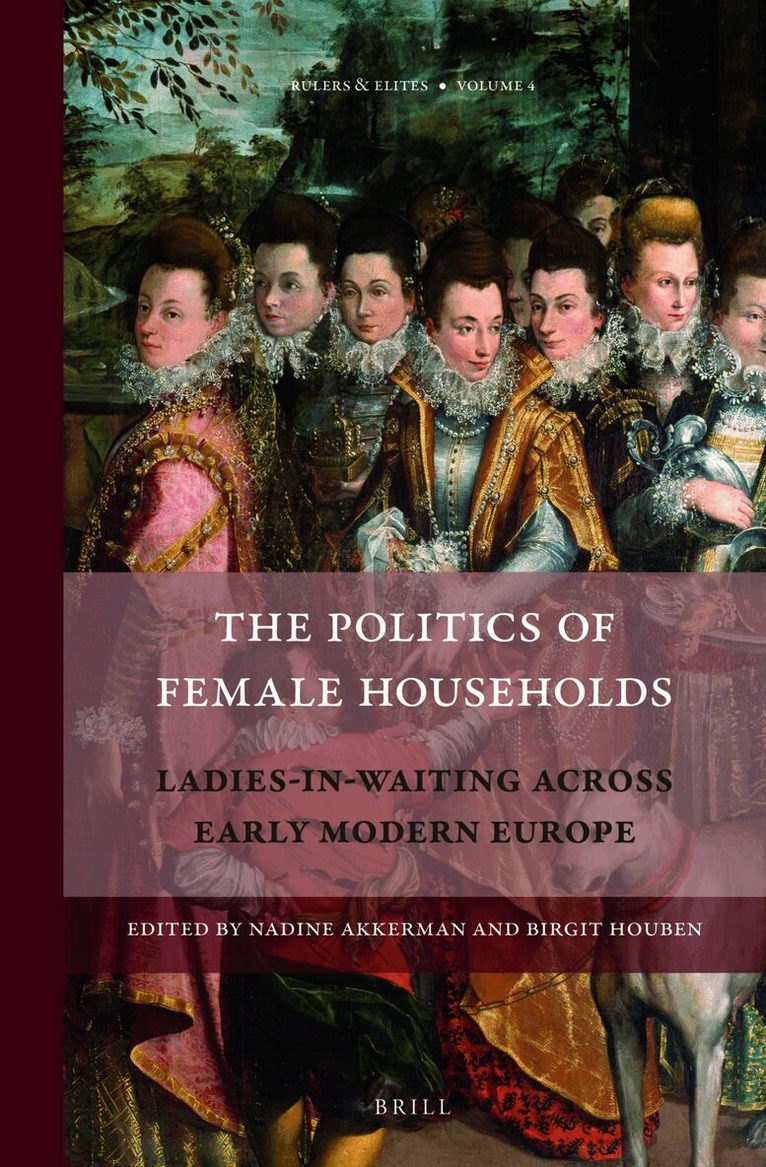
Politics of Female Households: Ladies-in-waiting across Early Modern Europe
Inbunden, Engelska, 2013
3 084 kr
Skickas inom 5-8 vardagar
The Politics of Female Households is the first collection that seeks to integrate ladies-in-waiting into the master narrative of early modern court studies. Presenting evidence and analysis of the multifarious ways in which ‘women above stairs’ shaped the European courts of the sixteenth and seventeenth centuries, it argues for a re-assessment of their political influence. The cultural agency of ladies-in-waiting is viewed in the reflection of portraiture, pamphlets and masques: their political dealings and patronage are revealed through analysis of letters, family networks, career patterns, gift exchange and household structures, as well as their activities in the fields of intelligence-gathering and espionage.By concentrating on a previously neglected area of female agency, this collection demonstrates clearly that the political climate of Europe was often shaped outside the male-dominated institutions of government and administration.Contributors include: Helen Graham-Matheson, Hannah Leah Crummé, Katrin Keller, Vanessa de Cruz, Birgit Houben, Dries Raeymaekers, Janet Ravenscroft, Una McIlvenna, Rosalind K. Marshall, Oliver Mallick, Cynthia Fry, Nadine Akkerman, Sara J. Wolfson, Fabian Persson, and Jeroen Duindam.