Nalini Persram - Böcker
Visar alla böcker från författaren Nalini Persram. Handla med fri frakt och snabb leverans.
2 produkter
2 produkter
962 kr
Skickas inom 3-6 vardagar
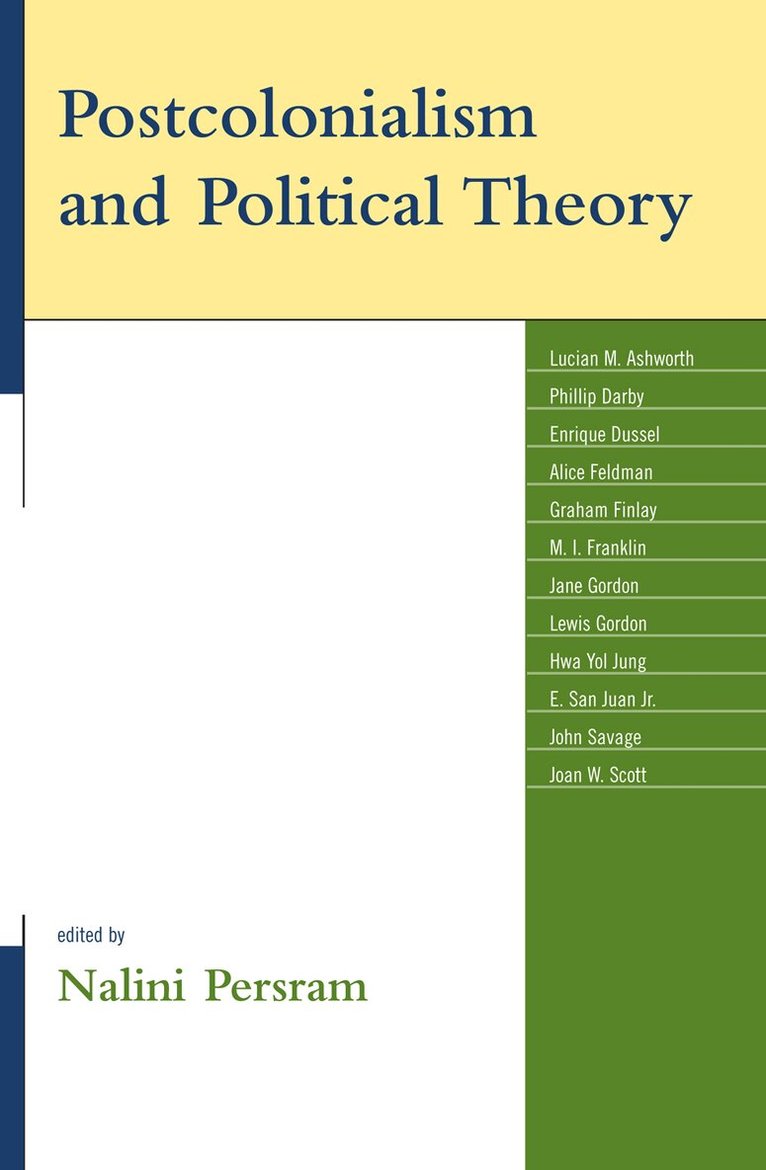
Postcolonialism and Political Theory explores the intersection between the political and the postcolonial through an engagement with, critique of, and challenge to some of the prevalent, restrictive tenets and frameworks of Western political and social thought. It is a response to the call by postcolonial studies, as well as to the urgent need within world politics, to turn towards a multiplicity_largely excluded from globally dominant discourses of community, subjectivity, power and prosperity_constituted by otherness, radical alterity, or subordination to the newly reconsolidated West. The book offers a diverse range of essays that re-examine and open the boundaries of political and cultural modernity's historical domain; that look at how the racialized and gendered and cultured subject visualizes the social from elsewhere; that critique the limits of postcolonial theory and its claim to celebrate diversity; and that complicate the notion of postcolonial politics within settler societies that continue to practice exile of the indigenous. Postcolonialism and Political Theory is an ideal book for graduate and advanced undergraduate level study and for those working both disciplinarily and interdisciplinarily, both inside and outside academia.
587 kr
Skickas inom 10-15 vardagar
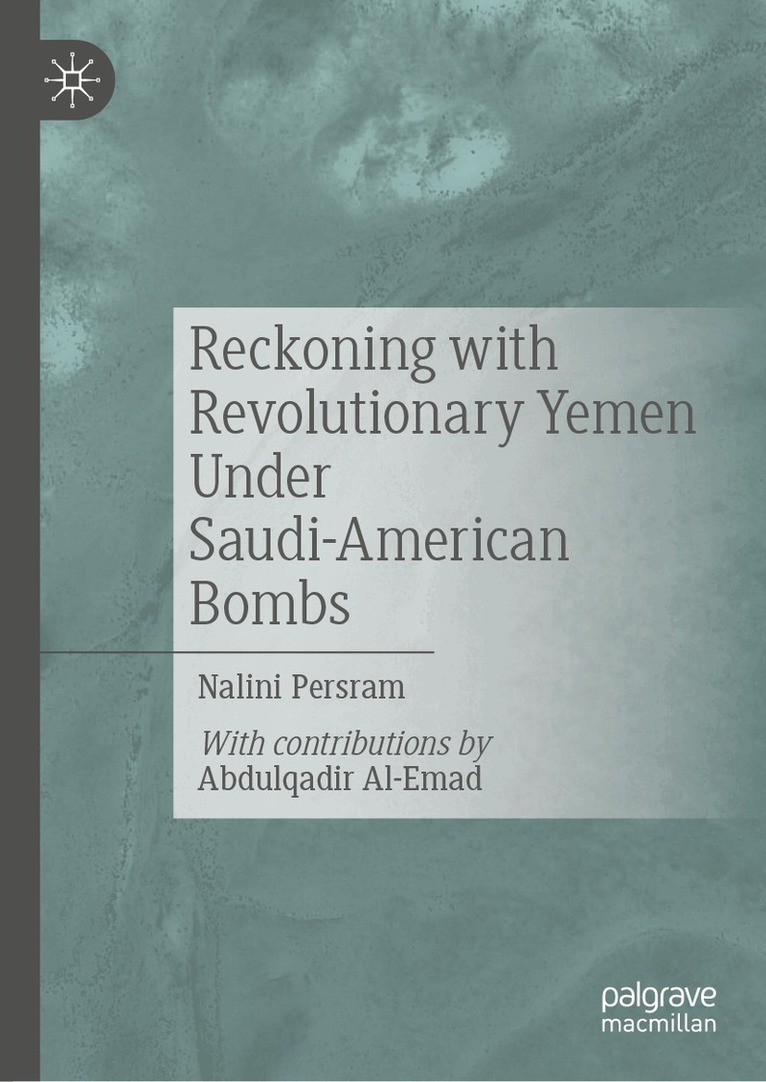
This critical study investigates why the US-backed Saudi-led coalition began bombing Yemen in 2015 and who represent the main protagonists and targets of the military intervention. How was an illegal military campaign resulting in the worst human-made humanitarian crisis in a century allowed to happen? A so-called proxy war involving Ansar Allah (the Houthis) who receive support from Iran, the rhetorical trigger of the intervention was the state coup in 2014 by Ansar Allah and Yemen’s deposed authoritarian leader, Saleh, that left the ‘internationally recognized’ government of Hadi confined to the south, and the Ansar Allah-dominated coalition the de facto power in the north. The facilitating conditions of Yemen’s civil war and its internationalization are traced back multifariously to the hijacking of the democratic Youth Revolution of 2011 by US-Saudi-backed Yemeni elites, Saleh’s Saudi-funded war against the Houthis in the 2000s, and the Republican Revolution of 1962 that overthrew the Imamate. US imperialism, Saudi regional ambition, and the Gulf oil monarchies’ determination to keep Yemen weak are, by a global neoliberal corporate monopoly capitalism, hinged to a Yemeni tribal republic constituted by decentralized, neopatrimonial power structured by a kleptocratic-tribal-military nexus. Non-tribal Ansar Allah represent Saudi Arabia’s greatest dread: Yemeni autonomy.