Namhee Lee - Böcker
Visar alla böcker från författaren Namhee Lee. Handla med fri frakt och snabb leverans.
10 produkter
10 produkter
436 kr
Skickas inom 5-8 vardagar
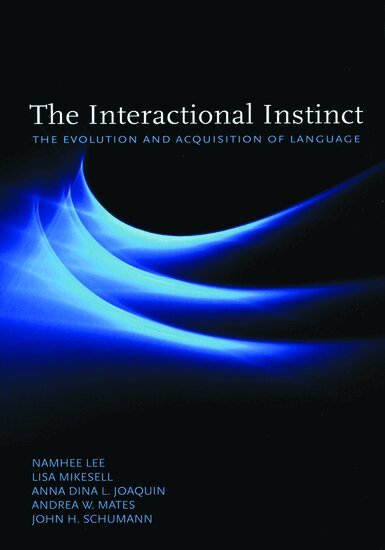
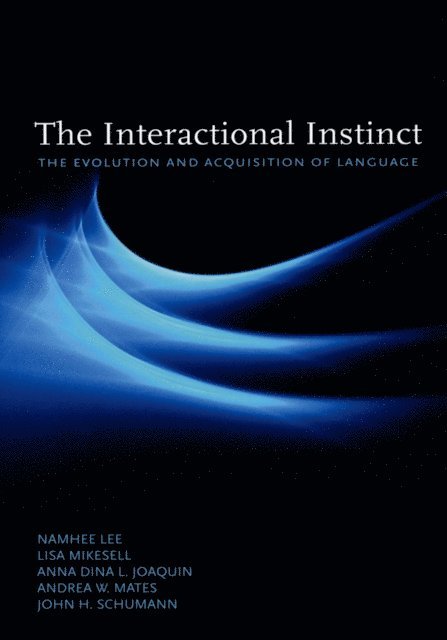
The Interactional Instinct explores the evolution of language from the theoretical view that language could have emerged without a biologically instantiated Universal Grammar. In the first part of the book, the authors speculate that a hominid group with a lexicon of about 600 words could combine these items to make larger meanings. Combinations that are successfully produced, comprehended, and learned become part of the language. Any combination that is incompatible with human mental capacities is abandoned. The authors argue for the emergence of language structure through interaction constrained by human psychology and physiology. In the second part of the book, the authors argue that language acquisition is based on an "interactional instinct" that emotionally entrains the infant on caregivers. This relationship provides children with a motivational and attentional mechanism that ensures their acquisition of language. In adult second language acquisition, the interactional instinct is no longer operating, but in some individuals with sufficient aptitude and motivation, successful second-language acquisition can be achieved.The Interactional Instinct presents a theory of language based on linguistic, evolutionary, and biological evidence indicating that language is a culturally inherited artifact that requires no a priori hard wiring of linguistic knowledge.
1 589 kr
Skickas inom 5-8 vardagar
The Interactional Instinct explores the evolution of language from the theoretical view that language could have emerged without a biologically instantiated Universal Grammar. In the first part of the book, the authors speculate that a hominid group with a lexicon of about 600 words could combine these items to make larger meanings. Combinations that are successfully produced, comprehended, and learned become part of the language. Any combination that is incompatible with human mental capacities is abandoned. The authors argue for the emergence of language structure through interaction constrained by human psychology and physiology.In the second part of the book, the authors argue that language acquisition is based on an "interactional instinct" that emotionally entrains the infant on caregivers. This relationship provides children with a motivational and attentional mechanism that ensures their acquisition of language. In adult second language acquisition, the interactional instinct is no longer operating, but in some individuals with sufficient aptitude and motivation, successful second-language acquisition can be achieved.The Interactional Instinct presents a theory of language based on linguistic, evolutionary, and biological evidence indicating that language is a culturally inherited artifact that requires no a priori hard wiring of linguistic knowledge.
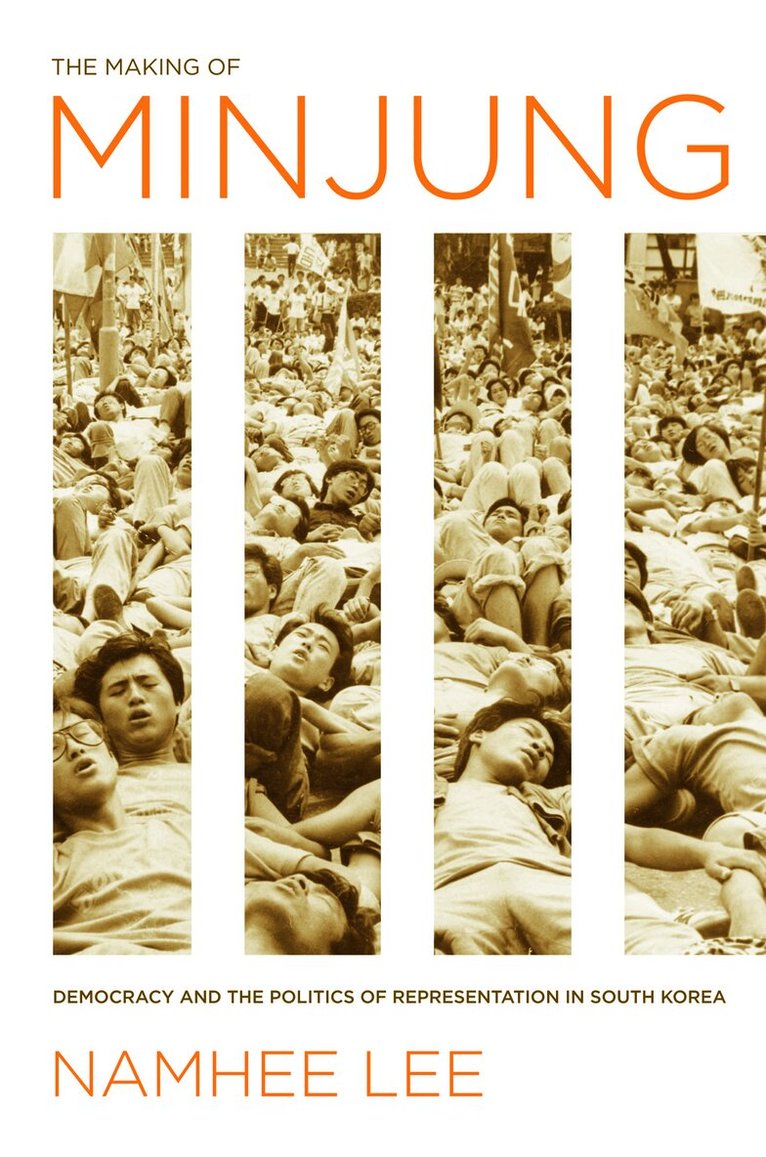
Making of Minjung
Democracy and the Politics of Representation in South Korea
Inbunden, Engelska, 2007
642 kr
Skickas inom 10-15 vardagar
In this sweeping intellectual and cultural history of the minjung ("common people's") movement in South Korea, Namhee Lee shows how the movement arose in the 1970s and 1980s in response to the repressive authoritarian regime and grew out of a widespread sense that the nation's "failed history" left Korean identity profoundly incomplete.The Making of Minjung captures the movement in its many dimensions, presenting its intellectual trajectory as a discourse and its impact as a political movement, as well as raising questions about how intellectuals represented the minjung. Lee's portrait is based on a wide range of sources: underground pamphlets, diaries, court documents, contemporary newspaper reports, and interviews with participants. Thousands of students and intellectuals left universities during this period and became factory workers, forging an intellectual-labor alliance perhaps unique in world history. At the same time, minjung cultural activists reinvigorated traditional folk theater, created a new "minjung literature," and influenced religious practices and academic disciplines.In its transformative scope, the minjung phenomenon is comparable to better-known contemporaneous movements in South Africa, Latin America, and Eastern Europe. Understanding the minjung movement is essential to understanding South Korea's recent resistance to U.S. influence. Along with its well-known economic transformation, South Korea has also had a profound social and political transformation. The minjung movement drove this transformation, and this book tells its story comprehensively and critically.
325 kr
Skickas inom 10-15 vardagar
In this sweeping intellectual and cultural history of the minjung ("common people's") movement in South Korea, Namhee Lee shows how the movement arose in the 1970s and 1980s in response to the repressive authoritarian regime and grew out of a widespread sense that the nation's "failed history" left Korean identity profoundly incomplete.The Making of Minjung captures the movement in its many dimensions, presenting its intellectual trajectory as a discourse and its impact as a political movement, as well as raising questions about how intellectuals represented the minjung. Lee's portrait is based on a wide range of sources: underground pamphlets, diaries, court documents, contemporary newspaper reports, and interviews with participants. Thousands of students and intellectuals left universities during this period and became factory workers, forging an intellectual-labor alliance perhaps unique in world history. At the same time, minjung cultural activists reinvigorated traditional folk theater, created a new "minjung literature," and influenced religious practices and academic disciplines.In its transformative scope, the minjung phenomenon is comparable to better-known contemporaneous movements in South Africa, Latin America, and Eastern Europe. Understanding the minjung movement is essential to understanding South Korea's recent resistance to U.S. influence. Along with its well-known economic transformation, South Korea has also had a profound social and political transformation. The minjung movement drove this transformation, and this book tells its story comprehensively and critically.
2 160 kr
Skickas inom 10-15 vardagar
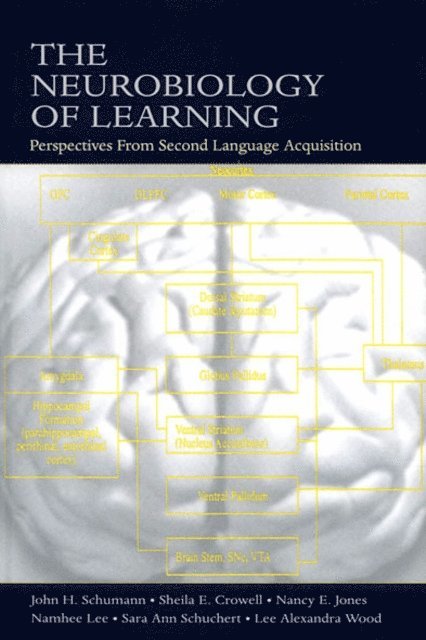
This book constitutes a timely contribution to the existing literature by presenting a relatively comprehensive, neurobiological account of certain aspects of second language acquisition. It represents the collaborative efforts of members of the Neurobiology of Language Research Group in the Applied Linguistics and TESL Department at UCLA. Members of the group are trained in neurobiology and then use this knowledge to develop biological accounts of various aspects of applied linguistics.The volume avoids the corticocentric bias that characterizes many brain-language publications--both cortical and subcortical structures receive their appropriate attention. In addition, it demonstrates that enough is presently known about the brain to inform our conceptualizations of how humans acquire second languages, thus, it provides a refreshingly novel, highly integrative contribution to the (second) language acquisition literature.The goal of the research program was based on the need to draw more links between the neurobiological mechanisms and second language acquisition. As such, the book promotes a neurobiology of language that starts with the brain and moves to behavior. The fundamental insights presented should guide second language acquisition researchers for years to come.
849 kr
Skickas inom 10-15 vardagar
This book constitutes a timely contribution to the existing literature by presenting a relatively comprehensive, neurobiological account of certain aspects of second language acquisition. It represents the collaborative efforts of members of the Neurobiology of Language Research Group in the Applied Linguistics and TESL Department at UCLA. Members of the group are trained in neurobiology and then use this knowledge to develop biological accounts of various aspects of applied linguistics.The volume avoids the corticocentric bias that characterizes many brain-language publications--both cortical and subcortical structures receive their appropriate attention. In addition, it demonstrates that enough is presently known about the brain to inform our conceptualizations of how humans acquire second languages, thus, it provides a refreshingly novel, highly integrative contribution to the (second) language acquisition literature.The goal of the research program was based on the need to draw more links between the neurobiological mechanisms and second language acquisition. As such, the book promotes a neurobiology of language that starts with the brain and moves to behavior. The fundamental insights presented should guide second language acquisition researchers for years to come.
Korea's Premier Collection of Classical Literature
Selections from Sŏ Kŏjŏng's Tongmunsŏn
Inbunden, Engelska, 2019
844 kr
Skickas inom 7-10 vardagar
This is the first book in English to offer an extensive introduction to the Tongmunsŏn (Selections of Refined Literature of Korea)—the largest and most important Korean literary collection created prior to the twentieth century—as well as translations of essays from key chapters. The Tongmunsŏn was compiled in 1478 by Sŏ Kŏjŏng (1420–1488) and other Chosŏn literati at the command of King Sŏngjong (r. 1469–1494). It was modeled after the celebrated Chinese anthology Wen Xuan and contains poetry and prose in an extensive array of styles and genres.The Translators’ Introduction begins by describing the general structure of the Tongmunsŏn and contextualizes literary output in Korea within the great sweep of East Asian literature from the eighth to the fifteenth centuries. The entire Tongmunsŏn as well as all of the essays selected for translation were written in hanmun (as opposed to Korean vernacular), which points to a close literary connection between the continent and the peninsula. The Introduction goes on to discuss the genres contained in the Tongmunsŏn and examines style as revealed through prosody. The translation of two of these genres (treatises and discourses) in four books of the Tongmunsŏn showcases prose-writing and the intellectual concerns of the age. Through their discussions of morality, nature, and the fantastic, we see Daoist, Buddhist, and Confucian themes at work in essays by some of Korea’s most distinguished writers, among them Yi Kyubo, Yi Saek, Yi Chehyŏn, and Chŏng Tojŏn. The translations also include annotations and extensive cross-references to classical allusions in the Chinese canon, making the present volume an essential addition to any East Asian literature collection.
Korean Scholar's Rude Awakening in Qing China
Pak Chega's Discourse on Northern Learning
Inbunden, Engelska, 2019
756 kr
Skickas inom 7-10 vardagar
Two years after Adam Smith's Wealth of Nations was published in 1776, Pak Chega's (1750–1805) Discourse on Northern Learning appeared on the opposite corner of the globe. Both books presented notions of wealth and the economy for critical review: the former caused a stir across Europe, the latter influenced only a modest group of Chosŏn (1392–1897) Korea scholars and other intellectuals. Nevertheless, the ideas of both thinkers closely reflected the spirit of their times and helped define certain schools of thought—in the case of Pak, Northern Learning (Pukhak), which disparaged the Chosŏn Neo-Confucian state ideology as inert and ineffective.Years of humiliation and resentment against the conquering Manchus blinded many Korean elites to the scientific and technological advances made in Qing China (1644–1911). They despised its rulers as barbarians and begrudged Qing China's status as their suzerain state. But Pak saw Korea's northern neighbor as a model of economic and social reform. He and like-minded progressives discussed and corroborated views about the superiority of China's civilization. After traveling to Beijing in 1776, Pak wrote Discourse on Northern Learning, in which he favorably introduced many aspects of China's economy and culture. By comparison, he argued, Korea's economy was depressed, the result of inadequate government policies and the selfishness of a privileged upper class. He called for drastic reforms in agriculture and industry and for opening the country to international trade. In a series of short essays, Pak gives us rare insights into life on the ground in late eighteenth-century Korea, and in the many details he supplies on Chinese farming, trade, and other commercial activities, his work provides a window onto everyday life in Qing China.Students and specialists of Korean history, particularly social reform movements, and Chosŏn-Qing relations will welcome this new translation.
1 096 kr
Skickas inom 7-10 vardagar
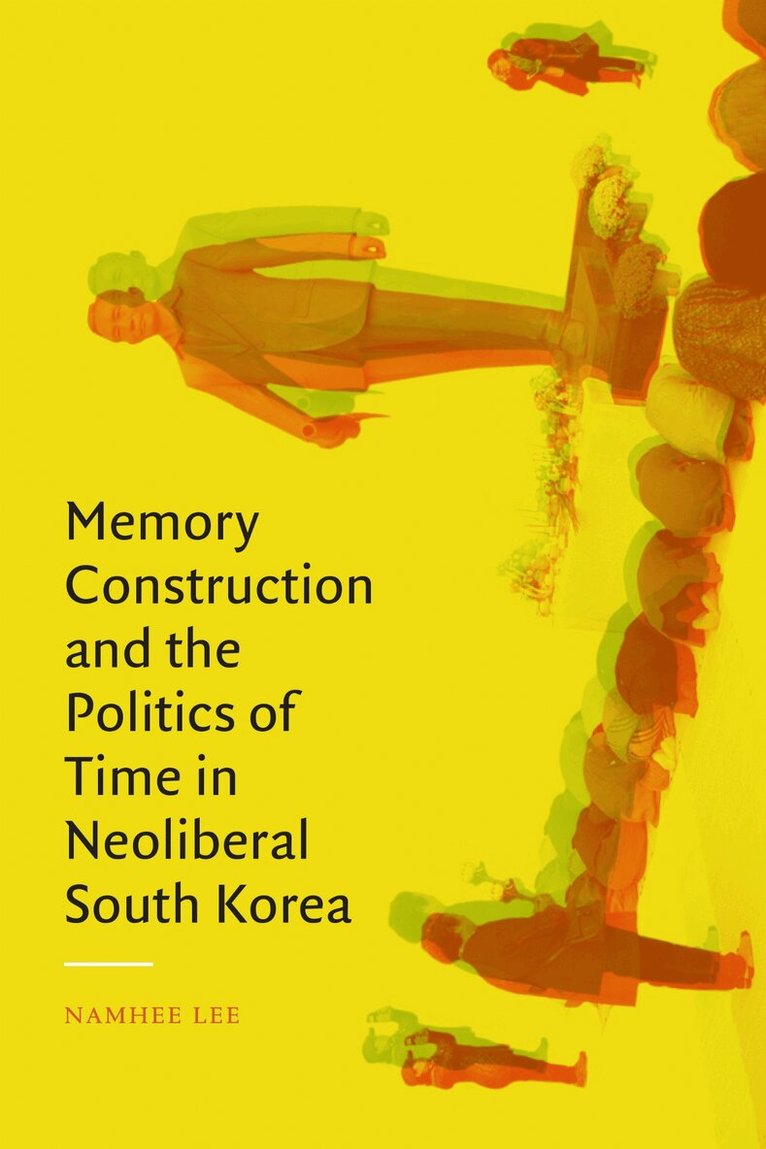
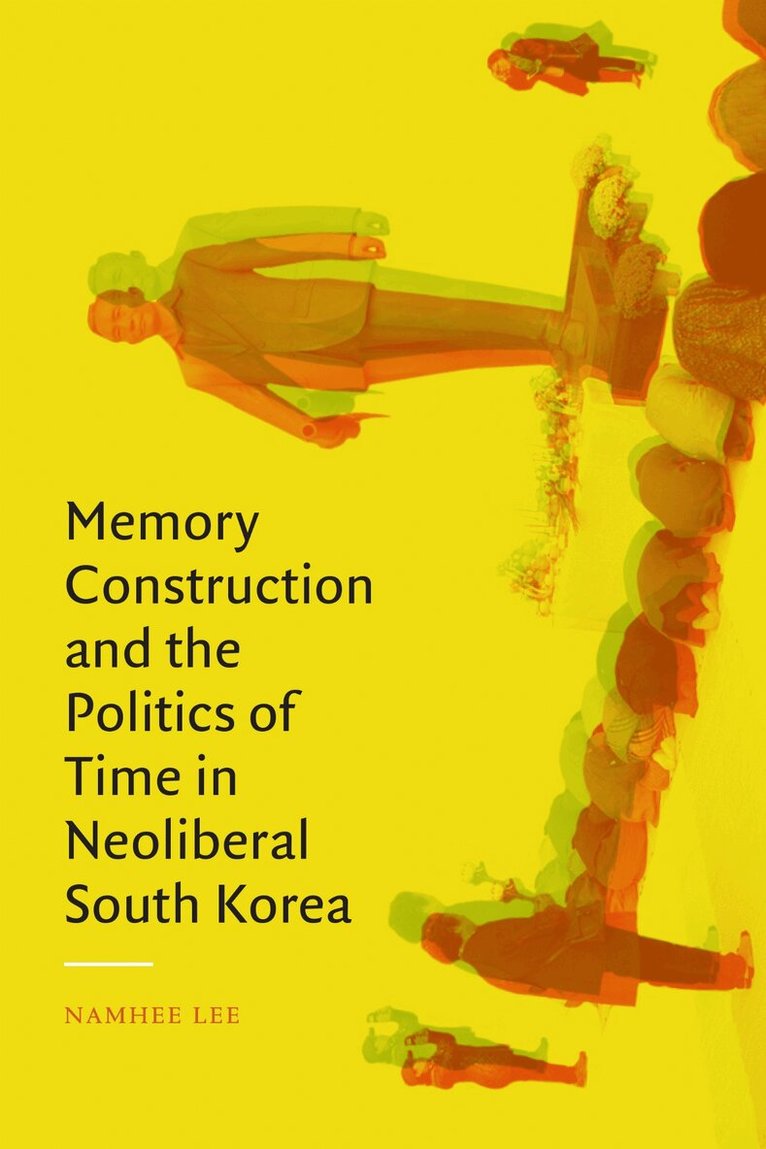
In Memory Construction and the Politics of Time in Neoliberal South Korea Namhee Lee explores memory construction and history writing in post-1987 South Korea. The massive neoliberal reconstruction of all aspects of society shifted public discourse from minjung (people) to simin (citizen), from political to cultural, from collective to individual. This shift reconstituted people as Homo economicus, rights-bearing and rights-claiming individuals, even in social movements. Lee explains this shift in the context of simultaneous historical developments: South Korea’s transition to democracy, the end of the Cold War, and neoliberal reconstruction understood as synonymous with democratization. By examining memoirs, biographies, novels, and revisionist conservative historical scholarship, Lee shows how the dominant discourse of a “complete break with the past” erases the critical ethos of previous emancipatory movements foundational to South Korean democracy.
279 kr
Skickas inom 7-10 vardagar
In Memory Construction and the Politics of Time in Neoliberal South Korea Namhee Lee explores memory construction and history writing in post-1987 South Korea. The massive neoliberal reconstruction of all aspects of society shifted public discourse from minjung (people) to simin (citizen), from political to cultural, from collective to individual. This shift reconstituted people as Homo economicus, rights-bearing and rights-claiming individuals, even in social movements. Lee explains this shift in the context of simultaneous historical developments: South Korea’s transition to democracy, the end of the Cold War, and neoliberal reconstruction understood as synonymous with democratization. By examining memoirs, biographies, novels, and revisionist conservative historical scholarship, Lee shows how the dominant discourse of a “complete break with the past” erases the critical ethos of previous emancipatory movements foundational to South Korean democracy.