Nancy Bermeo - Böcker
Visar alla böcker från författaren Nancy Bermeo. Handla med fri frakt och snabb leverans.
7 produkter
7 produkter
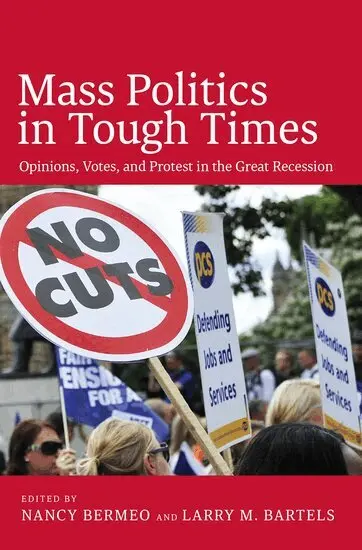
Mass Politics in Tough Times
Opinions, Votes and Protest in the Great Recession
Inbunden, Engelska, 2015
1 801 kr
Skickas inom 5-8 vardagar
The impact of the Great Depression on politics in the 1930s was both transformative and shocking. The role of government in America was forever transformed, and across Europe socialist, communist, and fascist parties saw their support skyrocket. Most famously, the National Socialists seized power in Germany in 1933, setting off a chain of events that led to the greatest conflagration in world history. The recent Great Recession has not been as severe as the Great Recession, but it has been severe enough, producing a half decade of negative and/or slow growth across the advanced industrial world. Yet the response by voters has been extraordinarily muted considering the circumstances. Why is this? In Mass Politics in Tough Times, the eminent political scientists Larry Bartels and Nancy Bermeo have gathered a group of leading scholars to analyze the political responses to the Great Recession in the US, Western Europe, and East-Central Europe. In contrast to works that focus on policy responses to the Recession, they examine how ordinary voters have responded. In almost every country, most voters have not shifted their allegiance to either far left or far right parties. Instead, they've continued to act as they have in more normal times: vote based on their own personal circumstances and punish the incumbents who were on watch when the bad turn occurred regardless of whether they were center-left or center-right. In some countries, electoral trends that existed before the Recession have continued. The US, for instance, saw no real increase in popular support for an expanded welfare state. In fact, the anti-regulatory right, which gained strength before the Recession occurred, experienced a series of victories in Wisconsin after 2008. Interestingly, states that had strong welfare systems have seen the least political realignment. As the contributors show, ordinary voters tend to vote based on their own experiences, and those in expansive welfare states have been buffered from the harshest effects of the Recession. That said, states with weaker welfare systems--e.g., Greece--have seen significant political turmoil. Moreover, there have been a small number of cases of popular radicalization, and the contributors have been able to isolate the cause: when voters can establish a clear and direct connection between the actions of political elites and economic hardship, they will throw their support to protest parties on the right and left. Ultimately, though, the picture is one of relatively stoic acceptance of the downturn by the majority of publics. Featuring an impressive range of cases, this will stand as the most comprehensive scholarly account of the Great Recession's impact on political behavior in advanced economies.
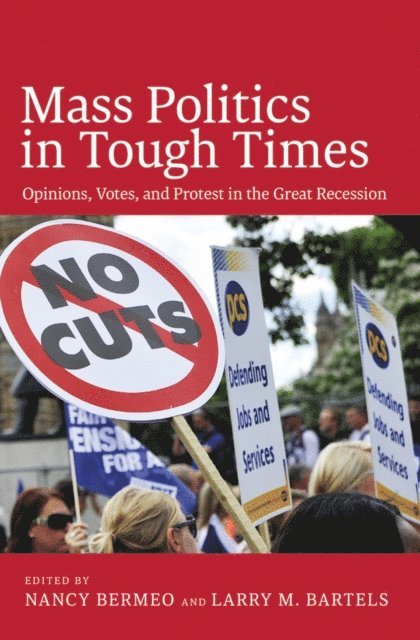
Mass Politics in Tough Times
Opinions, Votes and Protest in the Great Recession
Häftad, Engelska, 2014
673 kr
Skickas inom 5-8 vardagar
The impact of the Great Depression on politics in the 1930s was both transformative and shocking. The role of government in America was forever transformed, and across Europe socialist, communist, and fascist parties saw their support skyrocket. Most famously, the National Socialists seized power in Germany in 1933, setting off a chain of events that led to the greatest conflagration in world history. The recent Great Recession has not been as severe as the Great Recession, but it has been severe enough, producing a half decade of negative and/or slow growth across the advanced industrial world. Yet the response by voters has been extraordinarily muted considering the circumstances. Why is this? In Mass Politics in Tough Times, the eminent political scientists Larry Bartels and Nancy Bermeo have gathered a group of leading scholars to analyze the political responses to the Great Recession in the US, Western Europe, and East-Central Europe. In contrast to works that focus on policy responses to the Recession, they examine how ordinary voters have responded. In almost every country, most voters have not shifted their allegiance to either far left or far right parties. Instead, they've continued to act as they have in more normal times: vote based on their own personal circumstances and punish the incumbents who were on watch when the bad turn occurred regardless of whether they were center-left or center-right. In some countries, electoral trends that existed before the Recession have continued. The US, for instance, saw no real increase in popular support for an expanded welfare state. In fact, the anti-regulatory right, which gained strength before the Recession occurred, experienced a series of victories in Wisconsin after 2008. Interestingly, states that had strong welfare systems have seen the least political realignment. As the contributors show, ordinary voters tend to vote based on their own experiences, and those in expansive welfare states have been buffered from the harshest effects of the Recession. That said, states with weaker welfare systems--e.g., Greece--have seen significant political turmoil. Moreover, there have been a small number of cases of popular radicalization, and the contributors have been able to isolate the cause: when voters can establish a clear and direct connection between the actions of political elites and economic hardship, they will throw their support to protest parties on the right and left. Ultimately, though, the picture is one of relatively stoic acceptance of the downturn by the majority of publics. Featuring an impressive range of cases, this will stand as the most comprehensive scholarly account of the Great Recession's impact on political behavior in advanced economies.
509 kr
Skickas inom 7-10 vardagar
The movement for European integration has yielded a European Union of fifteen states with a unified monetary system that will eventually embrace over 370 million people. If current trends continue, an average of one in ten of these people will be unemployed. Not surprisingly, the European public ranks joblessness among its primary political concerns. This book focuses on both unemployment and economic unification. It examines the consequences of each and their interconnections. With chapters on the policy implications of European union, on current workings of domestic bargaining institutions and on how unemployment affects political behavior, this book yields a message with important policy implications: the organized managed economies of Europe should be reformed but not replaced, and a united Europe should be wary of modeling itself on the United States.
1 485 kr
Skickas inom 7-10 vardagar
The movement for European integration has yielded a European Union of fifteen states with a unified monetary system that will eventually embrace over 370 million people. If current trends continue, an average of one in ten of these people will be unemployed. Not surprisingly, the European public ranks joblessness among its primary political concerns. This book focuses on both unemployment and economic unification. It examines the consequences of each and their interconnections. With chapters on the policy implications of European union, on current workings of domestic bargaining institutions and on how unemployment affects political behavior, this book yields a message with important policy implications: the organized managed economies of Europe should be reformed but not replaced, and a united Europe should be wary of modeling itself on the United States.
Who Governs Southern Europe?
Regime Change and Ministerial Recruitment, 1850-2000
Häftad, Engelska, 2003
726 kr
Skickas inom 10-15 vardagar
In modern politics, cabinet ministers are major actors in the arena of power as they occupy a strategic locus of command from which vital, authoritative decisions flow continuously. Who are these uppermost policy-makers? What are their background characteristics and credentials? How are they selected and which career paths do they travel in their ascent to power?This set of research issues has guided this collection, a comprehensive, empirical account of the composition and patterns of recruitment of ministerial elites in Southern Europe throughout the last 150 years, thus encompassing different historical circumstances and political settings - liberal, authoritarian and democratic. With original, comparative data from the 19th century to the present, it provides valuable material for debates about how regime change and economic development affect who governs.First published in 2003 by Frank Cass / Reprinted in 2012 by Routledge
1 284 kr
Skickas inom 7-10 vardagar
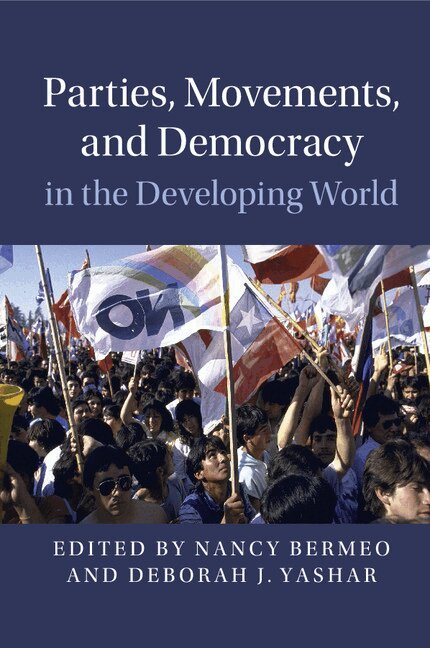
This volume analyzes regime politics in the developing world. By focusing on the civilian, collective actors that forge democracy and sustain it, this book moves beyond materialist arguments focusing on gross domestic product (GDP), poverty, and inequality. With case material from four continents, this volume emphasizes the decisive role played by parties and movements in forging democracy against the odds. These pivotal collectivities are consistently the key civilian collectivities that successfully mobilized for democracy, that helped forge enduring democratic institutions, and that shaped the quality of the democracies that emerged; they are the ones tasked with mobilizing along a range of social cleavages, confronting seemingly inhospitable conditions, and coordinating the process of regime change. While the presence of parties and movements alone is not sufficient to explain democracy, their absence is detrimental to enduring democratic regimes. Thus, this volume refocuses our attention on parties and movements as critical mechanisms of regime change.
428 kr
Skickas inom 7-10 vardagar
This volume analyzes regime politics in the developing world. By focusing on the civilian, collective actors that forge democracy and sustain it, this book moves beyond materialist arguments focusing on gross domestic product (GDP), poverty, and inequality. With case material from four continents, this volume emphasizes the decisive role played by parties and movements in forging democracy against the odds. These pivotal collectivities are consistently the key civilian collectivities that successfully mobilized for democracy, that helped forge enduring democratic institutions, and that shaped the quality of the democracies that emerged; they are the ones tasked with mobilizing along a range of social cleavages, confronting seemingly inhospitable conditions, and coordinating the process of regime change. While the presence of parties and movements alone is not sufficient to explain democracy, their absence is detrimental to enduring democratic regimes. Thus, this volume refocuses our attention on parties and movements as critical mechanisms of regime change.