Nancy E. Berg - Böcker
Visar alla böcker från författaren Nancy E. Berg. Handla med fri frakt och snabb leverans.
6 produkter
6 produkter
496 kr
Skickas inom 7-10 vardagar
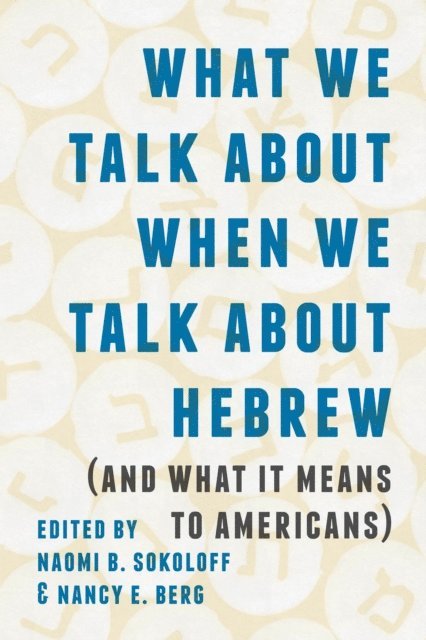
Why Hebrew, here and now? What is its value for contemporary Americans? In What We Talk about When We Talk about Hebrew (and What It Means to Americans) scholars, writers, and translators tackle a series of urgent questions that arise from the changing status of Hebrew in the United States. To what extent is that status affected by evolving Jewish identities and shifting attitudes toward Israel and Zionism? Will Hebrew programs survive the current crisis in the humanities on university campuses? How can the vibrancy of Hebrew literature be conveyed to a larger audience?The volume features a diverse group of distinguished contributors, including Sarah Bunin Benor, Dara Horn, Adriana Jacobs, Alan Mintz, Hannah Pressman, Adam Rovner, Ilan Stavans, Michael Weingrad, Robert Whitehill-Bashan, and Wendy Zierler. With lively personal insights, their essays give fellow Americans a glimpse into the richness of an exceptional language.Celebrating the vitality of modern Hebrew, this book addresses the challenges and joys of being a Hebraist in America in the twenty-first century. Together these essays explore ways to rekindle an interest in Hebrew studies, focusing not just on what Hebrew means—as a global phenomenon and long-lived tradition—but on what it can mean to Americans.
1 620 kr
Skickas inom 5-8 vardagar
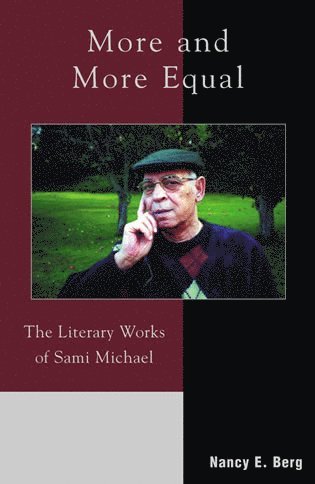
More and More Equal examines the works of Sami Michael, the most significant Israeli writer who has made the transition from Arabic to Hebrew. Born in Baghdad, Michael fled in 1948 to Iran, and later to Israel, to escape imprisonment or execution due to his involvement with the Iraqi Communist Party. Early in his career Michael was deemed merely an "ethnic" writer, but his incredible popular success and indelible influence on his Israeli audience have forced critics to consider his writings anew.Nancy E. Berg sheds light on Michael's belated canonization and traces his development as a storyteller. Berg offers fresh readings of each of Michael's major novels. She shows us that by questioning and exploring Israeli and Jewish identity via characters otherwise rare in Hebrew literature (non-European immigrants, Sephardis, and Arabs), Michael has recast the Zionist master narrative. Berg notes that Michael's rise to literary prominence owes not only to his growing sophistication as a writer but also to changing norms and attitudes in Israeli society.
406 kr
Skickas inom 7-10 vardagar
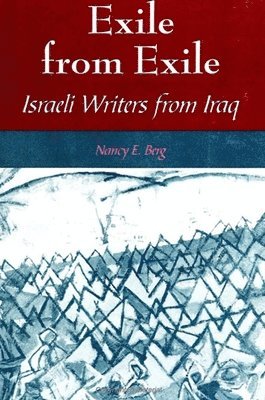
The standard histories of Israeli literature limit the canon, virtually ignoring those who came to Israel from Jewish communities in the Middle East. By focusing on the work of Iraqi-born authors, this book offers a fundamental rethinking of the canon and of Israeli literary history.The story of these writers challenges common conceptions of exile and Zionist redemption. At the heart of this book lies the paradox that the dream of ingathering the exiles has made exiles of the ingathered. Upon arriving in Israel, these writers had to decide whether to continue writing in their native language, Arabic, or begin in a new language, Hebrew. The author reveals how Israeli works written in Arabic depict different memories of Iraq from those written in Hebrew. In addition, her analysis of the early novels of Hebrew writers set against the experience of "transit camps" (ma'abarot) argues for a re-evaluation of the significance of this neglected literary subgenre.
373 kr
Skickas inom 7-10 vardagar
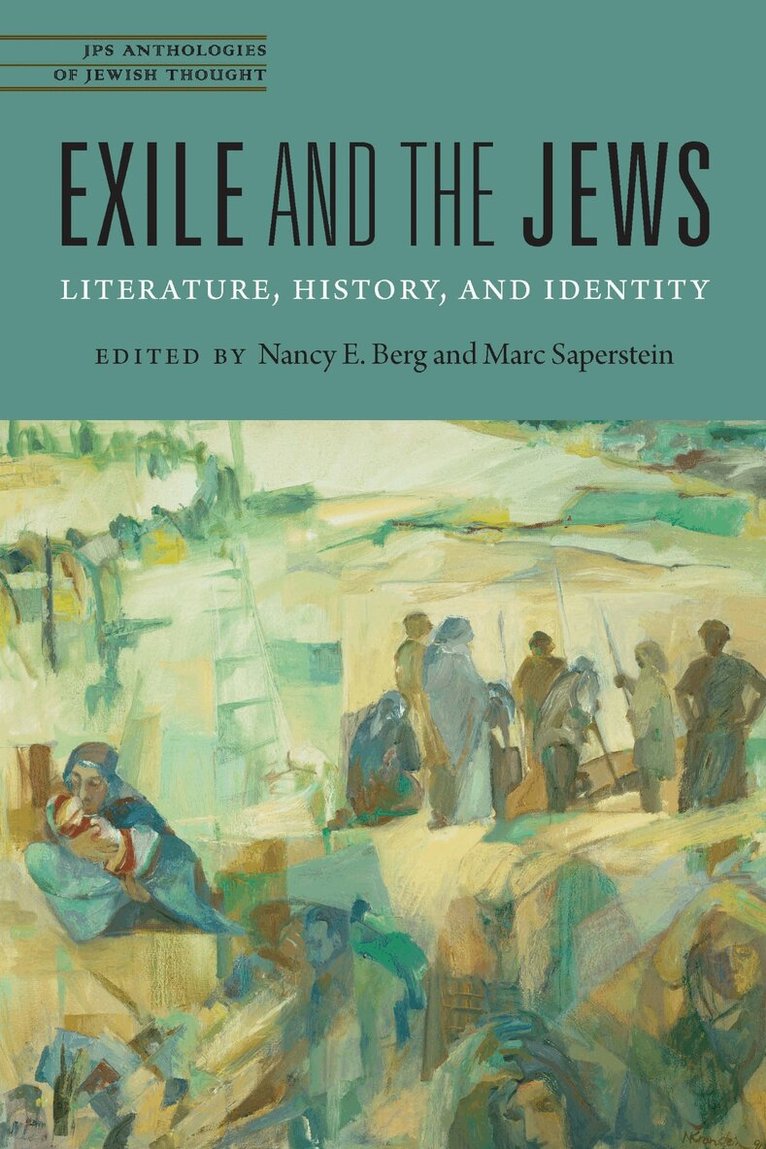
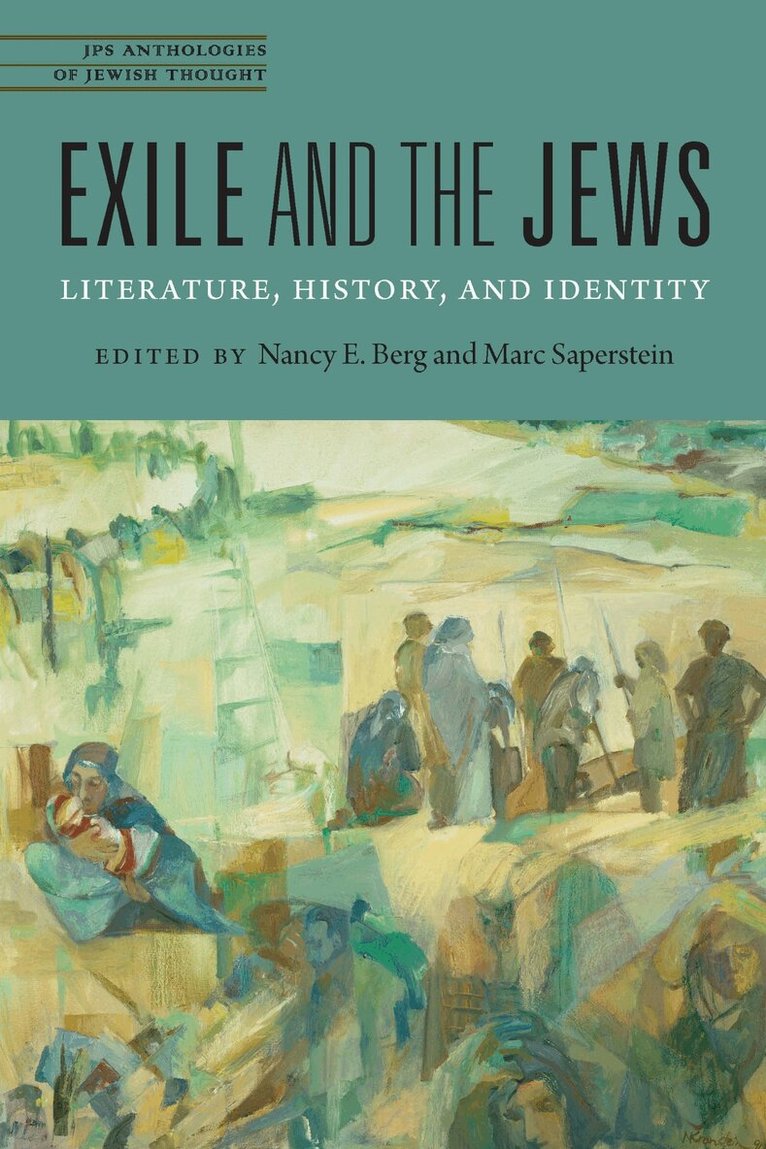
This first comprehensive anthology examining Jewish responses to exile from the biblical period to our modern day gathers texts from all genres of Jewish literary creativity to explore how the realities and interpretations of exile have shaped Judaism, Jewish politics, and individual Jewish identity for millennia. Ordered along multiple arcs-from universal to particular, collective to individual, and mythic-symbolic to prosaic everyday living-the chapters present different facets of exile: as human condition, in history and life, in holiday rituals, in language, as penance and atonement, as internalized experience, in relation to the Divine Presence, and more. By illuminating the multidimensional nature of “exile”-political, philosophical, religious, psychological, and mythological-widely divergent evaluations of Jewish life in the Diaspora emerge. The word “exile” and its Hebrew equivalent, galut, evoke darkness, bleakness-and yet the condition offers spiritual renewal and engenders great expressions of Jewish cultural creativity: the Babylonian Talmud, medieval Jewish philosophy, golden age poetry, and modern Jewish literature.Exile and the Jews will engage students, academics, and general readers in contemplating immigration, displacement, evolving identity, and more.
683 kr
Skickas inom 3-6 vardagar
A portrait of Israeli literature in its full transnational and multilingual complexity.2021 CHOICE Outstanding Academic Title Toward the end of the twentieth century, an unprecedented surge of writing altered the Israeli literary scene in profound ways. As fresh creative voices and multiple languages vied for recognition, diversity replaced consensus. Genres once accorded lower status-such as the graphic novel and science fiction-gained readership and positive critical notice. These trends ushered in not only the discovery and recovery of literary works but also a major rethinking of literary history. In Since 1948, scholars consider how recent voices have succeeded older ones and reverberated in concert with them; how linguistic and geographical boundaries have blurred; how genres have shifted; and how canon and competition have shaped Israeli culture. Charting surprising trajectories of a vibrant, challenging, and dynamic literature, the contributors analyze texts composed in Hebrew, Yiddish, and Arabic; by Jews and non-Jews; and by Israelis abroad as well as writers in Israel. What emerges is a portrait of Israeli literature as neither minor nor regional, but rather as transnational, multilingual, and worthy of international attention.
1 674 kr
Skickas inom 3-6 vardagar
A portrait of Israeli literature in its full transnational and multilingual complexity.2021 CHOICE Outstanding Academic Title Toward the end of the twentieth century, an unprecedented surge of writing altered the Israeli literary scene in profound ways. As fresh creative voices and multiple languages vied for recognition, diversity replaced consensus. Genres once accorded lower status-such as the graphic novel and science fiction-gained readership and positive critical notice. These trends ushered in not only the discovery and recovery of literary works but also a major rethinking of literary history. In Since 1948, scholars consider how recent voices have succeeded older ones and reverberated in concert with them; how linguistic and geographical boundaries have blurred; how genres have shifted; and how canon and competition have shaped Israeli culture. Charting surprising trajectories of a vibrant, challenging, and dynamic literature, the contributors analyze texts composed in Hebrew, Yiddish, and Arabic; by Jews and non-Jews; and by Israelis abroad as well as writers in Israel. What emerges is a portrait of Israeli literature as neither minor nor regional, but rather as transnational, multilingual, and worthy of international attention.