Nancy G. Siraisi - Böcker
Visar alla böcker från författaren Nancy G. Siraisi. Handla med fri frakt och snabb leverans.
10 produkter
10 produkter
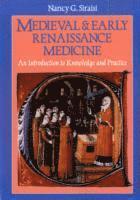
Medieval and Early Renaissance Medicine
An Introduction to Knowledge and Practice
Häftad, Engelska, 1990
307 kr
Skickas inom 7-10 vardagar
Western Europe supported a highly developed and diverse medical community in the late medieval and early Renaissance periods. In her absorbing history of this complex era in medicine, Siraisi explores the inner workings of the medical community and illustrates the connections of medicine to both natural philosophy and technical skills.
536 kr
Tillfälligt slut
546 kr
Skickas inom 7-10 vardagar
A path-breaking work at last available in paper, History, Medicine, and the Traditions of Renaissance Learning is Nancy G. Siraisi’s examination of the intersections of medically trained authors and history from 1450 to 1650. Rather than studying medicine and history as separate traditions, Siraisi calls attention to their mutual interaction in the rapidly changing world of Renaissance erudition. With remarkably detailed scholarship, Siraisi investigates doctors’ efforts to explore the legacies handed down to them from ancient medical and anatomical writings.
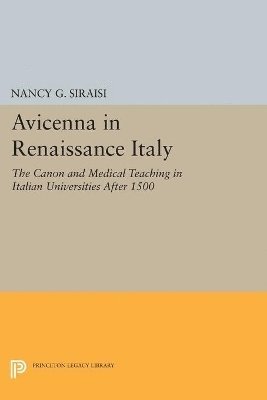
Avicenna in Renaissance Italy
The Canon and Medical Teaching in Italian Universities after 1500
Häftad, Engelska, 2014
615 kr
Skickas inom 7-10 vardagar
The Canon of Avicenna, one of the principal texts of Arabic origin to be assimilated into the medical learning of medieval Europe, retained importance in Renaissance and early modern European medicine. After surveying the medieval reception of the book, Nancy Siraisi focuses on the Canon in sixteenth- and early seventeenth-century Italy, and especially on its role in the university teaching of philosophy of medicine and physiological theory. Originally published in 1987. The Princeton Legacy Library uses the latest print-on-demand technology to again make available previously out-of-print books from the distinguished backlist of Princeton University Press. These editions preserve the original texts of these important books while presenting them in durable paperback and hardcover editions. The goal of the Princeton Legacy Library is to vastly increase access to the rich scholarly heritage found in the thousands of books published by Princeton University Press since its founding in 1905.
631 kr
Skickas inom 7-10 vardagar
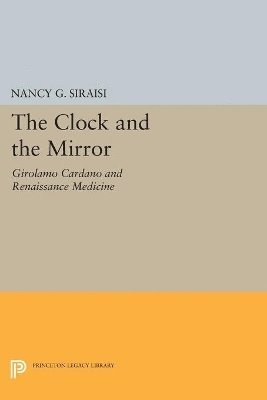
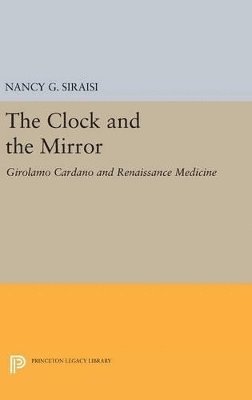
Girolamo Cardano (1501-1576), renowned as a mathematician, encyclopedist, astrologer, and autobiographer, was by profession a medical practitioner. His copious writings on medicine reflect both the complexity and diversity of the Renaissance medical world and the breadth of his own interests. In this book, Nancy Siraisi draws on selected themes in Cardano's medical writings to explore in detail the relation between medicine and wider areas of Renaissance culture. Cardano's medical advice included the suggestion that "the studious man should always have at hand a clock and a mirror"--a clock to keep track of the passage of time and a mirror to observe the changing condition of his body. The remark, which recalls his astrological and autobiographical interests, is emblematic of the many connections between his medicine and his other pursuits. Cardano's philosophical eclecticism, beliefs about occult forces in nature, theories about dreams, and free transitions between academic and popularizing scientific writing also contributed to his medicine.As a physician, he greeted two different types of medical innovation in his lifetime with equal enthusiasm: improved access to the Hippocratic corpus and Vesalian anatomy. Cardano presented himself as a practitioner with special gifts. Yet his medical learning remained rooted in the Galenic tradition that he often criticized. Meanwhile, he negotiated a career in a medical community characterized by personal and social rivalries, a competitive medical marketplace, and strong institutional and religious pressures. Originally published in 1997. The Princeton Legacy Library uses the latest print-on-demand technology to again make available previously out-of-print books from the distinguished backlist of Princeton University Press. These editions preserve the original texts of these important books while presenting them in durable paperback and hardcover editions. The goal of the Princeton Legacy Library is to vastly increase access to the rich scholarly heritage found in the thousands of books published by Princeton University Press since its founding in 1905.
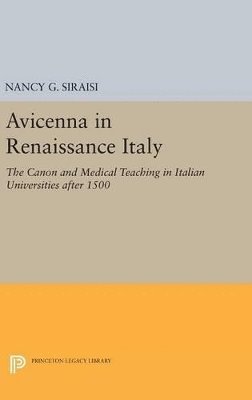
Avicenna in Renaissance Italy
The Canon and Medical Teaching in Italian Universities after 1500
Inbunden, Engelska, 2016
2 872 kr
Skickas inom 3-6 vardagar
The Canon of Avicenna, one of the principal texts of Arabic origin to be assimilated into the medical learning of medieval Europe, retained importance in Renaissance and early modern European medicine. After surveying the medieval reception of the book, Nancy Siraisi focuses on the Canon in sixteenth- and early seventeenth-century Italy, and especially on its role in the university teaching of philosophy of medicine and physiological theory. Originally published in 1987. The Princeton Legacy Library uses the latest print-on-demand technology to again make available previously out-of-print books from the distinguished backlist of Princeton University Press. These editions preserve the original texts of these important books while presenting them in durable paperback and hardcover editions. The goal of the Princeton Legacy Library is to vastly increase access to the rich scholarly heritage found in the thousands of books published by Princeton University Press since its founding in 1905.
3 244 kr
Skickas inom 3-6 vardagar
Girolamo Cardano (1501-1576), renowned as a mathematician, encyclopedist, astrologer, and autobiographer, was by profession a medical practitioner. His copious writings on medicine reflect both the complexity and diversity of the Renaissance medical world and the breadth of his own interests. In this book, Nancy Siraisi draws on selected themes in Cardano's medical writings to explore in detail the relation between medicine and wider areas of Renaissance culture. Cardano's medical advice included the suggestion that "the studious man should always have at hand a clock and a mirror"--a clock to keep track of the passage of time and a mirror to observe the changing condition of his body. The remark, which recalls his astrological and autobiographical interests, is emblematic of the many connections between his medicine and his other pursuits. Cardano's philosophical eclecticism, beliefs about occult forces in nature, theories about dreams, and free transitions between academic and popularizing scientific writing also contributed to his medicine.As a physician, he greeted two different types of medical innovation in his lifetime with equal enthusiasm: improved access to the Hippocratic corpus and Vesalian anatomy. Cardano presented himself as a practitioner with special gifts. Yet his medical learning remained rooted in the Galenic tradition that he often criticized. Meanwhile, he negotiated a career in a medical community characterized by personal and social rivalries, a competitive medical marketplace, and strong institutional and religious pressures. Originally published in 1997. The Princeton Legacy Library uses the latest print-on-demand technology to again make available previously out-of-print books from the distinguished backlist of Princeton University Press. These editions preserve the original texts of these important books while presenting them in durable paperback and hardcover editions. The goal of the Princeton Legacy Library is to vastly increase access to the rich scholarly heritage found in the thousands of books published by Princeton University Press since its founding in 1905.
801 kr
Skickas inom 7-10 vardagar
Taddeo Alderotti was the most celebrated professor of medicine at Bologna in the late thirteenth century. His teaching involved close attention not merely to medicine itself but to all the scientific and philosophical learning of the time. His pupils, in turn, included some of the leading learned physicians in Italy in the early fourteenth century. In a study of the professional thought and practice of these physicians, Nancy Siraisi shows how their intellectual and medical achievements were integrated with the soical and institutional context within which they lived.Focusing specifically on Taddeo Alderotti and six of his pupils, the author treats what is known of their lives, their teaching activites, their learned writings, their medical practice, and their broader moral outlook. She pays particular attention to the theoretical concepts of meidcal learning, the relationship of medicine to natural philosophy, the correlation of medical theory to medical practice, and the role of the physician as a citizen.Nancy G. Siraisi is Professor of History at Hunter College of the City University of New York.Originally published in 1981.The Princeton Legacy Library uses the latest print-on-demand technology to again make available previously out-of-print books from the distinguished backlist of Princeton University Press. These editions preserve the original texts of these important books while presenting them in durable paperback and hardcover editions. The goal of the Princeton Legacy Library is to vastly increase access to the rich scholarly heritage found in the thousands of books published by Princeton University Press since its founding in 1905.
2 009 kr
Skickas inom 7-10 vardagar
Taddeo Alderotti was the most celebrated professor of medicine at Bologna in the late thirteenth century. His teaching involved close attention not merely to medicine itself but to all the scientific and philosophical learning of the time. His pupils, in turn, included some of the leading learned physicians in Italy in the early fourteenth century. In a study of the professional thought and practice of these physicians, Nancy Siraisi shows how their intellectual and medical achievements were integrated with the soical and institutional context within which they lived.Focusing specifically on Taddeo Alderotti and six of his pupils, the author treats what is known of their lives, their teaching activites, their learned writings, their medical practice, and their broader moral outlook. She pays particular attention to the theoretical concepts of meidcal learning, the relationship of medicine to natural philosophy, the correlation of medical theory to medical practice, and the role of the physician as a citizen.Nancy G. Siraisi is Professor of History at Hunter College of the City University of New York.Originally published in 1981.The Princeton Legacy Library uses the latest print-on-demand technology to again make available previously out-of-print books from the distinguished backlist of Princeton University Press. These editions preserve the original texts of these important books while presenting them in durable paperback and hardcover editions. The goal of the Princeton Legacy Library is to vastly increase access to the rich scholarly heritage found in the thousands of books published by Princeton University Press since its founding in 1905.
484 kr
Tillfälligt slut
During the Renaissance, collections of letters both satisfied humanist enthusiasm for ancient literary forms and provided the flexibility of a format appropriate to many types of inquiry. The printed collections of medical letters by Giovanni Manardo of Ferrara and other physicians in early sixteenth-century Europe may thus be regarded as products of medical humanism. The letters of mid- and late sixteenth-century Italian and German physicians examined in "Communities of Learned Experience" by Nancy G. Siraisi also illustrate practices associated with the concepts of the Republic of Letters: open and relatively informal communication among a learned community and a liberal exchange of information and ideas. Additionally, such published medical correspondence may often have served to provide mutual reinforcement of professional reputation. Siraisi uses some of these collections to compare approaches to sharing medical knowledge across broad regions of Europe and within a city, with the goal of illuminating geographic differences as well as diversity within social, urban, courtly, and academic environments.The collections she has selected include essays on general medical topics addressed to colleagues or disciples, some advice for individual patients (usually written at the request of the patient's doctor), and a strong dose of controversy.