Nancy K. Bristow - Böcker
Visar alla böcker från författaren Nancy K. Bristow. Handla med fri frakt och snabb leverans.
3 produkter
3 produkter
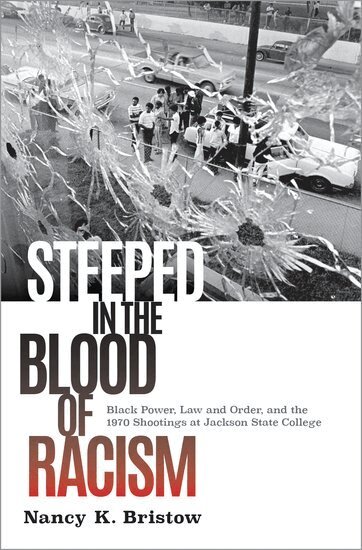
Steeped in the Blood of Racism
Black Power, Law and Order, and the 1970 Shootings at Jackson State College
Inbunden, Engelska, 2020
447 kr
Skickas inom 5-8 vardagar
Minutes after midnight on May 15, 1970, white members of the Jackson city police and the Mississippi Highway Patrol opened fire on young people in front of a women's dormitory at Jackson State College, a historically black college in Jackson, Mississippi, discharging "buckshot, rifle slugs, a submachine gun, carbines with military ammunition, and two 30.06 rifles loaded with armor-piercing bullets." Twenty-eight seconds later two young people lay dead, another 12 injured. Taking place just ten days after the killings at Kent State, the attack at Jackson State never garnered the same level of national attention and was chronically misunderstood as similar in cause. This book reclaims this story and situates it in the broader history of the struggle for African American freedom in the civil rights and black power eras. The book explores the essential role of white supremacy in causing the shootings and shaping the aftermath. By 1970, even historically conservative campuses such as Jackson State, where an all-white Board of Trustees of Institutions of Higher Learning had long exercised its power to control student behavior, were beginning to feel the impact of the movements for African American freedom. Though most of the students at Jackson State remained focused not on activism but their educations, racial consciousness was taking hold. It was this campus police attacked. Acting on racial animus and with impunity, the shootings reflected both traditional patterns of repression and the new logic and rhetoric of "law and order," with its thinly veiled racial coding.In the aftermath, the victims and their survivors struggled unsuccessfully to find justice. Despite multiple investigative commissions, two grand juries and a civil suit brought by students and the families of the dead, the law and order narrative proved too powerful. No officers were charged, no restitution was paid, and no apologies were offered. The shootings were soon largely forgotten except among the local African American community, the injured victimized once more by historical amnesia born of the unwillingness to acknowledge the essential role of race in causing the violence.
1 186 kr
Skickas inom 10-15 vardagar
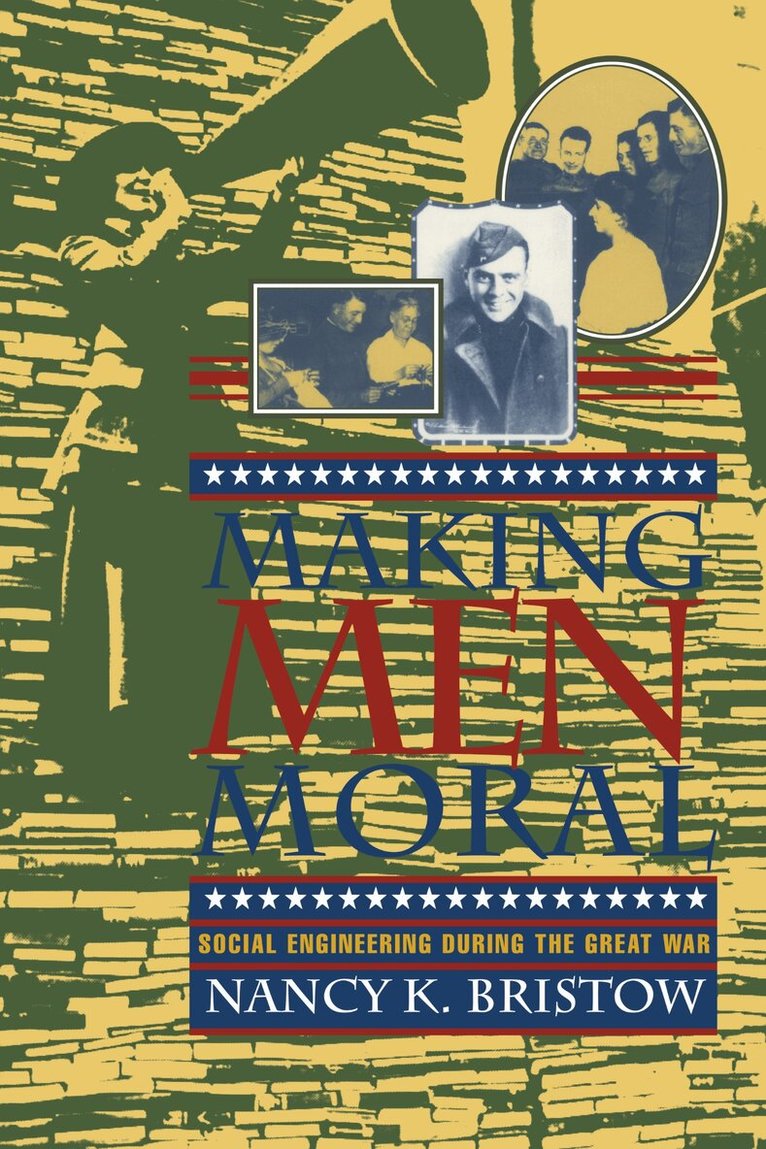
On May 29, 1917, Mrs. E. M. Craise, citizen of Denver, Colorado, penned a letter to President Woodrow Wilson, which concluded, We have surrendered to your absolute control our hearts' dearest treasures--our sons. If their precious bodies that have cost us so dear should be torn to shreds by German shot and shells we will try to live on in the hope of meeting them again in the blessed Country of happy reunions. But, Mr. President, if the hell-holes that infest their training camps should trip up their unwary feet and they be returned to us besotted degenerate wrecks of their former selves cursed with that hell-born craving for alcohol, we can have no such hope.Anxious about the United States' pending entry into the Great War, fearful that their sons would be polluted by the scourges of prostitution, venereal disease, illicit sex, and drink that ran rampant in the training camps, countless Americans sent such missives to their government officials. In response to this deluge, President Wilson created the Commission on Training Camp Activities to ensure the purity of the camp environment. Training camps would henceforth mold not only soldiers, but model citizens who, after the war, would return to their communities, spreading white, urban, middle-class values throughout the country.What began as a federal program designed to eliminate sexually transmitted diseases soon mushroomed into a powerful social force intent on replacing America's many cultures with a single, homogenous one. Though committed to the positive methods of education and recreation, the reformers did not hesitate to employ repression when necessary. Those not conforming to the prescribed vision of masculinity often faced exclusion from the reformers' idealized society, or sometimes even imprisonment. Social engineering ruled the day.Combining social, cultural, and military history and illustrating the deep divisions among reformers themselves, Nancy K. Bristow, with the aid of dozens of evocative photographs, here brings to life a pivotal era in the history of the U.S., revealing the complex relationship between the nation's competing cultures, progressive reform efforts, and the Great War.
418 kr
Skickas inom 10-15 vardagar
On May 29, 1917, Mrs. E. M. Craise, citizen of Denver, Colorado, penned a letter to President Woodrow Wilson, which concluded, We have surrendered to your absolute control our hearts' dearest treasures--our sons. If their precious bodies that have cost us so dear should be torn to shreds by German shot and shells we will try to live on in the hope of meeting them again in the blessed Country of happy reunions. But, Mr. President, if the hell-holes that infest their training camps should trip up their unwary feet and they be returned to us besotted degenerate wrecks of their former selves cursed with that hell-born craving for alcohol, we can have no such hope.Anxious about the United States' pending entry into the Great War, fearful that their sons would be polluted by the scourges of prostitution, venereal disease, illicit sex, and drink that ran rampant in the training camps, countless Americans sent such missives to their government officials. In response to this deluge, President Wilson created the Commission on Training Camp Activities to ensure the purity of the camp environment. Training camps would henceforth mold not only soldiers, but model citizens who, after the war, would return to their communities, spreading white, urban, middle-class values throughout the country.What began as a federal program designed to eliminate sexually transmitted diseases soon mushroomed into a powerful social force intent on replacing America's many cultures with a single, homogenous one. Though committed to the positive methods of education and recreation, the reformers did not hesitate to employ repression when necessary. Those not conforming to the prescribed vision of masculinity often faced exclusion from the reformers' idealized society, or sometimes even imprisonment. Social engineering ruled the day.Combining social, cultural, and military history and illustrating the deep divisions among reformers themselves, Nancy K. Bristow, with the aid of dozens of evocative photographs, here brings to life a pivotal era in the history of the U.S., revealing the complex relationship between the nation's competing cultures, progressive reform efforts, and the Great War.