Nancy Lee Peluso - Böcker
Visar alla böcker från författaren Nancy Lee Peluso. Handla med fri frakt och snabb leverans.
9 produkter
9 produkter
577 kr
Skickas inom 3-6 vardagar
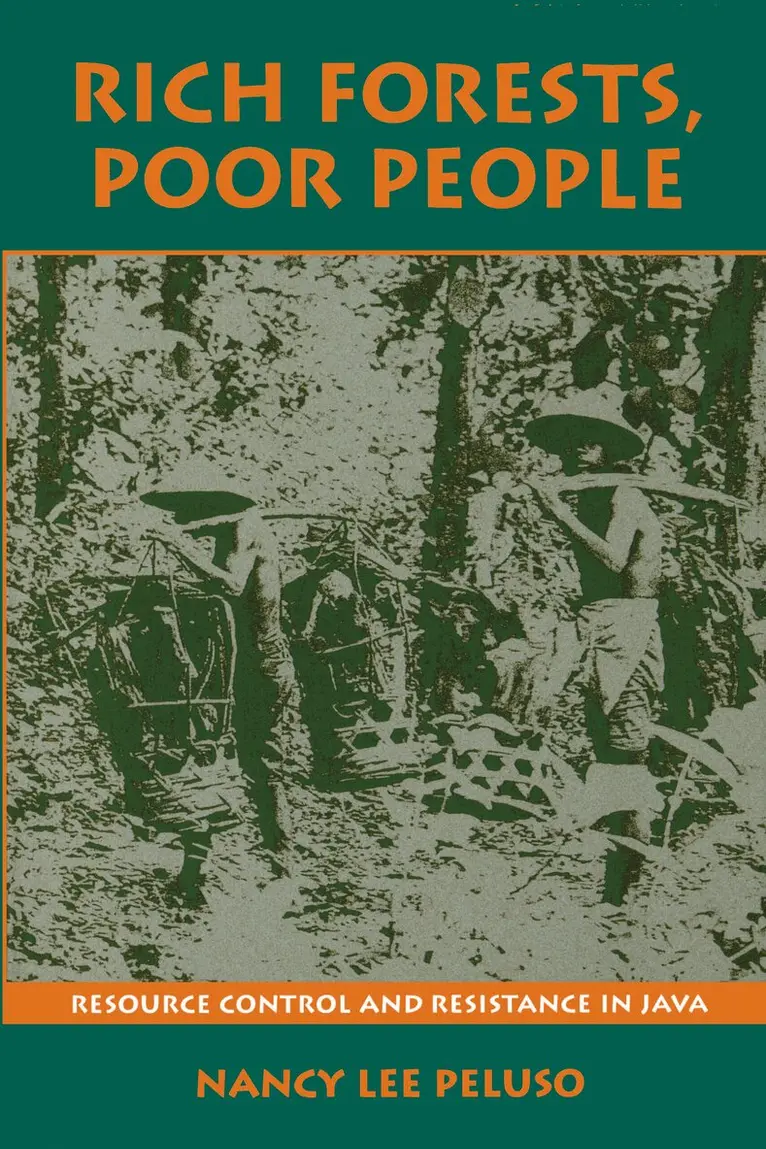
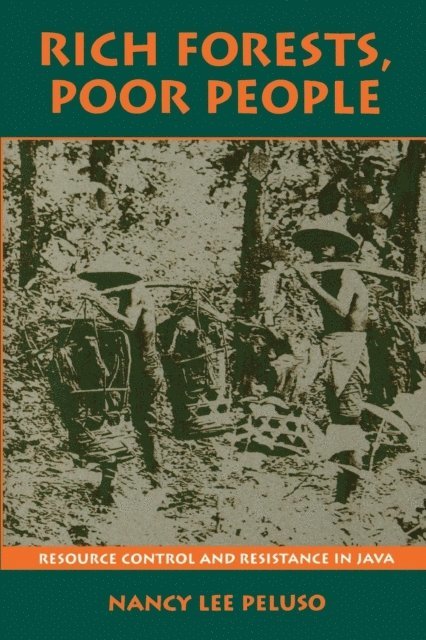
Millions of Javanese peasants live alongside state-controlled forest lands in one of the world's most densely populated agricultural regions. Because their legal access and customary rights to the forest have been severely limited, these peasants have been pushed toward illegal use of forest resources. Rich Forests, Poor People untangles the complex of peasant and state politics that has developed in Java over three centuries. Drawing on historical materials and intensive field research, including two contemporary case studies, Peluso presents the story of the forest and its people. Without major changes in forest policy, Peluso contends, the situation is portentous. Economic, social, and political costs to the government will increase. Development efforts will by stymied and forest destruction will continue. Mindful that a dramatic shift is unlikely, Peluso suggests how tension between foresters and villagers can be alleviated while giving peasants a greater stake in local forest management.
1 518 kr
Skickas inom 10-15 vardagar
Do environmental problems and processes produce violence? Current U.S. policy about environmental conflict and scholarly work on environmental security assume direct causal links between population growth, resource scarcity, and violence. This belief, a staple of governmental decision-making during both Clinton administrations and widely held in the environmental security field, depends on particular assumptions about the nature of the state, the role of population growth, and the causes of environmental degradation.The conventional understanding of environmental security, and its assumptions about the relation between violence and the environment, are challenged and refuted in Violent Environments. Chapters by geographers, historians, anthropologists, and sociologists include accounts of ethnic war in Indonesia, petro-violence in Nigeria and Ecuador, wildlife conservation in Tanzania, and "friendly fire" at Russia's nuclear weapons sites. Violent Environments portrays violence as a site-specific phenomenon rooted in local histories and societies, yet connected to larger processes of material transformation and power relations. The authors argue that specific resource environments, including tropical forests and oil reserves, and environmental processes (such as deforestation, conservation, or resource abundance) are constituted by and in part constitute the political economy of access to and control over resources. Violent Environments demands new approaches to an international set of complex problems, powerfully arguing for deeper, more ethnographically informed analyses of the circumstances and processes that cause violence.
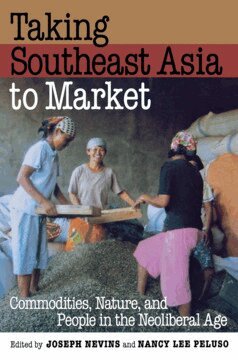
Taking Southeast Asia to Market
Commodities, Nature, and People in the Neoliberal Age
Inbunden, Engelska, 2008
1 518 kr
Skickas inom 10-15 vardagar
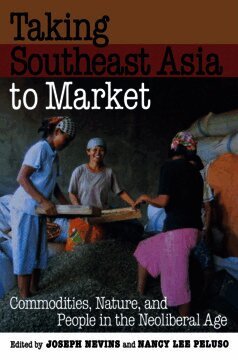
Recent changes in the global economy and in Southeast Asian national political economies have led to new forms of commodity production and new commodities. Using insights from political economy and commodity studies, the essays in Taking Southeast Asia to Market trace the myriad ways recent alignments among producers, distributors, and consumers are affecting people and nature throughout the region. In case studies ranging from coffee and hardwood products to mushroom pickers and Vietnamese factory workers, the authors detail the Southeast Asian articulations of these processes while also discussing the broader implications of these shifts. Taken together, the cases show how commodities illuminate the convergence of changing social forces in Southeast Asia today, as they transform the terms, practices, and experiences of everyday life and politics in the global economy.
Taking Southeast Asia to Market
Commodities, Nature, and People in the Neoliberal Age
Häftad, Engelska, 2008
421 kr
Skickas inom 10-15 vardagar
Recent changes in the global economy and in Southeast Asian national political economies have led to new forms of commodity production and new commodities. Using insights from political economy and commodity studies, the essays in Taking Southeast Asia to Market trace the myriad ways recent alignments among producers, distributors, and consumers are affecting people and nature throughout the region. In case studies ranging from coffee and hardwood products to mushroom pickers and Vietnamese factory workers, the authors detail the Southeast Asian articulations of these processes while also discussing the broader implications of these shifts. Taken together, the cases show how commodities illuminate the convergence of changing social forces in Southeast Asia today, as they transform the terms, practices, and experiences of everyday life and politics in the global economy.
428 kr
Skickas inom 10-15 vardagar
Do environmental problems and processes produce violence? Current U.S. policy about environmental conflict and scholarly work on environmental security assume direct causal links between population growth, resource scarcity, and violence. This belief, a staple of governmental decision-making during both Clinton administrations and widely held in the environmental security field, depends on particular assumptions about the nature of the state, the role of population growth, and the causes of environmental degradation.The conventional understanding of environmental security, and its assumptions about the relation between violence and the environment, are challenged and refuted in Violent Environments. Chapters by geographers, historians, anthropologists, and sociologists include accounts of ethnic war in Indonesia, petro-violence in Nigeria and Ecuador, wildlife conservation in Tanzania, and "friendly fire" at Russia's nuclear weapons sites. Violent Environments portrays violence as a site-specific phenomenon rooted in local histories and societies, yet connected to larger processes of material transformation and power relations. The authors argue that specific resource environments, including tropical forests and oil reserves, and environmental processes (such as deforestation, conservation, or resource abundance) are constituted by and in part constitute the political economy of access to and control over resources. Violent Environments demands new approaches to an international set of complex problems, powerfully arguing for deeper, more ethnographically informed analyses of the circumstances and processes that cause violence.
2 098 kr
Skickas inom 10-15 vardagar
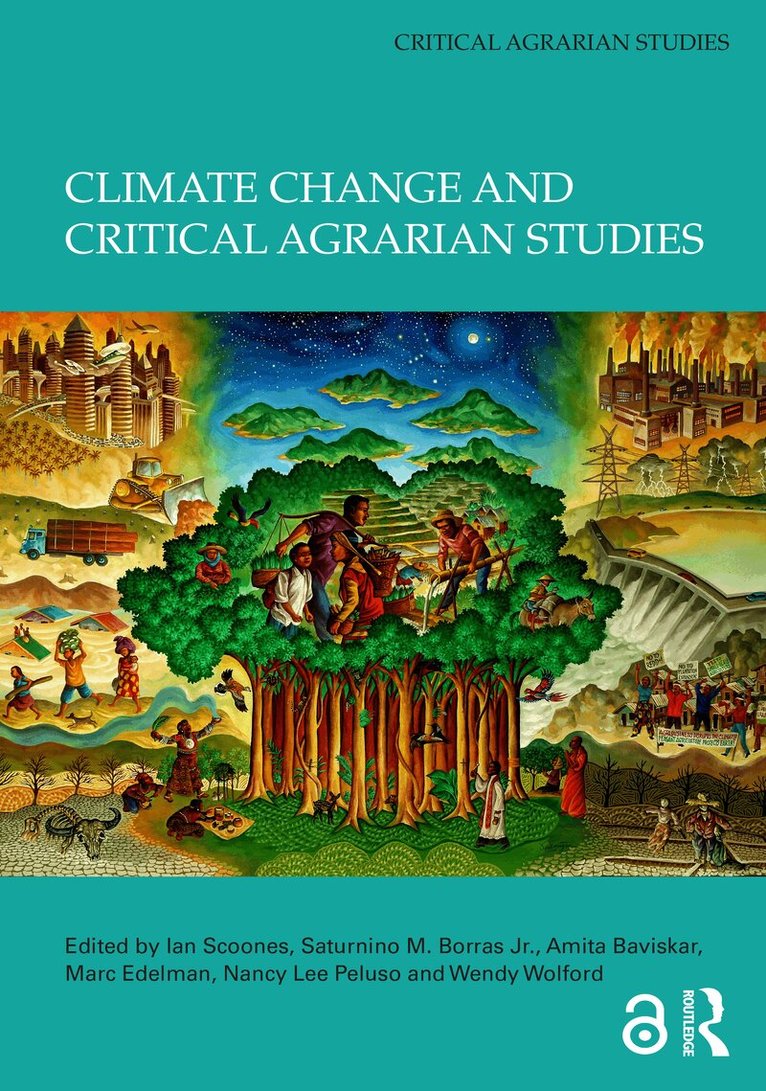
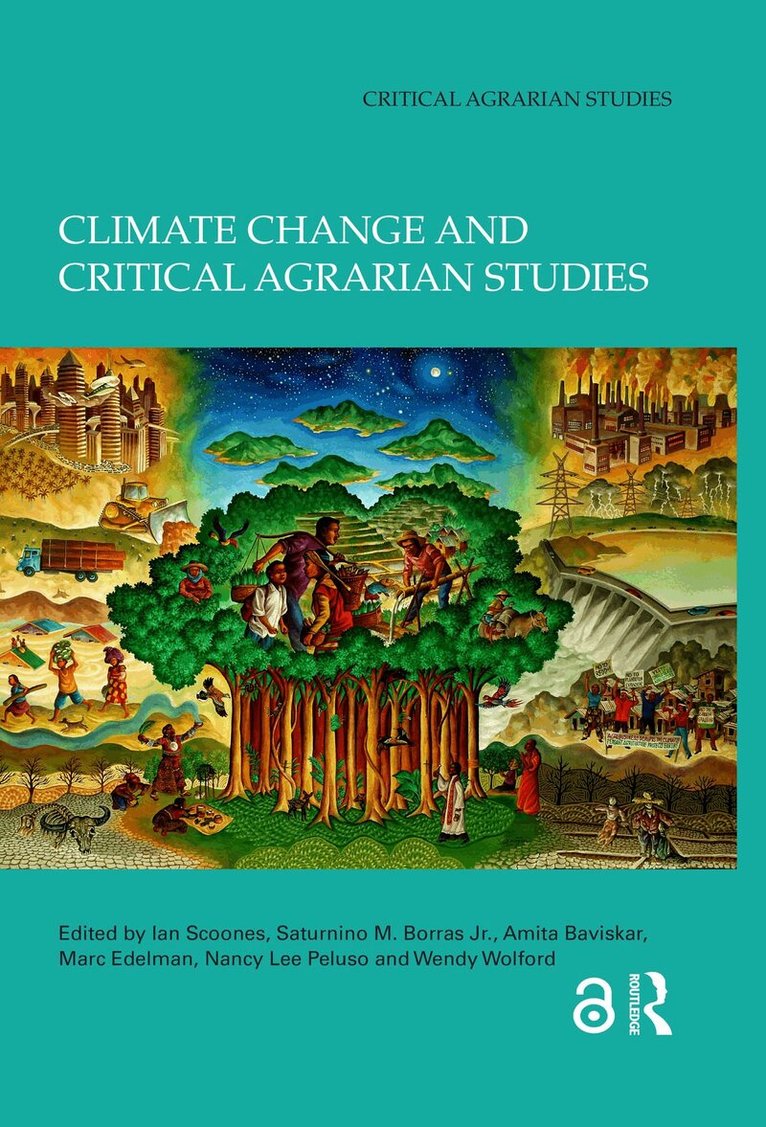
Climate change is perhaps the greatest threat to humanity today and plays out as a cruel engine of myriad forms of injustice, violence and destruction. The effects of climate change from human-made emissions of greenhouse gases are devastating and accelerating; yet are uncertain and uneven both in terms of geography and socio-economic impacts. Emerging from the dynamics of capitalism since the industrial revolution — as well as industrialisation under state-led socialism — the consequences of climate change are especially profound for the countryside and its inhabitants.The book interrogates the narratives and strategies that frame climate change and examines the institutionalised responses in agrarian settings, highlighting what exclusions and inclusions result. It explores how different people — in relation to class and other co-constituted axes of social difference such as gender, race, ethnicity, age and occupation — are affected by climate change, as well as the climate adaptation and mitigation responses being implemented in rural areas. The book in turn explores how climate change – and the responses to it - affect processes of social differentiation, trajectories of accumulation and in turn agrarian politics. Finally, the book examines what strategies are required to confront climate change, and the underlying political-economic dynamics that cause it, reflecting on what this means for agrarian struggles across the world.The 26 chapters in this volume explore how the relationship between capitalism and climate change plays out in the rural world and, in particular, the way agrarian struggles connect with the huge challenge of climate change. Through a huge variety of case studies alongside more conceptual chapters, the book makes the often-missing connection between climate change and critical agrarian studies. The book argues that making the connection between climate and agrarian justice is crucial.The chapters in this book were originally published in The Journal of Peasant Studies.The Open Access version of this book, available at https://www.taylorfrancis.com/books/oa-edit/10.4324/9781003467960/climate-change-critical-agrarian-studies-ian-scoones-saturnino-borras-jr-amita-baviskar-marc-edelman-nancy-lee-peluso-wendy-wolford, has been made available under a Creative Commons [Attribution-Non Commercial-No Derivatives (CC-BY-NC-ND)] 4.0 license. A version of the open access title is also available on the OAPEN platform https://library.oapen.org/handle/20.500.12657/85297 .
633 kr
Skickas inom 10-15 vardagar
Climate change is perhaps the greatest threat to humanity today and plays out as a cruel engine of myriad forms of injustice, violence and destruction. The effects of climate change from human-made emissions of greenhouse gases are devastating and accelerating; yet are uncertain and uneven both in terms of geography and socio-economic impacts. Emerging from the dynamics of capitalism since the industrial revolution — as well as industrialisation under state-led socialism — the consequences of climate change are especially profound for the countryside and its inhabitants.The book interrogates the narratives and strategies that frame climate change and examines the institutionalised responses in agrarian settings, highlighting what exclusions and inclusions result. It explores how different people — in relation to class and other co-constituted axes of social difference such as gender, race, ethnicity, age and occupation — are affected by climate change, as well as the climate adaptation and mitigation responses being implemented in rural areas. The book in turn explores how climate change – and the responses to it - affect processes of social differentiation, trajectories of accumulation and in turn agrarian politics. Finally, the book examines what strategies are required to confront climate change, and the underlying political-economic dynamics that cause it, reflecting on what this means for agrarian struggles across the world.The 26 chapters in this volume explore how the relationship between capitalism and climate change plays out in the rural world and, in particular, the way agrarian struggles connect with the huge challenge of climate change. Through a huge variety of case studies alongside more conceptual chapters, the book makes the often-missing connection between climate change and critical agrarian studies. The book argues that making the connection between climate and agrarian justice is crucial.The chapters in this book were originally published in The Journal of Peasant Studies.The Open Access version of this book, available at https://www.taylorfrancis.com/books/oa-edit/10.4324/9781003467960/climate-change-critical-agrarian-studies-ian-scoones-saturnino-borras-jr-amita-baviskar-marc-edelman-nancy-lee-peluso-wendy-wolford, has been made available under a Creative Commons [Attribution-Non Commercial-No Derivatives (CC-BY-NC-ND)] 4.0 license. A version of the open access title is also available on the OAPEN platform https://library.oapen.org/handle/20.500.12657/85297 .
1 525 kr
Skickas inom 10-15 vardagar
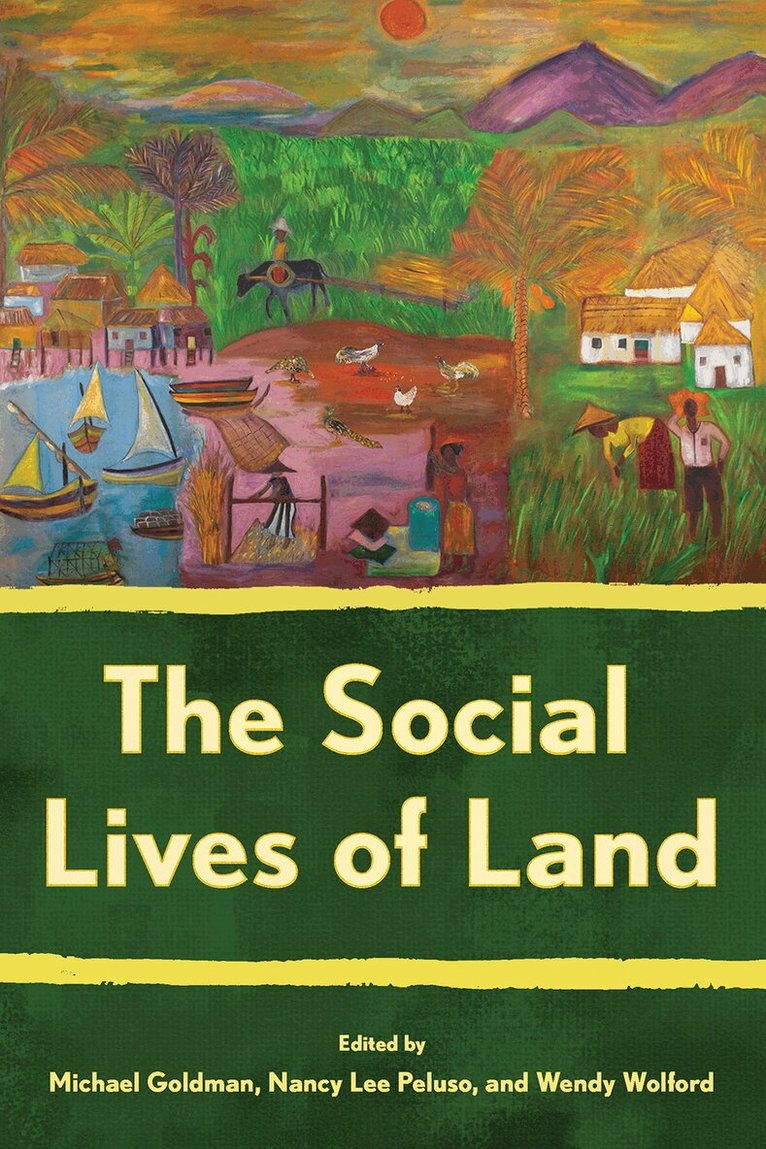
From the shaping of new homelands in the Cherokee Nation to the export of sand from Cambodia to shore up urban expansion in Singapore, The Social Lives of Land reveals the dynamics of contemporary social and political change. The editors of this volume bring together contributions from across multiple disciplines and geographic locations. The contributions showcase novel theoretical and empirical insights, analyzing how people are living on, with, and from their land. From Mozambique to India, Indonesia, Ecuador, and the colonial United States, the scholars in this collection uncover histories and retell stories with a focus on the lived experiences of rural and urban land dispossession and repossession.Contributors: Kati Álvarez, Clint Carroll, Flora Lu, Richard Mbunda, Gregg Mitman, Paul Nadasdy, Robert Nichols, Andrew Ofstehage, Laura Schoenberger, Kirsteen Shields, Emmanuel Sulle, Erik Swyngedouw, Gabriela Valdivia, Katherine Verdery, Callum Ward, Ciara Wirth, Emmanuel King Urey Yarkpawolo
409 kr
Skickas inom 10-15 vardagar
From the shaping of new homelands in the Cherokee Nation to the export of sand from Cambodia to shore up urban expansion in Singapore, The Social Lives of Land reveals the dynamics of contemporary social and political change. The editors of this volume bring together contributions from across multiple disciplines and geographic locations. The contributions showcase novel theoretical and empirical insights, analyzing how people are living on, with, and from their land. From Mozambique to India, Indonesia, Ecuador, and the colonial United States, the scholars in this collection uncover histories and retell stories with a focus on the lived experiences of rural and urban land dispossession and repossession.Contributors: Kati Álvarez, Clint Carroll, Flora Lu, Richard Mbunda, Gregg Mitman, Paul Nadasdy, Robert Nichols, Andrew Ofstehage, Laura Schoenberger, Kirsteen Shields, Emmanuel Sulle, Erik Swyngedouw, Gabriela Valdivia, Katherine Verdery, Callum Ward, Ciara Wirth, Emmanuel King Urey Yarkpawolo