Nancy Locklin – Författare
Visar alla böcker från författaren Nancy Locklin. Handla med fri frakt och snabb leverans.
2 produkter
2 produkter
2 176 kr
Skickas inom 10-15 vardagar
In 1718, a young woman named Moricette Nayl fought with her brother’s mother-in-law and accidentally killed her. Ruled a homicide, the incident set in motion an investigation, a trial, Moricette's flight from justice, an execution in effigy and, ultimately, the pardon of the killer and her reintegration into the community. Based on the detailed records of the court dossier, this microhistory reveals the social networks of a small town, the history of interpersonal violence, the complex criminal justice system at work, and the power of restoring harmony after a tragedy of this magnitude. An enduring mystery is the reluctance of those closest to the crime to participate in the legal process. An explanation for their silence sheds light on the turmoil of the criminal justice system in France in the decades leading up to the French Revolution. Neither independent feudal lords nor an elite tamed by an Absolutist king, the gentlemen overseeing justice in this place maintained a delicate balance between their personal power and the rule of law. The incident and its aftermath also reveal the bonds that make community possible, even in the face of senseless violence.
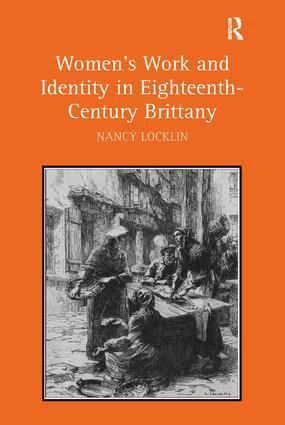
2 246 kr
Skickas inom 10-15 vardagar
Based on a solid foundation of archival research that ranges from tax rolls to notarial records, this study adds an important chapter to our understanding of women in pre-industrial Europe. Through a rigorous examination of primary documents peculiar to eighteenth-century Brittany, the author demonstrates the difficulties engendered in broad generalities about European women, and makes a strong case for the necessity for historians to account for regional differences in women's experiences. In particular, Nancy Locklin makes a compelling argument for the need to incorporate a broader basis upon which women attained their identity. Indeed, Locklin rightly contends that most women in pre-industrial European societies were recognized (and perhaps saw themselves) through a variety of identities over the course of their lives, depending on their age, familial connections, marital status, and the type of work they performed, and that often these identities overlapped. Locklin also shows the extent to which legal and ideological prescriptions painted a relatively negative picture of women's status, but that a close examination of women's participation in family, community, and commercial affairs reveals a much more complex and divergent reality.