Nancy Perloff - Böcker
Visar alla böcker från författaren Nancy Perloff. Handla med fri frakt och snabb leverans.
4 produkter
4 produkter
443 kr
Tillfälligt slut
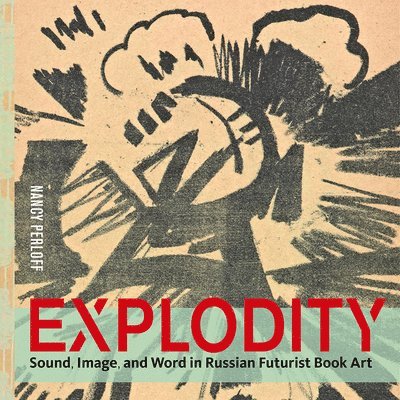
Painters and poets-including Natalia Goncharova, Velimir Khlebnikov, Mikhail Larionov, Kazimir Malevich, and Vladimir Mayakovsky-collaborated to fabricate hand-lithographed books, for which they invented a new language called zaum (a neologism meaning "beyond the mind"), which was distinctive in its emphasis on "sound as such" and its rejection of definite logical meaning.At the heart of this volume are close analyses of two of the most significant and experimental futurist books: Mirskontsa (Worldbackwards) and Vzorval' (Explodity). In addition, Nancy Perloff examines the profound differences between the Russian avant-garde and Western art movements, including futurism, and she uncovers a wide-ranging legacy in the mid-century global movement of sound and concrete poetry (the Brazilian Noigandres group, Ian Hamilton Finlay, and Henri Chopin), contemporary Western conceptual art, and the artist's book.Upon publication, sound recordings of zaum poems featured in the book will be made available at www.getty.edu.
260 kr
Skickas inom 7-10 vardagar
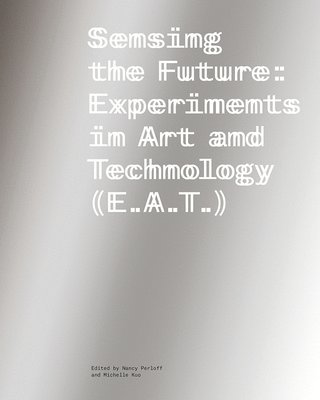
In 1966, Billy Kluver and Fred Waldhauer, engineers at Bell Telephone Laboratories in New Jersey, teamed up with artists Robert Rauschenberg and Robert Whitman to form a nonprofit organization, Experiments in Art and Technology (E.A.T.). E.A.T.'s debut event, 9 Evenings: Theatre & Engineering, integrated art, theater, and groundbreaking technology in a series of performances at the 69th Regiment Armory in Manhattan. Its second major event, the 1970 Pepsi Pavilion in Osaka, Japan, presented a complex, multisensory environment for the first world exposition held in Asia. At these events, and in the hundreds of collaborations E.A.T. facilitated in between, its members-including John Cage, Lucinda Childs, Deborah Hay, Steve Paxton, Yvonne Rainer, and David Tudor-imagined innovative ways for art and science to intersect and enrich society. Sensing the Future tells the story of how this unique organization brought artists and engineers together to pioneer technology-based artworks and performances. Through the examination of films, photographs, diagrams, and ephemera from the archives of the Getty Research Institute, this volume provides a new perspective on multimedia art in the 1960s and 70s and highlights the ways E.A.T. pushed the role of the artist beyond the traditional art world.EXHIBITIONJ. Paul Getty Museum, Getty CenterSeptember 10, 2024-February 23, 2025Clear-eyed and clear-eared insights by scholars at the very top of their topics, and beautifully designed and illustrated with archival treasures from the Getty Research Institute, Sensing the Future is an indispensable document on Experiments in Art and Technology, and on key events of the period in art, music, dance, performance, and everything in-between. - Douglas Kahn, author of Earth Sound Earth Signal: Energies and Earth Magnitude in the ArtsThis book presents multifaceted scholarly investigations of an organization that was committed to collaborations among artists, engineers, and scientists, but it was also an organization that continued to reinvent itself as it seized new opportunities to change society and the future. - Julie MartinSensing the Future: Experiments in Art and Technology explores alargely ignored conceptual and material transformation of the arts in the1960s. Framed by nine performances at the New York Armory in October 1966 andthe Pepsi Pavilion at Osaka’s Expo ’70, it focuses on the imaginativecollaborations of engineers, especially Bell Labs’s visionary Billy Klüver,with artists, composers, and dancers—among them Tinguely and Rauschenberg, Cageand Tudor, Hay and Rainer. Through the examination of works that grew out oftechnological innovations and engaged the senses, editors Nancy Perloff andMichelle Kuo conclude that these experiences suggested the “future of modernsociety” as “contingent, shifting, and open-ended.” — Jann Pasler,Distinguished Professor, University of California, San Diego
323 kr
Skickas inom 7-10 vardagar
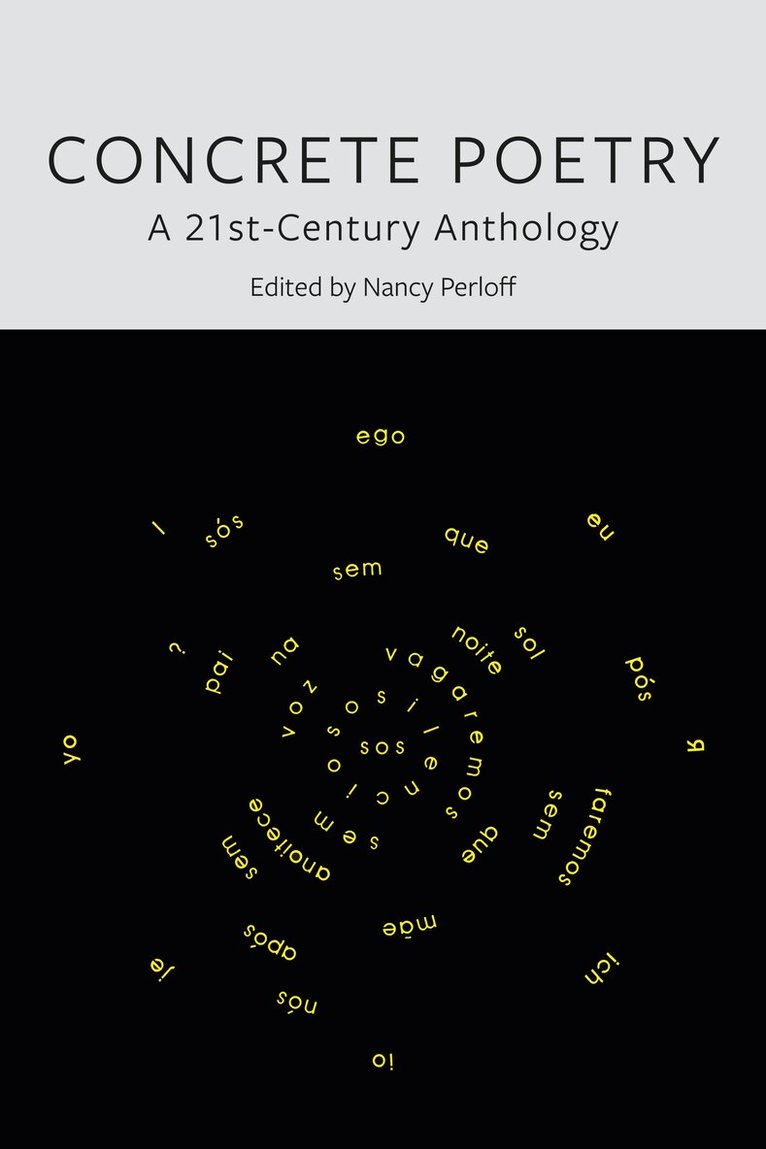
Concrete Poetry: A 21st-century Anthology is the first overview of concrete poetry in many years. Selective yet wide-ranging, this anthology re-evaluates the movement, singling out its most distinctive and influential works. Nancy Perloff, curator of an important Concrete Poetry exhibition at the Getty Research Institute, includes examples from the little-known Japanese concretists and the Wiener Gruppe – groups that, together with the Brazilian poet Augusto de Campos and the Scottish poet Ian Hamilton Finlay, have engaged with the most subtle possibilities of language itself – while also incorporating key poems by Eugen Gomringer, Dieter Roth, Henri Chopin and others and including contemporary contributions by Cia Rinne and Susan Howe.Perloff’s anthology presents individual poems, reproduced in their original languages, together with lively commentaries that explicate and contextualize the work, allowing readers to discover the intricacy of poems that some have dismissed as simple, even trivial, texts. This substantial new collection redefines what the concrete poetry movement means today.
256 kr
Skickas inom 7-10 vardagar
Now available in paperback, Concrete Poetry: A 21st-Century Anthology is the first overview of concrete poetry in many years. Selective yet wide-ranging, this anthology re-evaluates the movement, singling out its most distinctive and influential works, including the little-known Japanese concretists, the Wiener Gruppe, Augusto de Campos, Ian Hamilton Finlay, Eugen Gomringer, Dieter Roth, Henri Chopin, Cia Rinne, Susan Howe and many others. Perloff’s anthology presents individual poems, reproduced in their original languages, together with lively commentaries that explicate and contextualize the work, allowing readers to discover the intricacy of poems that some have dismissed as simple, even trivial, texts.