Nancy Weiss Malkiel - Böcker
Visar alla böcker från författaren Nancy Weiss Malkiel. Handla med fri frakt och snabb leverans.
7 produkter
7 produkter
755 kr
Skickas inom 3-6 vardagar
This book examines a remarkable political phenomenon--the dramatic shift of black voters from the Republican to the Democratic party in the 1930s, a shift all the more striking in light of the Democrats' indifference to racial concerns. Nancy J. Weiss shows that blacks became Democrats in response to the economic benefits of the New Deal and that they voted for Franklin Roosevelt in spite of the New Deal's lack of a substantive record on race. By their support for FDR blacks forged a political commitment to the Democratic party that has lasted to our own time. The last group to join the New Deal coalition, they have been the group that remained the most loyal to the Democratic party. This book explains the sources of their commitment in the 1930s. It stresses the central role of economic concerns in shaping black political behavior and clarifies both the New Deal record on race and the extraordinary relationship between black voters and the Roosevelts.
275 kr
Skickas inom 7-10 vardagar
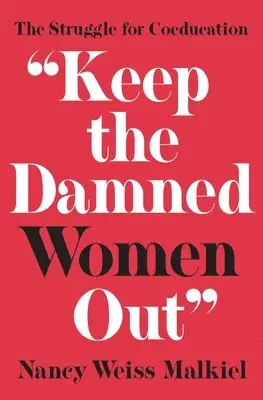
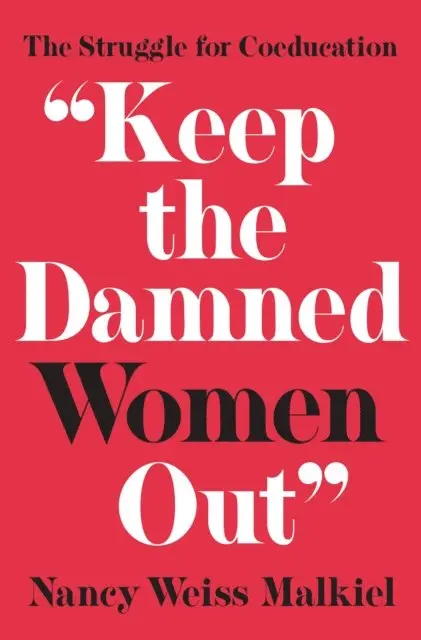
As the tumultuous decade of the 1960s ended, a number of very traditional, very conservative, highly prestigious colleges and universities in the United States and the United Kingdom decided to go coed, seemingly all at once, in a remarkably brief span of time. Coeducation met with fierce resistance. As one alumnus put it in a letter to his alma mater, "Keep the damned women out." Focusing on the complexities of institutional decision making, this book tells the story of this momentous era in higher education--revealing how coeducation was achieved not by organized efforts of women activists, but through strategic decisions made by powerful men. In America, Ivy League schools like Harvard, Yale, Princeton, and Dartmouth began to admit women; in Britain, several of the men's colleges at Cambridge and Oxford did the same. What prompted such fundamental change? How was coeducation accomplished in the face of such strong opposition? How well was it implemented? Nancy Weiss Malkiel explains that elite institutions embarked on coeducation not as a moral imperative but as a self-interested means of maintaining a first-rate applicant pool.She explores the challenges of planning for the academic and non-academic lives of newly admitted women, and shows how, with the exception of Mary Ingraham Bunting at Radcliffe, every decision maker leading the charge for coeducation was male. Drawing on unprecedented archival research, "Keep the Damned Women Out" is a breathtaking work of scholarship that is certain to be the definitive book on the subject.
252 kr
Skickas inom 7-10 vardagar
A groundbreaking history of how elite colleges and universities in America and Britain finally went coedAs the tumultuous decade of the 1960s ended, a number of very traditional, very conservative, highly prestigious colleges and universities in the United States and the United Kingdom decided to go coed, seemingly all at once, in a remarkably brief span of time. Coeducation met with fierce resistance. As one alumnus put it in a letter to his alma mater, "Keep the damned women out." Focusing on the complexities of institutional decision making, this book tells the story of this momentous era in higher education—revealing how coeducation was achieved not by organized efforts of women activists, but through strategic decisions made by powerful men.In America, Ivy League schools like Harvard, Yale, Princeton, and Dartmouth began to admit women; in Britain, several of the men's colleges at Cambridge and Oxford did the same. What prompted such fundamental change? How was coeducation accomplished in the face of such strong opposition? How well was it implemented? Nancy Weiss Malkiel explains that elite institutions embarked on coeducation not as a moral imperative but as a self-interested means of maintaining a first-rate applicant pool. She explores the challenges of planning for the academic and non-academic lives of newly admitted women, and shows how, with the exception of Mary Ingraham Bunting at Radcliffe, every decision maker leading the charge for coeducation was male.Drawing on unprecedented archival research, “Keep the Damned Women Out” is a breathtaking work of scholarship that is certain to be the definitive book on the subject.
Changing the Game
William G. Bowen and the Challenges of American Higher Education
Inbunden, Engelska, 2023
300 kr
Skickas inom 7-10 vardagar
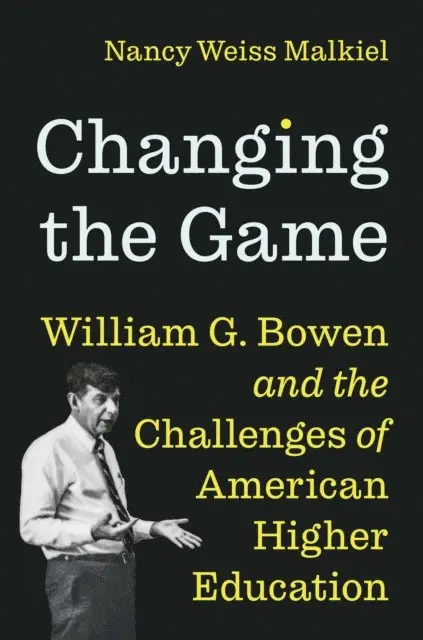
How a visionary university and foundation president tackled some of the thorniest problems facing higher educationAs provost and then president of Princeton University, William G. Bowen (1933–2016) took on the biggest and most complex challenges confronting higher education: cost disease, inclusion, affirmative action, college access, and college completion. Later, as president of the Andrew W. Mellon Foundation, he took his vision for higher education—and the strategies for accomplishing that vision—to a larger arena. Along the way, he wrote a series of influential books, including the widely read The Shape of the River (coauthored with Derek Bok), which documented the success of policies designed to increase racial diversity at elite institutions. In Changing the Game, drawing on deep archival research and hundreds of interviews, Nancy Weiss Malkiel argues that Bowen was the most consequential higher education leader of his generation.Bowen, who became Princeton’s president in 1972 at the age of 38, worked to shore up the university’s financial stability, implement coeducation, and create a more inclusive institution. Breaking through the traditional Ivy League demographics of white, Protestant, and male, he embraced equal access in admissions for women and men and actively sought to enroll Black, Hispanic, and Asian American students. To “increase the intellectual muscle of the faculty,” he used targeted recruiting and enforced higher scholarly standards. In 1988, Bowen moved on to Mellon, where, among many other accomplishments, he developed digital research tools, most notably JSTOR, and promoted racial diversity through the Mellon Mays Undergraduate Fellowship. Attacking problems with tenacity, insight, and deep knowledge, Bowen showed the world of higher education how a visionary leader can transform an institution.
Changing the Game
William G. Bowen and the Challenges of American Higher Education
Häftad, Engelska, 2026
279 kr
Kommande
How a visionary university and foundation president tackled some of the thorniest problems facing higher educationAs provost and then president of Princeton University, William G. Bowen (1933–2016) took on the biggest and most complex challenges confronting higher education: cost disease, inclusion, affirmative action, college access, and college completion. Later, as president of the Andrew W. Mellon Foundation, he took his vision for higher education—and the strategies for accomplishing that vision—to a larger arena. Along the way, he wrote a series of influential books, including the widely read The Shape of the River (coauthored with Derek Bok), which documented the success of policies designed to increase racial diversity at elite institutions. In Changing the Game, drawing on deep archival research and hundreds of interviews, Nancy Weiss Malkiel argues that Bowen was the most consequential higher education leader of his generation.Bowen, who became Princeton’s president in 1972 at the age of 38, worked to shore up the university’s financial stability, implement coeducation, and create a more inclusive institution. Breaking through the traditional Ivy League demographics of white, Protestant, and male, he embraced equal access in admissions for women and men and actively sought to enroll Black, Hispanic, and Asian American students. To “increase the intellectual muscle of the faculty,” he used targeted recruiting and enforced higher scholarly standards. In 1988, Bowen moved on to Mellon, where, among many other accomplishments, he developed digital research tools, most notably JSTOR, and promoted racial diversity through the Mellon Mays Undergraduate Fellowship. Attacking problems with tenacity, insight, and deep knowledge, Bowen showed the world of higher education how a visionary leader can transform an institution.
926 kr
Skickas inom 3-6 vardagar
Whitney M. Young, Jr., the charismatic executive director of the National Urban League from 1961 to 1971, bridged the worlds of race and power. The "inside man" of the black revolution, he served as interpreter between black America and the businessmen, foundation executives, and public officials who constituted the white power structure. In this stimulating biography, Nancy J. Weiss shows how Young accomplished what Jesse Jackson called the toughest job in the black movement: selling civil rights to the nation's most powerful whites. With race at center stage in American national politics, Young brought the National Urban League into the civil rights movement and made it a force in the major events and debates of the decade. Within the civil rights leadership, he played an important role as strategist and mediator. A black man who grew up in a middle class family in the segregated South, Young spent most of his adult life in the white world, transcending barriers of race, wealth, and social standing to advance the welfare of black Americans.His goals were to gain access for blacks to good jobs, education, housing, health care, and social services; his tactics were reason, persuasion, and negotiation. He understood keenly the value to the movement of creative tension between moderates and militants, and he took good advantage of that understanding to promote his aims. Andrew Young said of Whitney Young that he knew the "high art of how to get power from the powerful and share it with the powerless." How he managed that, and with what consequence, is the central theme of this book. Originally published in 1990. The Princeton Legacy Library uses the latest print-on-demand technology to again make available previously out-of-print books from the distinguished backlist of Princeton University Press. These editions preserve the original texts of these important books while presenting them in durable paperback and hardcover editions. The goal of the Princeton Legacy Library is to vastly increase access to the rich scholarly heritage found in the thousands of books published by Princeton University Press since its founding in 1905.
2 105 kr
Skickas inom 3-6 vardagar
Whitney M. Young, Jr., the charismatic executive director of the National Urban League from 1961 to 1971, bridged the worlds of race and power. The "inside man" of the black revolution, he served as interpreter between black America and the businessmen, foundation executives, and public officials who constituted the white power structure. In this stimulating biography, Nancy J. Weiss shows how Young accomplished what Jesse Jackson called the toughest job in the black movement: selling civil rights to the nation's most powerful whites. With race at center stage in American national politics, Young brought the National Urban League into the civil rights movement and made it a force in the major events and debates of the decade. Within the civil rights leadership, he played an important role as strategist and mediator. A black man who grew up in a middle class family in the segregated South, Young spent most of his adult life in the white world, transcending barriers of race, wealth, and social standing to advance the welfare of black Americans.His goals were to gain access for blacks to good jobs, education, housing, health care, and social services; his tactics were reason, persuasion, and negotiation. He understood keenly the value to the movement of creative tension between moderates and militants, and he took good advantage of that understanding to promote his aims. Andrew Young said of Whitney Young that he knew the "high art of how to get power from the powerful and share it with the powerless." How he managed that, and with what consequence, is the central theme of this book. Originally published in 1990. The Princeton Legacy Library uses the latest print-on-demand technology to again make available previously out-of-print books from the distinguished backlist of Princeton University Press. These editions preserve the original texts of these important books while presenting them in durable paperback and hardcover editions. The goal of the Princeton Legacy Library is to vastly increase access to the rich scholarly heritage found in the thousands of books published by Princeton University Press since its founding in 1905.