Nanette Neuwahl – författare
Visar alla böcker från författaren Nanette Neuwahl. Handla med fri frakt och snabb leverans.
7 produkter
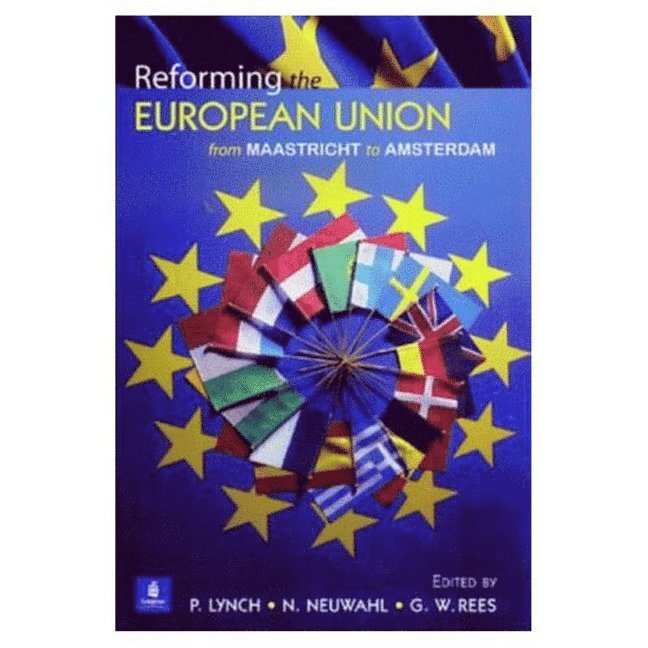
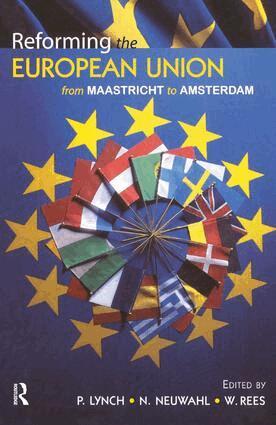
Reforming the European Union
From Maastricht to Amsterdam
Av G. Wyn Rees, N. (Department of Law Universit Neuwahl m. fl.
Häftad, 2000
907 kr
Lägg i varukorg
Reforming the European Union examines the key debates and developments in the EU from the signing of the Treaty on European Union in 1992 through to the entry into force of the Treaty of Amsterdam in 1999. Divided into three parts, the book focuses on institutional reforms, major policy areas and …
Canada Model and Post-Brexit EU Trade Relations
Insights from the 'Other' Transatlantic Partner
Av Nanette Neuwahl, Amy Verdun
Inbunden, 2025
2519 kr
Lägg i varukorg
This book provides an overview of the relationship between Canada and the European Union (EU), offering a comprehensive treatment of the ‘Canada model,’ frequently mentioned in the discussions surrounding Brexit.Addressing the issues in three ways: examining the economic relations between Canada …
Canada Model and Post-Brexit EU Trade Relations
Insights from the 'Other' Transatlantic Partner
Av Amy Verdun, Nanette Neuwahl
E-bok, 2025
813 kr
Lägg i varukorg
This book provides an overview of the relationship between Canada and the European Union (EU), offering a comprehensive treatment of the 'Canada model,' frequently mentioned in the discussions surrounding Brexit.Addressing the issues in three ways: examining the economic relations between Canada …
Canada Model and Post-Brexit EU Trade Relations
Insights from the 'Other' Transatlantic Partner
Av Amy Verdun, Nanette Neuwahl
E-bok, 2025
813 kr
Lägg i varukorg
This book provides an overview of the relationship between Canada and the European Union (EU), offering a comprehensive treatment of the 'Canada model,' frequently mentioned in the discussions surrounding Brexit.Addressing the issues in three ways: examining the economic relations between Canada …
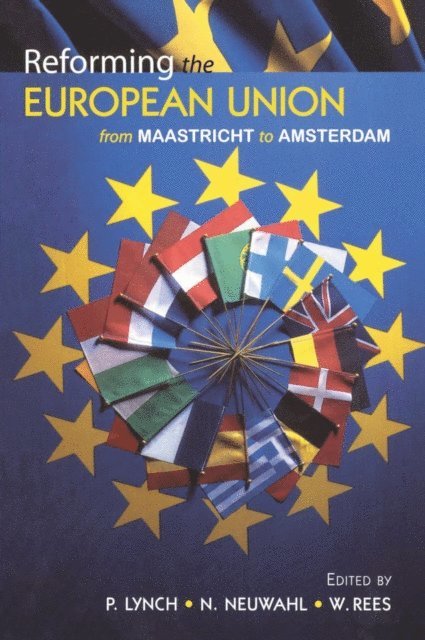
Reforming the European Union
From Maastricht to Amsterdam
Av G.Wyn Rees, University Of Leicester) Neuwahl, N. (Department Of Law m. fl.
Inbunden, 2017
3439 kr
Lägg i varukorg
Analyses the likely future of the EU following next year's Intergovernmental Conference (IGC) which is likely to be even more significant for the future of Europe than the Maastricht Treaty. Since Maastricht it has become clear that future developments are less certain with regard to the EU and …
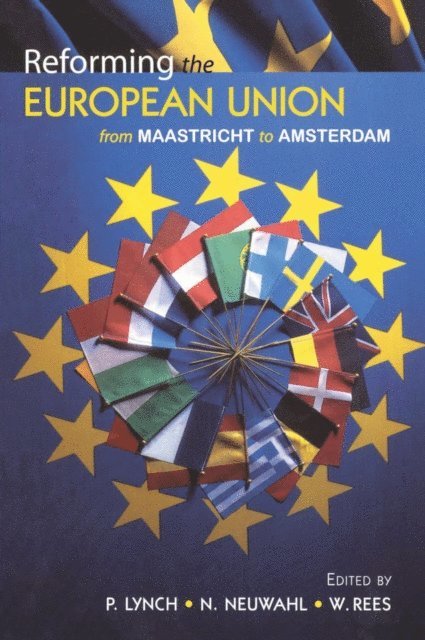
Reforming the European Union
From Maastricht to Amsterdam
Av G.Wyn Rees, G. Wyn Rees m. fl.
E-bok, 2014
1051 kr
Lägg i varukorg
Analyses the likely future of the EU following next year''s Intergovernmental Conference (IGC) which is likely to be even more significant for the future of Europe than the Maastricht Treaty. Since Maastricht it has become clear that future developments are less certain with regard to the EU and …
Reforming the European Union
From Maastricht to Amsterdam
Av G.Wyn Rees, G. Wyn Rees m. fl.
E-bok, 2014
1074 kr
Lägg i varukorg
Analyses the likely future of the EU following next year''s Intergovernmental Conference (IGC) which is likely to be even more significant for the future of Europe than the Maastricht Treaty. Since Maastricht it has become clear that future developments are less certain with regard to the EU and …