Naoko Fujimoto - Böcker
Visar alla böcker från författaren Naoko Fujimoto. Handla med fri frakt och snabb leverans.
6 produkter
6 produkter
195 kr
Skickas inom 5-8 vardagar
284 kr
Skickas inom 3-6 vardagar
289 kr
Skickas inom 11-20 vardagar
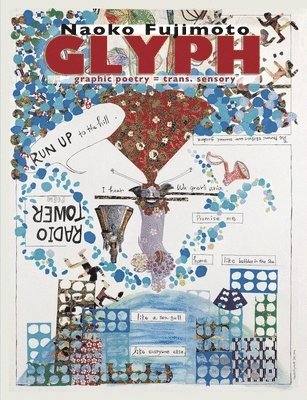
Naoko Fujimoto translates her poems (that are written in English on flat paper) into words and images to create a contemporary picture scroll. The picture scroll in Japanese is Emaki (eh-MA-kee) and the style has been popular since the 7-16th centuries in Japan. It is still a widely recognized art style in Japan and the rest of the world. Emaki is akin to a current graphic novel / poetry / comic. One of the most famous Emaki is the Tale of Genji, which is a fictional (perhaps gossip) story about a handsome son of the emperor. The graphic poetry project is also meant for the viewer to transport their senses from the flat paper and bridge the gap between words and images that will connect with their physical counterparts. Like a historical Emaki, there are side stories hidden behind some of the main graphic narratives-- be they comedic or serious-- for audiences to interpret. All of the details (choice of words, origami paper, or styles) have a specific meaning to contribute to the whole. Graphic Poetry is Trans. Sensory.
229 kr
Kommande
231 kr
Skickas inom 5-8 vardagar
258 kr
Kommande
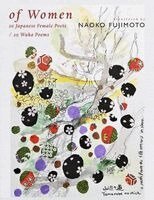
A collection of translated Japanese waka-poems, including text collage and haibun-style discourses on translation.Of Women is a collection of translations of Japanese waka-poems from the seventh century to the twelfth century, featuring twenty female poets from this period, when Japanese women’s literature flourished. This book includes poems by famous writers from the era, such as Sei Shonagon (The Pillow Book) and Murasaki Shikibu (The Tale of Genji), and introduces some lesser-known female poets as well. Waka compacts much information in a short form: words with double meanings, unfamiliar phrases, habits foreign to non-Japanese speakers, and hidden historical backgrounds. Direct translations would fail to capture the author’s full intent, so Of Women takes several approaches to capture the original sensory images, including text collage and haibun, short essays that provide historical context and introduce the author before each waka.