Naomi R. Cahn - Böcker
Visar alla böcker från författaren Naomi R. Cahn. Handla med fri frakt och snabb leverans.
4 produkter
4 produkter
369 kr
Skickas inom 7-10 vardagar
Since the mid-19th century, American law has recognized adoption as a way to create parent-child relationships. As the product of law, rather than blood, adoptive families have become a focal point for debates about the meaning of family, the rights and responsibilities of parents, and the best interests of children.Families by Law brings together diverse perspectives on contemporary aspects of adoption law and practice. Following a historical overview of adoption in American law and society, the reader presents different responses to concerns about who may place children for adoption, the status of birth parents, who may adopt, and the legal and psychosocial consequences of adoption. The new frontiers of adoption are explored: from transracial and intercountry adoption, adoption by same sex couples, and the adoption of children with special needs, to the movements for opening records and maintaining post-adoption contact between adoptive and birth families. The relationship between adoption and assisted reproductive technologies is discussed, as are feminist, economic, and philosophical perspectives on adoption and procreation. The volume includes statutes and cases, advocacy organization statements, and pieces from legal scholars, social scientists, philosophers, psychologists, and sociologists in order to provide a wealth of information about the contemporary dimensions of adoption.Families by Law provides undergraduates, as well as law, social welfare, and public policy graduate students and others interested in family relationships with a multifaceted context for understanding the complexities of contemporary family life.
543 kr
Skickas inom 10-15 vardagar
The birth of the first test tube baby in 1978 focused attention on the sweeping advances in assisted reproductive technology (ART), which is now a multi-billion-dollar business in the United States. Sperm and eggs are bought and sold in a market that has few barriers to its skyrocketing growth. While ART has been an invaluable gift to thousands of people, creating new families, the use of someone else's genetic material raises complex legal and public policy issues that touch on technological anxiety, eugenics, reproductive autonomy, identity, and family structure. How should the use of gametic material be regulated? Should recipients be able to choose the "best" sperm and eggs? Should a child ever be able to discover the identity of her gamete donor? Who can claim parental rights?Naomi R. Cahn explores these issues and many more in Test Tube Families, noting that although such questions are fundamental to the new reproductive technologies, there are few definitive answers currently provided by the law, ethics, or cultural norms. As a new generation of "donor kids" comes of age, Cahn calls for better regulation of ART, exhorting legal and policy-making communities to cease applying piecemeal laws and instead create legislation that sustains the fertility industry while simultaneously protecting the interests of donors, recipients, and the children that result from successful transfers.
485 kr
Skickas inom 10-15 vardagar
No federal law in the United States requires that egg or sperm donors or recipients exchange any information with the offspring that result from the donation. Donors typically enter into contracts with fertility clinics or sperm banks which promise them anonymity. The parents may know thedonor's hair color, height, IQ, college, and profession; they may even have heard the donor's voice. But they don't know the donor's name, medical history, or other information that might play a key role in a child's development. And, until recently, donor-conceived offspring typically didn't know that one of their biological parents was a donor. But the secrecy surrounding the use of donor eggs and sperm is changing. And as it does, increasing numbers of parents and donor-conceived offspring are searching for others who share the same biological heritage. When donors, recipients, and "donor kids" find each other, they create new forms of families that exist outside of the law. The New Kinship details how families are made and how bonds are created between families in the brave new world of reproductive technology. Naomi Cahn, a nationally-recognized expert on reproductive technology and the law, shows how these new kinship bonds dramatically exemplify the ongoing cultural change in how we think about family. The issues Cahn explores in this book will resonate with anyone—and everyone—who has struggled with questions of how to define themselves in connection with their own biological, legal, or social families.
1 266 kr
Skickas inom 7-10 vardagar
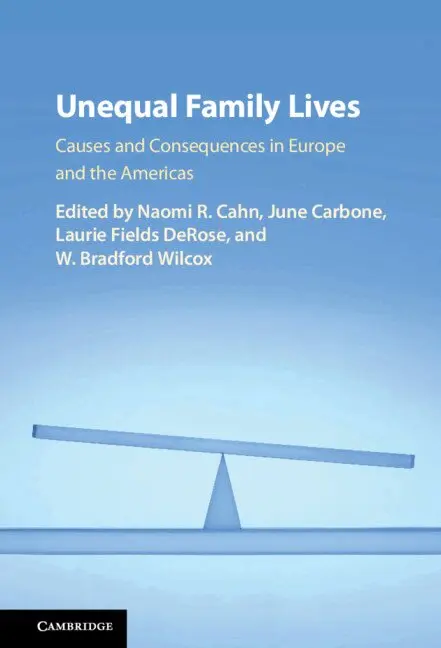
Across the Americas and Europe, the family has changed and marriage is in retreat. To answer the question of what's driving these changes and how they impact social and economic inequality, progressives have typically focused on the economic causes of changing family structures, whereas conservatives tend to stress cultural and policy roots. In this illuminating book, an international group of scholars revisit these issues, offering competing and contrasting perspectives from left, center, and right, while also adding a third layer of analysis: namely, the role of gender - changes in women's roles, male employment patterns, and gendered family responsibilities - in driving family change across three continents. Unequal Family Lives: Causes and Consequences in Europe and the Americas adds richness and depth to our understanding of the relationship between family and economics in the United States, Europe, and Latin America. This title is also available as Open Access.