Nasser Rabbat - Böcker
Visar alla böcker från författaren Nasser Rabbat. Handla med fri frakt och snabb leverans.
5 produkter
5 produkter
1 212 kr
Skickas inom 5-8 vardagar
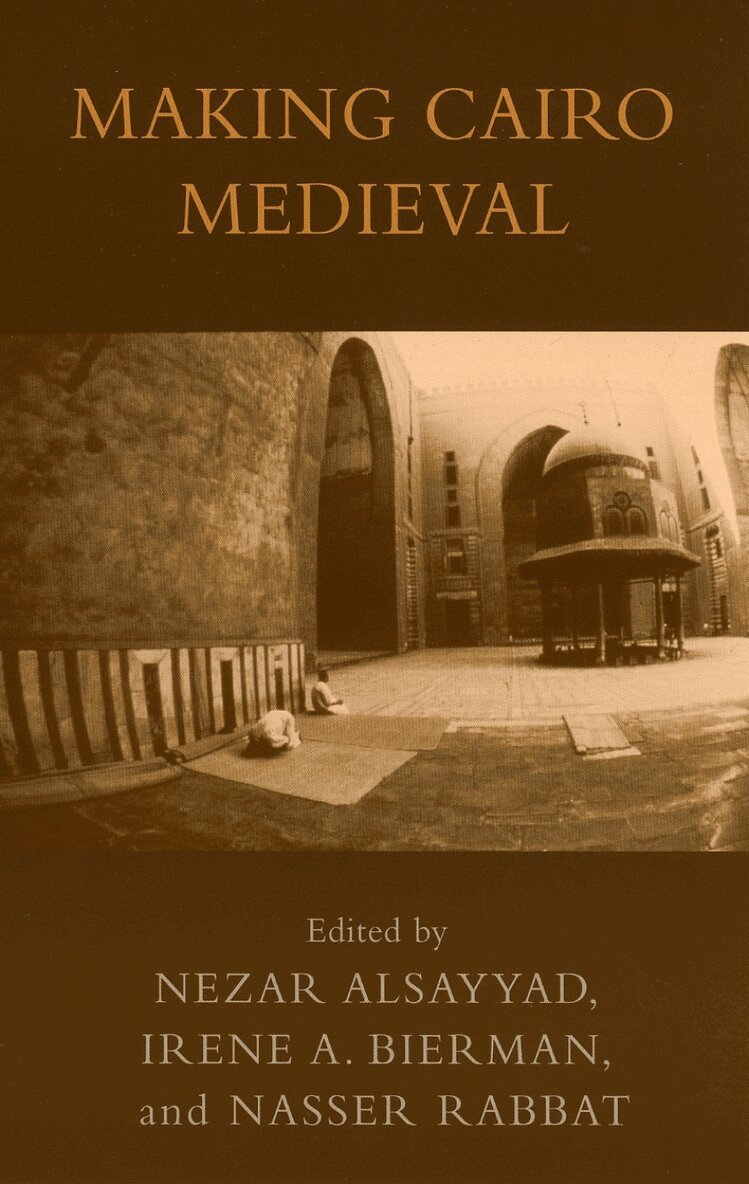
During the nineteenth century, Cairo witnessed once of its most dramatic periods of transformation. Well on its way to becoming a modern and cosmopolitan city, by the end of the century, a 'medieval' Cairo had somehow come into being. While many Europeans in the nineteenth century viewed Cairo as a fundamentally dual city—physically and psychically split between East/West and modern/medieval—the contributors to the provocative collection demonstrate that, in fact, this process of inscription was the result of restoration practices, museology, and tourism initiated by colonial occupiers. The first edited volume to address nineteenth-century Cairo both in terms of its history and the perception of its achievements, this book will be an essential text for courses in architectural and art history dealing with the Islamic world.
1 346 kr
Skickas inom 3-6 vardagar
Recounts the life of Egypt's greatest historian, analyses his work and assesses its impact then and nowOffers the most complete, probing and layered biography of al-Maqrizi Interprets al-Maqrizi's historical output as a long-term scholarly project revolving around his famous Khitat to capture the entire history of EgyptAnalyses al-Maqrizi's approach and methodologies in light of his beliefs, ethics, feelings, education, social standing, world views, politics and personal circumstancesDistills from al-Maqrizi's massive textual output insights into his theorising, conception of history and the influence of his teacher Ibn KhaldunRestores him to the pinnacle of Mamluk historiographical tradition as an unusually outspoken critic who was animated by his moral rectitudeAlthough al-Maqrizi is recognised as the most influential historian of pre-modern Egypt, he has never received the probing historical treatment warranted by his standing and scholarly output. This book fills that gap. Arranged in three sections, it tells al-Maqrizi's life story in the first, weaves it with historiographical, textual and methodological analysis of his oeuvre in the second, and reconstructs the afterlife of the author and his work down to the present in the third part.al-Maqrizi is presented both as a man of his age who forged a distinct and unique scholarly persona and a historian with a structured and principled project aiming to reconstruct the history of Islamic Egypt in all its facets. His, however, was a critical stance with moral overtones, conceived from within the epistemological framework of a medieval Muslim thinker, which ensured not only his reputation in his own historiographical tradition, but also his reclamation in the modern Egyptian consciousness as one of the most original voices of Egypt.
340 kr
Skickas inom 11-20 vardagar
Recounts the life of Egypt's greatest historian, analyses his work and assesses its impact then and nowOffers the most complete, probing and layered biography of al-Maqrizi Interprets al-Maqrizi's historical output as a long-term scholarly project revolving around his famous Khitat to capture the entire history of EgyptAnalyses al-Maqrizi's approach and methodologies in light of his beliefs, ethics, feelings, education, social standing, world views, politics and personal circumstancesDistills from al-Maqrizi's massive textual output insights into his theorising, conception of history and the influence of his teacher Ibn KhaldunRestores him to the pinnacle of Mamluk historiographical tradition as an unusually outspoken critic who was animated by his moral rectitudeAlthough al-Maqrizi is recognised as the most influential historian of pre-modern Egypt, he has never received the probing historical treatment warranted by his standing and scholarly output. This book fills that gap. Arranged in three sections, it tells al-Maqrizi's life story in the first, weaves it with historiographical, textual and methodological analysis of his oeuvre in the second, and reconstructs the afterlife of the author and his work down to the present in the third part.al-Maqrizi is presented both as a man of his age who forged a distinct and unique scholarly persona and a historian with a structured and principled project aiming to reconstruct the history of Islamic Egypt in all its facets. His, however, was a critical stance with moral overtones, conceived from within the epistemological framework of a medieval Muslim thinker, which ensured not only his reputation in his own historiographical tradition, but also his reclamation in the modern Egyptian consciousness as one of the most original voices of Egypt.
979 kr
Skickas
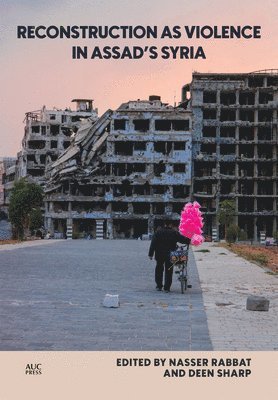
A sustained critique of postwar reconstruction in Syria as a politically neutral process In 2011, emboldened by the Arab Spring, the Syrians rose up against their government. The Syrian regime used violence to suppress the protests, so that what began as pro-democracy protests eventually morphed into a civil war with heavy outside intervention. Today, the Assad regime has fallen, but large parts of the country lie in ruins, millions of Syrians are displaced, and the economy is in freefall. Reconstruction as Violence delves into the complex interplay of post-conflict reconstruction in Syria, challenging the traditionally held dichotomy between the end of violence and the commencement of rebuilding.The contributors to this volume—architects, urbanists, geographers, and historians—employ critical concepts such as urbicide, domicide, and “civilian crisis architecture” to argue against the conventional theoretical frameworks that support a neat separation of phases. They illustrate how reconstruction often extends the dynamics of conflict into the urban and social realms, suggesting that the built environment becomes a battleground for further violence. They emphasize the importance of acknowledging the historical, economic, societal, legal, and bureaucratic contexts that shape reconstruction efforts, arguing for initiatives that prioritize equity, inclusivity, and community participation.Reconstruction as Violence starkly underscores the authors’ stance that to overlook any of these dimensions, or to disengage from the reconstruction process altogether, represents a political choice with potentially detrimental effects on Syria and beyond in the Arab world, where countries like Palestine, Yemen, Libya, Iraq, Lebanon, and Sudan are undergoing similar cycles of destruction and rebuilding. It calls for a reimagined approach to reconstruction, one that fosters peace, resilience, and social justice in post-conflict societies.Contributors:Sawsan Abou Zainedin, Madaniya, London, UKAmmar Azzouz, University of Oxford, UKValérie Clerc, Institut de Recherche pour le Développement, FranceEmma Katherine DiNapoli, human rights lawyer, London, UKOmar Ferwati, Goldsmiths, University of London, UKRim Lababidi, architect and independent scholar, Ohio, USAWendy Pullan, University of Cambridge, UKNasser Rabbat, Massachusetts Institute of Technology, Cambridge, MA, USAHashim Sarkis, Massachusetts Institute of Technology, Cambridge, MA, USADeen Sharp, London School of Economics, UKHeghnar Watenpaugh, University of California Davis, CA, USA

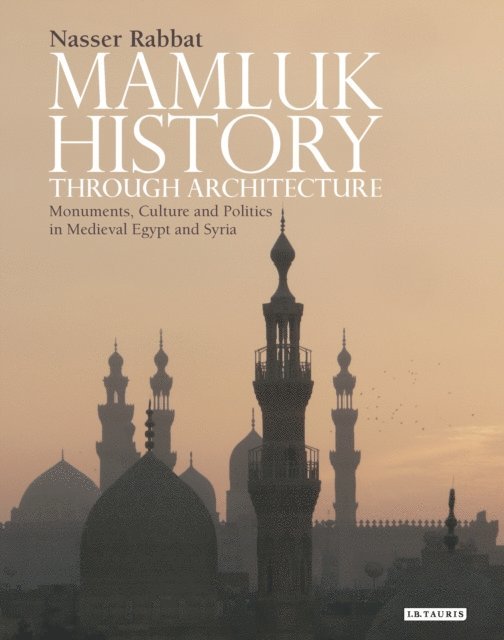
Mamluk History through Architecture
Monuments, Culture and Politics in Medieval Egypt and Syria
Inbunden, Engelska, 2010
1 888 kr
Skickas inom 10-15 vardagar
The most enduring testament to the Mamluk Sultanate is its architecture. Not only do Mamluk buildings embody one of the most outstanding medieval architectural traditions, Mamluk architecture is actually a key to the social history of the period. Analysing Mamluk constructions as a form of communication and documentation as well as a cultural index, "Mamluk History Through Architecture" shows how the buildings mirror the complex - and historically unique - military, political, social and financial structures of Mamluk society. With this original and authoritative study, Nasser Rabbat offers an innovative approach to the history of the Mamluks - through readings of the spectacular architecture of the period. Drawing on examples from throughout both Egypt and Syria, from the Citadel and Al-Azhar Mosque of Cairo to the Mausoleum of al-Zahir Baybars in Damascus, Rabbat demonstrates how Mamluk architecture served to reinforce visually the spirit of the counter-Crusade, when the Muslim world rebounded from the setbacks of the First Crusade. Both holistically and in case studies, Rabbat demonstrates how history is inscribed into and reflected by a culture's artefacts.This is a groundbreaking work in the study of architecture and social history in the Middle East and beyond.