Deen Sharp - Böcker
Visar alla böcker från författaren Deen Sharp. Handla med fri frakt och snabb leverans.
5 produkter
5 produkter
841 kr
Skickas inom 5-8 vardagar
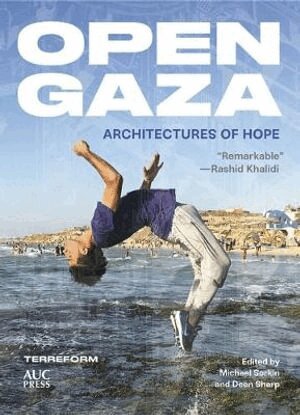
Cutting-edge analysis on how to improve life inside the Gaza Strip through architecture and design, illustrated in full-colorThe Gaza Strip is one of the most beleaguered environments on earth. Crammed into a space of 139 square miles (360 square kilometers), 1.8 million people live under an Israeli siege, enforcing conditions that continue to plummet to ever more unimaginable depths of degradation and despair. Gaza, however, is more than an endless encyclopedia of depressing statistics. It is also a place of fortitude, resistance, and imagination; a context in which inhabitants go to remarkable lengths to create the ordinary conditions of the everyday and to reject their exceptional status. Inspired by Gaza’s inhabitants, this book builds on the positive capabilities of Gazans. It brings together environmentalists, planners, activists, and scholars from Palestine and Israel, the US, the UK, India, and elsewhere to create hopeful interventions that imagine a better place for Gazans and Palestinians. Open Gaza engages the Gaza Strip within and beyond the logics of siege and warfare, it considers how life can be improved inside the limitations imposed by the Israeli blockade, and outside the idiocy of violence and warfare.Contributors AffiliationsSalem Al Qudwa, Harvard Divinity School and Harvard Kennedy School, Cambridge, USAHadeel Assali, Columbia University, USATareq Baconi, International Crisis Group, Brussels, BelgiumTeddy Cruz, University of California-San Diego, USAFonna Forman, University of California-San Diego, USAM. Christine Boyer, Princeton University, Princeton, USAAlberto Foyo, architect, New York, USANasser Golzari , Westminster University, London, UKYara Sharif, Westminster University, London, UKDenise Hoffman Brandt, City College of New York, USARomi Khosla, architect, New Delhi, IndiaCraig Konyk, Kean University, Union, NJ, USARafi Segal, Massachusetts Institute of Technology, Boston, USA Chris Mackey, Payette Architects, Boston, USAVyjayanthi V. Rao, Terreform, New York, USASara Roy, Harvard University, Cambridge, USAMahdi Sabbagh, architect, New York, USAMeghan McAllister, architect, San Francisco Bay Area, USADeen Sharp, London School of Economics, UKMalkit Shoshan, Harvard University, Cambridge, USAPietro Stefanini, University of Edinburgh, ScotlandMichael Sorkin (1948–2020) , City University of New York, USAHelga Tawil-Souri, New York University, USAOmar Yousef, Al-Quds University, Jerusalem Fadi Shayya, The University of Manchester, UK
979 kr
Skickas
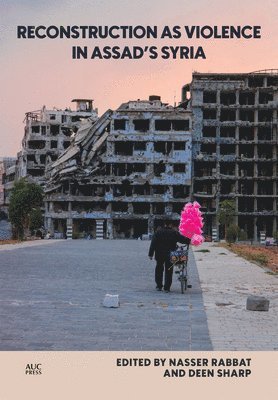
A sustained critique of postwar reconstruction in Syria as a politically neutral process In 2011, emboldened by the Arab Spring, the Syrians rose up against their government. The Syrian regime used violence to suppress the protests, so that what began as pro-democracy protests eventually morphed into a civil war with heavy outside intervention. Today, the Assad regime has fallen, but large parts of the country lie in ruins, millions of Syrians are displaced, and the economy is in freefall. Reconstruction as Violence delves into the complex interplay of post-conflict reconstruction in Syria, challenging the traditionally held dichotomy between the end of violence and the commencement of rebuilding.The contributors to this volume—architects, urbanists, geographers, and historians—employ critical concepts such as urbicide, domicide, and “civilian crisis architecture” to argue against the conventional theoretical frameworks that support a neat separation of phases. They illustrate how reconstruction often extends the dynamics of conflict into the urban and social realms, suggesting that the built environment becomes a battleground for further violence. They emphasize the importance of acknowledging the historical, economic, societal, legal, and bureaucratic contexts that shape reconstruction efforts, arguing for initiatives that prioritize equity, inclusivity, and community participation.Reconstruction as Violence starkly underscores the authors’ stance that to overlook any of these dimensions, or to disengage from the reconstruction process altogether, represents a political choice with potentially detrimental effects on Syria and beyond in the Arab world, where countries like Palestine, Yemen, Libya, Iraq, Lebanon, and Sudan are undergoing similar cycles of destruction and rebuilding. It calls for a reimagined approach to reconstruction, one that fosters peace, resilience, and social justice in post-conflict societies.Contributors:Sawsan Abou Zainedin, Madaniya, London, UKAmmar Azzouz, University of Oxford, UKValérie Clerc, Institut de Recherche pour le Développement, FranceEmma Katherine DiNapoli, human rights lawyer, London, UKOmar Ferwati, Goldsmiths, University of London, UKRim Lababidi, architect and independent scholar, Ohio, USAWendy Pullan, University of Cambridge, UKNasser Rabbat, Massachusetts Institute of Technology, Cambridge, MA, USAHashim Sarkis, Massachusetts Institute of Technology, Cambridge, MA, USADeen Sharp, London School of Economics, UKHeghnar Watenpaugh, University of California Davis, CA, USA
442 kr
Skickas inom 3-6 vardagar
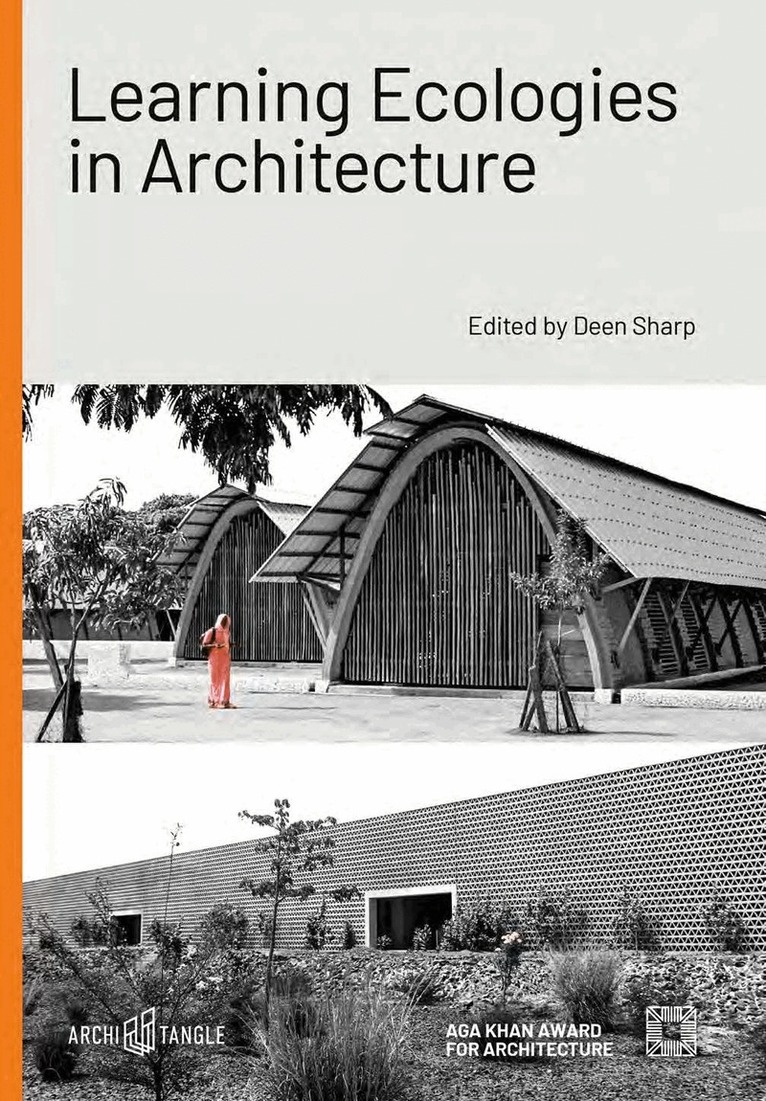
Learning Ecologies in Architecture explores how exemplary educational buildings actively shape, and are shaped by, their ecological contexts through processes of translation, research, innovation, and collaboration. These ecologies are not only environmental but encompass dynamic interactions between people, organisations, and material resources, to bring educational spaces into being. Good educational design has always extended beyond the boundaries of the building, fostering and addressing the individual learners in the classroom as well as the community and contexts that nurture them.The book is guided by two Senegalese projects that won the Aga Khan Award for Architecture (in 2019 and 2022 respectively): the Alioune Diop University Teaching and Research Unit designed by IDOM and the Kamanar Secondary School by Dawoffice. These projects exemplify architecture both as a process of civic engagement, where architects purposefully involve communities, and as an environmentally conscious and responsive endeavour, applying sustainability principles and process in resource-constrained contexts. By delving into these case studies, the book interrogates the legacy and philosophy of educational design, the critical debates and practices in relation to participatory architecture, and the intricacies of representation and materiality.The first section of the book examines the historical legacies and contexts of educational architecture, with an emphasis on Africa. It traces how the design and construction of university institutions have played a pivotal role in postcolonial nation-building and identity. This historic perspective provides a foundation for analysing contemporary efforts to further meaningful civic engagement in educational design. Several contributors critically assess the successes and limitations of civic engagement in architecture, exploring the work needed to ensure that translation, participation, and collaboration lead to meaningful change.With contributions by Jonathan Kplorla Agbeh, Christian Paul “Zigato” Agboada, Christian Benimana, Dawoffice, Katherine Dawson, Farrokh Derakhshani, Souleymane Bachir Diagne, Christian Hedrick, Anna Heringer, IDOM, Farhan Karim, Timothy Latim, Lesley Lokko, Tubi Otitooluwa, Deen Sharp, Mamadou Jean-Charles Tall, Justicia Tegyeka and Ola Uduku.
442 kr
Skickas inom 3-6 vardagar
442 kr
Skickas inom 3-6 vardagar
The volume Optimism and Architecture presents the awarded and shortlisted projects for the Aga Khan Award for Architecture 2025. The book explores the ways in which optimism and hope are linked to better design outcomes, highlighting architecture's capacity to serve as a catalyst for pluralism, social transformation, cultural dialogue, and climate-responsive design.Unpublished material offers deep insights into the broad social, political, and cultural contexts that shape our built environments. The publication sheds light on the extensive jury and in-depth review processes for which the Award is renowned. Through essays and conversations, this volume examines how architecture can reinvigorate tradition through thoughtful innovation, connect local practices with global conversations, touch the earth lightly yet profoundly, and create inclusive spaces where diverse cultures and histories converge. Architecture is considered not only as a physical structure but also as a cultural practice that shapes public life, sparks social engagement, and reimagines heritage and identity in a rapidly changing world. This publication provides an optimistic and vivid portrait of contemporary architecture's role in fostering more inclusive and interconnected futures. With contributions by Azra Akamija, Lucia Allais, David Basulto, Farrokh Derakhshani, Yvonne Farrell, Hanif Kara, Yacouba Konaté, Lesley Lokko, Raafat Majzoub, Deen Sharp, and Cristina Steingräber.