Nastaran Dadashi - Böcker
Visar alla böcker från författaren Nastaran Dadashi. Handla med fri frakt och snabb leverans.
3 produkter
3 produkter
656 kr
Skickas inom 10-15 vardagar
With the development of sensor technology, wireless communications, big data, and machine learning, there is an increasing interest in technologies and solutions that assess and predict the state of equipment and assets within various industrial settings. These technologies aim to collect information from multiple sources about infrastructure asset status. Then, through current and historical data analysis, this configuration of technologies delivers intelligence on current and future asset status to a maintenance operator or manager to inform optimal maintenance decision-making. These technologies are known under different terms – remote condition monitoring, e-maintenance, prognostic systems, predictive maintenance, and smart or intelligent infrastructure. Despite the promise of remote condition monitoring and predictive technologies, there is a growing concern with such technologies because they can be difficult or impractical to use.Understanding and mitigating potential human factors issues could ensure that such vast investments are not wasted. This book considers, in depth, the challenges placed on users of current and future condition monitoring systems. Its primary focus is to understand the cognitive processes, including managing alarms, interpreting data, and collaborating with automation. The book describes a range of human factors methods that can be used to understand the current and future functioning of people and technology in an enhanced maintenance and asset monitoring context. The book also presents a framework for describing these issues systematically and presents the resulting design considerations to increase the effectiveness of individual operators and organisations as a whole.
2 307 kr
Skickas inom 10-15 vardagar
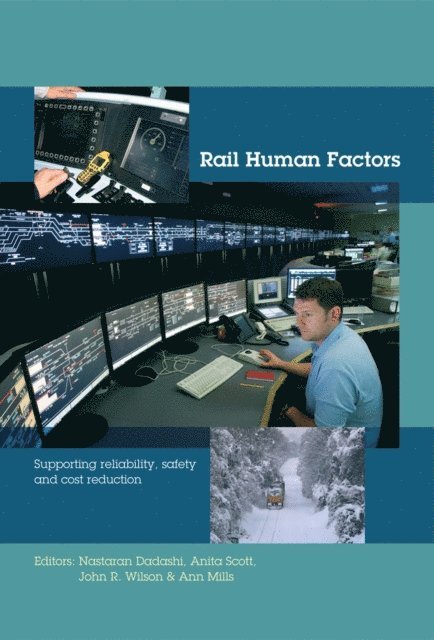
The rail human factors/ergonomics community has grown quickly and extensively, and there is much increased recognition of the vital importance of ergonomics/human factors by rail infrastructure owners, rail operating companies, system developers, regulators and national and trans-national government. This book, the fourth on rail human factors, is drawn from papers presented at the London 4th International Conference on Rail Human Factors. The contributions cover the range of human and organisational issues on the railway, from driving to signalling and control to maintenance and engineering work, to passengers and security issues such as trespass, and address improvements in safety, reliability, use of capacity, efficiency and quality. The book represents the best of recent work in rail human factors, and starts to define the framework for the next few years. As well as the human factors areas listed above, the conference and thus the book are notable for sessions on simulation in rail human factors and on human factors in metro design and operation. The book also reflects the increased attention being paid to, and developments in, understanding all aspects of rail stakeholders’ behaviour, and also the contribution of ergonomics/human factors to innovative network control systems which will enhance reliability, safety and use of capacity. The book will be of interest to a number of groups: those working in the rail sector from a human factors point of view; the larger rail industry and related bodies generally; and in terms of transferrable knowledge to ergonomists and human factors specialists working in other industries.
2 713 kr
Skickas inom 10-15 vardagar
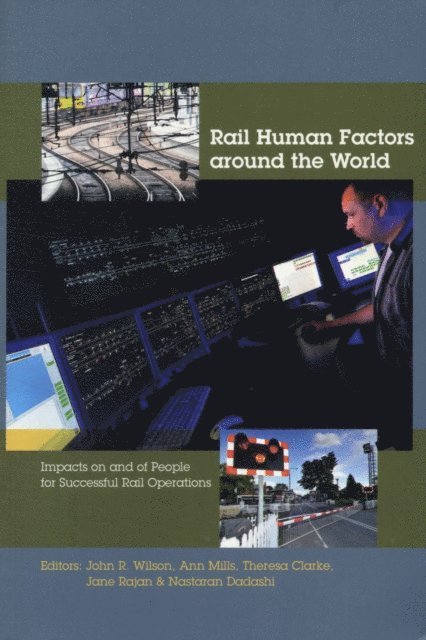
The rail human factors/ergonomics community has grown quickly and extensively, and there is much increased recognition of the vital importance of ergonomics/human factors by rail infrastructure owners, rail operating companies, system developers, regulators and national and trans-national government. This book, the fourth on rail human factors, is drawn from papers presented at the London 4th International Conference on Rail Human Factors. The contributions cover the range of human and organisational issues on the railway, from driving to signalling and control to maintenance and engineering work, to passengers and security issues such as trespass, and address improvements in safety, reliability, use of capacity, efficiency and quality. The book represents the best of recent work in rail human factors, and starts to define the framework for the next few years. As well as the human factors areas listed above, the conference and thus the book are notable for sessions on simulation in rail human factors and on human factors in metro design and operation. The book also reflects the increased attention being paid to, and developments in, understanding all aspects of rail stakeholders behaviour, and also the contribution of ergonomics/human factors to innovative network control systems which will enhance reliability, safety and use of capacity. The book will be of interest to a number of groups: those working in the rail sector from a human factors point of view; the larger rail industry and related bodies generally; and in terms of transferrable knowledge to ergonomists and human factors specialists working in other industries.