Natacha Klein Käfer - Böcker
Visar alla böcker från författaren Natacha Klein Käfer. Handla med fri frakt och snabb leverans.
6 produkter
6 produkter
1 422 kr
Skickas inom 10-15 vardagar
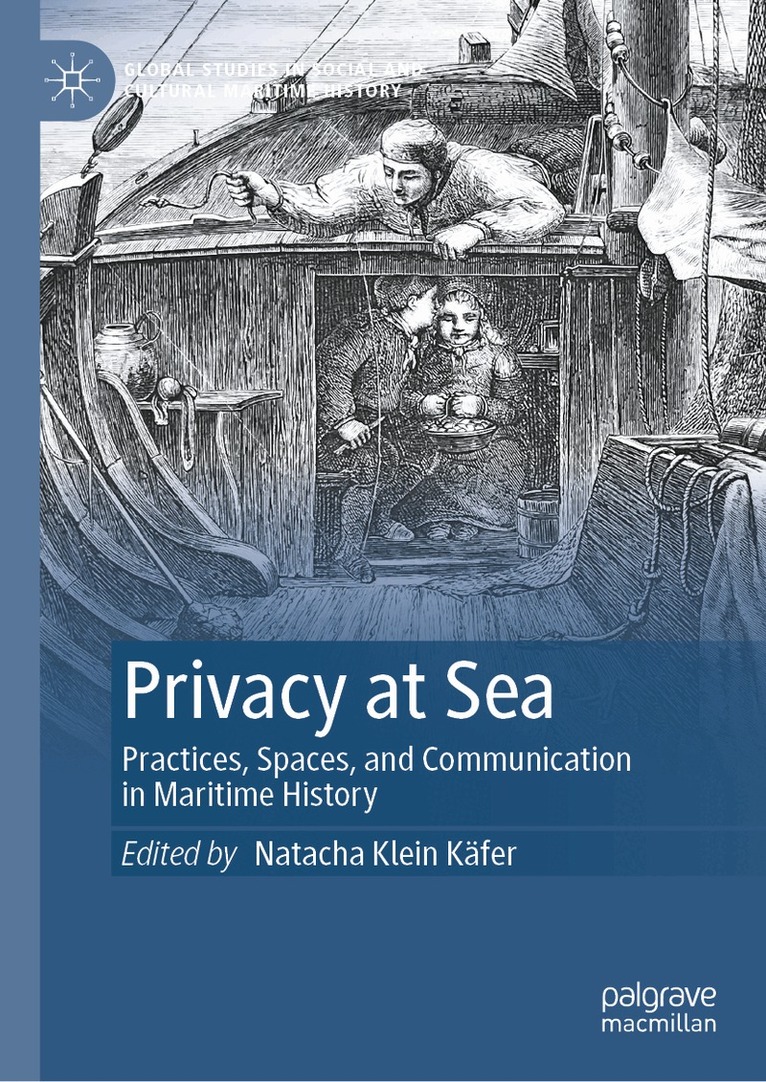
This book explores the idea of privacy at sea, from early sixteenth-century maritime expansions to nineteenth-century naval developments. In this period, the sea became a focal point of political and economic ambition as technological and cultural shifts enabled a more extensive exploration of maritime spaces and global coexistence at sea. The exploration of the sea and the conflicts arising from establishing control over maritime routes demanded a more nuanced distinction and negotiation between State and private efforts. Privateering, for example, became a bridge between the private enterprises and the State’s warfares or trade struggles, demonstrating that the sea required public control at the same time as it enabled private endeavours. Although this tension between private and public interests has been explored in military and economic studies, questions of how the private appeared in maritime history have been discussed only through a particularly merchantile lens.This volume adds a new dimension to this discussion by focusing on how privacy and the private were perceived and created by the historical agents at sea. We aim to move beyond the mercantile “private” as a direct opposite to the “public” or the State, thereby opening the discussion of privacy at sea as a multiplicity of lived experiences.Chapters 1, 8 and 14 are available open access under a Creative Commons Attribution 4.0 International License via link.springer.com.
1 422 kr
Skickas inom 10-15 vardagar
This book explores the idea of privacy at sea, from early sixteenth-century maritime expansions to nineteenth-century naval developments. In this period, the sea became a focal point of political and economic ambition as technological and cultural shifts enabled a more extensive exploration of maritime spaces and global coexistence at sea. The exploration of the sea and the conflicts arising from establishing control over maritime routes demanded a more nuanced distinction and negotiation between State and private efforts. Privateering, for example, became a bridge between the private enterprises and the State’s warfares or trade struggles, demonstrating that the sea required public control at the same time as it enabled private endeavours. Although this tension between private and public interests has been explored in military and economic studies, questions of how the private appeared in maritime history have been discussed only through a particularly merchantile lens.This volume adds a new dimension to this discussion by focusing on how privacy and the private were perceived and created by the historical agents at sea. We aim to move beyond the mercantile “private” as a direct opposite to the “public” or the State, thereby opening the discussion of privacy at sea as a multiplicity of lived experiences.Chapters 1, 8 and 14 are available open access under a Creative Commons Attribution 4.0 International License via link.springer.com.
552 kr
Skickas inom 10-15 vardagar
This open access book explores knowledge practices by five women from different European contexts. Contributors document, analyze, and discuss how women employed practices of privacy to pursue knowledge that did not necessarily conform with the curriculum prescribed for them. The practices of Jane Lumley in England, Camila Herculiana in Padua, Victorine de Chastenay in Paris, as well as Elisabeth Sophie Marie and Philippine Charlotte in Brunswick-Wolfenbüttel, will help us to exemplify the delicate balance between audacity and obedience that women had to employ to be able to explore science, literature, philosophy, theology, and other types of learned activities. Cases range from the sixteenth to the nineteenth century, presenting continuities and discontinuities across temporal and geographical lines of the strategies that women used to protect their knowledge production and retain intact their reputations as good Christian daughters, wives, and mothers. Taken together, the essaysshow how having access to privacy—the ability to regulate access to themselves while studying and learning—was a crucial condition for the success of the knowledge activities these women pursued.This is an open access book.
Tracing Private Conversations in Early Modern Europe
Talking in Everyday Life
Inbunden, Engelska, 2024
552 kr
Skickas inom 10-15 vardagar
This open access book provides a multifold exploration of how people in early modern Europe understood, conducted, and actively used private conversations.
443 kr
Skickas inom 10-15 vardagar
This open access book provides a multifold exploration of how people in early modern Europe understood, conducted, and actively used private conversations.
Privacy in Early Modern Saxony
Perspectives on Architecture, Culture, Health, Law, and Religion
Inbunden, Engelska, 2024
1 012 kr
Skickas inom 3-6 vardagar
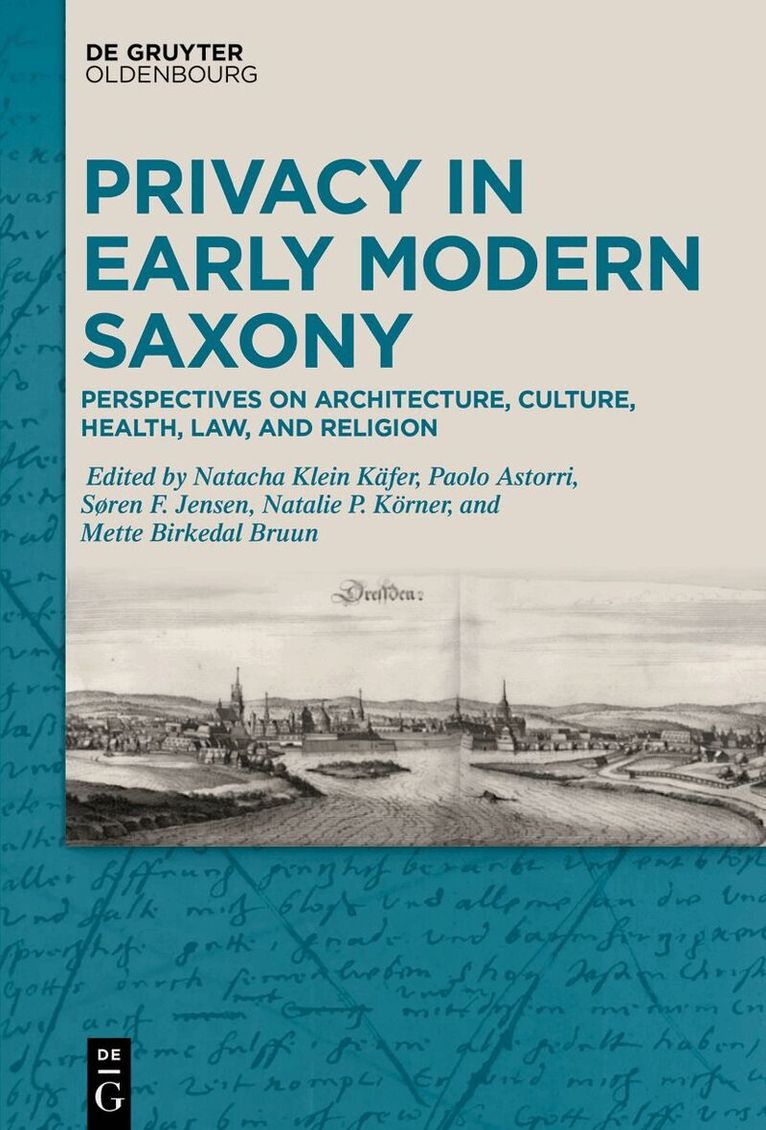
Concerns over privacy grow in our society. Understanding the historical roots of the phenomenon becomes more and more necessary to navigate our contemporary struggles with availability and control of personal information. When we ponder what people of the past valued and aimed to protect and what they considered threatening and needing uncovering, we achieve a broader perspective of the importance of privacy in everyday life. The early modern period, in particular, was a period in which many views and experiences of privacy were negotiated and consolidated into more recognisable feelings and norms in different layers of society. This volume will focus on Saxony, as it is a great example to explore how privacy was created and negotiated in the early modern period. Throughout the sixteenth century, Saxony rose to prominence in the broader European context through the influence of its Electors. Saxony is an emblematic context to explore notions of privacy in the early modern period, as the region underwent a range of transformations – religious, political, legal, and cultural – that reconfigured the thresholds between the private and the public. The main goals of this volume are: to put Saxony on the map of early modern studies of privacy by bringing forth the region’s contribution to political, cultural, scientific, religious, and legal developments; to challenge preconceived notions of privacy in the early modern German context by providing new analytical tools to analyse both well-known and novel sources; to inaugurate and instigate further the research of early modern privacy in regional studies.