
Natasa Kovacevic - Böcker
Visar alla böcker från författaren Natasa Kovacevic. Handla med fri frakt och snabb leverans.
5 produkter
5 produkter
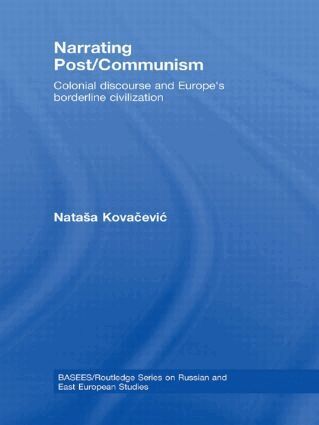
Narrating Post/Communism
Colonial Discourse and Europe's Borderline Civilization
Inbunden, Engelska, 2008
2 490 kr
Skickas inom 10-15 vardagar
The transition of communist Eastern Europe to capitalist democracy post-1989 and in the aftermath of the Yugoslav wars has focused much scholarly attention - in history, political science and literature - on the fostering of new identities across Eastern European countries in the absence of the old communist social and ideological frameworks. This book examines an important, but hitherto largely neglected, part of this story: the ways in which the West has defined its own identity and ideals via the demonization of communist regimes and Eastern European cultures as a totalitarian, barbarian and Orientalist "other". It describes how old Orientalist prejudices resurfaced during the Cold War period, and argues that the establishment of this discourse helped to justify transitions of Eastern European societies to market capitalism and liberal democracy, suppressing Eastern Europe’s communist histories and legacies, whilst perpetuating its dependence on the West as a source of its own sense of identity. It argues that this process of Orientalization was reinforced by the literary narratives of Eastern European and Russian anti-communist dissidents and exiles, including Vladimir Nabokov, Czeslaw Milosz and Milan Kundera, in their attempts to present themselves as native, Eastern European experts and also emancipate themselves – and their homelands – as civilized, enlightened and Westernized. It goes on to suggest that the greatest potential for recognizing and overcoming this self-Orientalization lies in post-communist literary and visual narratives, with their themes of disappointment in the social, economic, or political changes brought on by the transitions, challenge of the unequal discursive power in East-West dialogues where the East is positioned as a disciple or a mimic of the West, and the various guises of nostalgia for communism.
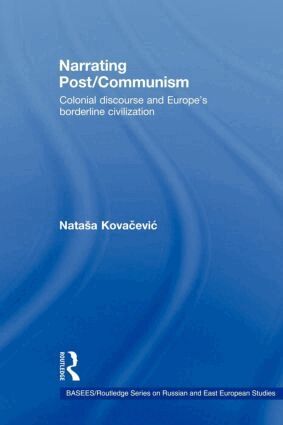
Narrating Post/Communism
Colonial Discourse and Europe's Borderline Civilization
Häftad, Engelska, 2009
932 kr
Skickas inom 10-15 vardagar
The transition of communist Eastern Europe to capitalist democracy post-1989 and in the aftermath of the Yugoslav wars has focused much scholarly attention - in history, political science and literature - on the fostering of new identities across Eastern European countries in the absence of the old communist social and ideological frameworks. This book examines an important, but hitherto largely neglected, part of this story: the ways in which the West has defined its own identity and ideals via the demonization of communist regimes and Eastern European cultures as a totalitarian, barbarian and Orientalist "other". It describes how old Orientalist prejudices resurfaced during the Cold War period, and argues that the establishment of this discourse helped to justify transitions of Eastern European societies to market capitalism and liberal democracy, suppressing Eastern Europe’s communist histories and legacies, whilst perpetuating its dependence on the West as a source of its own sense of identity. It argues that this process of Orientalization was reinforced by the literary narratives of Eastern European and Russian anti-communist dissidents and exiles, including Vladimir Nabokov, Czeslaw Milosz and Milan Kundera, in their attempts to present themselves as native, Eastern European experts and also emancipate themselves – and their homelands – as civilized, enlightened and Westernized. It goes on to suggest that the greatest potential for recognizing and overcoming this self-Orientalization lies in post-communist literary and visual narratives, with their themes of disappointment in the social, economic, or political changes brought on by the transitions, challenge of the unequal discursive power in East-West dialogues where the East is positioned as a disciple or a mimic of the West, and the various guises of nostalgia for communism.
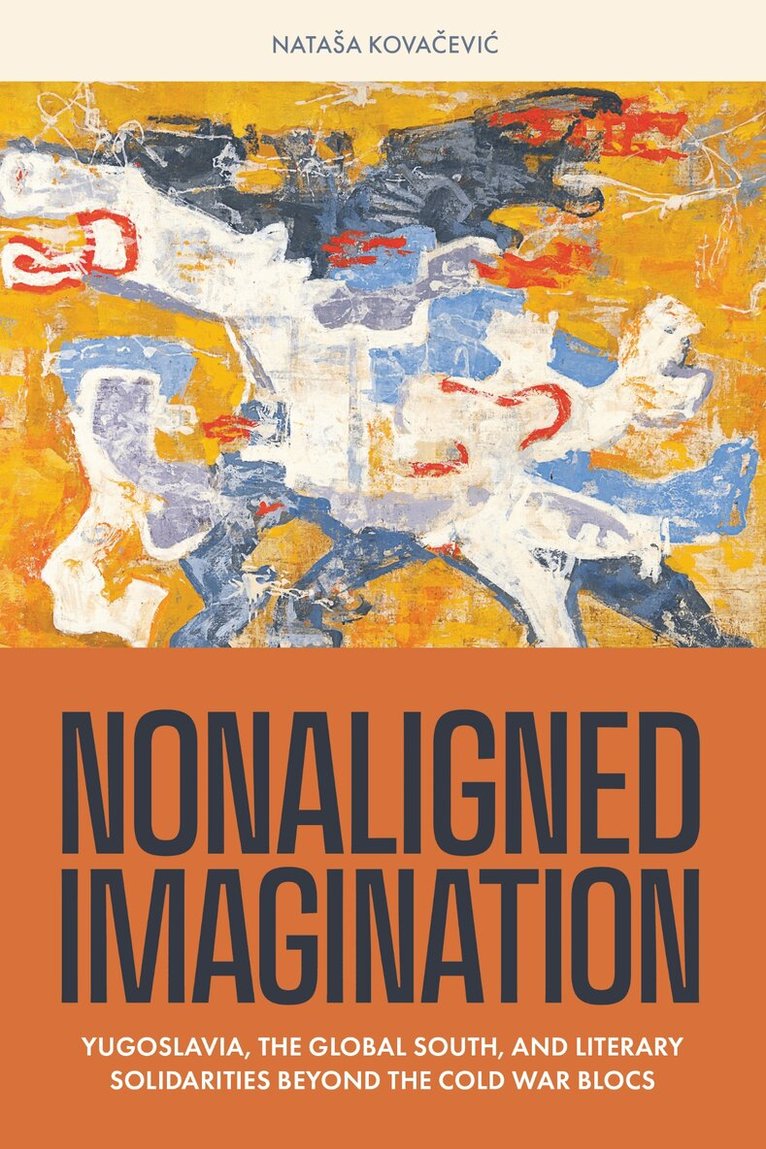
Nonaligned Imagination
Yugoslavia, the Global South, and Literary Solidarities Beyond the Cold War Blocs
Häftad, Engelska, 2025
418 kr
Skickas inom 7-10 vardagar
Recovering the literary and intellectual history of anticolonial collaborations Preoccupied with developing a multiethnic, postcolonial culture and seeking an alternative to Cold War-bloc politics, socialist Yugoslavia turned to the decolonizing countries of the Global South. It forged political, economic, and cultural links with postcolonial states and anticolonial liberation movements through the Non-Aligned Movement, of which it was a founding member in 1961. NAM spanned political and economic systems, uniting members in opposition to superpower politics and around policies of nuclear disarmament, active peaceful coexistence, anticolonialism, and respect for national sovereignty. Nataša Kovacevic reconstructs the forgotten literary and cultural history of this movement, tracing the development of new networks of intellectual engagement and cultural exchange between writers, journalists, and scholars who connected postwar Yugoslavia with 1950s India, 1960s Algeria and Guinea, 1970s Vietnam, and beyond. Nonaligned narratives attempted to reconfigure the understanding of the globe outside Eurocentric tropes and hegemonic political stratifications and to articulate Yugoslavs' own internationalist sensibility. With Cold War-era rhetoric intensifying again in the twenty-first century, Nonaligned Imagination assumes the urgent task of unearthing a history of engaged writing and cultural diplomacy that imagined alternatives to superpower conflicts and a bipolar vision of the world.
1 528 kr
Skickas inom 7-10 vardagar
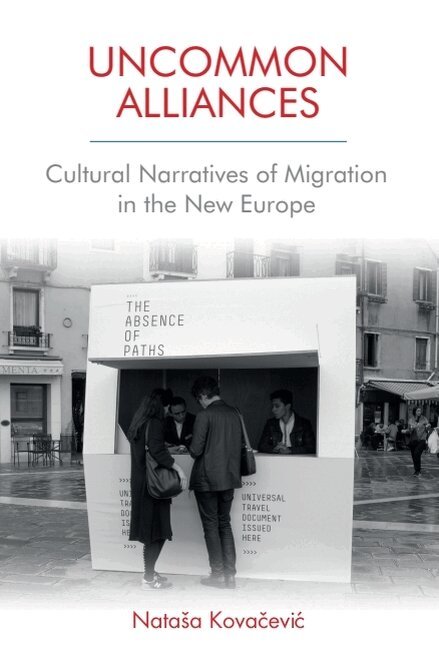
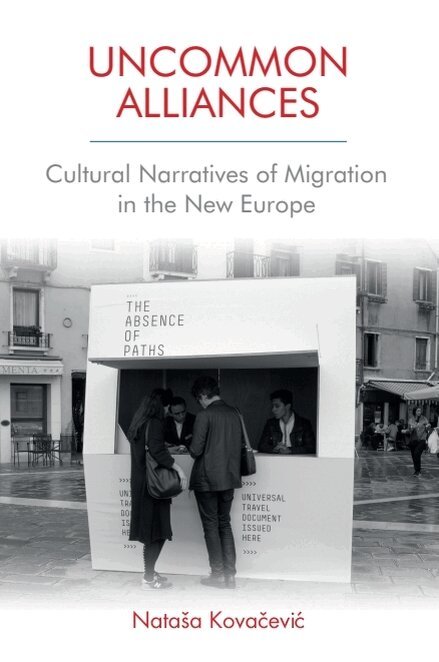
Examines European Union's neocolonial sovereignty in cultural narratives of migration'Uncommon Alliances: Cultural Narratives of Migration in the New Europe' takes a critical stance toward both assimilationist and multicultural imaginings of community in the European Union that occlude neocolonial relations of dependence and exclusion. Brining into conversation postcolonial and post-communist migration narratives from Africa, Asia and Eastern Europe, it aims to capture the emergent shift from national to postnational European space. Through its examination of cultural texts, including works by Jamal Mahjoub, Mike Phillips, Laila Lalami, Mahi Binebine, Dubravka Ugresic and others, this book traces EU neocolonial practices in relation to European history, borders and guiding ideals of community, which exclude various 'others' from their symbolic imaginary. The book deliberately moves the discussion away from social-scientific approaches to humanities and offers a fresh intellectual framework for understanding multicultural identity in Europe.Key FeaturesGoes beyond traditional frameworks of cultural analysis (national, ethnic, or language-based) by focusing on narratives which take the European Union as a point of referenceShifts focus from narratives depicting interactions between different cultures to those imagining communities of solidarity based on common economic or historical marginalisation in the European UnionRevises postcolonial theory by arguing that the European Union exemplifies a new, 'consensual' regime of colonial governanceOffers poststructuralist readings of migrant narratives to go beyond the more common, multicultural approaches to such narrativesDevelops original perspectives on individual writers (Jamal Mahjoub, Mike Phillips, Laila Lalami, Mahi Binebine, Dubravka Ugresic, and others)Helps reorient European Union studies, dominated by social sciences, to the humanities side
747 kr
Skickas inom 3-6 vardagar
Examines European Union’s neocolonial sovereignty in cultural narratives of migrationUncommon Alliances: Cultural Narratives of Migration in the New Europe takes a critical stance toward both assimilationist and multicultural imaginings of community in the European Union that occlude neocolonial relations of dependence and exclusion. Bringing into conversation postcolonial and post-communist migration narratives from Africa, Asia and Eastern Europe, it aims to capture the emergent shift from national to postnational European space. Through its examination of cultural texts, including works by Jamal Mahjoub, Mike Phillips, Laila Lalami, Mahi Binebine, Dubravka Ugrešić and others, this book traces EU neocolonial practices in relation to European history, borders and guiding ideals of community, which exclude various 'others' from their symbolic imaginary. The book deliberately moves the discussion away from social-scientific approaches to humanities and offers a fresh intellectual framework for understanding multicultural identity in Europe.Key FeaturesGoes beyond traditional frameworks of cultural analysis (national, ethnic, or language-based) by focusing on narratives which take the European Union as a point of referenceShifts focus from narratives depicting interactions between different cultures to those imagining communities of solidarity based on common economic or historical marginalisation in the European UnionRevises postcolonial theory by arguing that the European Union exemplifies a new, ‘consensual’ regime of colonial governance Offers poststructuralist readings of migrant narratives to go beyond the more common, multicultural approaches to such narrativesDevelops original perspectives on individual writers (Jamal Mahjoub, Mike Phillips, Laila Lalami, Mahi Binebine, Dubravka Ugrešić, and others)Helps reorient European Union studies, dominated by social sciences, to the humanities side