Natasha Erlank - Böcker
Visar alla böcker från författaren Natasha Erlank. Handla med fri frakt och snabb leverans.
3 produkter
3 produkter
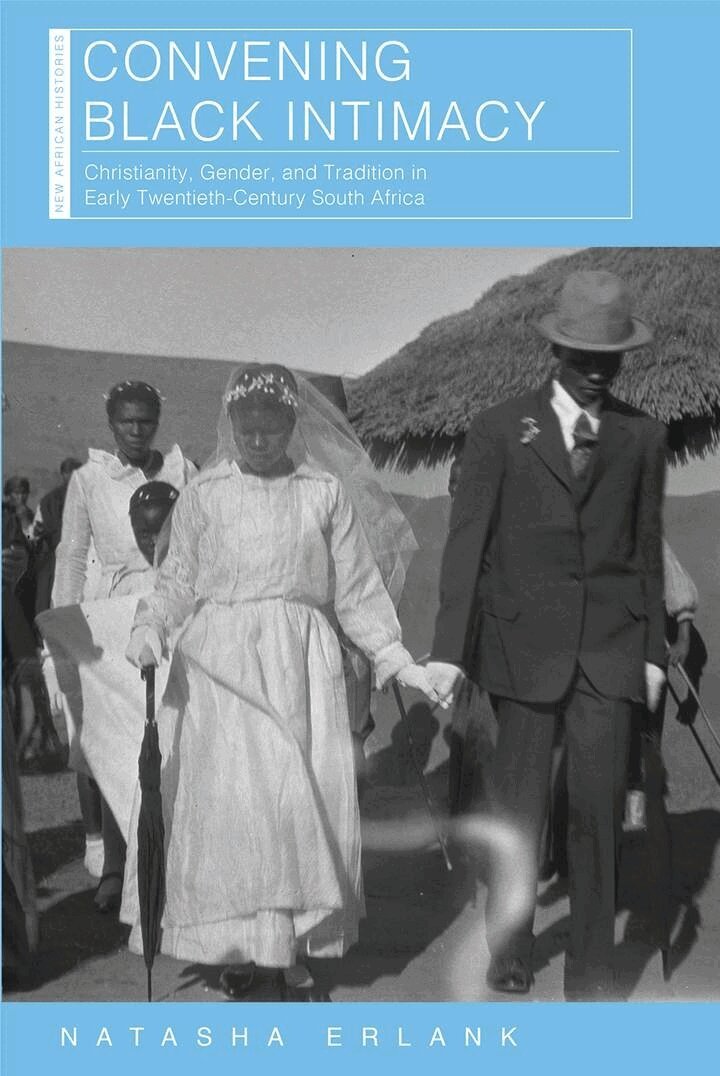
Convening Black Intimacy
Christianity, Gender, and Tradition in Early Twentieth-Century South Africa
Inbunden, Engelska, 2022
844 kr
Skickas inom 7-10 vardagar
An unprecedented study of how Christianity reshaped Black South Africans' ideas about gender, sexuality, marriage, and family during the first half of the twentieth century.This book demonstrates that the primary affective force in the construction of modern Black intimate life in early twentieth-century South Africa was not the commonly cited influx of migrant workers but rather the spread of Christianity. During the late nineteenth and early twentieth centuries, African converts developed a new conception of intimate life, one that shaped ideas about sexuality, gender roles, and morality.Although the reshaping of Black intimacy occurred first among educated Africans who aspired to middle-class status, by the 1950s it included all Black Christians—60 percent of the Black South African population. In turn, certain Black traditions and customs were central to the acceptance of sexual modernity, which gained traction because it included practices such as lobola, in which a bridegroom demonstrates his gratitude by transferring property to his bride's family. While the ways of understanding intimacy that Christianity informed enjoyed broad appeal because they partially aligned with traditional ways, other individuals were drawn to how the new ideas broke with tradition. In either case, Natasha Erlank argues that what Black South Africans regard today as tradition has been unequivocally altered by Christianity.In asserting the paramount influence of Christianity on unfolding ideas about family, gender, and marriage in Black South Africa, Erlank challenges social historians who have attributed the key factor to be the migrant labor system. Erlank draws from a wide range of sources, including popular Black literature and the Black press, African church and mission archives, and records of the South African law courts, which she argues have been underutilized in histories of South Africa. The book is sure to attract historians and other scholars interested in the history of African Christianity, African families, sexuality, and the social history of law, especially colonial law.
Convening Black Intimacy
Christianity, Gender, and Tradition in Early Twentieth-Century South Africa
Häftad, Engelska, 2022
360 kr
Skickas inom 7-10 vardagar
An unprecedented study of how Christianity reshaped Black South Africans' ideas about gender, sexuality, marriage, and family during the first half of the twentieth century.This book demonstrates that the primary affective force in the construction of modern Black intimate life in early twentieth-century South Africa was not the commonly cited influx of migrant workers but rather the spread of Christianity. During the late nineteenth and early twentieth centuries, African converts developed a new conception of intimate life, one that shaped ideas about sexuality, gender roles, and morality.Although the reshaping of Black intimacy occurred first among educated Africans who aspired to middle-class status, by the 1950s it included all Black Christians—60 percent of the Black South African population. In turn, certain Black traditions and customs were central to the acceptance of sexual modernity, which gained traction because it included practices such as lobola, in which a bridegroom demonstrates his gratitude by transferring property to his bride's family. While the ways of understanding intimacy that Christianity informed enjoyed broad appeal because they partially aligned with traditional ways, other individuals were drawn to how the new ideas broke with tradition. In either case, Natasha Erlank argues that what Black South Africans regard today as tradition has been unequivocally altered by Christianity.In asserting the paramount influence of Christianity on unfolding ideas about family, gender, and marriage in Black South Africa, Erlank challenges social historians who have attributed the key factor to be the migrant labor system. Erlank draws from a wide range of sources, including popular Black literature and the Black press, African church and mission archives, and records of the South African law courts, which she argues have been underutilized in histories of South Africa. The book is sure to attract historians and other scholars interested in the history of African Christianity, African families, sexuality, and the social history of law, especially colonial law.
504 kr
Skickas inom 7-10 vardagar
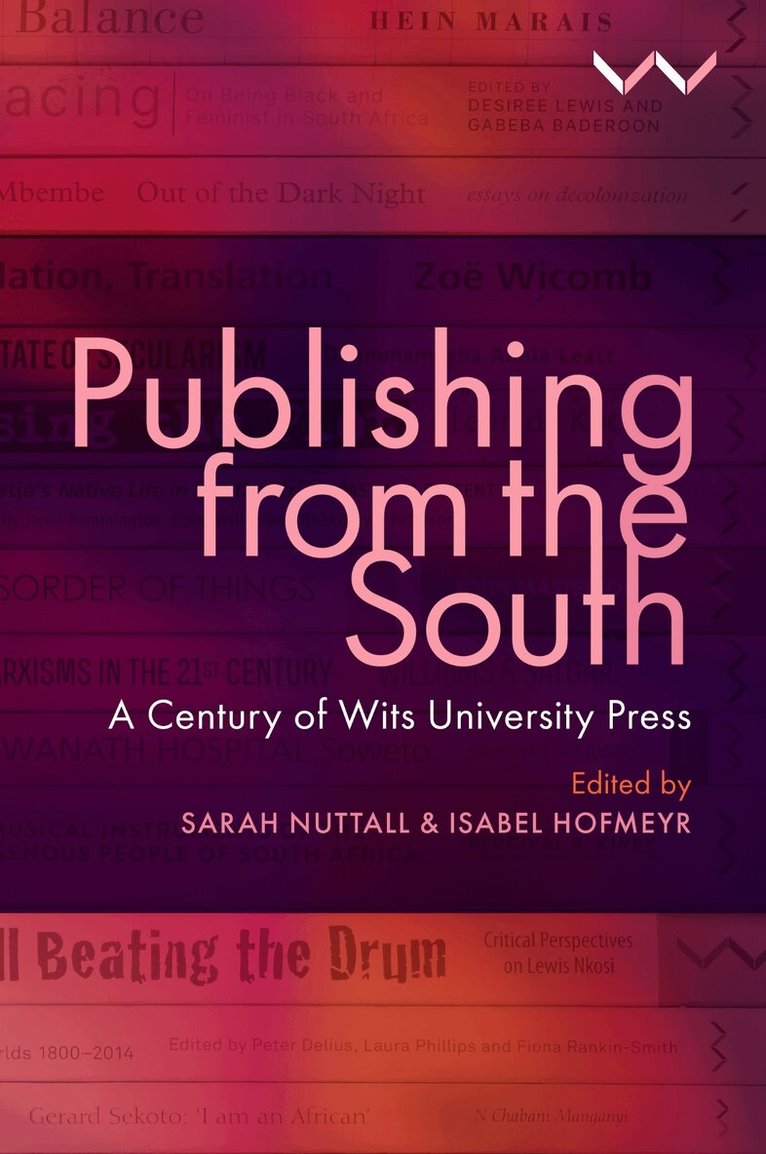
In 2022 Wits University Press marked its centenary, making it the oldest, most established university press in sub-Saharan Africa. While in part modelled on scholarly publishers from the global North, it has had to contend with the constraints of working under global South conditions: marginalisation within the university, budgetary limitations, small local markets, unequal access to international sales channels, and the privileging of English language publishing over indigenous languages. This volume explores what the Press has achieved, and what its modes of reinvention might look like. In widening and deepening our understanding of the Press as an example of a global South scholarly publisher, this volume asks how publishing can contribute to a broader understanding of Southern knowledge production. Featuring contributions from scholars, publishers and authors this multi-voiced volume showcases the history of the Press's publishing activities over 100 years: from documenting its evolution through book covers and giving credence to some of the leading black intellectuals and writers of the early 20th century and the success of those works in spite of their authors' racial marginalisation, to the role of women, both in publishing and in the spaces afforded to women's writing on the Press's list. The collection concludes with essays by contemporary authors who detail not only their experiences of working with Southern publishers, but also the politics and influences governing their decisions to choose the Press over a Northern publisher. Publishing from the South shows the strategies deployed by the Press to professionalise Southern knowledge making, and in the process demonstrating how university presses in the global South support the scholarly missions of their universities for both local and global audiences.