Nathalie Bernard-Maugiron - Böcker
Visar alla böcker från författaren Nathalie Bernard-Maugiron. Handla med fri frakt och snabb leverans.
2 produkter
2 produkter
2 745 kr
Kommande
Today, a plurality of personal statuses in family matters persists in a significant number of African and Asian countries. This volume identifies 33 countries as presenting this configuration and provides a comprehensive overview of their legal systems, examining the relationship between the plurality of personal laws and the principle of equality. After a long period of stability dating from the colonial era, these countries are seeing more and more conflicts involving the plurality of personal status laws. The work takes a comparative and multi-disciplinary approach to understand the different aspects and levels involved in this heterogeneity and link them with the concepts of equality and non-discrimination. The first part of the book presents the concepts used to analyse personal status laws in their historical, sociological, ethnographic, and legal contexts. The chapters in the remainder of the book, each devoted to a country or in some cases a group of neighbouring countries, are written by specialists drawn from a large international and interdisciplinary pool. With its multi-disciplinary approach, including law, history and anthropology, the work will be a major contribution to the field of “socio-historical jurisprudence.” It will be of interest to academics and researchers working in the areas of socio-legal studies, human rights, religion-inspired law, and law and politics.
282 kr
Skickas inom 5-8 vardagar
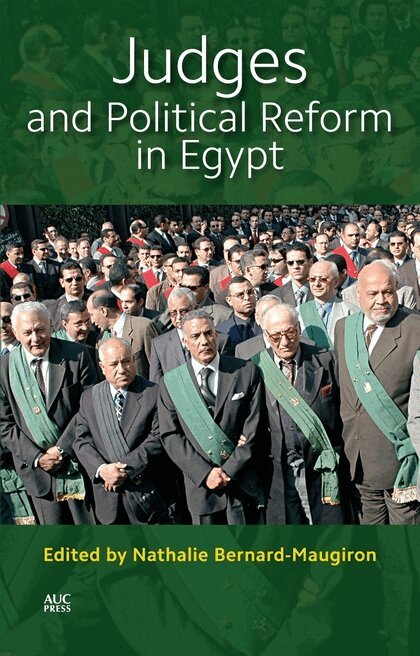
If justice in the Arab world is often marked by a lack of autonomy of the judiciary toward the executive power, one of the characteristic features of the Egyptian judiciary lies in its strength and activism in the defense of democratic values. Judges have been struggling for years to enhance their independence from the executive power and exercise full supervision of the electoral process to achieve transparent elections. Recent years have seen growing tensions in Egypt between the judiciary and the executive authority. In order to gain concessions, judges went as far as to threaten to boycott the supervision of the presidential and legislative elections in the fall of 2005 and to organize sit-ins in the streets. The struggle between the two powers was in full swing in the spring of 2006, when a conference convened in Cairo in early April on the theme of the role of judges in the process of political reform in Egypt and the Arab world. The conference was organized by the Cairo Institute for Human Rights Studies (CIHRS) in cooperation with the Institut de Recherche pour le Developpement (IRD). This book is a collection of papers from the conference dealing with Egypt.They allow a better understanding of the role judges are playing in the process of democratic reform in Egypt as well as the limits of their struggle.