Nathalie Etoke - Böcker
Visar alla böcker från författaren Nathalie Etoke. Handla med fri frakt och snabb leverans.
5 produkter
5 produkter
125 kr
Skickas inom 7-10 vardagar
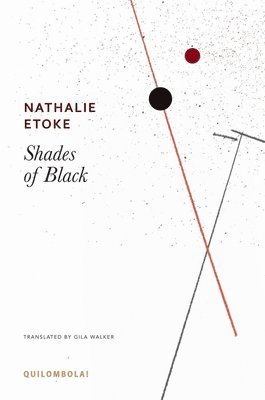
One might say that the womb of death—the Middle Passage, slavery, and colonization—gave birth to Black populations. Taking this observation as her point of departure, Nathalie Etoke examines Black existence today in her riveting new book, Shades of Black. In a white supremacist world, Black bodies hold a specific position, invested with a range of meaning that maintains them in a fixed role, with a script they did not write. The white world has invented and defined the Black person according to its own interests, endowing her with a bereaved humanity. The Black person is confronted with an essential paradox—exist as Black or as a human being? Does the Black person exist for herself or for the other? In the white world, is the Black race the embodiment of a sub-humanity?Situated at the crossroads of three countries—Cameroon, France, and, now, the United States—Nathalie Etoke is uniquely positioned for this polyphonic reflection on race. She examines what happens when race obliterates historical, social, cultural, and political differences among populations of African descent from different parts of the world. Focusing on recent and ongoing topics in the United States, including the murder of George Floyd, police brutality, the complex symbolism of Barack Obama and Kamala Harris, Etoke explores the relations of violence, oppression, dispossession, and inequalities that have brought us here, face to face with these existential questions: Are you breathing? Are we breathing?
1 142 kr
Skickas inom 10-15 vardagar
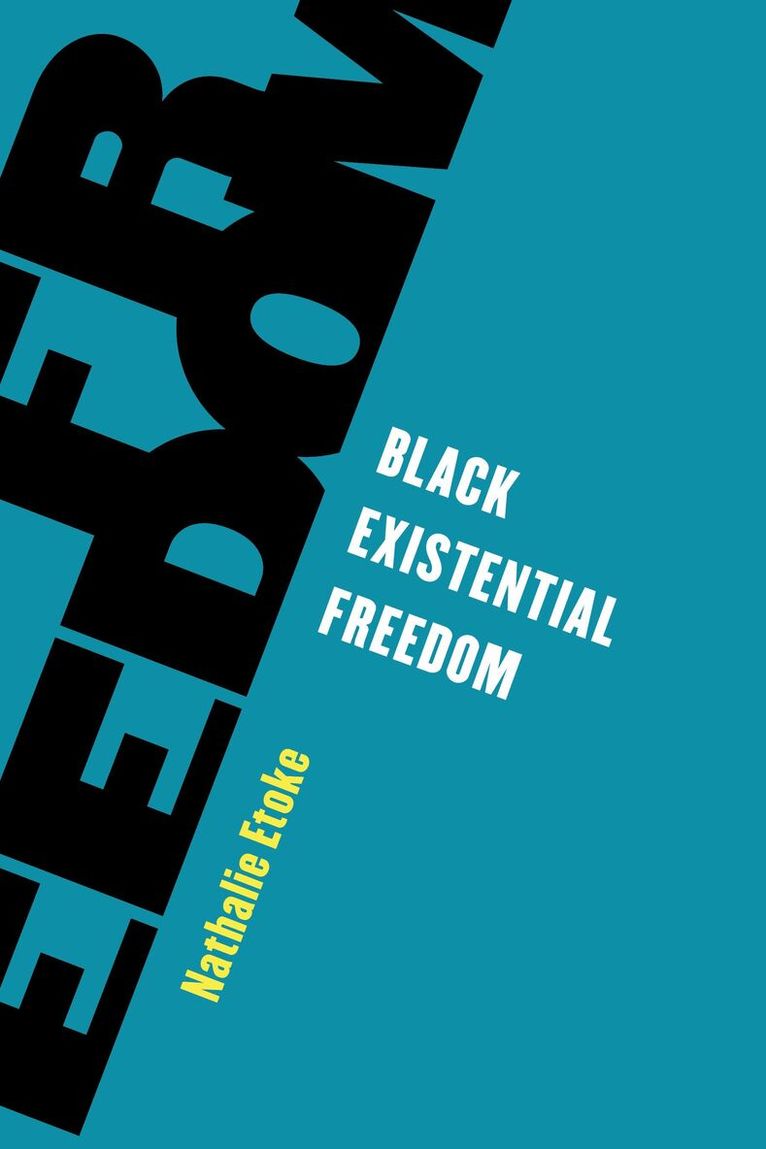
The history of slavery, colonization, subjugation, gratuitous violence, and the denial of basic human rights to people of African descent has led Afro-Pessimists to look at black existence through the lens of white supremacy and anti-blackness. Against this trend, Black Existential Freedom argues that Blackness is not inherently synonymous with victimhood. Rather, it is inextricable from existential freedom and the struggle for political liberation.This book presents an existential analysis of continental and diasporic African experiences through critical interpretations of music, film, and fiction that portray what it means to be human— to persevere in the tension between life and physical, psychological, and social death—for the sake of freedom. With its transdisciplinary perspective and convergence of Africana existential philosophy, African-American Studies, Afro-French Studies, Diaspora Studies, and African studies, this book is not concerned with disciplinary boundaries or certain appropriations of European metaphysics that are committed to a reading of black “non-being.” Black Existential Freedom explores the continuities and discontinuities of black existence and the manifestations and the meanings of blackness within different countries, time periods, and social and political contexts. Etoke's book empowers the reader to understand and process the complexities of racialized identity in a globalized contemporary society. Ultimately, it is an ode to human survival and freedom.
434 kr
Skickas inom 10-15 vardagar
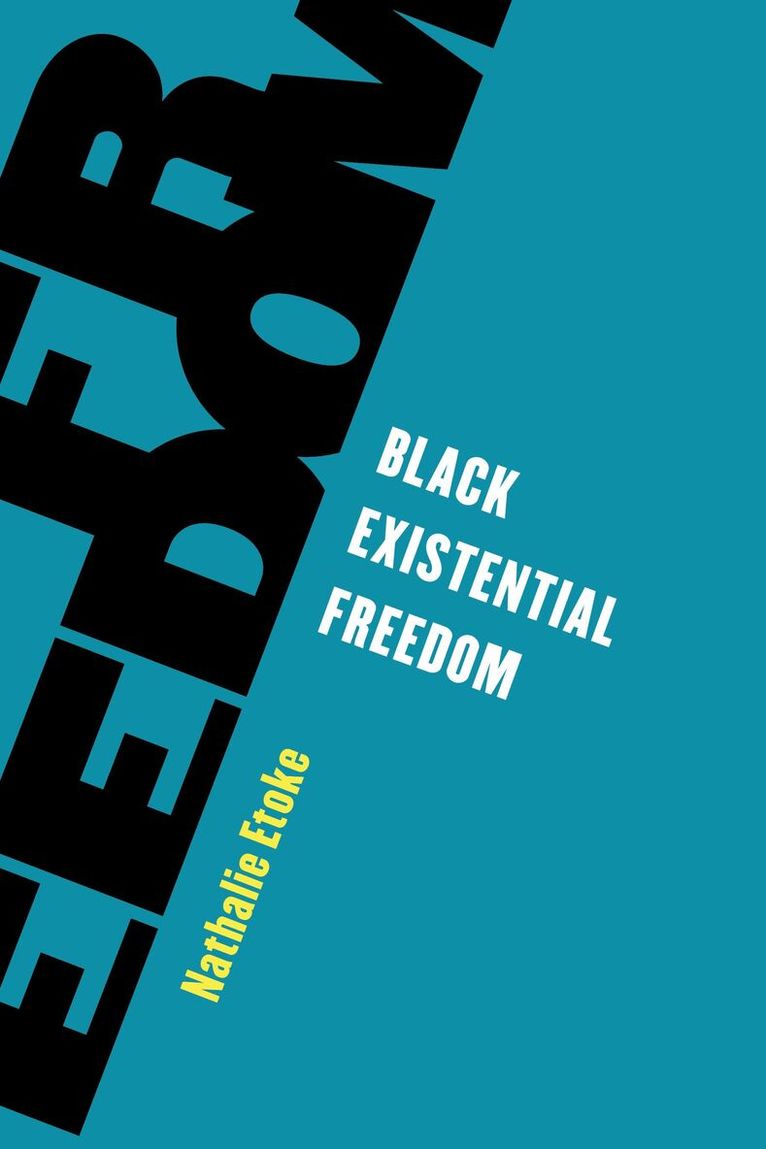
The history of slavery, colonization, subjugation, gratuitous violence, and the denial of basic human rights to people of African descent has led Afro-Pessimists to look at black existence through the lens of white supremacy and anti-blackness. Against this trend, Black Existential Freedom argues that Blackness is not inherently synonymous with victimhood. Rather, it is inextricable from existential freedom and the struggle for political liberation.This book presents an existential analysis of continental and diasporic African experiences through critical interpretations of music, film, and fiction that portray what it means to be human— to persevere in the tension between life and physical, psychological, and social death—for the sake of freedom. With its transdisciplinary perspective and convergence of Africana existential philosophy, African-American Studies, Afro-French Studies, Diaspora Studies, and African studies, this book is not concerned with disciplinary boundaries or certain appropriations of European metaphysics that are committed to a reading of black “non-being.” Black Existential Freedom explores the continuities and discontinuities of black existence and the manifestations and the meanings of blackness within different countries, time periods, and social and political contexts. Etoke's book empowers the reader to understand and process the complexities of racialized identity in a globalized contemporary society. Ultimately, it is an ode to human survival and freedom.
354 kr
Skickas inom 10-15 vardagar
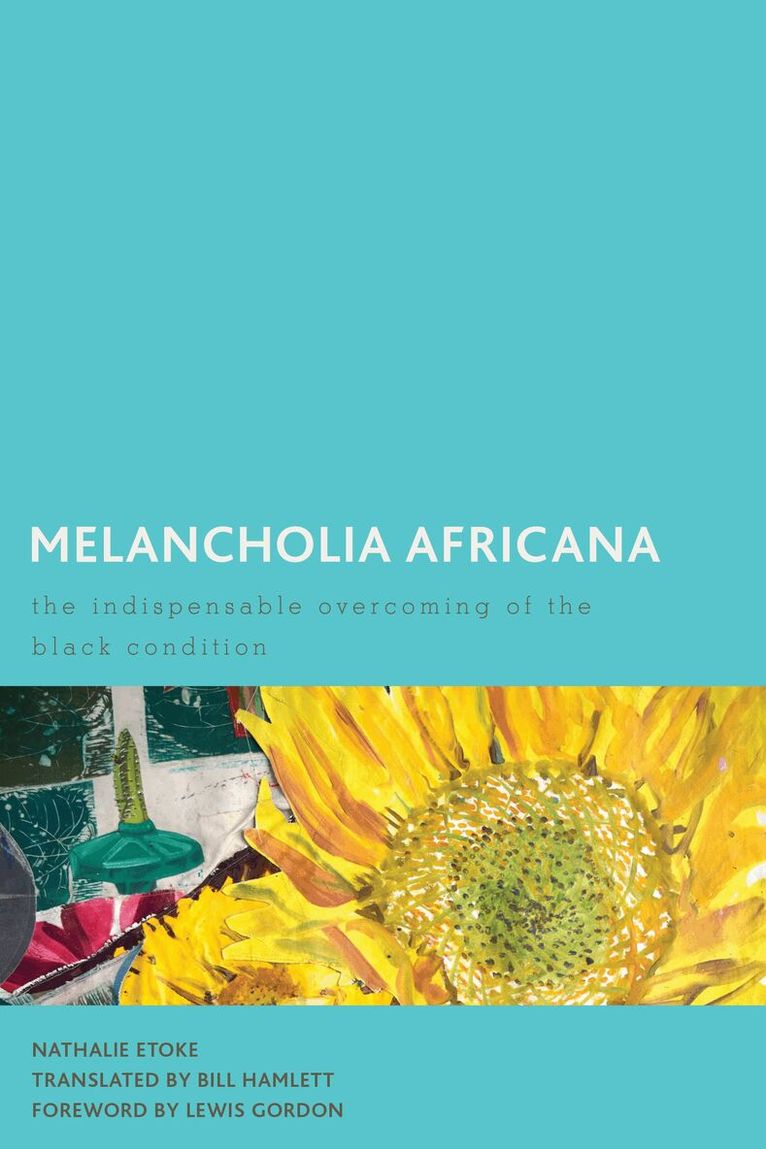
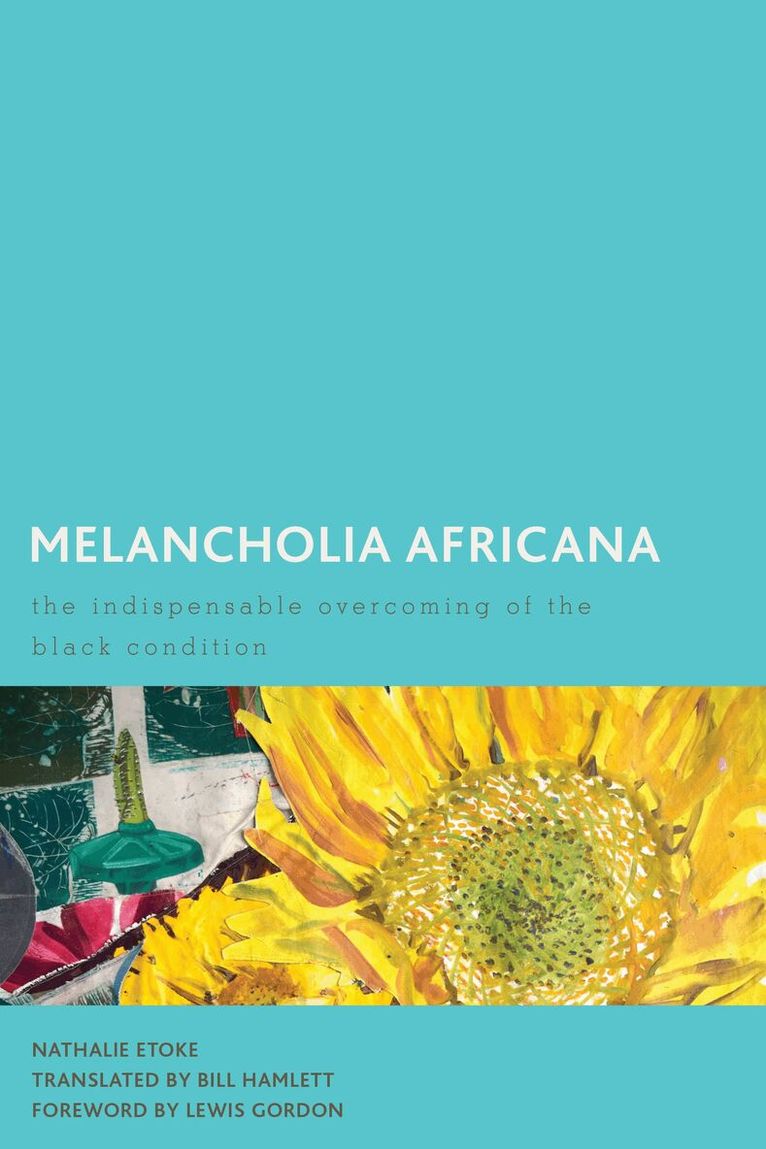
Melancholia Africana argues that in the African and Afro-diasporic context, melancholy is rooted in collective experiences such as slavery, colonization, and the post-colony. From these experiences a theme of loss resonates—loss of land, of freedom, of language, of culture, of self, and of ideals born from independence. Nathalie Etoke demonstrates that, beyond territorial expropriation and the pain inflicted upon the body and the soul, the violence that seals the encounter with the ‘other’ annihilates an age-old cycle of life. In the wake of this annihilation, continental and diasporic Africans strive to reconcile that which has been destroyed with what has been newly introduced. Their survival depends on their capacity to negotiate the inherent tension of their historical becoming. The book develops a transdisciplinary method encompassing historicism, critical theory, Africana existential thought, and poetics.
1 076 kr
Skickas inom 10-15 vardagar
Melancholia Africana argues that in the African and Afro-diasporic context, melancholy is rooted in collective experiences such as slavery, colonization, and the post-colony. From these experiences a theme of loss resonates—loss of land, of freedom, of language, of culture, of self, and of ideals born from independence. Nathalie Etoke demonstrates that, beyond territorial expropriation and the pain inflicted upon the body and the soul, the violence that seals the encounter with the ‘other’ annihilates an age-old cycle of life. In the wake of this annihilation, continental and diasporic Africans strive to reconcile that which has been destroyed with what has been newly introduced. Their survival depends on their capacity to negotiate the inherent tension of their historical becoming. The book develops a transdisciplinary method encompassing historicism, critical theory, Africana existential thought, and poetics.