Nathan D. Mitchell - Böcker
Visar alla böcker från författaren Nathan D. Mitchell. Handla med fri frakt och snabb leverans.
8 produkter
8 produkter
232 kr
Skickas inom 5-8 vardagar
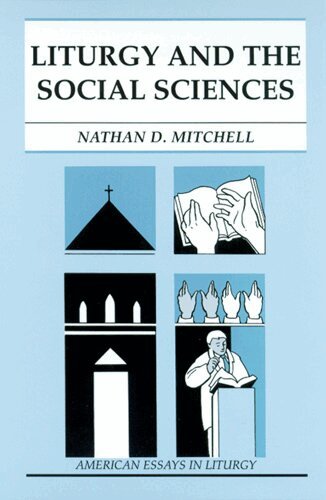
In his letter to liturgists meeting in Mainz, Germany, in 1964, theologian Romano Guardini asked: Is ritual a forgotten way of doing things?" That question challenged Catholics to reevaluate the roots and roles of ritual. In an ongoing response to that challenge, liturgists have sought to reinterpret the multiple meanings of ritual using insights from the social sciences. In Liturgy and the Social Sciences, Nathan Mitchell examines the responses of liturgists to Guardini's famous question.In the first chapter Mitchell focuses on Aidan Kavanagh, OSB, a noted U.S. liturgist that undertook the challenge of answering Guardini's question. He explains how Father Kavanagh's innovative call for a new discipline - a "political science" of behavior - was taken up by American liturgists in a "classical" or "high church" mode that emphasized ritual action as traditional, authoritative, repetitive, conservative, and "canonical."The second chapter examines how the "high church consensus" began to unravel as a result of critical work done on "emerging ritual" by Ronald Grimes and David Kertzer. These scholars argued that new categories were needed to understand how ritual connects with social life and explained the characteristics of "emerging ritual" as innovative, untraditional, unpredictable, playful, and short term.In the third chapter Mitchell explores some of the proposals that a new generation of anthropologists have made for interpreting ritual. He gives attention to the research of Talal Asad, who suggests that rituals are a "technology" aimed at producing "virtuous selves." Michel Foucalt's "technologies of the self" is also discussed in this chapter.Although written for directors of liturgy, Liturgy and the Social Sciences will also appeal to DREs, clergy and religious, directors of adult formation, persons working with candidates in RCIA, and students and teachers of liturgy who want to look beyond what we do to understand why we do it.
922 kr
Skickas inom 3-6 vardagar
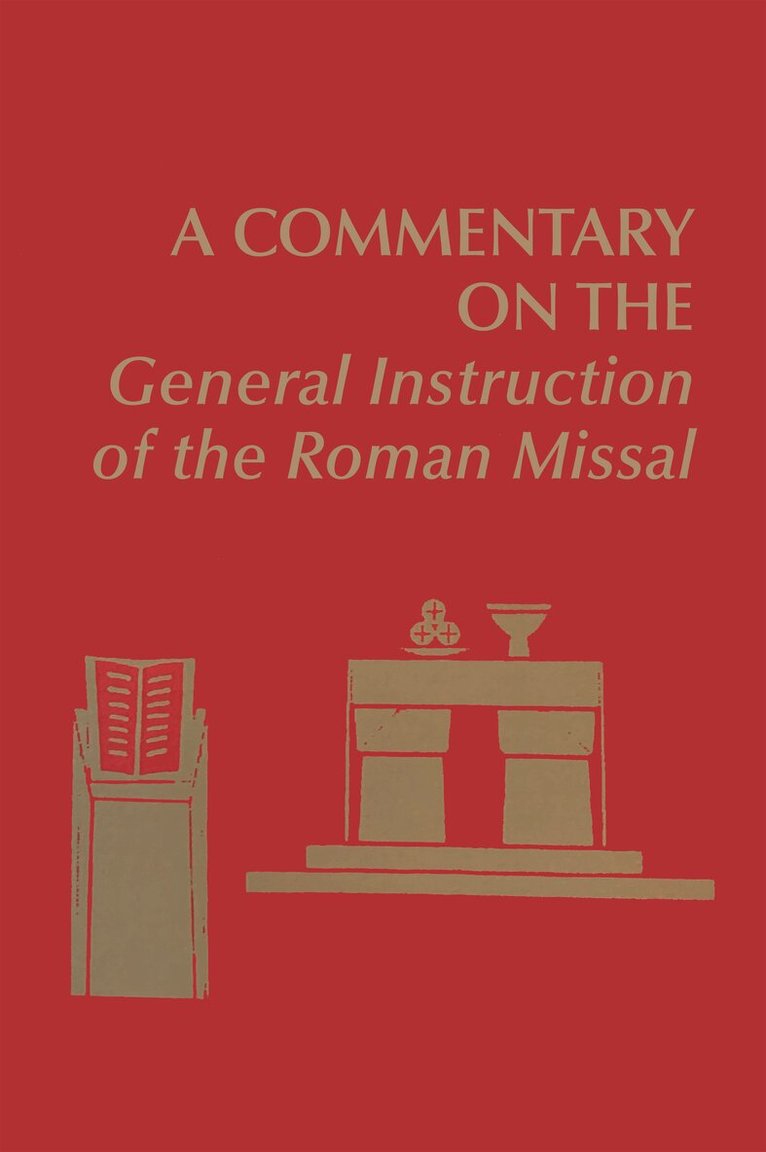
2008 Catholic Press Association Award Winner! The 2002 Institutio Generalis Missalis Romani(IGMR) comes at an important moment in the history of Roman Catholicism. The Church has come through the dramatic reforms of Vatican II and more than a generation has engaged in the contemporary liturgical practices. New churches have been built and texts and songs written that reflect the post 'Vatican II approach to liturgy. In view of these many changes there are yet concerns about what norms best articulate the liturgical Vision embedded in the documents of Vatican II and what directives are most appropriate for shaping the full, active, and conscious participation of the faithful.This commentary by members of the Catholic Academy of Liturgy is attentive to these concerns. While maintaining a balanced view of the reVisions, the authors provide thoughtful analysis of the theological, pastoral, and ecclesial implications of the 2002 IGMR. Several prefatory chapters reflecting on the overall significance of the current Instruction are followed by a concise and meaningful chapter-by-chapter commentary.In addition to the full text of the Instruction in Latin and English, readers will find a varied and rich commentary by top liturgical scholars. No single author's viewpoint dominates, and yet the authors offer a consistent, readable text for everyone interested in the current state of liturgy in the Catholic Church.
468 kr
Skickas inom 3-6 vardagar
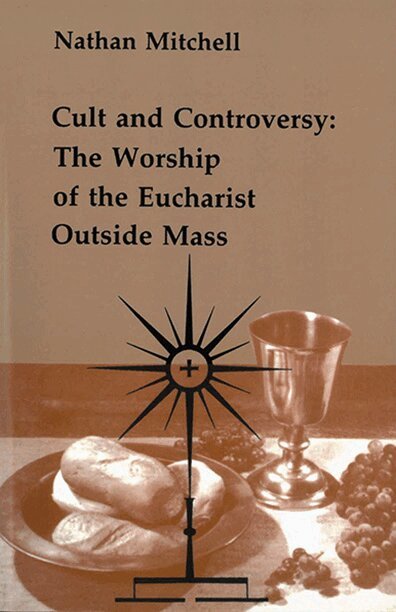
In the first part of this book, Father Mitchell traces the evolution within the Roman Catholic tradition of the cult of the Eucharist outside Mass, a change from holy meal to ritual drama that implied significant alterations of content, meaning, and interpretation.The second section comments on the mandates of Vatican Council II whose call to a return to proper praxis necessitated changes in then current pastoral practice and theological interpretation.
325 kr
Skickas inom 5-8 vardagar
A great deal has happened in Roman Catholic worship since Vatican II promulgated the Constitution on the Sacred Liturgy on December 4, 1963. But the myth persists that very little happened in the four centuries between the end of the Council of Trent on December 4, 1563, and Vatican II. Roman Catholic Worship explores what occurred in those four hundred years before Vatican II and how the stage was set for all the changes that have come about since the council. It may be true that liturgical texts were frozen during those intervening centuries, but to assume that liturgical texts are the whole of liturgy is questionable. James White demonstrates that the worship life of Roman Catholicism was in constant transition during this entire period despite the intransigence of liturgical texts.Chapters are "The Legacy of the Council of Trent," “The Baroque Age,” “The Enlightenment,” “The Romantic Era,” “The Journey to the Second Vatican Council,” “The Legacy of the Second Vatican Council,” “The Journey Beyond the Second Vatican Council,” and “The Future of Roman Catholic Worship.” Includes glossary, bibliography, index of persons and index of subjects.
688 kr
Skickas inom 3-6 vardagar
2008 Catholic Press Association Award Winner! The 2002 Institutio Generalis Missalis Romani(IGMR) comes at an important moment in the history of Roman Catholicism. The Church has come through the dramatic reforms of Vatican II and more than a generation has engaged in the contemporary liturgical practices. New churches have been built and texts and songs written that reflect the post 'Vatican II approach to liturgy. In view of these many changes there are yet concerns about what norms best articulate the liturgical Vision embedded in the documents of Vatican II and what directives are most appropriate for shaping the full, active, and conscious participation of the faithful.This commentary by members of the Catholic Academy of Liturgy is attentive to these concerns. While maintaining a balanced view of the reVisions, the authors provide thoughtful analysis of the theological, pastoral, and ecclesial implications of the 2002 IGMR. Several prefatory chapters reflecting on the overall significance of the current Instruction are followed by a concise and meaningful chapter-by-chapter commentary.In addition to the full text of the Instruction in Latin and English, readers will find a varied and rich commentary by top liturgical scholars. No single author's viewpoint dominates, and yet the authors offer a consistent, readable text for everyone interested in the current state of liturgy in the Catholic Church.
362 kr
Skickas inom 7-10 vardagar
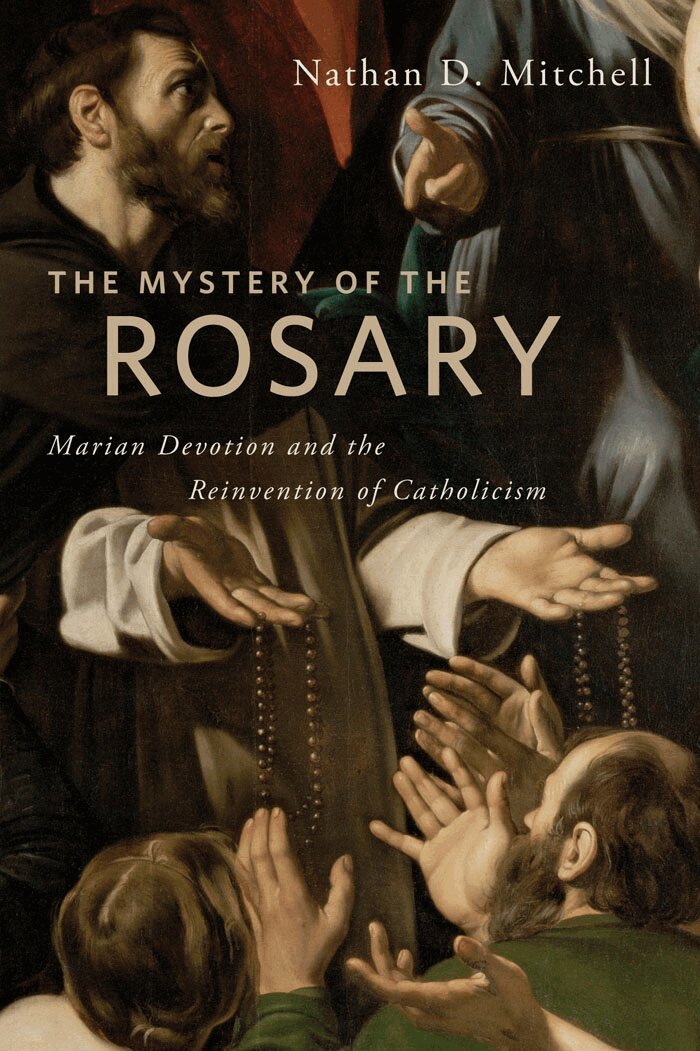
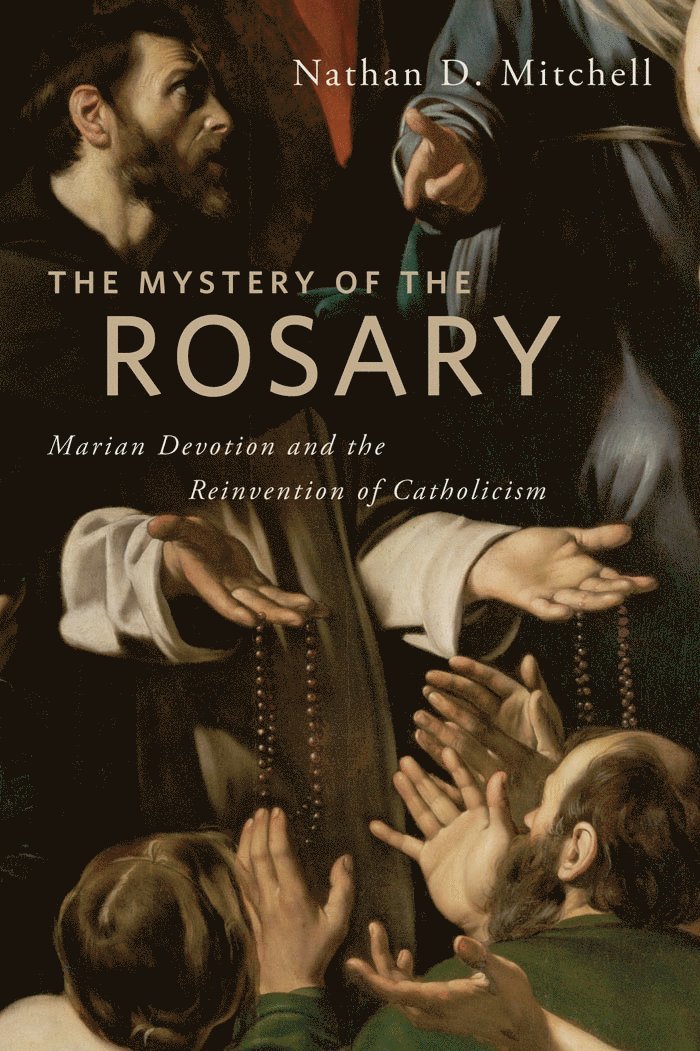
Ever since its appearance in Europe five centuries ago, the rosary has been a widespread, highly visible devotion among Roman Catholics. Its popularity has persisted despite centuries of often seismic social upheaval, cultural change, and institutional reform. In form, the rosary consists of a ritually repeated sequence of prayers accompanied by meditations on episodes in the lives of Christ and Mary. As a devotional object of round beads strung on cord or wire, the rosary has changed very little since its introduction centuries ago. Today, the rosary can be found on virtually every continent, and in the hands of hard-line traditionalists as well as progressive Catholics. It is beloved by popes, professors, protesters, commuters on their way to work, children learning their "first prayers," and homeless persons seeking shelter and safety.Why has this particular devotional object been so ubiquitous and resilient, especially in the face of Catholicism's reinvention in the Early Modern, or "Counter-Reformation," Era? Nathan D. Mitchell argues in lyric prose that to understand the rosary's adaptability, it is essential to consider the changes Catholicism itself began to experience in the aftermath of the Reformation.Unlike many other scholars of this period, Mitchell argues that after the Reformation Catholicism actually became more innovative and diversified rather than retrenched and monolithic. This innovation was especially evident in the sometimes "subversive"; visual representations of sacred subjects, such as in the paintings of Caravaggio, and in new ways of perceiving the relation between Catholic devotion and the liturgy's ritual symbols. The rosary was thus involved not only in how Catholics gave flesh to their faith, but in new ways of constructing their personal and collective identity. Ultimately, Mitchell employs the history of the rosary, and the concomitant devotion to the Virgin Mary with which it is associated, as a lens through which to better understand early modern Catholic history.
1 154 kr
Skickas inom 10-15 vardagar
Ever since its appearance in Europe five centuries ago, the rosary has been a widespread, highly visible devotion among Roman Catholics. Its popularity has persisted despite centuries of often seismic social upheaval, cultural change, and institutional reform. In form, the rosary consists of a ritually repeated sequence of prayers accompanied by meditations on episodes in the lives of Christ and Mary. As a devotional object of round beads strung on cord or wire, the rosary has changed very little since its introduction centuries ago. Today, the rosary can be found on virtually every continent, and in the hands of hard-line traditionalists as well as progressive Catholics. It is beloved by popes, professors, protesters, commuters on their way to work, children learning their "first prayers," and homeless persons seeking shelter and safety.Why has this particular devotional object been so ubiquitous and resilient, especially in the face of Catholicism's reinvention in the Early Modern, or "Counter-Reformation," Era? Nathan D. Mitchell argues in lyric prose that to understand the rosary's adaptability, it is essential to consider the changes Catholicism itself began to experience in the aftermath of the Reformation.Unlike many other scholars of this period, Mitchell argues that after the Reformation Catholicism actually became more innovative and diversified rather than retrenched and monolithic. This innovation was especially evident in the sometimes "subversive"; visual representations of sacred subjects, such as in the paintings of Caravaggio, and in new ways of perceiving the relation between Catholic devotion and the liturgy's ritual symbols. The rosary was thus involved not only in how Catholics gave flesh to their faith, but in new ways of constructing their personal and collective identity. Ultimately, Mitchell employs the history of the rosary, and the concomitant devotion to the Virgin Mary with which it is associated, as a lens through which to better understand early modern Catholic history.
301 kr
Skickas inom 3-6 vardagar