Nathan Glazer - Böcker
Visar alla böcker från författaren Nathan Glazer. Handla med fri frakt och snabb leverans.
12 produkter
12 produkter
179 kr
Skickas inom 7-10 vardagar
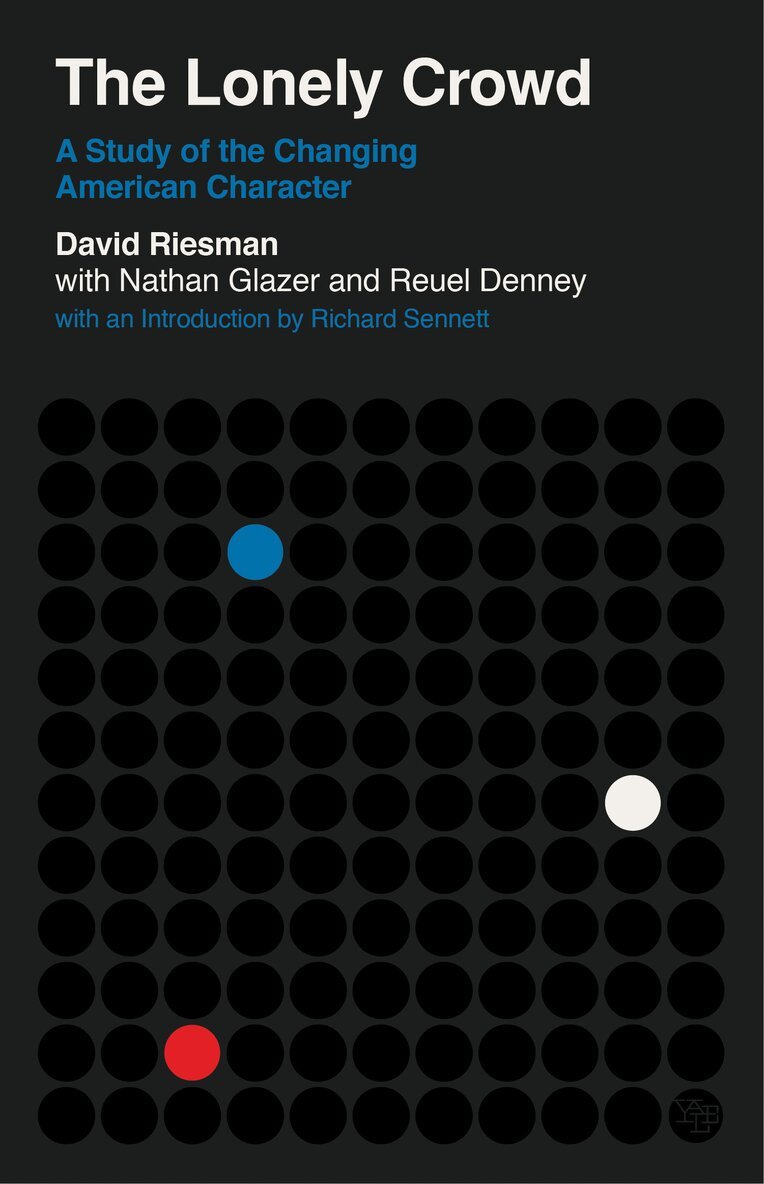
“The Lonely Crowd . . . remains not only the best-selling book by a professional sociologist in American history, but arguably one that has had the widest influence on the nation at large.”—Orlando Patterson, New York Times “As accessible as it is acute, The Lonely Crowd is indispensable reading for anyone who wishes to understand American society. After half a century, this book has lost none of its capacity to make sense of how we live.”—Todd Gitlin Considered by many to be one of the most influential books of the twentieth century, The Lonely Crowd opened exciting new dimensions in our understanding of the problems confronting the individual in twentieth-century America. Richard Sennett’s new introduction illuminates the ways in which Riesman’s analysis of a middle class obsessed with how others lived still resonates in the age of social media.
Beyond the Melting Pot, Revised
The Negroes, Puerto Ricans, Jews, Italians, and Irish of New York City
Häftad, Engelska, 1970
356 kr
Tillfälligt slut
354 kr
Skickas inom 10-15 vardagar
Should government try to remedy persistent racial and ethnic inequalities by establishing and enforcing quotas and other statistical goals? Here is one of the most incisive books ever written on this difficult issue. Nathan Glazer surveys the civil rights tradition in the United States; evaluates public policies in the areas of employment, education, and housing; and questions the judgment and wisdom of their underlying premises—their focus on group rights, rather than individual rights. Such policies, he argues, are ineffective, unnecessary, and politically destructive of harmonious relations among the races.Updated with a long, new introduction by the author, Affirmative Discrimination will enable citizens as well as scholars to better understand and evaluate public policies for achieving social justice in a multiethnic society.
375 kr
Skickas inom 10-15 vardagar
The last two decades have been the most turbulent for American racial and ethnic relations since Reconstruction. Following the passage of the landmark Civil Rights Act of 1964, there has been an explosion of ethnic self-consciousness, affirmative action, and student militancy. What do these events mean, and what should we expect in the future?Nathan Glazer, one of America's foremost social critics, records and interprets the central developments of this crucial period: the shift of major civil rights groups and black leaders from color blindness to color consciousness; the split this shift occasioned with other civil rights advocates, such as Jewish groups; the rapid growth of ethnic self-consciousness and militancy and its impact on schools and colleges; the conflict over bilingualism and over civil rights enforcement caused by the expansion of affirmative action; and the rise of similar issues in the new multi-ethnic states that emerged from colonialism and in Western European nations transformed by mass immigration.The book sums up a period that closed with the election of the first national administration committed to withdrawal from the further reaches of civil rights enforcement, and it forecasts the issues that will be raised as new waves of immigration from Latin America and Asia further transform the American racial and ethnic mix.
484 kr
Skickas inom 10-15 vardagar
This volume launches a far-reaching exploration into the meaning, manifestations, and significance of ethnicity in modern society and politics. The authors seek neither to celebrate nor to deplore ethnicity, but rather to examine it as a basis of social organization which in modern societies has achieved a significance comparable to that of social class. Ethnicity indicates that minority groups around the world are no longer doing what society for hundreds of years has expected them to do—assimilate, disappear, or endure as exotic, troublesome survivors. Instead, their numbers expanded by immigration, their experiences and struggles mirrored to one another by the international mass media, minorities have become vital, highly conscious forces within almost all contemporary societies.Ethnicity has played a pivotal role in recent social change; it has evolved into a political idea, a mobilizing principle, and an effective means of advancing group interests. Together with Glazer and Moynihan, Harold Isaacs, Talcott Parsons, Martin Kilson, Orlando Patterson, Daniel Bell, Milton Esman, Milton Gordon, William Petersen, and others bring analytic clarity to the rich concept of “ethnicity.” Their effort to explain why ethnic identity has become more salient, ethnic self-assertion stronger, and ethnic conflict more intense helps to develop a catholic view of ethnicity: this surpasses limited categories of race and nationality; includes the old world and the new, economically developed as well as developing nations; and offers a broad variety of theoretical approaches. Presenting the readers with a wealth of perceptions, points of view, and examples, Ethnicity: Theory and Experience will provoke discussion and argument for years to come.
744 kr
Skickas inom 10-15 vardagar
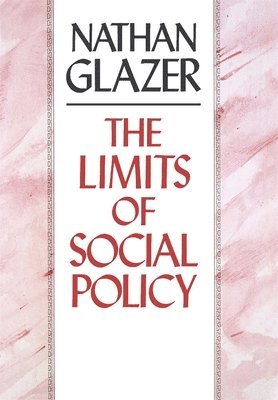
Many social policies of the 1960s and 1970s, designed to overcome poverty and provide a decent minimum standard of living for all Americans, ran into trouble in the 1980s—with politicians, with social scientists, and with the American people. Nathan Glazer has been a leading analyst and critic of those measures. Here he looks back at what went wrong, arguing that our social policies, although targeted effectively on some problems, ignored others that are equally important and contributed to the weakening of the structures—family, ethnic and neighborhood ties, commitment to work—that form the foundations of a healthy society. What keeps society going, after all, is that most people feel they should work, however well they might do without working, and that they should take care of their families, however attractive it might appear on occasion to desert them.Glazer proposes new kinds of social policies that would strengthen social structures and traditional restraints. Thus, to reinforce the incentive to work, he would attach to low-income jobs the same kind of fringe benefits—health insurance, social security, vacations with pay—that now make higher-paying jobs attractive and that paradoxically are already available in some form to those on welfare. More generally, he would reorient social policy to fit more comfortably with deep and abiding tendencies in American political culture: toward volunteerism, privatization, and decentralization.After a long period of quiescence, social policy and welfare reform are once again becoming salient issues on the national political agenda. Nathan Glazer’s deep knowledge and considered judgment, distilled in this book, will be a source of advice, ideas, and inspiration for citizens and policymakers alike.
299 kr
Skickas inom 10-15 vardagar
The monumental Harvard Encyclopedia of American Ethnic Groups is the most authoritative single source available on the history, culture, and distinctive characteristics of ethnic groups in the United States. The Dimensions of Ethnicity series is designed to make this landmark scholarship available to everyone in a series of handy paperbound student editions. Selections in this series will include outstanding articles that illuminate the social dynamics of a pluralistic nation or masterfully summarize the experience of key groups.Written by the best-qualified scholars in each field, Dimensions of Ethnicity titles will reflect the complex interplay between assimilation and pluralism that is a central theme of the American experience.In Prejudice, the history and psychology of discriminatory policies is contrasted with efforts to overcome discrimination.
302 kr
Skickas inom 10-15 vardagar
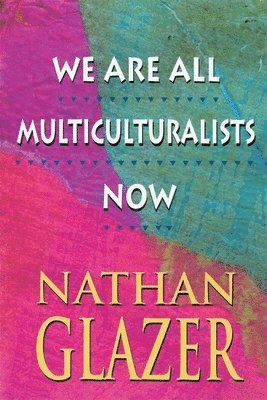
The melting pot is no more. Where not very long ago we sought assimilation, we now pursue multiculturalism. Nowhere has this transformation been more evident than in the public schools, where a traditional Eurocentric curriculum has yielded to diversity--and, often, to confrontation and confusion. In a book that brings clarity and reason to this highly charged issue, Nathan Glazer explores these sweeping changes. He offers an incisive account of why we all--advocates and skeptics alike--have become multiculturalists, and what this means for national unity, civil society, and the education of our youth.Focusing particularly on the impact in public schools, Glazer dissects the four issues uppermost in the minds of people on both sides of the multicultural fence: Whose "truth" do we recognize in the curriculum? Will an emphasis on ethnic roots undermine or strengthen our national unity in the face of international disorder? Will attention to social injustice, past and present, increase or decrease civil disharmony and strife? Does a multicultural curriculum enhance learning, by engaging students' interest and by raising students' self-esteem, or does it teach irrelevance at best and fantasy at worst?Glazer argues cogently that multiculturalism arose from the failure of mainstream society to assimilate African Americans; anger and frustration at their continuing separation gave black Americans the impetus for rejecting traditions that excluded them. But, willingly or not, "we are all multiculturalists now," Glazer asserts, and his book gives us the clearest picture yet of what there is to know, to fear, and to ask of ourselves in this new identity.
From a Cause to a Style
Modernist Architecture's Encounter with the American City
Inbunden, Engelska, 2007
459 kr
Skickas inom 3-6 vardagar
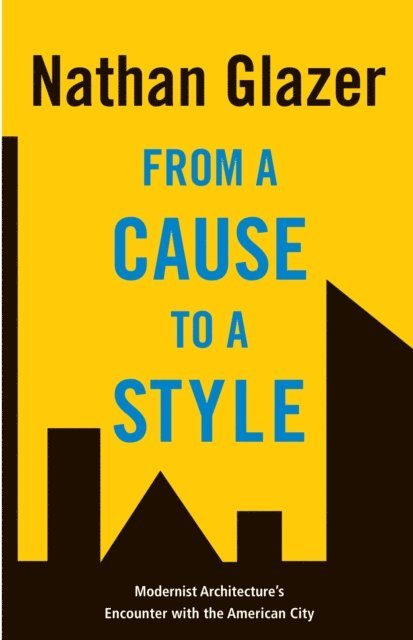
Modernism in architecture and urban design has failed the American city. This is the decisive conclusion that renowned public intellectual Nathan Glazer has drawn from two decades of writing and thinking about what this architectural movement will bequeath to future generations. In From a Cause to a Style, he proclaims his disappointment with modernism and its impact on the American city. Writing in the tradition of legendary American architectural critics Lewis Mumford and Jane Jacobs, Glazer contends that modernism, this new urban form that signaled not just a radical revolution in style but a social ambition to enhance the conditions under which ordinary people lived, has fallen short on all counts. The articles and essays collected here--some never published before, all updated--reflect his ideas on subjects ranging from the livable city and public housing to building design, public memorials, and the uses of public space.Glazer, an undisputed giant among public intellectuals, is perhaps best known for his writings on ethnicity and social policy, where the unflinching honesty and independence of thought that he brought to bear on tough social questions has earned him respect from both the Left and the Right. Here, he challenges us to face some difficult truths about the public places that, for better or worse, define who we are as a society. From a Cause to a Style is an exhilarating and thought-provoking book that raises important questions about modernist architecture and the larger social aims it was supposed to have addressed-and those it has abandoned.
2 103 kr
Skickas inom 10-15 vardagar
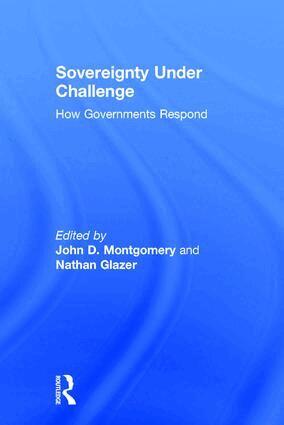
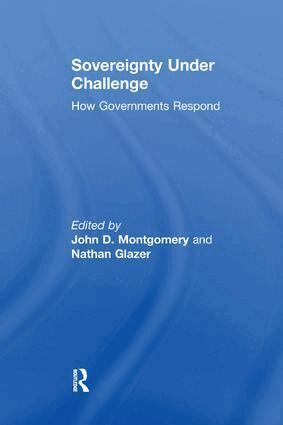
Sovereignty-the authority of a state to wield ultimate power over its territory, its citizens, its institutions-is everywhere undergoing change as states respond in various ways to the challenges posed, from above and below. "Above" the state is the widening net of international institutions and treaties dealing with human rights, trade, investment, and monetary affairs; and "below" it are rising claims within states from long-resident groups discontented with the political order and from new migrants testing its authority. Sovereignty under Challenge deals with a range of such challenges and responses, analyzed in authoritative studies by leading scholars.The introductory chapter sets forth the theme that sovereignty is asserted clearly, but often unpredictably, when governments respond to challenge. It suggests ways of classifying these responses as variables that help explain the changing nature of sovereignty. Part 1, "The Citizen and the State," treats the rising tide of dual citizenship and the concerns this arouses in the United States; the work of national human rights commissions in Asia; and the challenge posed to the state by the Falungong movement in China. The two chapters in Part 2, "The Government as Decision-Maker," examine Japan's response to global warming and the problems of the World Health Organization in orchestrating collaboration among Southeast Asian states in implementing infectious disease control. Part 3, "Sovereignty and Culture," looks at conflicts engendered by outside change on indigenous economic, cultural, and legal institutions in India, Fiji, Indonesia, and Malaysia. The chapters in Part 4, "Sovereignty and the Economy," analyze the economic and cultural instability induced by Chinese migration to Russia's far east; the impact on state sovereignty brought about by transnational regulatory campaigns and social activism; the question of indigenous land rights in the Philippines; and the impact of transnational corporations on information technology in Asia. A concluding chapter offers a global assessment of the current status of state sovereignty.
403 kr
Tillfälligt slut
The National Mall in Washington, D.C., has held an important place in the American psyche since the early nineteenth century. Home to monuments and museums dedicated to the ideals upon which the United States rests, the Mall serves as a gathering place for public protest and celebration. But as the nation ages and the population diversifies, demands for additional structures and uses have sparked debates over the Mall's future and the necessity of preserving its legacy and the vision of its designers. The National Mall addresses these issues with a novel and compelling collection of essays, the work of leading design professionals, historians, and social scientists. Supplemented by eye-catching illustrations and photographs, this cross-disciplinary examination follows the discussion over the Mall's design and use, from its conceptual origins as part of Pierre Charles L'Enfant's vision for the capital to the 1902 McMillan Plan to the present day and beyond.It assesses how architectural, societal, and political changes have altered the park-like space between the Capitol and the Lincoln Memorial and explores the influence that disparate interest groups and creeping corporatism have already had on-and are likely to exert upon-America's public square. The National Mall presents an overarching account of how a democratic society plans, creates, and expands a national ceremonial space, opening the way for a broadly based inquiry into the Mall as it was, is, and will become. Urban planners, architectural and design historians, and engaged citizens will be challenged and well served by the thoughtful essays collected by Nathan Glazer and Cynthia R. Field.
676 kr
Skickas inom 10-15 vardagar
Sovereignty-the authority of a state to wield ultimate power over its territory, its citizens, its institutions-is everywhere undergoing change as states respond in various ways to the challenges posed, from above and below. "Above" the state is the widening net of international institutions and treaties dealing with human rights, trade, investment, and monetary affairs; and "below" it are rising claims within states from long-resident groups discontented with the political order and from new migrants testing its authority. Sovereignty under Challenge deals with a range of such challenges and responses, analyzed in authoritative studies by leading scholars.The introductory chapter sets forth the theme that sovereignty is asserted clearly, but often unpredictably, when governments respond to challenge. It suggests ways of classifying these responses as variables that help explain the changing nature of sovereignty. Part 1, "The Citizen and the State," treats the rising tide of dual citizenship and the concerns this arouses in the United States; the work of national human rights commissions in Asia; and the challenge posed to the state by the Falungong movement in China. The two chapters in Part 2, "The Government as Decision-Maker," examine Japan's response to global warming and the problems of the World Health Organization in orchestrating collaboration among Southeast Asian states in implementing infectious disease control. Part 3, "Sovereignty and Culture," looks at conflicts engendered by outside change on indigenous economic, cultural, and legal institutions in India, Fiji, Indonesia, and Malaysia. The chapters in Part 4, "Sovereignty and the Economy," analyze the economic and cultural instability induced by Chinese migration to Russia's far east; the impact on state sovereignty brought about by transnational regulatory campaigns and social activism; the question of indigenous land rights in the Philippines; and the impact of transnational corporations on information technology in Asia. A concluding chapter offers a global assessment of the current status of state sovereignty.