David Riesman - Böcker
Visar alla böcker från författaren David Riesman. Handla med fri frakt och snabb leverans.
14 produkter
14 produkter
179 kr
Skickas inom 7-10 vardagar
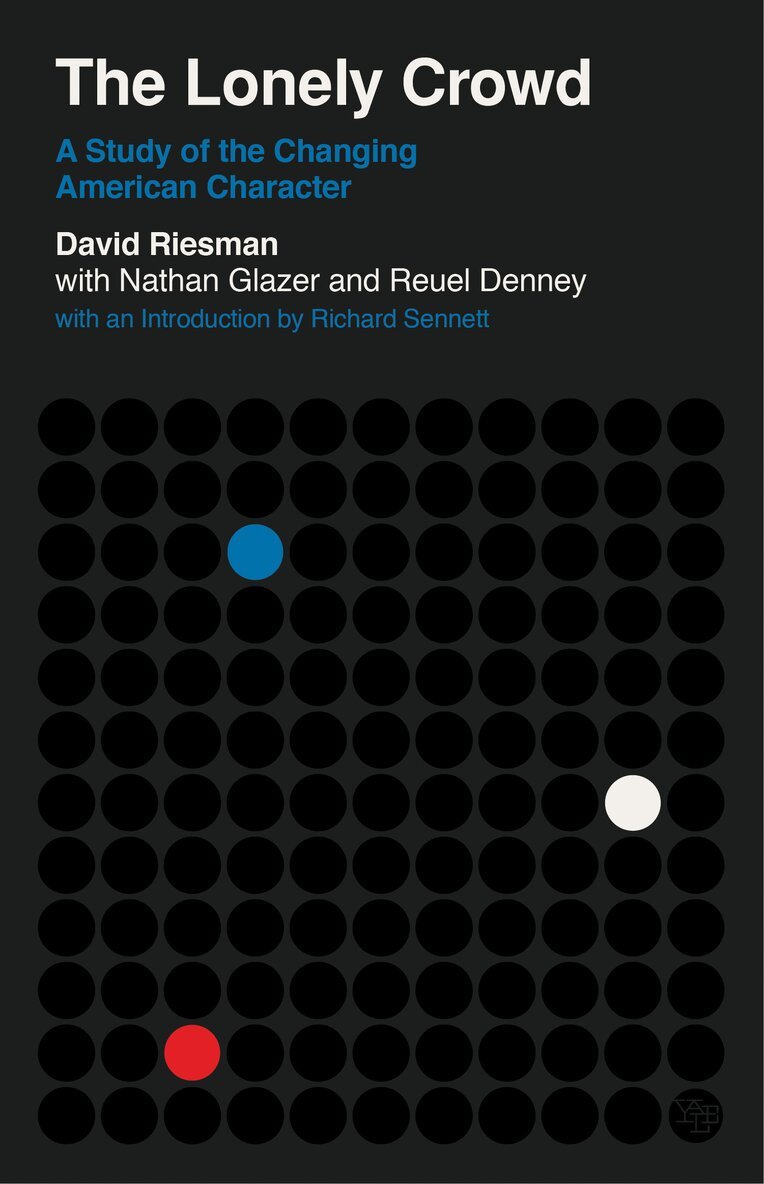
“The Lonely Crowd . . . remains not only the best-selling book by a professional sociologist in American history, but arguably one that has had the widest influence on the nation at large.”—Orlando Patterson, New York Times “As accessible as it is acute, The Lonely Crowd is indispensable reading for anyone who wishes to understand American society. After half a century, this book has lost none of its capacity to make sense of how we live.”—Todd Gitlin Considered by many to be one of the most influential books of the twentieth century, The Lonely Crowd opened exciting new dimensions in our understanding of the problems confronting the individual in twentieth-century America. Richard Sennett’s new introduction illuminates the ways in which Riesman’s analysis of a middle class obsessed with how others lived still resonates in the age of social media.
729 kr
Skickas inom 10-15 vardagar
This set of readings presents useful insights into urbanization and provides a fresh perspective on American cities and their inhabitants. Advancing the premise that it is not possible to understand how people live in cities without understanding how they think of them, the editor presents historical and contemporary materials that illustrate vividly the variety of ways in which Americans have viewed their cities, and urbanization in general.This book sheds light on what the city is and does by analyzing what its citizens think it should be and do. Its lively, readable selections include contributions from businessmen, ministers, journalists, reporters, city planners, and reformers, as well as sociologists. Strauss shows that Americans' views of cities have been profoundly influenced by their history of continental expansion, successive waves of immigration, massive industrialization and similar objective developments. He points out that certain perspectives or themes—relations of social classes within the city, of country to city, of small city to big city, of city to region, etc.—persist regardless of the social or historical perspective of the writer.The author's comprehensive introduction and his introductions to each section of the book delineate the thematic structure of the readings and guide the reader toward the insights and principles illuminated in the different sections. A fruitful contribution to courses in urban sociology, the book is a useful addition to the libraries of sociologists, political scientists, planners, and city officials who wish to understand more fully the contemporary urban milieu.
756 kr
Skickas inom 10-15 vardagar
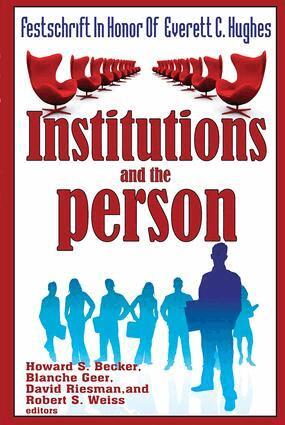
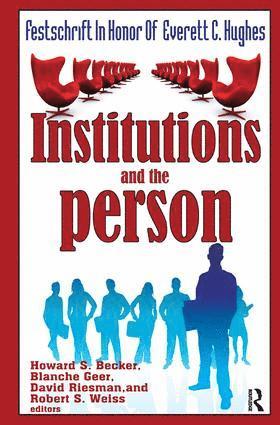
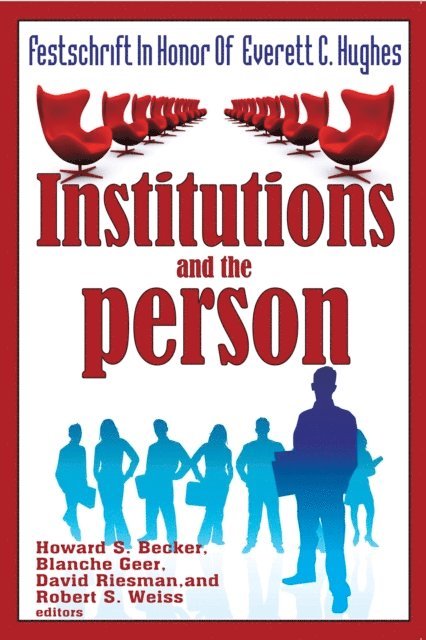
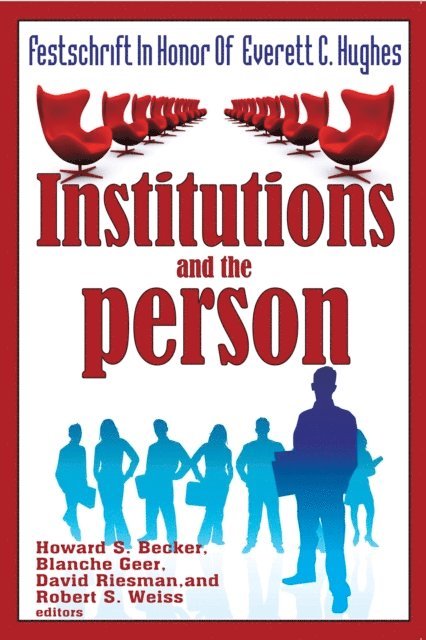
Everett C. Hughes had a great impact on the field of sociology as a whole and on an entire generation of sociologists. Some of Hughes' former students and colleagues honor him in this book. The essays address the main themes in his work over the years, and illustrate as well Hughes' impact on the contributors, many of whom are themselves senior figures in the field. The book as a whole provides a distinguished and representative sampling of a major stream of contemporary sociological thought. Each of the five main divisions in the book covers one aspect of Hughes' work. The first deals with the study of occupations and professions-a field in which Hughes was a leader. The second section deals with race relations and other situations in which peoples of differing cultures meet. Beginning with his own work in French Canada many years ago, Hughes interests spread, and the breadth of this interest is seen in chapters on India, Peru, and race relations in the United States. Problems of organizations-how they are put together and how they work-are contained in a third section. A fourth section reflects Hughes' interest in the impact of institutional experience on the people who participate in social institutions, and includes chapters on occupational socialization, status passage, and the use of drugs. A final section develops still another of Hughes' interests-social science method. Presenting some of the most important topics of contemporary theory and research, this book remains profitable reading for every member of the discipline
642 kr
Skickas inom 10-15 vardagar
The Academic Revolution describes the rise to power of professional scholars and scientists, first in America's leading universities and now in the larger society as well. Without attempting a full-scale history of American higher education, it outlines a theory about its development and present status. It is illustrated with firsthand observations of a wide variety of colleges and universities the country over-colleges for the rich and colleges for the upwardly mobile; colleges for vocationally oriented men and colleges for intellectually and socially oriented women; colleges for Catholics and colleges for Protestants; colleges for blacks and colleges for rebellious whites.The authors also look at some of the revolution's consequences. They see it as intensifying conflict between young and old, and provoking young people raised in permissive, middle-class homes to attacks on the legitimacy of adult authority. In the process, the revolution subtly transformed the kinds of work to which talented young people aspire, contributing to the decline of entrepreneurship and the rise of professionalism. They conclude that mass higher education, for all its advantages, has had no measurable effect on the rate of social mobility or the degree of equality in American society.Jencks and Riesman are not nostalgic; their description of the nineteenth-century liberal arts colleges is corrosively critical. They maintain that American students know more than ever before, that their teachers are more competent and stimulating than in earlier times, and that the American system of higher education has brought the American people to an unprecedented level of academic competence. But while they regard the academic revolution as having been an historically necessary and progressive step, they argue that, like all revolutions, it can devour its children. For Jencks and Riesman, academic professionalism is an advance over amateur gentility, but they warn of its dangers and limitations: the elitism and arrogance implicit in meritocracy, the myopia that derives from a strictly academic view of human experience and understanding, the complacency that comes from making technical competence an end rather than a means.
715 kr
Skickas inom 10-15 vardagar
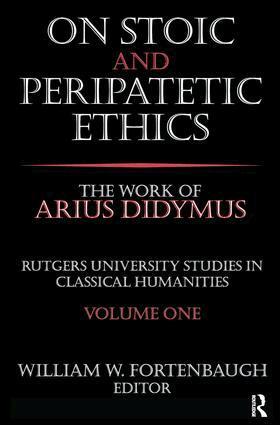
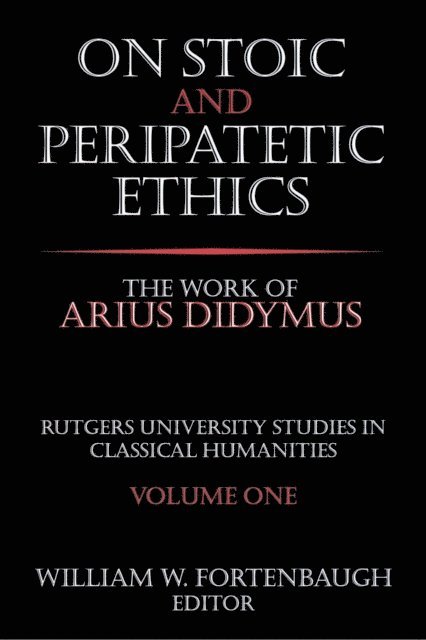
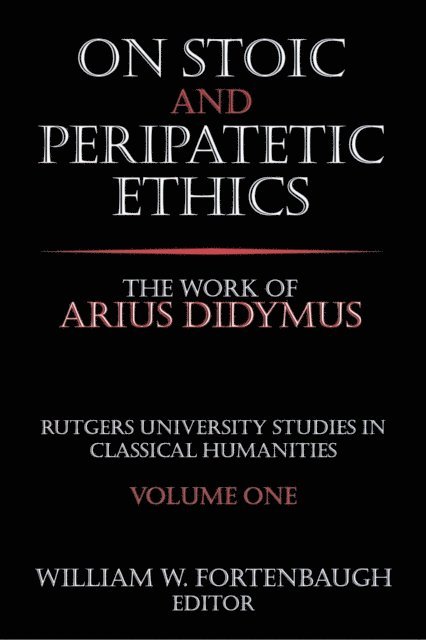
Providing the only full-length study of the compendium of Greek philosophy attributed to Arius Didymus, court philosopher to the Roman emperor Caesar Augustus, this volume elucidates Stoic and Peripatetic ethics for classicists and philosophers. The authors provide careful textual analysis of important passages by this synthesizer of the major schools of Greek thought. Essays include translations of major passages.
1 626 kr
Skickas inom 10-15 vardagar
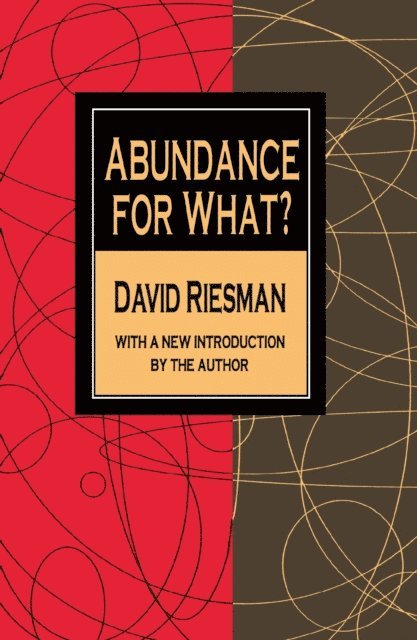
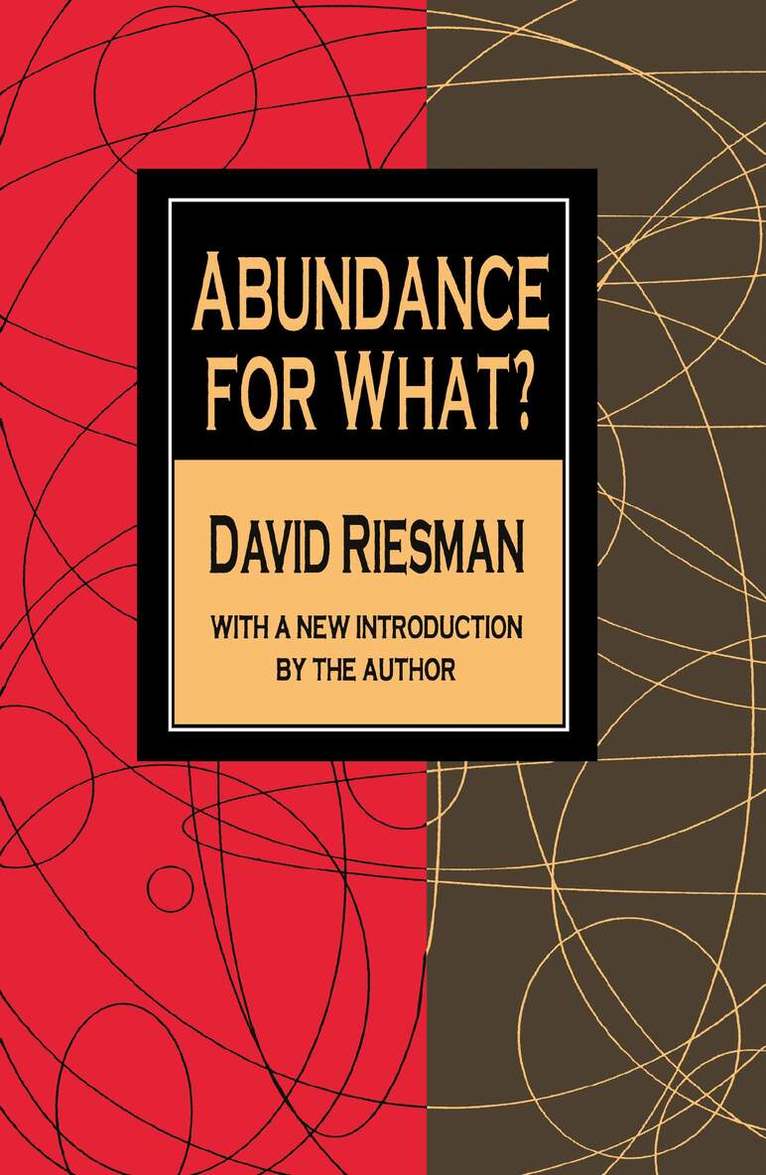
This classic collection of essays by Riesman discusses the implications of affluence in America. Riesman maintains that the question that should be raised by wealth has shifted over time from how to obtain wealth to how to make use of it. Another key theme concerns issues relevant to higher education, such as academic freedom. This book examines the notion that America is not as open a society as it may appear to be; it shows how social science may be used to explain why this is so. In a brilliant, lengthy reevaluation Riesman both clarifies and revises that earlier assessment with unusual luster and candor.
2 098 kr
Skickas inom 10-15 vardagar
Everett C. Hughes had a great impact on the field of sociology as a whole and on an entire generation of sociologists. Some of Hughes' former students and colleagues honor him in this book. The essays address the main themes in his work over the years, and illustrate as well Hughes' impact on the contributors, many of whom are themselves senior figures in the field. The book as a whole provides a distinguished and representative sampling of a major stream of contemporary sociological thought. Each of the five main divisions in the book covers one aspect of Hughes' work. The first deals with the study of occupations and professions-a field in which Hughes was a leader. The second section deals with race relations and other situations in which peoples of differing cultures meet. Beginning with his own work in French Canada many years ago, Hughes interests spread, and the breadth of this interest is seen in chapters on India, Peru, and race relations in the United States. Problems of organizations-how they are put together and how they work-are contained in a third section. A fourth section reflects Hughes' interest in the impact of institutional experience on the people who participate in social institutions, and includes chapters on occupational socialization, status passage, and the use of drugs. A final section develops still another of Hughes' interests-social science method. Presenting some of the most important topics of contemporary theory and research, this book remains profitable reading for every member of the discipline
2 098 kr
Skickas inom 10-15 vardagar
Providing the only full-length study of the compendium of Greek philosophy attributed to Arius Didymus, court philosopher to the Roman emperor Caesar Augustus, this volume elucidates Stoic and Peripatetic ethics for classicists and philosophers. The authors provide careful textual analysis of important passages by this synthesizer of the major schools of Greek thought. Essays include translations of major passages.
2 039 kr
Skickas inom 10-15 vardagar
The Academic Revolution describes the rise to power of professional scholars and scientists, first in America's leading universities and now in the larger society as well. Without attempting a full-scale history of American higher education, it outlines a theory about its development and present status. It is illustrated with firsthand observations of a wide variety of colleges and universities the country over-colleges for the rich and colleges for the upwardly mobile; colleges for vocationally oriented men and colleges for intellectually and socially oriented women; colleges for Catholics and colleges for Protestants; colleges for blacks and colleges for rebellious whites.The authors also look at some of the revolution's consequences. They see it as intensifying conflict between young and old, and provoking young people raised in permissive, middle-class homes to attacks on the legitimacy of adult authority. In the process, the revolution subtly transformed the kinds of work to which talented young people aspire, contributing to the decline of entrepreneurship and the rise of professionalism. They conclude that mass higher education, for all its advantages, has had no measurable effect on the rate of social mobility or the degree of equality in American society.Jencks and Riesman are not nostalgic; their description of the nineteenth-century liberal arts colleges is corrosively critical. They maintain that American students know more than ever before, that their teachers are more competent and stimulating than in earlier times, and that the American system of higher education has brought the American people to an unprecedented level of academic competence. But while they regard the academic revolution as having been an historically necessary and progressive step, they argue that, like all revolutions, it can devour its children. For Jencks and Riesman, academic professionalism is an advance over amateur gentility, but they warn of its dangers and limitations: the elitism and arrogance implicit in meritocracy, the myopia that derives from a strictly academic view of human experience and understanding, the complacency that comes from making technical competence an end rather than a means.
2 098 kr
Skickas inom 10-15 vardagar
This set of readings presents useful insights into urbanization and provides a fresh perspective on American cities and their inhabitants. Advancing the premise that it is not possible to understand how people live in cities without understanding how they think of them, the editor presents historical and contemporary materials that illustrate vividly the variety of ways in which Americans have viewed their cities, and urbanization in general.This book sheds light on what the city is and does by analyzing what its citizens think it should be and do. Its lively, readable selections include contributions from businessmen, ministers, journalists, reporters, city planners, and reformers, as well as sociologists. Strauss shows that Americans' views of cities have been profoundly influenced by their history of continental expansion, successive waves of immigration, massive industrialization and similar objective developments. He points out that certain perspectives or themes relations of social classes within the city, of country to city, of small city to big city, of city to region, etc.persist regardless of the social or historical perspective of the writer.The author's comprehensive introduction and his introductions to each section of the book delineate the thematic structure of the readings and guide the reader toward the insights and principles illuminated in the different sections. A fruitful contribution to courses in urban sociology, the book is a useful addition to the libraries of sociologists, political scientists, planners, and city officials who wish to understand more fully the contemporary urban milieu.
161 kr
Skickas inom 7-10 vardagar
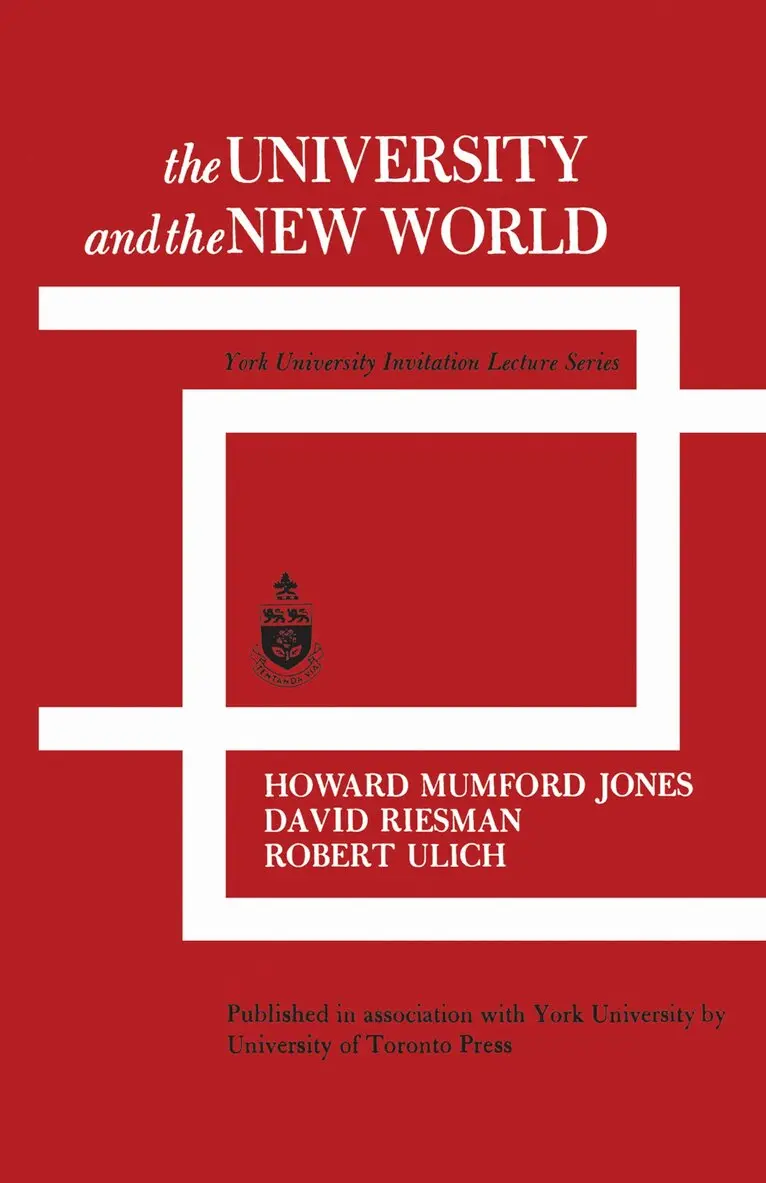
This is the first volume in the Invitation Lecture Series of York University and it is an auspicious beginning. Three leaders in higher education in the United States here present their thoughts on challenging questions of enrolment, curriculum, and standards which today confront the ever expanding universities of North America. Professor Jones describes "The Idea of a University Once More"; Professor Riesman outlines and comments on some significant recent "Experiments in Higher Education"; Professor Ulich discusses a theme which is vitally important for the effect of university education, "Creativity."
668 kr
Tillfälligt slut
This classic collection of essays by Riesman discusses the implications of affluence in America. Riesman maintains that the question that should be raised by wealth has shifted over time from how to obtain wealth to how to make use of it. Another key theme concerns issues relevant to higher education, such as academic freedom. This book examines the notion that America is not as open a society as it may appear to be; it shows how social science may be used to explain why this is so. In a brilliant, lengthy reevaluation Riesman both clarifies and revises that earlier assessment with unusual luster and candor.
674 kr
Skickas inom 10-15 vardagar
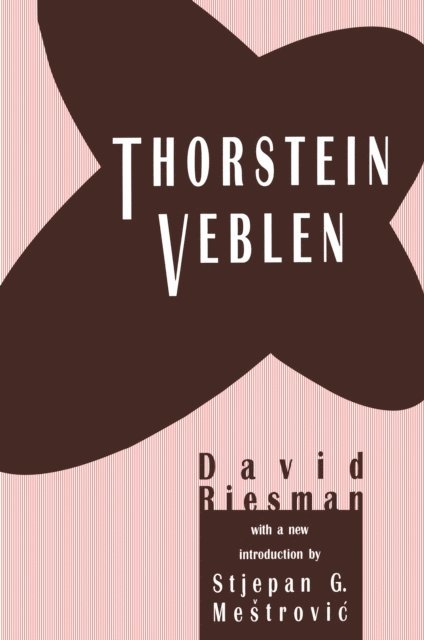
This is a brilliant and unconventional study of one of the most challenging figures in modern social and economic thought. David Riesman has chosen a deliberately personal method of exposition and evaluation, and he is by no means a disciple. He says of Veblen: 'I find him more often interesting than attractive, more often pungent than wise.' By approaching Veblen subjectively and in a critical spirit, Riesman has arrived at an estimate of the man that is objective and balanced.Veblen's ideas and attitudes are carefully examined, with particular attention to his conviction that 'the instinct of workmanship' was the constructive element in life, and to his fundamental principle of 'idle curiosity.' Veblen is seen as a man with a passionate moral sense whose method was irony coupled with research. Riesman makes the interesting point that the author of The Theory of the Leisure Class was episodically a passionate, even revolutionary reformer, in contrast to a career primarily as an intellectual skeptic.Riesman looks behind the ideas, searching for their origins in Veblen's life, with the result that one finishes the book with a genuine sense of the strange man who is its subject. Riesman concludes that Thorstein Veblen is important not so much for his specific contribution to economic thought as for his stance toward the economy and his fellow economists. For us today, Riesman adds, Veblen's great value inheres in his way of seeing. The new introduction by Mestrovic provides an appreciation of Riesman, no less than Veblen.David Riesman is the Henry Ford II Professor Emeritus of Social Sciences at Harvard University. He has also taught at the University of Chicago, and Johns Hopkins University. Among his most important books are The Lonely Crowd; Faces in the Crowd; Individualism Reconsidered; and Constraint and Variety in American Education. His collection, Abundance for What?, confirms his place as the foremost sociologist of education in the modern era.Stjepan G. Mestrovic is a senior social theorist in his own right. He is currently located at Texas A&M University, where he is a professor of sociology.
220 kr
Skickas
David Riesmans klassiska arbete Den ensamma massan är den amerikanska sociologins genom tiderna mest sålda bok. Denna nya och bearbetade svenska utgåva följer den 43:e tryckningen. Ett centralt tema för Riesman är den nya medelklassens sociala karaktär. Jaget, personligheten och självuppfattningen bestäms alltmer av krafter utifrån: familj, grannskap och arbetskolleger. Det tidigare idealet om den inifrånstyrda individen, vars egna drivkraft och samvete var avgörande, ersätts av konformitet och anpassning till den sociala omgivningen -- grupptryck och jantelag blir avgörande. Riesmans arbete är en amerikansk parallell till studier av det civiliserade beteendets framväxt som gjorts av till exempel Norbert Elias. Den aktuella debatten om den postmoderna människans ambivalens, fragmentisering och brist på stabil identitet finner här en naturlig utgångspunkt. I Arkivs nyutgåva finns också ett avsnitt där Riesman kommenterar den omfattande debatt som ägnats Den ensamma massan.