William W Fortenbaugh – författare
Visar alla böcker från författaren William W Fortenbaugh. Handla med fri frakt och snabb leverans.
48 produkter
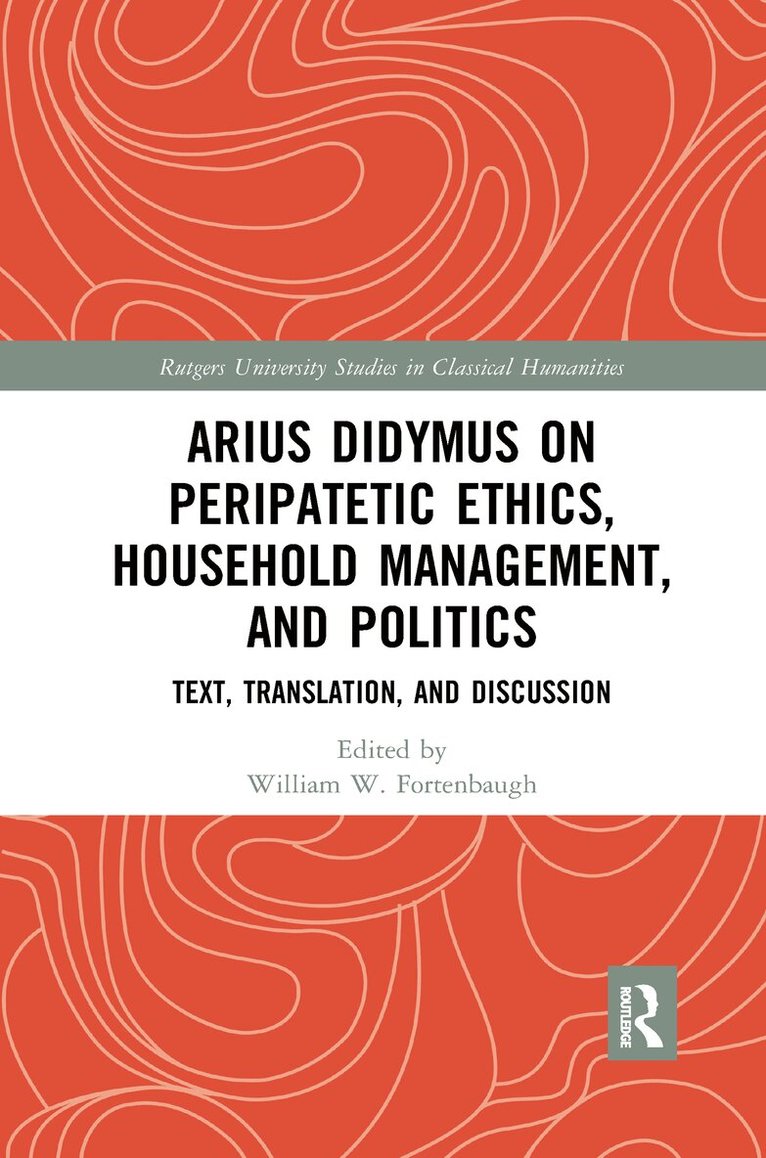
Arius Didymus on Peripatetic Ethics, Household Management, and Politics
Text, Translation, and Discussion
Häftad, 2020
689 kr
Lägg i varukorg
This volume features a unique epitome (original summation) of Aristotelian practical philosophy. It is often attributed to Arius Didymus who composed a survey of Peripatetic thought on three closely related areas: ethics, household management, and politics. The quality of the epitome, which draws …
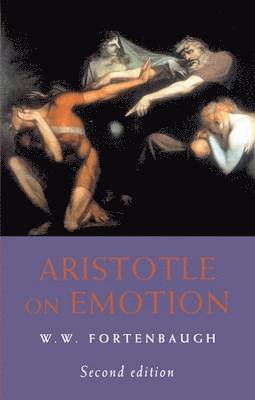
Aristotle on Emotion
Häftad, 2002
373 kr
Lägg i varukorg
When "Aristotle on Emotion" was first published it showed how discussion within Plato's Academy led to a better understanding of emotional response, and how that understanding influenced Aristotle's work in rhetoric, poetics, politics and ethics. The subject has been much discussed since then: …
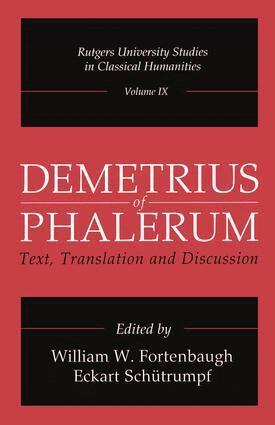
Demetrius of Phalerum
Text, Translation and Discussion
Av William W. Fortenbaugh, Eckart Schütrumpf
Inbunden, 1999
2504 kr
Lägg i varukorg
Demetrius of Phalerum (c. 355-280BCE) of Phalerum was a philosopher-statesman. He studied in the Peripatos under Theophrastus and subsequently used his political influence to help his teacher acquire property for the Peripatetic school. As overseer of Athens, his governance was characterized by a …
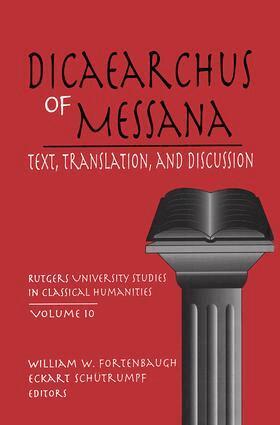
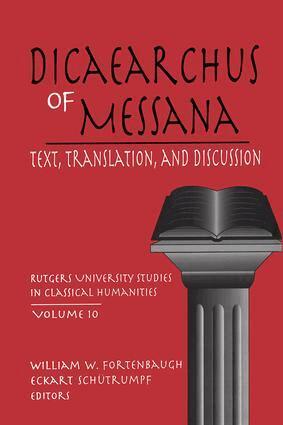
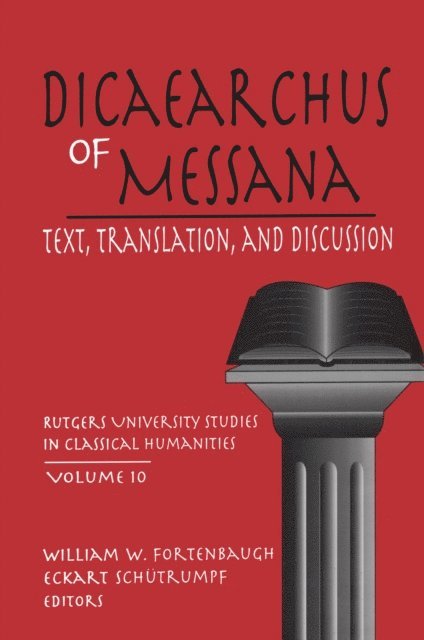
Dicaearchus of Messana
Volume 10
Av William W. Fortenbaugh, Eckart Schütrumpf
Inbunden, 2001
2504 kr
Lägg i varukorg
Dicaearchus of Messana (fl. c. 320 b.c.) was a peripatetic philosopher. Like Theophrastus of Eresus, he was a pupil of Aristotle. Dicaearchus's life is not well documented. There is no biography by Diogenes Laertius, and what the Suda offers is meager. However, it can be ascertained that a close …
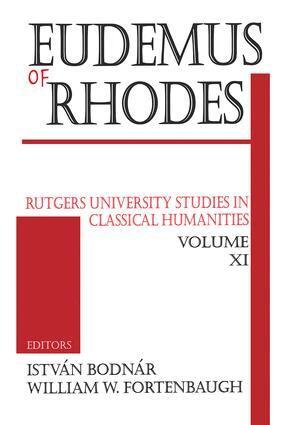
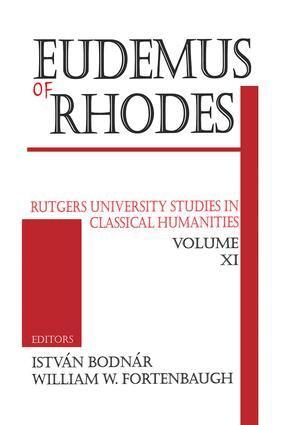
Eudemus of Rhodes
Av István Bodnár, William W. Fortenbaugh
Inbunden, 2002
2468 kr
Lägg i varukorg
Eudemus of Rhodes was a pupil of Aristotle in the second half of the fourth century BCE. When Aristotle died, having chosen Theophrastus as his successor, Eudemus returned to Rhodes where it appears he founded his own school. His contributions to logic were significant: he took issue with Aristotle …
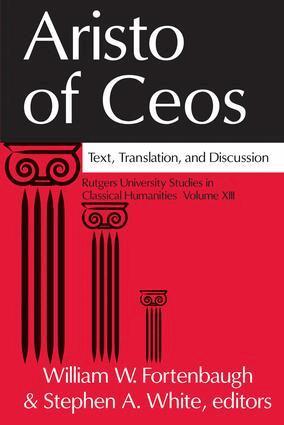
Aristo of Ceos
Text, Translation, and Discussion
Av William W. Fortenbaugh, Stephen A. White
Inbunden, 2006
2504 kr
Lägg i varukorg
Volume 13 in the RUSCH series continues work already begun on the School of Aristotle. Volume 9 featured Demetrius of Phalerum, Volume 10, Dicaearchus of Messana, Volume 11, Eudemus of Rhodes, and Volume 12, both Lyco of Troas and Hieronymus of Rhodes. Now Volume 13 turns our attention to Aristo of …
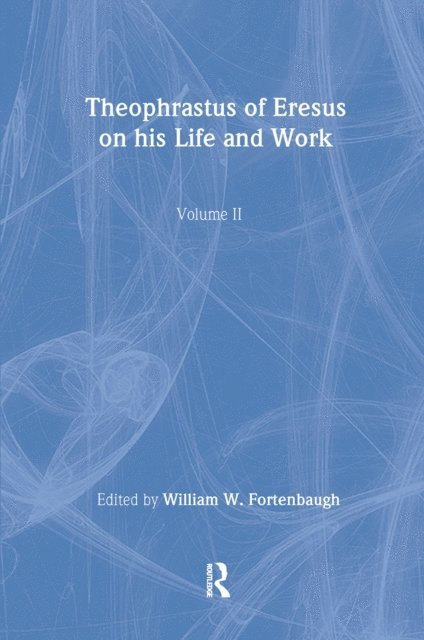
Theophrastus of Eresus
On His Life and Work
Inbunden, 1984
762 kr
Lägg i varukorg
This series in the field of classics grew out of Project Theophrastus, an international undertaking whose goal is to collect, edit, and comment on the fragments of Theophrastus, Greek philosopher, Aristotle's pupil and second head of the Peripatetic School. Contributions are by international …
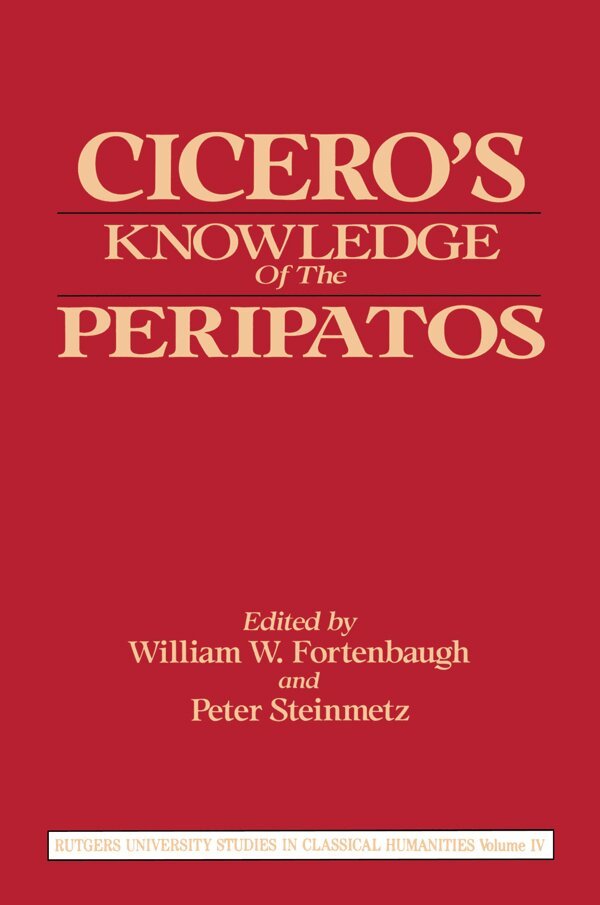
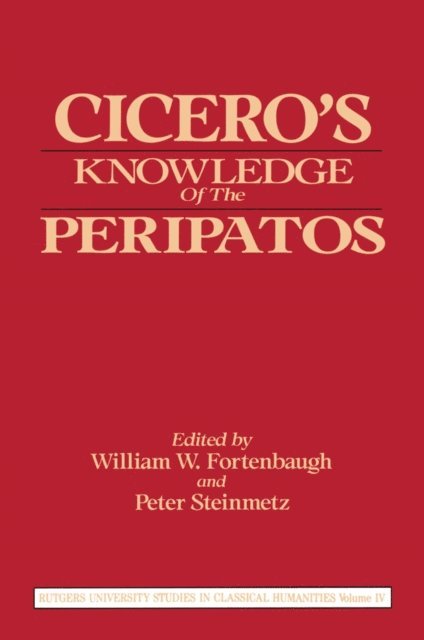
Cicero's Knowledge of the Peripatos
Av William W. Fortenbaugh, Peter Steinmetz
Inbunden, 1989
2879 kr
Lägg i varukorg
Cicero is best known for his political speeches. His Catilinarian orations are regularly studied in third or fourth year Latin; his self-proclaimed role as savior of the Republic is much discussed in courses on Roman history. But, however fascinating such material may be, there is another side to …
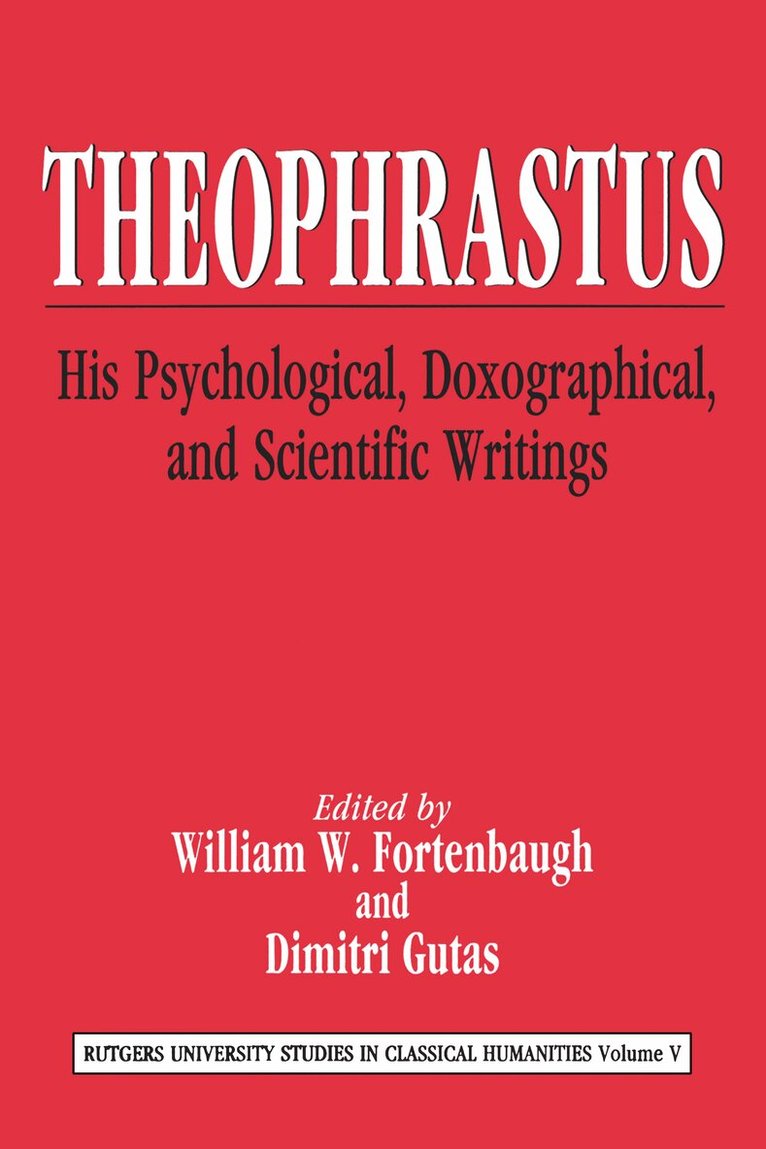
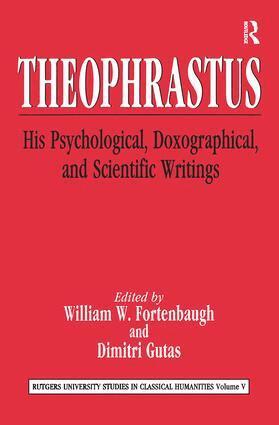
Theophrastus
His Psychological, Doxographical, and Scientific Writings
Av William W. Fortenbaugh, Dimitri Gutas
Inbunden, 1991
2504 kr
Lägg i varukorg
Theophrastus of Eresus was Aristotle's pupil and successor as head of the Peripatetic School. He is best known as the author of the amusing Characters and two ground-breaking works in botany, but his writings extend over the entire range of Hellenistic philosophic studies. Volume 5 of Rutgers …
Cicero's Knowledge of the Peripatos
Av Peter Steinmetz, William W. Fortenbaugh
E-bok, 2020
814 kr
Lägg i varukorg
Cicero is best known for his political speeches. His Catilinarian orations are regularly studied in third or fourth year Latin; his self-proclaimed role as savior of the Republic is much discussed in courses on Roman history. But, however fascinating such material may be, there is another side to …
Cicero's Knowledge of the Peripatos
Av Peter Steinmetz, William W. Fortenbaugh
E-bok, 2020
796 kr
Lägg i varukorg
Cicero is best known for his political speeches. His Catilinarian orations are regularly studied in third or fourth year Latin; his self-proclaimed role as savior of the Republic is much discussed in courses on Roman history. But, however fascinating such material may be, there is another side to …
Theophrastus of Eresus
On His Life and Work
E-bok, 2023
676 kr
Lägg i varukorg
This series in the field of classics grew out of Project Theophrastus, an international undertaking whose goal is to collect, edit, and comment on the fragments of Theophrastus, Greek philosopher, Aristotle''s pupil and second head of the Peripatetic School. Contributions are by international …
Theophrastus of Eresus
On His Life and Work
E-bok, 2023
676 kr
Lägg i varukorg
This series in the field of classics grew out of Project Theophrastus, an international undertaking whose goal is to collect, edit, and comment on the fragments of Theophrastus, Greek philosopher, Aristotle''s pupil and second head of the Peripatetic School. Contributions are by international …
Aristo of Ceos
Text, Translation, and Discussion
Av William W. Fortenbaugh, Stephen A. White
Häftad, 2017
762 kr
Lägg i varukorg
Volume 13 in the RUSCH series continues work already begun on the School of Aristotle. Volume 9 featured Demetrius of Phalerum, Volume 10, Dicaearchus of Messana, Volume 11, Eudemus of Rhodes, and Volume 12, both Lyco of Troas and Hieronymus of Rhodes. Now Volume 13 turns our attention to Aristo of …
Cicero's Knowledge of the Peripatos
Av William W. Fortenbaugh, Peter Steinmetz
Häftad, 2020
689 kr
Lägg i varukorg
Cicero is best known for his political speeches. His Catilinarian orations are regularly studied in third or fourth year Latin; his self-proclaimed role as savior of the Republic is much discussed in courses on Roman history. But, however fascinating such material may be, there is another side to …
Demetrius of Phalerum
Text, Translation and Discussion
Av William W. Fortenbaugh, Eckart Schütrumpf
Häftad, 2018
762 kr
Lägg i varukorg
Demetrius of Phalerum (c. 355-280BCE) of Phalerum was a philosopher-statesman. He studied in the Peripatos under Theophrastus and subsequently used his political influence to help his teacher acquire property for the Peripatetic school. As overseer of Athens, his governance was characterized by a …
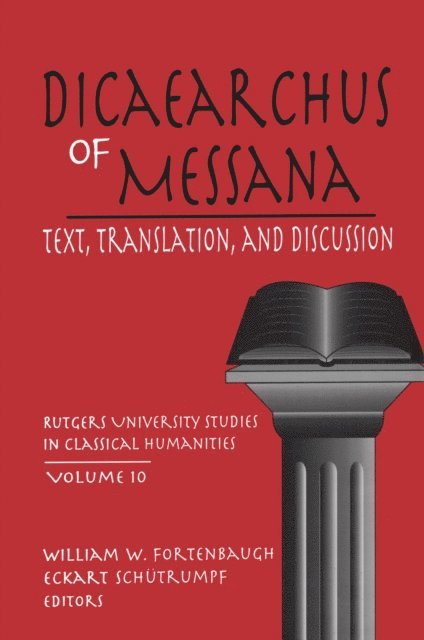
Dicaearchus of Messana
Volume 10
Av William W. Fortenbaugh, Eckart Schütrumpf
Häftad, 2018
921 kr
Lägg i varukorg
Dicaearchus of Messana (fl. c. 320 b.c.) was a peripatetic philosopher. Like Theophrastus of Eresus, he was a pupil of Aristotle. Dicaearchus's life is not well documented. There is no biography by Diogenes Laertius, and what the Suda offers is meager. However, it can be ascertained that a close …
Eudemus of Rhodes
Av István Bodnár, William W. Fortenbaugh
Häftad, 2018
762 kr
Lägg i varukorg
Eudemus of Rhodes was a pupil of Aristotle in the second half of the fourth century BCE. When Aristotle died, having chosen Theophrastus as his successor, Eudemus returned to Rhodes where it appears he founded his own school. His contributions to logic were significant: he took issue with Aristotle …
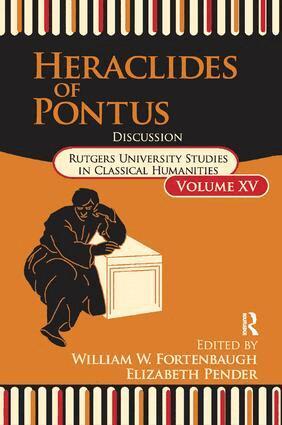
Heraclides of Pontus
Discussion
Av Elizabeth Pender, William W. Fortenbaugh m. fl.
Häftad, 2017
762 kr
Lägg i varukorg
Heraclides of Pontus hailed from the shores of the Black Sea. He studied with Aristotle in Plato's Academy, and became a respected member of that school. During Plato's third trip to Sicily, Heraclides served as head of the Academy and was almost elected its head on the death of …
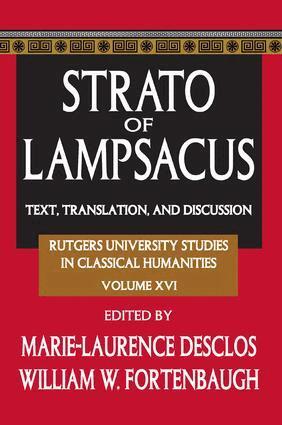
Strato of Lampsacus
Text, Translation and Discussion
Av William W. Fortenbaugh, Marie-Laurence Desclos m. fl.
Häftad, 2017
921 kr
Lägg i varukorg
Volume 16 of Transaction's acclaimed Rutgers University Studies in Classical Humanities series, continues the work of Project Theophrastus on the School of Aristotle. The subject of this volume is Strato of Lampsacus in Mysia on the Hellespont. Strato was the third head of the Peripatetic School …
Theophrastus
His Psychological, Doxographical, and Scientific Writings
Av William W. Fortenbaugh, Dimitri Gutas
Häftad, 2018
921 kr
Lägg i varukorg
Theophrastus of Eresus was Aristotle's pupil and successor as head of the Peripatetic School. He is best known as the author of the amusing Characters and two ground-breaking works in botany, but his writings extend over the entire range of Hellenistic philosophic studies. Volume 5 of Rutgers …
Theophrastus of Eresus
On His Life and Work
Häftad, 2025
573 kr
Lägg i varukorg
This series in the field of classics grew out of Project Theophrastus, an international undertaking whose goal is to collect, edit, and comment on the fragments of Theophrastus, Greek philosopher, Aristotle's pupil and second head of the Peripatetic School. Contributions are by international …
Theophrastus
His Psychological, Doxographical, and Scientific Writings
Av Dimitri Gutas, William W. Fortenbaugh
E-bok, 2018
1091 kr
Lägg i varukorg
Theophrastus of Eresus was Aristotle''s pupil and successor as head of the Peripatetic School. He is best known as the author of the amusing Characters and two ground-breaking works in botany, but his writings extend over the entire range of Hellenistic philosophic studies. Volume 5 of Rutgers …
Theophrastus
His Psychological, Doxographical, and Scientific Writings
Av Dimitri Gutas, William W. Fortenbaugh
E-bok, 2018
1067 kr
Lägg i varukorg
Theophrastus of Eresus was Aristotle''s pupil and successor as head of the Peripatetic School. He is best known as the author of the amusing Characters and two ground-breaking works in botany, but his writings extend over the entire range of Hellenistic philosophic studies. Volume 5 of Rutgers …
Aristo of Ceos
Text, Translation, and Discussion
Av Stephen A. White, William W. Fortenbaugh
E-bok, 2017
901 kr
Lägg i varukorg
Volume 13 in the RUSCH series continues work already begun on the School of Aristotle. Volume 9 featured Demetrius of Phalerum, Volume 10, Dicaearchus of Messana, Volume 11, Eudemus of Rhodes, and Volume 12, both Lyco of Troas and Hieronymus of Rhodes. Now Volume 13 turns our attention to Aristo of …
Aristo of Ceos
Text, Translation, and Discussion
Av Stephen A. White, William W. Fortenbaugh
E-bok, 2017
901 kr
Lägg i varukorg
Volume 13 in the RUSCH series continues work already begun on the School of Aristotle. Volume 9 featured Demetrius of Phalerum, Volume 10, Dicaearchus of Messana, Volume 11, Eudemus of Rhodes, and Volume 12, both Lyco of Troas and Hieronymus of Rhodes. Now Volume 13 turns our attention to Aristo of …
Eudemus of Rhodes
Av William W. Fortenbaugh, Istvan Bodnar
E-bok, 2018
881 kr
Lägg i varukorg
Eudemus of Rhodes was a pupil of Aristotle in the second half of the fourth century BCE. When Aristotle died, having chosen Theophrastus as his successor, Eudemus returned to Rhodes where it appears he founded his own school. His contributions to logic were significant: he took issue with Aristotle …
Eudemus of Rhodes
Av William W. Fortenbaugh, Istvan Bodnar
E-bok, 2018
872 kr
Lägg i varukorg
Eudemus of Rhodes was a pupil of Aristotle in the second half of the fourth century BCE. When Aristotle died, having chosen Theophrastus as his successor, Eudemus returned to Rhodes where it appears he founded his own school. His contributions to logic were significant: he took issue with Aristotle …
Dicaearchus of Messana
Volume 10
Av Eckart Schutrumpf, William W. Fortenbaugh
E-bok, 2018
1091 kr
Lägg i varukorg
Dicaearchus of Messana (fl. c. 320 b.c.) was a peripatetic philosopher. Like Theophrastus of Eresus, he was a pupil of Aristotle. Dicaearchus''s life is not well documented. There is no biography by Diogenes Laertius, and what the Suda offers is meager. However, it can be ascertained that a close …
Dicaearchus of Messana
Volume 10
Av Eckart Schutrumpf, William W. Fortenbaugh
E-bok, 2018
1091 kr
Lägg i varukorg
Dicaearchus of Messana (fl. c. 320 b.c.) was a peripatetic philosopher. Like Theophrastus of Eresus, he was a pupil of Aristotle. Dicaearchus''s life is not well documented. There is no biography by Diogenes Laertius, and what the Suda offers is meager. However, it can be ascertained that a close …