Nathan Katz – författare
Visar alla böcker från författaren Nathan Katz. Handla med fri frakt och snabb leverans.
4 produkter
4 produkter
1 002 kr
Skickas inom 3-6 vardagar
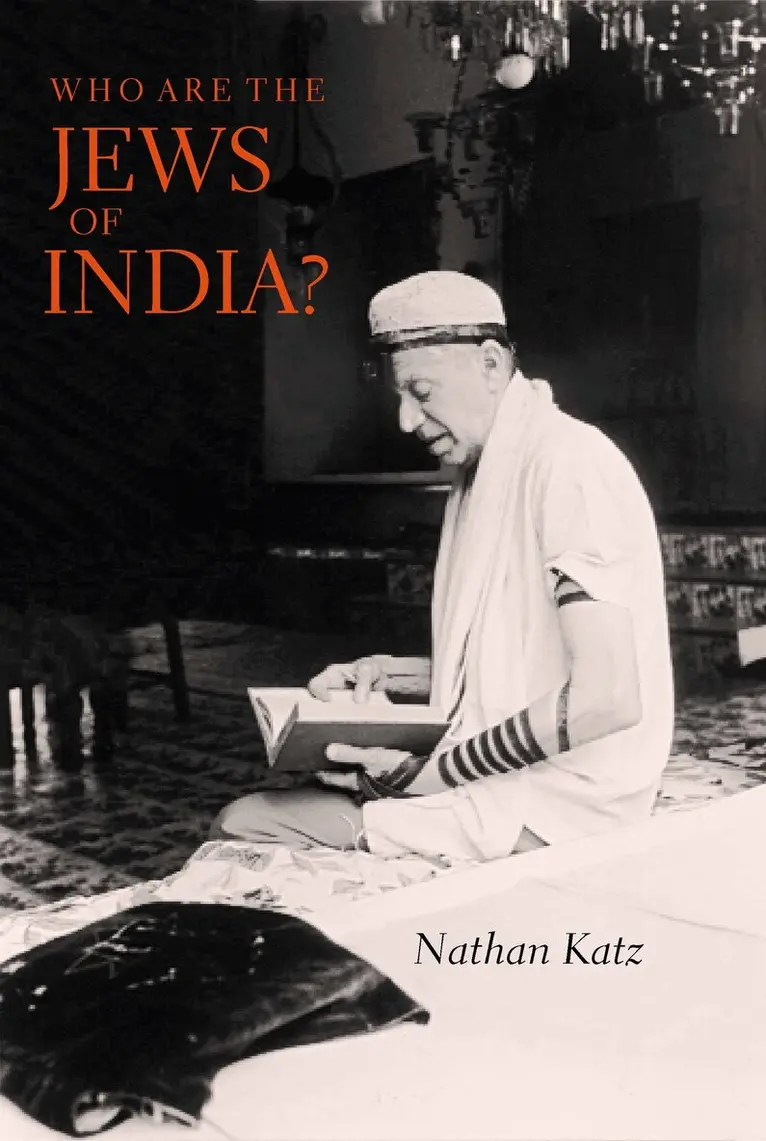
Of all the Diaspora communities, the Jews of India are among the least known and most interesting. This readable study, full of vivid details of everyday life, looks in depth at the religious life of the Jewish community in Cochin, the Bene Israel from the remote Konkan coast near Bombay, and the Baghdadi Jews, who migrated to Indian port cities and flourished under the British Raj. "Who Are the Jews of India?" is the first integrated, comprehensive work available on all three of India's Jewish communities. Using an interdisciplinary approach, Nathan Katz brings together methods and insights from religious studies, ritual studies, anthropology, history, linguistics, and folklore, as he discusses the strategies each community developed to maintain its Jewish identity. Based on extensive fieldwork throughout India, as well as close reading of historical documents, this study provides a striking new understanding of the Jewish Diaspora and of Hindu civilization as a whole.
1 542 kr
Skickas inom 3-6 vardagar
A deeply researched investigation that shows how the long-held ideas protecting unlimited campaign spending as free speech that once served the needs of political candidates and voters are now shaped to serve the desires of interest groups, threatening the future of American democracy.In the 2010 Citizens United decision, Supreme Court Justice Anthony Kennedy stated that the precedent they were overturning “interferes with the ‘open marketplace’ of ideas protected by the First Amendment.” For the majority who ruled in this case, money was in some sense the equivalent of speech, meaning that spending should be allowed under the guise of a marketplace of ideas. But what does this actually mean? And what are the consequences?Both critics and advocates of this marketplace of ideas often treat it as an abstract principle; one that focuses on competition among different voices that allows for the most popular, and therefore best, ideas to gain prominence. But the marketplace of ideas is not a single tool. There are multiple mechanisms at play, all of which influence the rules and regulations behind this competition. Therefore, the marketplace of ideas should be understood not as a single idea but as a collection of smaller norms that build a regulatory, market-like system.Bankrupting Democracy traces the development of this system, which Nathan Katz calls the “money-speech paradigm.” Through a historical analysis of campaign finance reform discourses that have occurred within the legislative record and the Supreme Court, Katz demonstrates how these ideologies have caused radical changes to political speech. He pairs these data with an analysis of the changing patterns of political advertisers—the PACs, Super PACs, interest groups, candidates, and parties that all spend a large portion, often the majority, of their money on television advertisements. By combining these components, Katz shows how changes to the money-speech paradigm have shifted from a focus on political candidates and their right to public exposure to a system that focuses on supporting interest groups’ pursuit of social and economic dominance.At each stage in the development of the current system, proponents of the reforms assumed the security of democratic institutions, leaving them unprotected against the consolidation of corporate power. Bankrupting Democracy illuminates this market system that threatens to unravel the very fabric of American society.
519 kr
Skickas inom 3-6 vardagar
A deeply researched investigation that shows how the long-held ideas protecting unlimited campaign spending as free speech that once served the needs of political candidates and voters are now shaped to serve the desires of interest groups, threatening the future of American democracy.In the 2010 Citizens United decision, Supreme Court Justice Anthony Kennedy stated that the precedent they were overturning “interferes with the ‘open marketplace’ of ideas protected by the First Amendment.” For the majority who ruled in this case, money was in some sense the equivalent of speech, meaning that spending should be allowed under the guise of a marketplace of ideas. But what does this actually mean? And what are the consequences?Both critics and advocates of this marketplace of ideas often treat it as an abstract principle; one that focuses on competition among different voices that allows for the most popular, and therefore best, ideas to gain prominence. But the marketplace of ideas is not a single tool. There are multiple mechanisms at play, all of which influence the rules and regulations behind this competition. Therefore, the marketplace of ideas should be understood not as a single idea but as a collection of smaller norms that build a regulatory, market-like system.Bankrupting Democracy traces the development of this system, which Nathan Katz calls the “money-speech paradigm.” Through a historical analysis of campaign finance reform discourses that have occurred within the legislative record and the Supreme Court, Katz demonstrates how these ideologies have caused radical changes to political speech. He pairs these data with an analysis of the changing patterns of political advertisers—the PACs, Super PACs, interest groups, candidates, and parties that all spend a large portion, often the majority, of their money on television advertisements. By combining these components, Katz shows how changes to the money-speech paradigm have shifted from a focus on political candidates and their right to public exposure to a system that focuses on supporting interest groups’ pursuit of social and economic dominance.At each stage in the development of the current system, proponents of the reforms assumed the security of democratic institutions, leaving them unprotected against the consolidation of corporate power. Bankrupting Democracy illuminates this market system that threatens to unravel the very fabric of American society.
732 kr
Skickas inom 7-10 vardagar
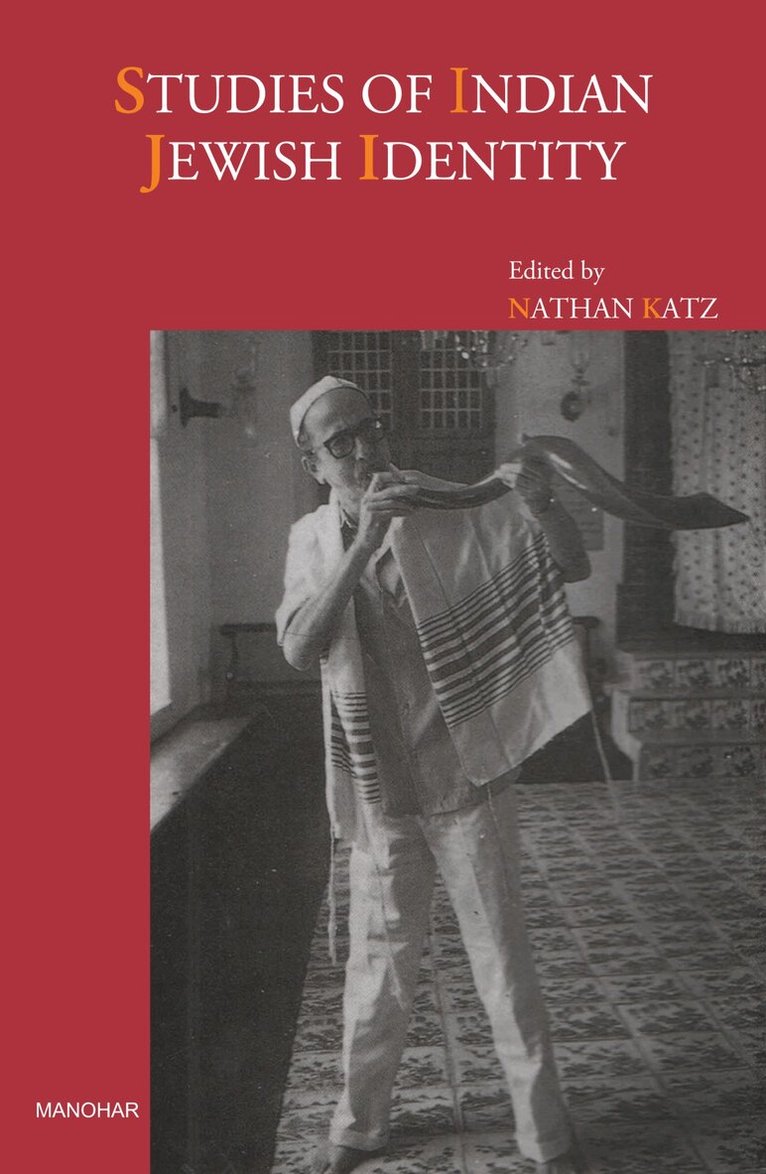
This book about Indian Jewish identity is an attempt at 'self definition'. It raises basic questions like who the Jews of India are, are they Jewish or Indian? It then proceeds to answer them by delving deep into cultural mechanisms by which India's Jews came to define themselves and how they were defined by others. In doing this it explores the conditions by which a group's identity is established and maintained, how it responds to changing conditions and how it anticipates and structures a future.This book, therefore, is about at least two subjects. First, it is descriptive and ethnographic. It describes the beliefs and attitudes, the rituals and histories, which conditioned the identities of three distinct communities of Indian Jews. Second, it is analytical and therefore reflexive; it adheres to the standard of scholarship which insists that in studying the 'other' we learn about ourselves.The seven essays in the book analyze Indian Jewish identity as a complex product of four interrelated phenomena. First, there is the historical trajectory, the construction of a suitable narrative. Second, there are social trajectories of the present, the patterns underlying social interactions with Gentile neighbors, which also defined the group. Third, there are the trajectories of the future, which is to say how modernization, Zionism and Indian nationalism came to reconstellate Jewish identity by directing toward new sometimes competing, goals. Finally, there is the role of religion, not merely as a template of ethnic identity but as a system of rituals and norms which defined and celebrated the very identities of India's Jews.