Nathaniel Greenberg - Böcker
Visar alla böcker från författaren Nathaniel Greenberg. Handla med fri frakt och snabb leverans.
7 produkter
7 produkter
300 kr
Skickas inom 7-10 vardagar
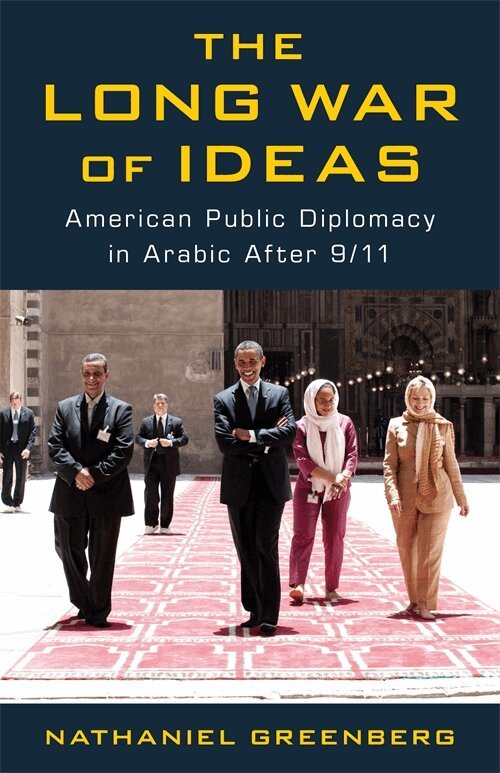
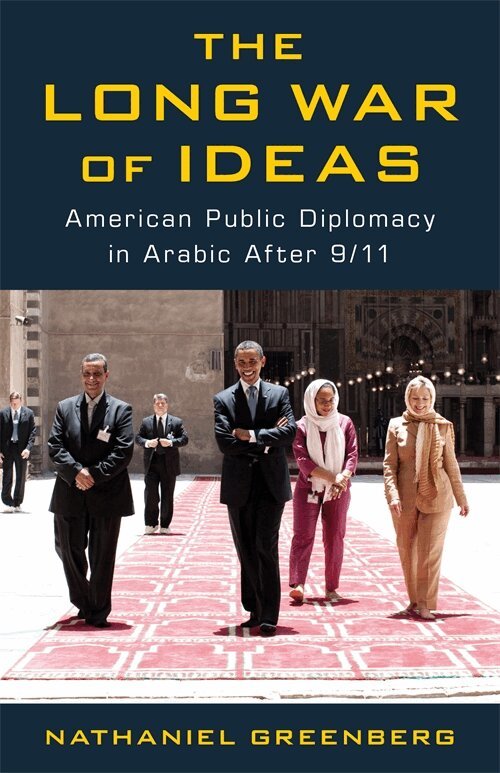
In the wake of the September 11 attacks, US officials identified the so-called battle for hearts and minds as the “second front” in the war on terror. A wave of funding flowed into public diplomacy in the Middle East, seeking to change views of the United States through Arabic-language communications—often while hiding the traces of American origins. To what extent did this vast propaganda apparatus sway Arab public opinion? Which ideas and actors shaped American public diplomacy in this period? What are the lessons for information strategy today?This groundbreaking book tells the story of American propaganda campaigns in the Middle East after 9/11, drawing on in-depth interviews with key players and previously classified documents. Nathaniel Greenberg shows how the United States tried to control perceptions of its response to 9/11 through news and entertainment, and reveals that Arab governments and unofficial actors were involved—knowingly or not—in distributing US propaganda. He explores the institutions, strategy, and rhetoric deployed in the war on terror, placing them in the context of American and Soviet influence campaigns during the Cold War. Greenberg argues that US government-backed broadcasting laid the groundwork for global information warfare, such as the rise of competing Russian and Chinese state media operations. Shedding light on the ideological underpinnings of American propaganda in Arabic after 9/11, The Long War of Ideas offers new insight into soft power in the twenty-first century.
1 147 kr
Skickas inom 7-10 vardagar
In the wake of the September 11 attacks, US officials identified the so-called battle for hearts and minds as the “second front” in the war on terror. A wave of funding flowed into public diplomacy in the Middle East, seeking to change views of the United States through Arabic-language communications—often while hiding the traces of American origins. To what extent did this vast propaganda apparatus sway Arab public opinion? Which ideas and actors shaped American public diplomacy in this period? What are the lessons for information strategy today?This groundbreaking book tells the story of American propaganda campaigns in the Middle East after 9/11, drawing on in-depth interviews with key players and previously classified documents. Nathaniel Greenberg shows how the United States tried to control perceptions of its response to 9/11 through news and entertainment, and reveals that Arab governments and unofficial actors were involved—knowingly or not—in distributing US propaganda. He explores the institutions, strategy, and rhetoric deployed in the war on terror, placing them in the context of American and Soviet influence campaigns during the Cold War. Greenberg argues that US government-backed broadcasting laid the groundwork for global information warfare, such as the rise of competing Russian and Chinese state media operations. Shedding light on the ideological underpinnings of American propaganda in Arabic after 9/11, The Long War of Ideas offers new insight into soft power in the twenty-first century.
618 kr
Skickas inom 10-15 vardagar
In 2011, the Maghreb occupied a prominent place in world headlines when Sidi Bouzid, Tunisia, became the birthplace of the so-called Arab Spring. Events in Tunisia sparked huge and sometimes violent uprisings. Longstanding dictatorships fell in their wake. The ensuing democratic reforms resulted in elections and the victory of several Islamist political parties in the Arab world.This book explores the origins, development and rise of these Islamist parties by focusing on the people behind them. In doing so, it provides readers with a concise history of Sunni Islam in North Africa, the violent struggles against European colonial occupation, and the subsequent quest for an affirmation of Muslim identities in its wake. Exploring Islamism as an identity movement rooted in the colonial experience, this book argues that votes for Islamist parties after the Arab Spring reflected a universal human need for an authentic sense of self. This view contrasts with the popular belief that support for Islamists in North Africa reflects a dangerous "fundamentalist" view of the world that seeks to simply impose archaic religious laws on modern societies. Rather, the electoral success of Islamists in the Maghreb, like Tunisia's Ennahdha party, is rooted in a reaffirmation of the Arab-Islamic identities of the Maghreb states, long delayed by dictatorships that mimicked Western models and ideologies (e.g., Socialism). Ultimately, however, it is argued that this affirmation is a temporary phenomenon that will give way in time to the fundamental need for good governance, accountability, and a stable growing economy in these countries.Written in an accessible format, and providing fresh analytical perspectives on Islamism in the Maghreb, this book will be a valuable tool for students and scholars of Political Islam and North African Politics.
Aesthetic of Revolution in the Film and Literature of Naguib Mahfouz (1952–1967)
Inbunden, Engelska, 2014
1 245 kr
Skickas inom 10-15 vardagar
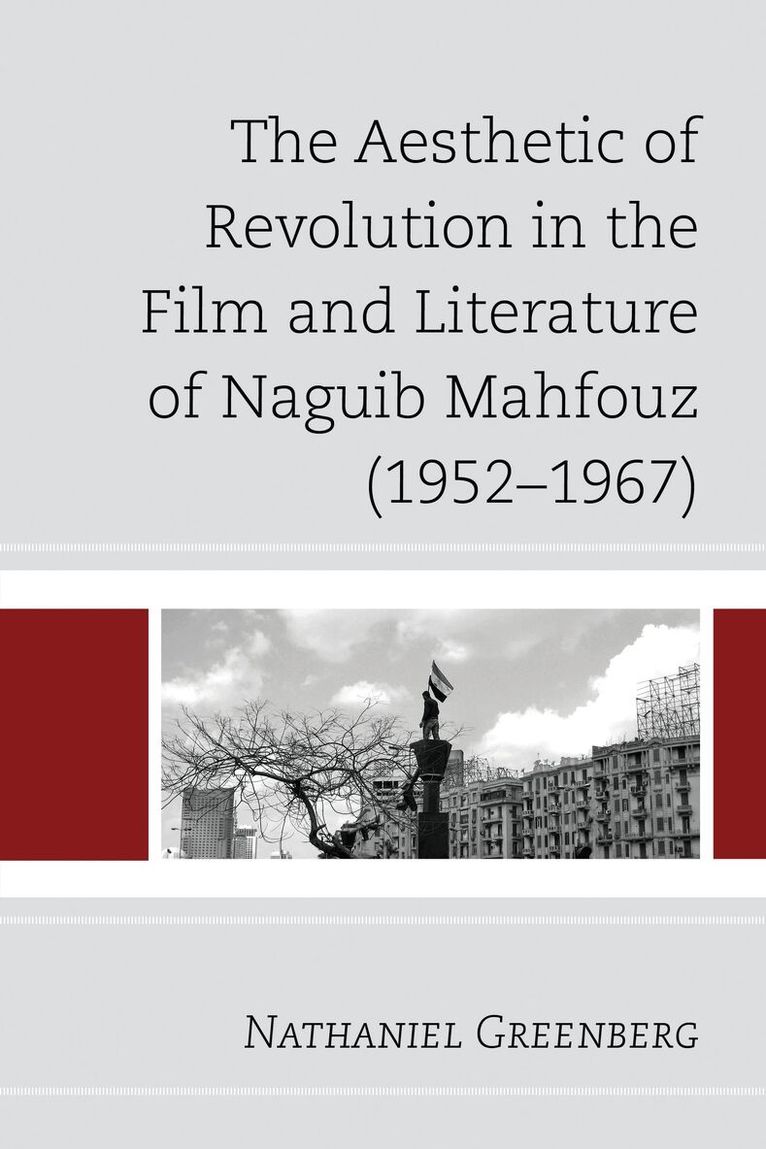
In the wake of the 1952 Revolution, Egypt’s future Nobel laureate in literature devoted himself exclusively to writing for film. The Aesthetic of Revolution in the Film and Literature of Naguib Mahfouz is the first full-length study in English to examine this critical period in the author’s career and to contextualize it within the scope of post-revolutionary Egyptian politics and culture. Before returning to literature in 1959 with his post-revolutionary masterpiece Children of the Alley, Mahfouz wrote or co-wrote some twenty odd scripts, many of them among the most successful in Egyptian history. He did so at a time when film was the country’s second largest export commodity after cotton and the domestic film industry in Egypt the fourth largest in the world. Artistically, his screenplays channeled the ideology of the revolution, often raising themes of oppression and liberation, and almost always within a storyline of criminal transgression. But as he discussed in later articles and interviews, the capacity for film to enumerate the flow of life—through montage, jump cuts, lighting, and close ups—helped him to develop a darker, faster, and more complex vision of society. This technological revolution was followed by a literary one in the 1960s, a time when Mahfouz would generate through a series of short, trenchant, and often comedic novellas, a deeply measured meditation on the experience of collective upheaval and the interpersonal impact of political transformation.
2 113 kr
Skickas inom 10-15 vardagar
In 2011, the Maghreb occupied a prominent place in world headlines when Sidi Bouzid, Tunisia, became the birthplace of the so-called Arab Spring. Events in Tunisia sparked huge and sometimes violent uprisings. Longstanding dictatorships fell in their wake. The ensuing democratic reforms resulted in elections and the victory of several Islamist political parties in the Arab world.This book explores the origins, development and rise of these Islamist parties by focusing on the people behind them. In doing so, it provides readers with a concise history of Sunni Islam in North Africa, the violent struggles against European colonial occupation, and the subsequent quest for an affirmation of Muslim identities in its wake. Exploring Islamism as an identity movement rooted in the colonial experience, this book argues that votes for Islamist parties after the Arab Spring reflected a universal human need for an authentic sense of self. This view contrasts with the popular belief that support for Islamists in North Africa reflects a dangerous "fundamentalist" view of the world that seeks to simply impose archaic religious laws on modern societies. Rather, the electoral success of Islamists in the Maghreb, like Tunisia's Ennahdha party, is rooted in a reaffirmation of the Arab-Islamic identities of the Maghreb states, long delayed by dictatorships that mimicked Western models and ideologies (e.g., Socialism). Ultimately, however, it is argued that this affirmation is a temporary phenomenon that will give way in time to the fundamental need for good governance, accountability, and a stable growing economy in these countries.Written in an accessible format, and providing fresh analytical perspectives on Islamism in the Maghreb, this book will be a valuable tool for students and scholars of Political Islam and North African Politics.
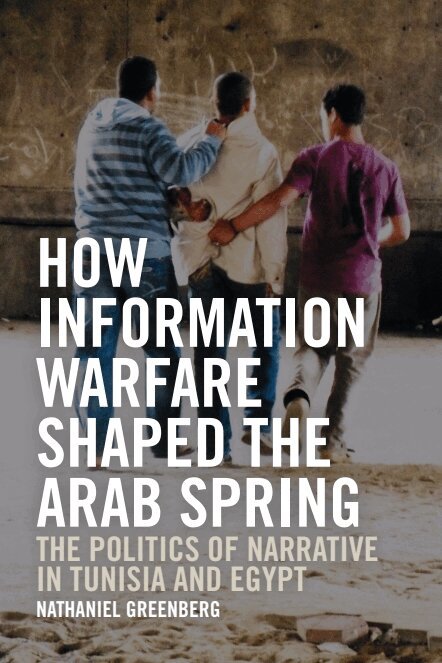
How Information Warfare Shaped the Arab Spring
The Politics of Narrative in Egypt and Tunisia
Inbunden, Engelska, 2019
1 454 kr
Skickas inom 7-10 vardagar
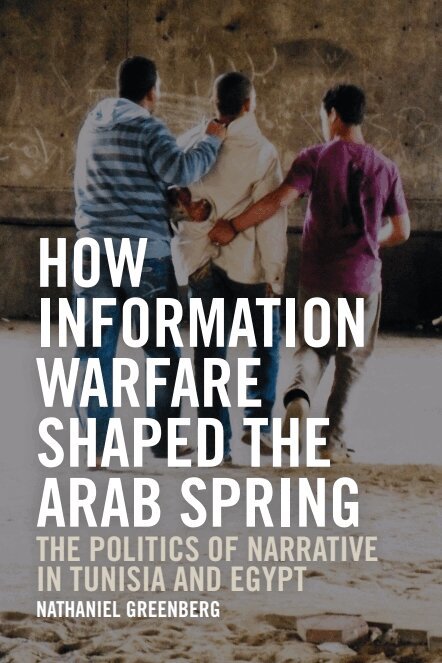
On January 28 2011 WikiLeaks released documents from a cache of US State Department cables stolen the previous year. The Daily Telegraph in London published one of the memos with an article headlined ‘Egypt protests: America's secret backing for rebel leaders behind uprising'. The effect of the revelation was immediate, helping set in motion an aggressive counter-narrative to the nascent story of the Arab Spring. The article featured a cluster of virulent commentators all pushing the same story: the CIA, George Soros and Hillary Clinton were attempting to take over Egypt. Many of these commentators were trolls, some of whom reappeared in 2016 to help elect Donald J. Trump as President of the United States. This book tells the story of how a proxy-communications war ignited and hijacked the Arab uprisings and how individuals on the ground, on air and online worked to shape history.
How Information Warfare Shaped the Arab Spring
The Politics of Narrative in Egypt and Tunisia
Häftad, Engelska, 2019
397 kr
Skickas inom 7-10 vardagar
On January 28 2011 WikiLeaks released documents from a cache of US State Department cables stolen the previous year. The Daily Telegraph in London published one of the memos with an article headlined ‘Egypt protests: America's secret backing for rebel leaders behind uprising'. The effect of the revelation was immediate, helping set in motion an aggressive counter-narrative to the nascent story of the Arab Spring. The article featured a cluster of virulent commentators all pushing the same story: the CIA, George Soros and Hillary Clinton were attempting to take over Egypt. Many of these commentators were trolls, some of whom reappeared in 2016 to help elect Donald J. Trump as President of the United States. This book tells the story of how a proxy-communications war ignited and hijacked the Arab uprisings and how individuals on the ground, on air and online worked to shape history.