Nayanika Mathur - Böcker
Visar alla böcker från författaren Nayanika Mathur. Handla med fri frakt och snabb leverans.
7 produkter
7 produkter
225 kr
Skickas inom 3-6 vardagar
727 kr
Skickas inom 7-10 vardagar
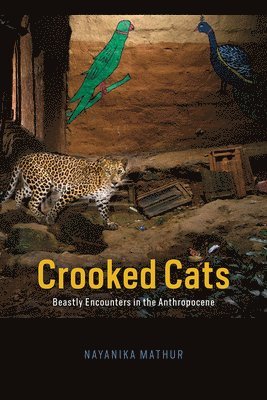
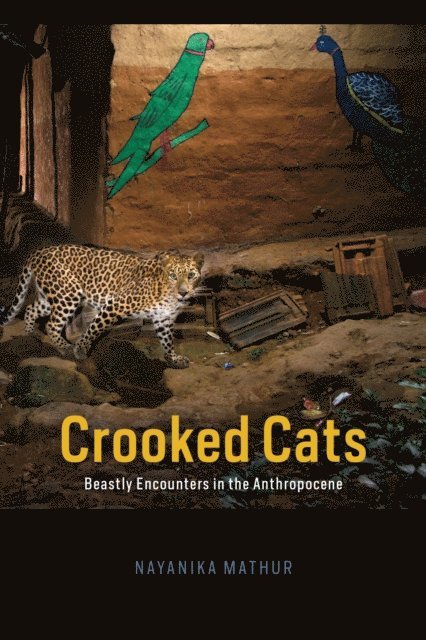
Big cats—tigers, leopards, and lions—that make prey of humans are commonly known as “man-eaters.” Anthropologist Nayanika Mathur reconceptualizes them as cats that have gone off the straight path to become “crooked.” Building upon fifteen years of research in India, this groundbreaking work moves beyond both colonial and conservationist accounts to place crooked cats at the center of the question of how we are to comprehend a planet in crisis.There are many theories on why and how a big cat comes to prey on humans, with the ecological collapse emerging as a central explanatory factor. Yet, uncertainty over the precise cause of crookedness persists. Crooked Cats explores in vivid detail the many lived complexities that arise from this absence of certain knowledge to offer startling new insights into both the governance of nonhuman animals and their intimate entanglements with humans. Through creative ethnographic storytelling, Crooked Cats illuminates the Anthropocene in three critical ways: as method, as a way of reframing human-nonhuman relations on the planet, and as a political tool indicating the urgency of academic engagement. Weaving together “beastly tales” spun from encounters with big cats, Mathur deepens our understanding of the causes, consequences, and conceptualization of the climate crisis.
250 kr
Skickas inom 7-10 vardagar
Big cats—tigers, leopards, and lions—that make prey of humans are commonly known as “man-eaters.” Anthropologist Nayanika Mathur reconceptualizes them as cats that have gone off the straight path to become “crooked.” Building upon fifteen years of research in India, this groundbreaking work moves beyond both colonial and conservationist accounts to place crooked cats at the center of the question of how we are to comprehend a planet in crisis.There are many theories on why and how a big cat comes to prey on humans, with the ecological collapse emerging as a central explanatory factor. Yet, uncertainty over the precise cause of crookedness persists. Crooked Cats explores in vivid detail the many lived complexities that arise from this absence of certain knowledge to offer startling new insights into both the governance of nonhuman animals and their intimate entanglements with humans. Through creative ethnographic storytelling, Crooked Cats illuminates the Anthropocene in three critical ways: as method, as a way of reframing human-nonhuman relations on the planet, and as a political tool indicating the urgency of academic engagement. Weaving together “beastly tales” spun from encounters with big cats, Mathur deepens our understanding of the causes, consequences, and conceptualization of the climate crisis.
939 kr
Skickas inom 7-10 vardagar
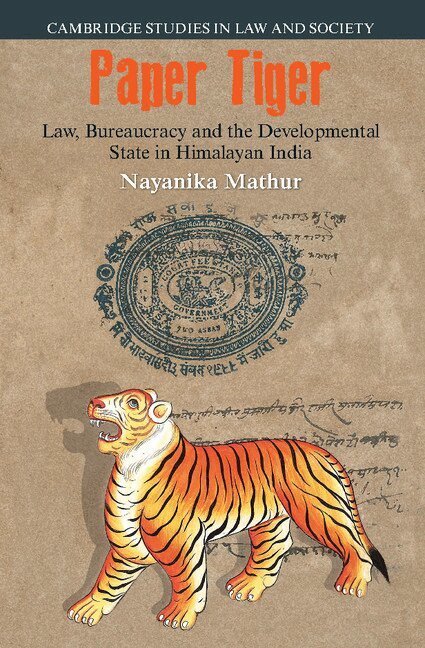
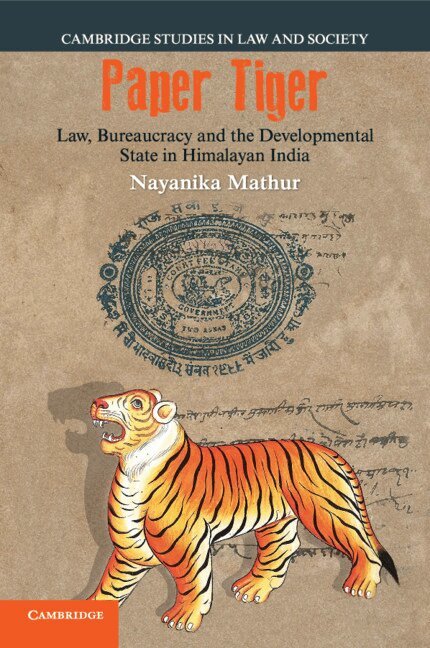
A big cat overthrows the Indian state and establishes a reign of terror over the residents of a Himalayan town. A welfare legislation aimed at providing employment and commanding a huge budget becomes 'unimplementable' in a region bedeviled by high levels of poverty and unemployment. Paper Tiger provides a lively ethnographic account of how such seemingly bizarre scenarios come to be in contemporary India. Based on eighteen months of intensive fieldwork, this book presents a unique explanation for why and how progressive laws can do what they do and not, ever-so-often, what they are supposed to do. It reveals the double-edged effects of the reforms that have been ushered in by the post-liberalization Indian state, particularly the effort to render itself more transparent and accountable. Through a meticulous detailing of everyday bureaucratic life on the Himalayan borderland, Paper Tiger makes an argument for shifting the very frames of thought through which we apprehend the workings of the developmental Indian state.
285 kr
Skickas inom 7-10 vardagar
A big cat overthrows the Indian state and establishes a reign of terror over the residents of a Himalayan town. A welfare legislation aimed at providing employment and commanding a huge budget becomes 'unimplementable' in a region bedeviled by high levels of poverty and unemployment. Paper Tiger provides a lively ethnographic account of how such seemingly bizarre scenarios come to be in contemporary India. Based on eighteen months of intensive fieldwork, this book presents a unique explanation for why and how progressive laws can do what they do and not, ever-so-often, what they are supposed to do. It reveals the double-edged effects of the reforms that have been ushered in by the post-liberalization Indian state, particularly the effort to render itself more transparent and accountable. Through a meticulous detailing of everyday bureaucratic life on the Himalayan borderland, Paper Tiger makes an argument for shifting the very frames of thought through which we apprehend the workings of the developmental Indian state.
1 860 kr
Skickas inom 3-6 vardagar
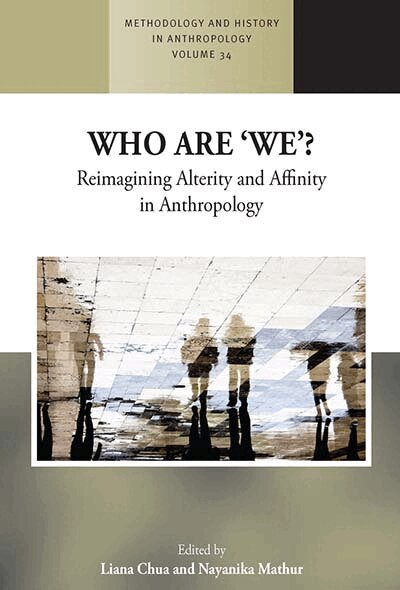
Who do “we” anthropologists think “we” are? And how do forms and notions of collective disciplinary identity shape the way we think, write, and do anthropology? This volume explores how the anthropological “we” has been construed, transformed, and deployed across history and the global anthropological landscape. Drawing together both reflections and ethnographic case studies, it interrogates the critical—yet poorly studied—roles played by myriad anthropological “we” as in generating and influencing anthropological theory, method, and analysis. In the process, new spaces are opened for reimagining who “we” are – and what “we,” and indeed anthropology, could become.
496 kr
Skickas inom 3-6 vardagar
Who do “we” anthropologists think “we” are? And how do forms and notions of collective disciplinary identity shape the way we think, write, and do anthropology? This volume explores how the anthropological “we” has been construed, transformed, and deployed across history and the global anthropological landscape. Drawing together both reflections and ethnographic case studies, it interrogates the critical—yet poorly studied—roles played by myriad anthropological “we” as in generating and influencing anthropological theory, method, and analysis. In the process, new spaces are opened for reimagining who “we” are – and what “we,” and indeed anthropology, could become.