Neda Atanasoski - Böcker
Visar alla böcker från författaren Neda Atanasoski. Handla med fri frakt och snabb leverans.
7 produkter
7 produkter
291 kr
Skickas inom 7-10 vardagar
When is a war not a war? When it is undertaken in the name of democracy, against the forces of racism, sexism, and religious and political persecution? This is the new world of warfare that Neda Atanasoski observes in Humanitarian Violence, different in name from the old imperialism but not so different in kind. In particular, she considers U.S. militarism-humanitarian militarism-during the Vietnam War, the Soviet-Afghan War, and the 1990s wars of secession in the former Yugoslavia.What this book brings to light-through novels, travel narratives, photojournalism, films, news media, and political rhetoric-is in fact a system of postsocialist imperialism based on humanitarian ethics. In the fiction of the United States as a multicultural haven, which morally underwrites the nation’s equally brutal waging of war and making of peace, parts of the world are subject to the violence of U.S. power because they are portrayed to be homogeneous and racially, religiously, and sexually intolerant-and thus permanently in need of reform. The entangled notions of humanity and atrocity that follow from such mediations of war and crisis have refigured conceptions of racial and religious freedom in the post–Cold War era. The resulting cultural narratives, Atanasoski suggests, tend to racialize ideological differences-whereas previous forms of imperialism racialized bodies. In place of the European racial imperialism, U.S. settler colonialism, and pre–civil rights racial constructions that associated racial difference with a devaluing of nonwhite bodies, Humanitarian Violence identifies an emerging discourse of race that focuses on ideological and cultural differences and makes postsocialist and Islamic nations the potential targets of U.S. disciplining violence.
1 901 kr
Skickas inom 10-15 vardagar
Moving past the conflation of state socialism with all socialist projects, this book opens up avenues for addressing socialist projects rooted in decolonial and antiracist politics. To that end, this anthology brings together scholarship across regions that engages postsocialism as an analytic that connects the ‘afters’ of the capitalist– socialist dynamic to present day politics. Resisting the revolutionary teleology of what was before, “postsocialism” can function to create space to work through ongoing legacies of socialisms in the present.Looking at the Middle East, Scandanavia, Korea, Romania, China, and the US, the chapters in this book assess ongoing socialist legacies in new ethical collectivities and networks of dissent opposing state- and corporate- based military, economic, and cultural expansionism since the end of the Cold War.The majority of the chapters in this book were originally published as a special issue of the journal, Social Identities.
575 kr
Skickas inom 10-15 vardagar
Moving past the conflation of state socialism with all socialist projects, this book opens up avenues for addressing socialist projects rooted in decolonial and antiracist politics. To that end, this anthology brings together scholarship across regions that engages postsocialism as an analytic that connects the ‘afters’ of the capitalist– socialist dynamic to present day politics. Resisting the revolutionary teleology of what was before, “postsocialism” can function to create space to work through ongoing legacies of socialisms in the present.Looking at the Middle East, Scandanavia, Korea, Romania, China, and the US, the chapters in this book assess ongoing socialist legacies in new ethical collectivities and networks of dissent opposing state- and corporate- based military, economic, and cultural expansionism since the end of the Cold War.The majority of the chapters in this book were originally published as a special issue of the journal, Social Identities.
1 116 kr
Skickas inom 7-10 vardagar
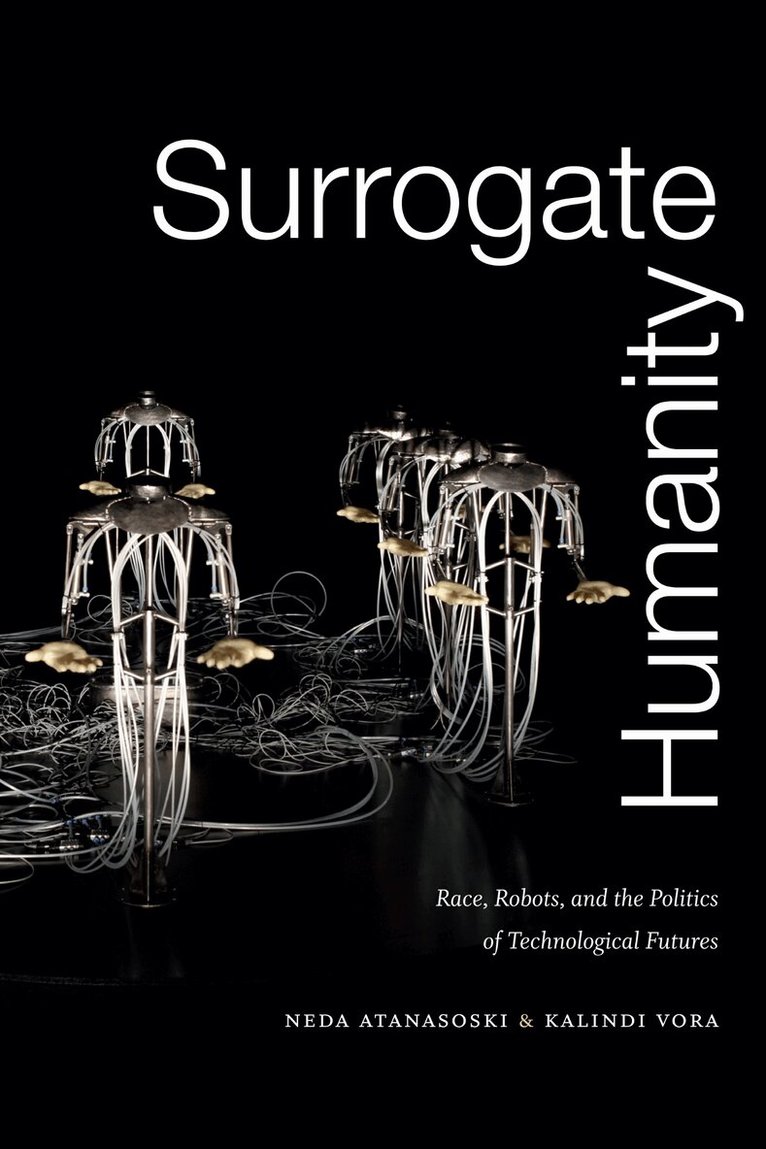
In Surrogate Humanity Neda Atanasoski and Kalindi Vora trace the ways in which robots, artificial intelligence, and other technologies serve as surrogates for human workers within a labor system entrenched in racial capitalism and patriarchy. Analyzing myriad technologies, from sex robots and military drones to sharing-economy platforms, Atanasoski and Vora show how liberal structures of antiblackness, settler colonialism, and patriarchy are fundamental to human---machine interactions, as well as the very definition of the human. While these new technologies and engineering projects promise a revolutionary new future, they replicate and reinforce racialized and gendered ideas about devalued work, exploitation, dispossession, and capitalist accumulation. Yet, even as engineers design robots to be more perfect versions of the human-more rational killers, more efficient workers, and tireless companions-the potential exists to develop alternative modes of engineering and technological development in ways that refuse the racial and colonial logics that maintain social hierarchies and inequality.
278 kr
Skickas inom 7-10 vardagar
In Surrogate Humanity Neda Atanasoski and Kalindi Vora trace the ways in which robots, artificial intelligence, and other technologies serve as surrogates for human workers within a labor system entrenched in racial capitalism and patriarchy. Analyzing myriad technologies, from sex robots and military drones to sharing-economy platforms, Atanasoski and Vora show how liberal structures of antiblackness, settler colonialism, and patriarchy are fundamental to human---machine interactions, as well as the very definition of the human. While these new technologies and engineering projects promise a revolutionary new future, they replicate and reinforce racialized and gendered ideas about devalued work, exploitation, dispossession, and capitalist accumulation. Yet, even as engineers design robots to be more perfect versions of the human-more rational killers, more efficient workers, and tireless companions-the potential exists to develop alternative modes of engineering and technological development in ways that refuse the racial and colonial logics that maintain social hierarchies and inequality.
1 359 kr
Skickas inom 7-10 vardagar
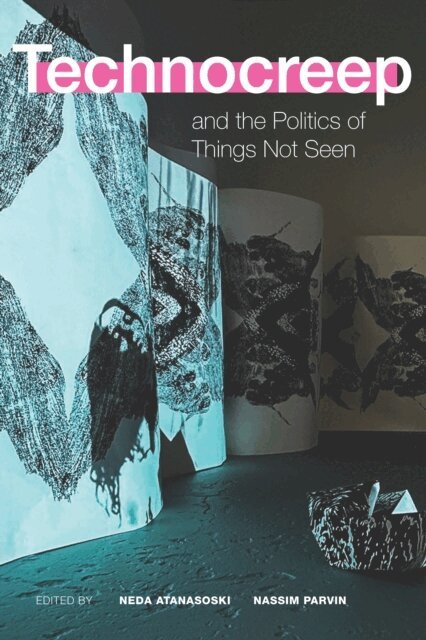
New and emerging technologies, especially ones that infiltrate intimate spaces, relations, homes, and bodies, are often referred to as creepy in media and political discourses. In Technocreep and the Politics of Things Not Seen, Neda Atanasoski and Nassim Parvin introduce a feminist theory of creep that they substantiate through critical engagement with smart homes, smart dust, smart desires, and smart forests toward dreams of feminist futures. Contributing authors further illuminate what is otherwise obscured, assumed, or dismissed in characterizations of technology as creepy or creeping. Considering diverse technologies such as border surveillance and China’s credit system to sexcams and home assistants, the volume’s essays and artworks demonstrate that the potentials and pitfalls of artificial intelligence and digital and robotic technologies cannot be assessed through binaries of seeing/being seen, privacy/surveillance, or harmful/useful. Together, their multifaceted and multimodal approach transcends such binaries, accounting for technological relations that exceed sight to include touch, presence, trust, and diverse modes of collectivity. As such, this volume develops creep as a feminist analytic and creative mode on par with technology’s complex entanglement with intimate, local, and global politics.Contributors. Neda Atanasoski, Katherine Bennett, IvÁn Chaar LÓpez, Sushmita Chatterjee, Hayri Dortdivanlioglu, Sanaz Haghani, Jacob Hagelberg, Jennifer Hamilton, Antonia HernÁndez, Marjan Khatibi, Tamara Kneese, Erin McElroy, Vernelle A. A. Noel, Jessica Olivares, Nassim Parvin, Beth Semel, Renee Shelby, Tanja Wiehn
370 kr
Skickas
New and emerging technologies, especially ones that infiltrate intimate spaces, relations, homes, and bodies, are often referred to as creepy in media and political discourses. In Technocreep and the Politics of Things Not Seen, Neda Atanasoski and Nassim Parvin introduce a feminist theory of creep that they substantiate through critical engagement with smart homes, smart dust, smart desires, and smart forests toward dreams of feminist futures. Contributing authors further illuminate what is otherwise obscured, assumed, or dismissed in characterizations of technology as creepy or creeping. Considering diverse technologies such as border surveillance and China’s credit system to sexcams and home assistants, the volume’s essays and artworks demonstrate that the potentials and pitfalls of artificial intelligence and digital and robotic technologies cannot be assessed through binaries of seeing/being seen, privacy/surveillance, or harmful/useful. Together, their multifaceted and multimodal approach transcends such binaries, accounting for technological relations that exceed sight to include touch, presence, trust, and diverse modes of collectivity. As such, this volume develops creep as a feminist analytic and creative mode on par with technology’s complex entanglement with intimate, local, and global politics.Contributors. Neda Atanasoski, Katherine Bennett, IvÁn Chaar LÓpez, Sushmita Chatterjee, Hayri Dortdivanlioglu, Sanaz Haghani, Jacob Hagelberg, Jennifer Hamilton, Antonia HernÁndez, Marjan Khatibi, Tamara Kneese, Erin McElroy, Vernelle A. A. Noel, Jessica Olivares, Nassim Parvin, Beth Semel, Renee Shelby, Tanja Wiehn