Neil Thurman - Böcker
Visar alla böcker från författaren Neil Thurman. Handla med fri frakt och snabb leverans.
3 produkter
3 produkter
Algorithms, Automation, and News
New Directions in the Study of Computation and Journalism
Inbunden, Engelska, 2021
2 088 kr
Skickas inom 10-15 vardagar
This book examines the growing importance of algorithms and automation—including emerging forms of artificial intelligence—in the gathering, composition, and distribution of news. In it the authors connect a long line of research on journalism and computation with scholarly and professional terrain yet to be explored. Taken as a whole, these chapters share some of the noble ambitions of the pioneering publications on ‘reporting algorithms’, such as a desire to see computing help journalists in their watchdog role by holding power to account. However, they also go further, firstly by addressing the fuller range of technologies that computational journalism now consists of: from chatbots and recommender systems to artificial intelligence and atomised journalism. Secondly, they advance the literature by demonstrating the increased variety of uses for these technologies, including engaging underserved audiences, selling subscriptions, and recombining and re-using content. Thirdly, they problematise computational journalism by, for example, pointing out some of the challenges inherent in applying artificial intelligence to investigative journalism and in trying to preserve public service values. Fourthly, they offer suggestions for future research and practice, including by presenting a framework for developing democratic news recommenders and another that may help us think about computational journalism in a more integrated, structured manner.The chapters in this book were originally published as a special issue of Digital Journalism.
Algorithms, Automation, and News
New Directions in the Study of Computation and Journalism
Häftad, Engelska, 2023
617 kr
Skickas inom 10-15 vardagar
This book examines the growing importance of algorithms and automation—including emerging forms of artificial intelligence—in the gathering, composition, and distribution of news. In it the authors connect a long line of research on journalism and computation with scholarly and professional terrain yet to be explored. Taken as a whole, these chapters share some of the noble ambitions of the pioneering publications on ‘reporting algorithms’, such as a desire to see computing help journalists in their watchdog role by holding power to account. However, they also go further, firstly by addressing the fuller range of technologies that computational journalism now consists of: from chatbots and recommender systems to artificial intelligence and atomised journalism. Secondly, they advance the literature by demonstrating the increased variety of uses for these technologies, including engaging underserved audiences, selling subscriptions, and recombining and re-using content. Thirdly, they problematise computational journalism by, for example, pointing out some of the challenges inherent in applying artificial intelligence to investigative journalism and in trying to preserve public service values. Fourthly, they offer suggestions for future research and practice, including by presenting a framework for developing democratic news recommenders and another that may help us think about computational journalism in a more integrated, structured manner.The chapters in this book were originally published as a special issue of Digital Journalism.
543 kr
Kommande
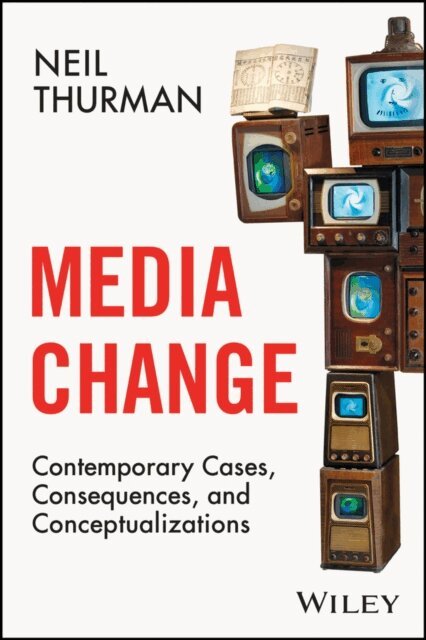
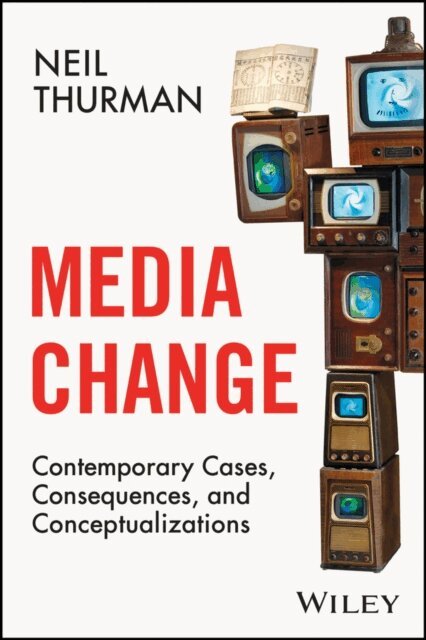
Explores the multifaceted dynamics of media change across technologies and societiesMedia change is constant, but it is rarely straightforward. While some shifts in the media landscape are rapid and transformative, others unfold slowly, unevenly, or even stall and reverse. Media Change: Contemporary Cases, Consequences, and Conceptualizations examines this complexity through a series of contemporary, self-contained case studies. Each of the nine core chapters explores a specific example of media transformation, such as AI-driven content production, evolving regulatory landscapes, and media business models. Situating media change within broader historical and conceptual frameworks, Neil Thurman reveals how today’s most pressing issues in media are part of longer trajectories of change, shaped by forces such as technological innovation, economic pressures, and cultural resistance.Drawing on an original “6 Rs” framework—revolution, remediation, resistance, rapidity, regulation, and reversals—Thurman provides a systematic yet accessible way of thinking about how and why media change occurs. By combining rich empirical evidence with a long historical view, the book illuminates the social, industrial, and technological drivers of transformation and their impact on media practices, products, and audiences. Its nine case studies not only offer depth on contemporary issues, but also prompt reflection on broader patterns of continuity and disruption in media systems.Offering fresh insights into contemporary communication, Media Change: Balances global perspectives, drawing on both US and non-US examplesChallenges common assumptions about the evolving media environmentDemonstrates how change can be incomplete, uneven, and historically contingentIncludes discussion questions at the end of each chapter to stimulate critical reflectionCombines conceptual innovation with extensive empirical evidenceWritten in a clear and accessible style, Media Change: Contemporary Cases, Consequences, and Conceptualizations is an essential resource for those seeking to understand how media systems are transforming. Whether used in its entirety or as stand-alone chapters, it is ideal for undergraduate, master’s, and doctoral students in media, communication, journalism, and cultural studies programs.This broad-ranging book by a true leader in the field illuminates key dynamics in media transformation in recent years: drawing on a set of well-chosen case studies, it identifies the major social, industrial, and technological drivers of change, and explains them through its innovative 'six Rs' framework. Using that framework, Thurman prompts us to ask all the right questions—not just about his illustrative cases, but about media change more generally too. A true tour de force at this critical moment for media production, policy, and use around the world.— Axel Bruns, Australian Laureate Fellow and Professor, Digital Media Research Centre, Queensland University of Technology AustraliaDrawing on nine original case studies, Thurman develops an innovative framework for understanding media change. The book brilliantly captures media change's complex historical dependencies, sometimes slow unfolding, regular reversals, and how it can—and at times should—be resisted. — Thorsten Quandt, Professor and Dean of the Faculty of Education and Social Sciences, University of Münster, GermanyAt a time when the evolution and operation of our increasingly complex media ecosystem is of growing political, economic, and cultural consequence, Neil Thurman's book provides valuable guidance through the process of media change for students, scholars, and professionals. — Philip M. Napoli, James R. Shepley Professor of Public Policy; Director, DeWitt Wallace Center for Media & Democracy, Duke University, USAMedia Change is a refreshing take on contemporary transformations in our media environment. Thurman's six Rs framework of media change (Revolution, Remediation, Resistance, Rapidity, Regulation, and Reversals) is definitely here to stay.— Thomas Hanitzsch, Professor of Communication, Department of Media and Communication, LMU Munich, Germany and President, International Communication AssociationMedia Change grapples with the enormous changes that have affected media ecosystems in the past five decades and adeptly reveals why they are important and how readers should understand them. Professor Thurman explains how and why the changes have upended industries and companies and left policymakers scrambling to address new and complex media effects and issues. Although based in how the media ecosystems have evolved, the book presents insights on the contemporary relevance of those changes, and how current scholars and practitioners should conceptualize and respond as changes continue in media environments. — Robert G. Picard, University of Oxford, UK Neil Thurman's Media Change provides a most valuable analysis to understand contemporary dynamics of media transformation and to anticipate some of the most likely future pathways. An important read for scholars and practitioners alike. — Pablo J. Boczkowski, Hamad Bin Khalifa Al-Thani Professor, Department of Communication studies, Northwestern University, UKThis strikingly original, engaging and accessible book is essential reading for anyone seeking to make sense of changes in our media landscape. The book's richly detailed exploration of varied case studies— from live blogs to AI and internet pornography— sheds light on why and how transformations take place. In doing so, it challenges technologically determinist accounts, reminding us of the complexity of change. —Karin Wahl-Jorgensen, Professor and University Dean of Research Environment and Culture, Cardiff School of Journalism, Media and Culture, Cardiff University, UKMedia Change is an engaging and enlightening journey through decades of digital transformation, from the early days of blogging to generative AI. Written in a clear, accessible style, the book tracks how media evolution rarely follows a linear path, instead unfolding in unpredictable patterns. Thurman shows how understanding media transformation demands looking beyond technological innovation and recognising the roles played by remediation, regulation, and resistance. — Alfred Hermida, Professor, School of Journalism, Writing, and Media, The University of British Columbia, Canada