Nels P. Highberg - Böcker
Visar alla böcker från författaren Nels P. Highberg. Handla med fri frakt och snabb leverans.
4 produkter
4 produkter
2 100 kr
Skickas inom 10-15 vardagar
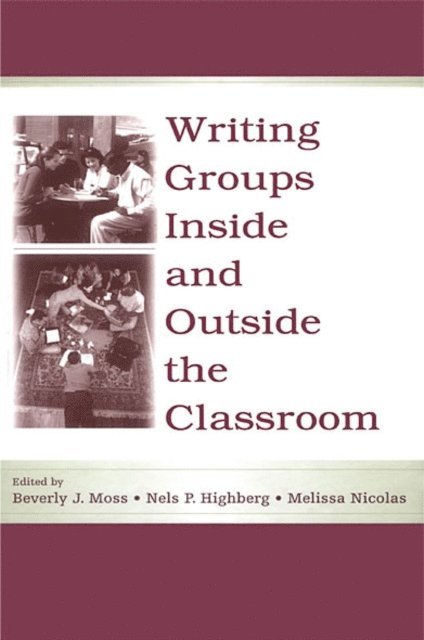
This unique collection considers the nature of writing groups inside and outside the academic environment. Exploring writing groups as contextual literacy events, editors Beverly J. Moss, Nels P. Highberg, and Melissa Nicolas bring together contributors to document and reflect on the various types of collaborations that occur in writing groups in a wide range of settings, both within and outside the academy. The chapters in this volume respond to a variety of questions about writing groups, including: *What is the impact of gender, race, and socioeconomic class on power dynamics in writing groups? *When is a writing group a community and are all writing groups communities? *How does the local community of a writing group impact the participation of group members in other local or global communities? *How does the local community of a writing group impact the participation of group members in other local or global communities? *What actions contribute to a strong community of writers and what actions contribute to the breakdown of community? *When and for whom are writing groups ineffective? *What is it about belonging to a community of writers that makes writing groups appealing to so many within and beyond the academy?Each chapter highlights how writing groups, whether or not they are labeled as such, function in various spaces and locations, and how collaboration works when writers from a variety of backgrounds with diverse interests come together. Writing Groups Inside and Outside the Classroom illustrates that writing groups outside of the academy are worthy of study and serve as important sites of writing and literacy instruction. Offering significant insights into the roles of writing groups in literacy and writing practice, this volume is appropriate for scholars and teachers of writing, rhetoric, composition, and literacy; for writing center administrators and staff; and for writing group participants.
794 kr
Skickas inom 10-15 vardagar
This unique collection considers the nature of writing groups inside and outside the academic environment. Exploring writing groups as contextual literacy events, editors Beverly J. Moss, Nels P. Highberg, and Melissa Nicolas bring together contributors to document and reflect on the various types of collaborations that occur in writing groups in a wide range of settings, both within and outside the academy. The chapters in this volume respond to a variety of questions about writing groups, including: *What is the impact of gender, race, and socioeconomic class on power dynamics in writing groups? *When is a writing group a community and are all writing groups communities? *How does the local community of a writing group impact the participation of group members in other local or global communities? *How does the local community of a writing group impact the participation of group members in other local or global communities? *What actions contribute to a strong community of writers and what actions contribute to the breakdown of community? *When and for whom are writing groups ineffective? *What is it about belonging to a community of writers that makes writing groups appealing to so many within and beyond the academy?Each chapter highlights how writing groups, whether or not they are labeled as such, function in various spaces and locations, and how collaboration works when writers from a variety of backgrounds with diverse interests come together. Writing Groups Inside and Outside the Classroom illustrates that writing groups outside of the academy are worthy of study and serve as important sites of writing and literacy instruction. Offering significant insights into the roles of writing groups in literacy and writing practice, this volume is appropriate for scholars and teachers of writing, rhetoric, composition, and literacy; for writing center administrators and staff; and for writing group participants.
2 631 kr
Skickas inom 10-15 vardagar
The essays selected for this volume address debilitating assumptions that place both students and teachers of basic writing, as well as the discipline itself, on the margins of educational, economic, and political localities of influence. The collection presents readers with previously published essays that together depict the fundamental and shifting theoretical, methodological, and pedagogical assumptions of basic writing instruction over the past two decades. Arranged chronologically, the essays examine such issues as defining basic writers, the phenomenology of error, cognitivism and writing instruction, the social construction of remediation, and the politics of basic writing pedagogy in a postmodern world. They collectively present what the contributors perceive as some of the most enduring and important debates in the field. At the same time, they illustrate that neither the basic writing classroom nor recent scholarship need to be intellectually marginalized locations. By including primarily essays published between 1987 and 1997, the contributors bring together essays that historicize the preceding decades of scholarship and also anticipate the future of the field. The volume moves thematically from situating and defining basic writers and basic writing scholarship to questions of the relationships among methodology, ideology, and race. It closes with a series of essays that collectively move the field "Toward a Post-Critical Pedagogy of Basic Writing."
702 kr
Skickas inom 10-15 vardagar
The essays selected for this volume address debilitating assumptions that place both students and teachers of basic writing, as well as the discipline itself, on the margins of educational, economic, and political localities of influence. The collection presents readers with previously published essays that together depict the fundamental and shifting theoretical, methodological, and pedagogical assumptions of basic writing instruction over the past two decades. Arranged chronologically, the essays examine such issues as defining basic writers, the phenomenology of error, cognitivism and writing instruction, the social construction of remediation, and the politics of basic writing pedagogy in a postmodern world. They collectively present what the contributors perceive as some of the most enduring and important debates in the field. At the same time, they illustrate that neither the basic writing classroom nor recent scholarship need to be intellectually marginalized locations. By including primarily essays published between 1987 and 1997, the contributors bring together essays that historicize the preceding decades of scholarship and also anticipate the future of the field. The volume moves thematically from situating and defining basic writers and basic writing scholarship to questions of the relationships among methodology, ideology, and race. It closes with a series of essays that collectively move the field "Toward a Post-Critical Pedagogy of Basic Writing."