Nete Kristensen - Böcker
Visar alla böcker från författaren Nete Kristensen. Handla med fri frakt och snabb leverans.
3 produkter
3 produkter
657 kr
Skickas inom 10-15 vardagar
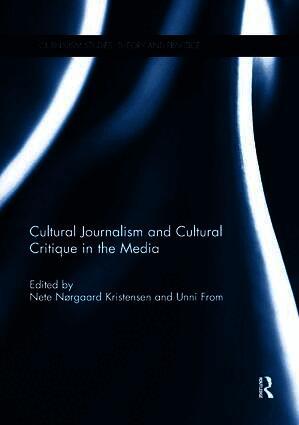
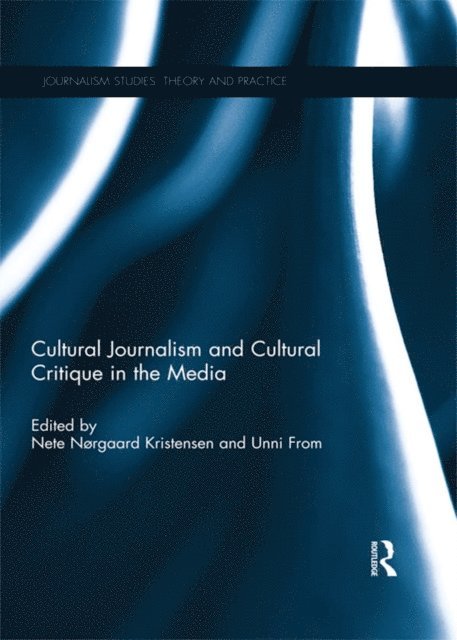
This book addresses a topic in journalism studies that has gained increasing scholarly attention since the mid-2000s: the coverage and evaluation of arts and culture, or what we term ‘cultural journalism and cultural critique’. The book highlights three approaches to this emerging research field: (1) the constant challenge of demarcating what constitutes the ‘cultural’ in cultural journalism and cultural critique, and the interlinks of cultural journalism and cultural critique; (2) the dialectic of globalization’s cultural homogenization and the specificity of local/national cultures; and (3) the need to rethink, perhaps even redefine, cultural journalism and cultural critique in view of the digital media landscape. ‘Cultural journalism’ is used as an umbrella term for media reporting and debating on culture, including the arts, value politics, popular culture, the culture industries, and entertainment. Therefore some of the contributions this book apply a broad approach to ‘the cultural’ when theorizing and analyzing the production and content of cultural journalism, and the professional ideology, self-perception, and legitimacy struggles of cultural journalists and editors. Other contributions demarcate their field of study more narrowly, both topically and generically, by engaging with very specific sub-areas such as ‘film criticism’ or ‘television series.’ This book was originally published as a special issue of Journalism Practice.
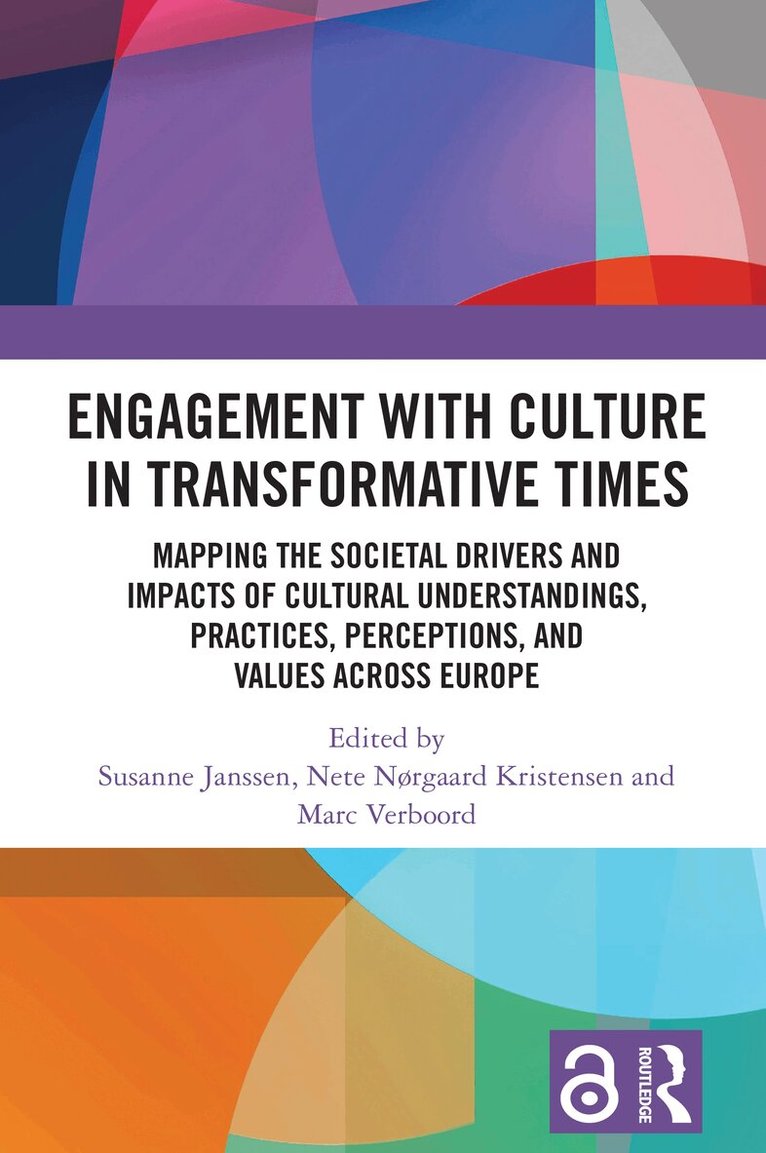
Engagement with Culture in Transformative Times
Mapping the Societal Drivers and Impacts of Cultural Understandings, Practices, Perceptions, and Values across Europe
Inbunden, Engelska, 2025
2 088 kr
Skickas inom 10-15 vardagar
At the heart of this volume are the questions: What does culture mean to European citizens in the face of globalisation, digitalisation, diversity, and social inequality? How do Europeans engage with culture in its various forms, and what societal values are tied to this cultural engagement? These questions are explored in depth across the 15 chapters of this book. By delving into the understandings, practices, perceptions, affordances, and impacts of culture, this book advances the study of the societal values of culture in contemporary European societies, offering insights beneficial to both research and cultural policy work.The book stands out with its five unique features. It embraces an inclusive conception of culture, spanning the arts, popular culture, and everyday cultural practices, both offline and online. It takes a grassroots approach, starting from the cultural understandings and experiences of European citizens. It employs a comparative method involving people from diverse socio-economic groups in nine European countries – with different cultural policy models, social-structural features, socio-cultural value orientations, and media systems. It builds on a multi- and mixed-methods approach, including a large-scale survey, a smartphone study with experimental stimuli, several phases of online content data collection and analysis, qualitative interviews, and focus groups. Finally, it delves into how wide-ranging and interconnected sociocultural transformations such as migration, digitalisation, and social inequality impact people’s understanding of and engagement with culture as well as the meanings and values they attribute to culture. These unique features promise to offer a fresh and comprehensive perspective on cultural engagement in contemporary European societies.The collection showcases the multiple, often contradictory concepts and understandings of culture and its societal values among social groups within and across European societies. The findings call for a “social turn” in cultural policy that extends beyond traditional arts and culture to support diverse cultural expressions that may enhance social values, address complex social issues, and shift the focus from economic objectives to promoting civic solidarity, equity, inclusivity, tolerance, and shared community values.The Open Access version of this book, available at http://www.taylorfrancis.com, has been made available under a Creative Commons [Attribution-Non Commercial-No Derivatives (CC-BY-NC-ND)] 4.0 license.
2 021 kr
Skickas inom 10-15 vardagar
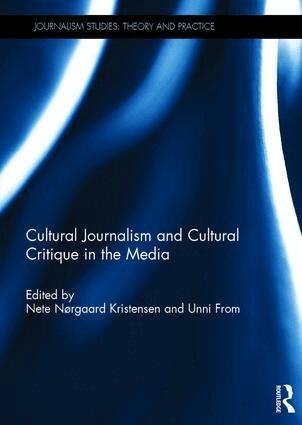
This book addresses a topic in journalism studies that has gained increasing scholarly attention since the mid-2000s: the coverage and evaluation of arts and culture, or what we term ‘cultural journalism and cultural critique’. The book highlights three approaches to this emerging research field: (1) the constant challenge of demarcating what constitutes the ‘cultural’ in cultural journalism and cultural critique, and the interlinks of cultural journalism and cultural critique; (2) the dialectic of globalization’s cultural homogenization and the specificity of local/national cultures; and (3) the need to rethink, perhaps even redefine, cultural journalism and cultural critique in view of the digital media landscape. ‘Cultural journalism’ is used as an umbrella term for media reporting and debating on culture, including the arts, value politics, popular culture, the culture industries, and entertainment. Therefore some of the contributions this book apply a broad approach to ‘the cultural’ when theorizing and analyzing the production and content of cultural journalism, and the professional ideology, self-perception, and legitimacy struggles of cultural journalists and editors. Other contributions demarcate their field of study more narrowly, both topically and generically, by engaging with very specific sub-areas such as ‘film criticism’ or ‘television series.’ This book was originally published as a special issue of Journalism Practice.