Nianshen Song - Böcker
Visar alla böcker från författaren Nianshen Song. Handla med fri frakt och snabb leverans.
4 produkter
4 produkter
939 kr
Skickas inom 7-10 vardagar
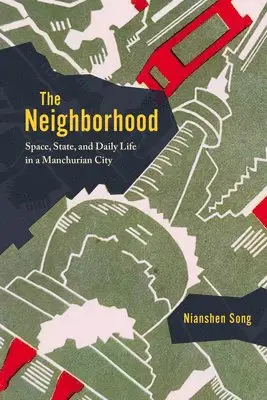
This masterful blend of history and urban storytelling brings to life the people and politics that shaped a single neighborhood in a Manchurian city across several centuries. What can one neighborhood reveal about the making of a modern nation? The Neighborhood deciphers the unexpected significance of Xita, a half-square-mile quarter in Shenyang, in Northeast China. As the historian Nianshen Song shows, over nearly four centuries, Xita has been shaped and reshaped by empire, war, migration, and urban transformation. Remarkably, the history of this small area mirrors large-scale changes, including and especially China’s metamorphosis from a multiethnic Eurasian empire to a postindustrial society. Song begins with Xita’s origins as a Qing-era Tibetan Buddhist center, following the lives of Mongol lamas and their imperial patrons. He tracks the neighborhood through the tumultuous twentieth century, when competing Russian and Japanese railway empires fueled its industrial growth, and Japanese colonizers turned it into a showcase for their imperial ambitions. Later, Xita became a vital enclave for Korea’s diaspora before emerging in the post-Mao era as a neon-lit hub of commerce and entertainment. A thoroughly researched microhistory, The Neighborhood reveals how global forces play out in everyday spaces. By studying the emperors, warlords, merchants, laborers, and migrants who shaped Xita, Song presents a captivating and original perspective for understanding China’s past—not from the top down, but through the streets and people who lived it.
250 kr
Skickas inom 7-10 vardagar
This masterful blend of history and urban storytelling brings to life the people and politics that shaped a single neighborhood in a Manchurian city across several centuries. What can one neighborhood reveal about the making of a modern nation? The Neighborhood deciphers the unexpected significance of Xita, a half-square-mile quarter in Shenyang, in Northeast China. As the historian Nianshen Song shows, over nearly four centuries, Xita has been shaped and reshaped by empire, war, migration, and urban transformation. Remarkably, the history of this small area mirrors large-scale changes, including and especially China’s metamorphosis from a multiethnic Eurasian empire to a postindustrial society. Song begins with Xita’s origins as a Qing-era Tibetan Buddhist center, following the lives of Mongol lamas and their imperial patrons. He tracks the neighborhood through the tumultuous twentieth century, when competing Russian and Japanese railway empires fueled its industrial growth, and Japanese colonizers turned it into a showcase for their imperial ambitions. Later, Xita became a vital enclave for Korea’s diaspora before emerging in the post-Mao era as a neon-lit hub of commerce and entertainment. A thoroughly researched microhistory, The Neighborhood reveals how global forces play out in everyday spaces. By studying the emperors, warlords, merchants, laborers, and migrants who shaped Xita, Song presents a captivating and original perspective for understanding China’s past—not from the top down, but through the streets and people who lived it.
1 282 kr
Skickas inom 7-10 vardagar
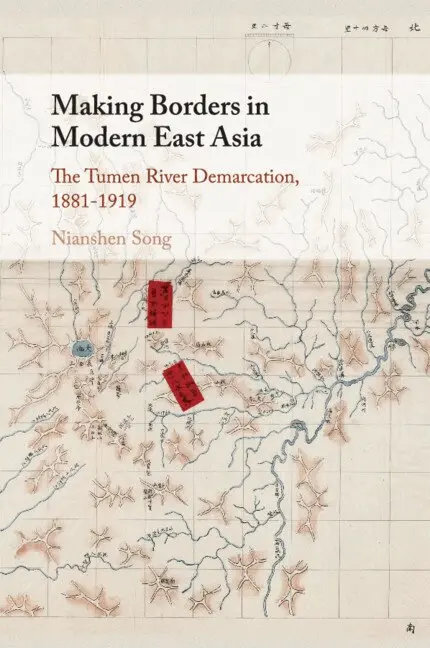
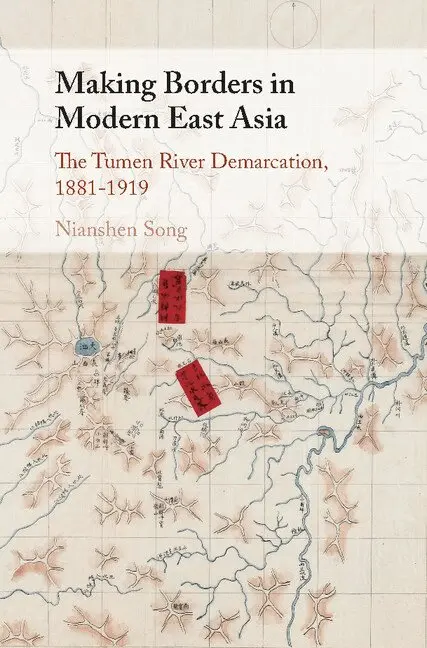
Until the late nineteenth century, the Chinese-Korean Tumen River border was one of the oldest, and perhaps most stable, state boundaries in the world. Spurred by severe food scarcity following a succession of natural disasters, from the 1860s, countless Korean refugees crossed the Tumen River border into Qing-China's Manchuria, triggering a decades-long territorial dispute between China, Korea, and Japan. This major new study of a multilateral and multiethnic frontier highlights the competing state- and nation-building projects in the fraught period that witnessed the Sino-Japanese War, the Russo-Japanese War, and the First World War. The power-plays over land and people simultaneously promoted China's frontier-building endeavours, motivated Korea's nationalist imagination, and stimulated Japan's colonialist enterprise, setting East Asia on an intricate trajectory from the late-imperial to a situation that, Song argues, we call modern.
441 kr
Skickas inom 7-10 vardagar
Until the late nineteenth century, the Chinese-Korean Tumen River border was one of the oldest, and perhaps most stable, state boundaries in the world. Spurred by severe food scarcity following a succession of natural disasters, from the 1860s, countless Korean refugees crossed the Tumen River border into Qing-China's Manchuria, triggering a decades-long territorial dispute between China, Korea, and Japan. This major new study of a multilateral and multiethnic frontier highlights the competing state- and nation-building projects in the fraught period that witnessed the Sino-Japanese War, the Russo-Japanese War, and the First World War. The power-plays over land and people simultaneously promoted China's frontier-building endeavours, motivated Korea's nationalist imagination, and stimulated Japan's colonialist enterprise, setting East Asia on an intricate trajectory from the late-imperial to a situation that, Song argues, we call modern.