Niaz A Shah – författare
Visar alla böcker från författaren Niaz A Shah. Handla med fri frakt och snabb leverans.
5 produkter
5 produkter
2 148 kr
Skickas inom 10-15 vardagar
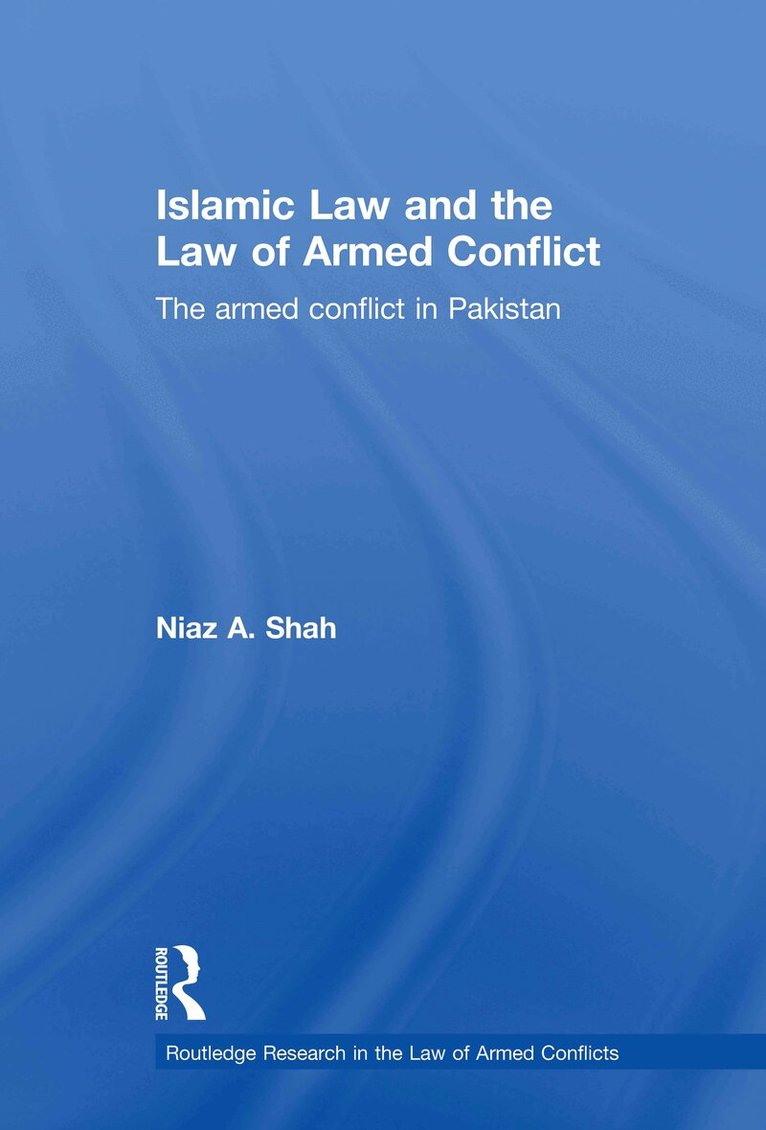
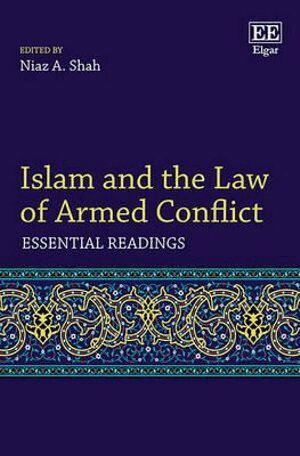
Islamic Law and the Law of Armed Conflict: The Conflict in Pakistan demonstrates how international law can be applied in Muslim states in a way that is compatible with Islamic law. Within this broader framework of compatible application, Niaz A. Shah argues that the Islamic law of qital (i.e. armed conflict) and the law of armed conflict are compatible with each other and that the former can complement the latter at national and regional levels. Shah identifies grey areas in the Islamic law of qital and argues for their expansion and clarification. Shah also calls for new rules to be developed to cover what he calls the blind spots in the Islamic law of qital. He shows how Islamic law and the law of armed conflict could contribute to each other in certain areas, such as, the law of occupation; air and naval warfare; and the use of modern weaponry. Such a contribution is neither prohibited by Islamic law nor by international law. Shah applies the Islamic law of qital and the law of armed conflict to a live armed conflict in Pakistan and argues that all parties, the Taliban, the security forces of Pakistan and the American CIA, have violated one or more of the applicable laws. He maintains that whilst militancy is a genuine problem, fighting militants does not allow or condone violation of the law. Islamic Law and the Law of Armed Conflict will be of interest to students and scholars of international law, Islamic law, international relations, security studies and south-east Asian studies.
750 kr
Skickas inom 10-15 vardagar
Islamic Law and the Law of Armed Conflict: The Conflict in Pakistan demonstrates how international law can be applied in Muslim states in a way that is compatible with Islamic law. Within this broader framework of compatible application, Niaz A. Shah argues that the Islamic law of qital (i.e. armed conflict) and the law of armed conflict are compatible with each other and that the former can complement the latter at national and regional levels. Shah identifies grey areas in the Islamic law of qital and argues for their expansion and clarification. Shah also calls for new rules to be developed to cover what he calls the blind spots in the Islamic law of qital. He shows how Islamic law and the law of armed conflict could contribute to each other in certain areas, such as, the law of occupation; air and naval warfare; and the use of modern weaponry. Such a contribution is neither prohibited by Islamic law nor by international law. Shah applies the Islamic law of qital and the law of armed conflict to a live armed conflict in Pakistan and argues that all parties, the Taliban, the security forces of Pakistan and the American CIA, have violated one or more of the applicable laws. He maintains that whilst militancy is a genuine problem, fighting militants does not allow or condone violation of the law. Islamic Law and the Law of Armed Conflict will be of interest to students and scholars of international law, Islamic law, international relations, security studies and south-east Asian studies.
6 398 kr
Skickas inom 5-8 vardagar
This important collection reveals a multiplicity of perspectives on the Islamic law of war and peace. Prefaced by an original introduction, the carefully selected works demonstrate how the concept of Jihad is interpreted or misinterpreted. They also examine the rules applicable during the conduct of armed conflict and the significance of peace and security within Islamic tradition. The collection provides valuable insights into the compatibility of the Islamic law of war and peace and the law of armed conflict, demonstrating how the former could minimise unnecessary human suffering during armed conflict. This book is an essential source of reference for everyone interested in this vital relationship.
Judicial Resource Book on Violence Against Women for Asia
Combating Violence against Women and Girls for Cambodia, India, Pakistan and Thailand
Häftad, Engelska, 2018
627 kr
Skickas inom 10-15 vardagar
The Judicial Resource Book on Violence Against Women for Asia deepens our understanding of the varying forms of violence against women and girls (VAWG) and raises awareness of the important role that the judiciary can play in tackling them. It is designed to be used by judicial officers and other professionals as a practical contribution towards promoting justice and fairness in the judicial process for women who have been victims of violence.Produced in partnership with the UN Women Regional Office for Asia- Pacific, this volume brings together information on key judgments of apex courts in Cambodia, India, Pakistan and Thailand to advance protections for women against violence, throughapplication of constitutional guarantees and international human rights law. Judgments are analysed in the context of relevant legislative frameworks, and guidance offered on best practices on overcoming gender bias when dispensing justice.
Del 4 - Studies in Religion, Secular Beliefs and Human Rights
Women, the Koran and International Human Rights Law
The Experience of Pakistan
Inbunden, Engelska, 2006
2 466 kr
Skickas inom 3-6 vardagar
Religion plays a pivotal role in the way women are treated around the world, socially and legally. This book discusses three Islamic human rights approaches: secular, non-compatible, reconciliatory (compatible), and proposes a contextual interpretive approach. It is argued that the current gender discriminatory statutory Islamic laws in Islamic jurisdictions, based on the decontextualised interpretation of the Koran, can be reformed through Ijtihad: independent individual reasoning. It is claimed that the original intention of the Koran was to protect the rights of women and raise their status in society, not to relegate them to subordination. This Koranic intention and spirit may be recaptured through the proposed contextual interpretation which in fact means using an Islamic (or insider) strategy to achieve gender equality in Muslim states and greater compatibility with international human rights law. It discusses the negative impact of the so-called statutory Islamic laws of Pakistan on the enjoyment of women’s human rights and robustly challenges their Koranic foundation. While supporting the international human rights regime, this book highlights the challenges to its universality: feminism and cultural relativism. To achieve universal application, genuine voices from different cultures and groups must be accommodated. It is argued that the women’s human rights regime does not cover all issues of concern to women and has a weak implementation mechanism. The book argues for effective implementation procedures to turn women’s human rights into reality.