Nicholas A Christakis - Böcker
Visar alla böcker från författaren Nicholas A Christakis. Handla med fri frakt och snabb leverans.
6 produkter
6 produkter
2 121 kr
Skickas inom 7-10 vardagar
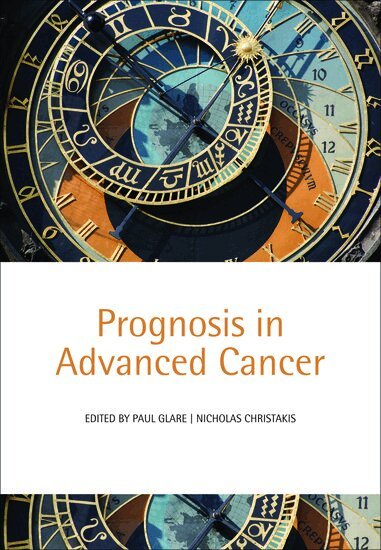
Predicting survival and other outcomes is increasingly being recognized as an important skill for palliative care doctors and nurses, oncologists, and other healthcare professionals who treat patients with advanced cancer. Accurate prognosis is essential if we are to offer quality of care and 'a good death', as well as to aid decision-making. There is much prognostic information available that is scattered throughout the palliative care and oncological literature but this is the first time it has been gathered systematically in one place. Glare and Christakis, leaders in the field of prognosis, bring together a team of international contributors from across the fields of palliative care and oncology. This comprehensive but practical guide begins with the principles of prognostication, including formulating the prediction and then communicating it. Topics such as statistical issues, evidence-based medicine, and the ethics of prognostication are also covered. The second section addresses prognostication in 15 specific cancer sites once they have reached the advanced stage, following a standard template for consistency and easy access to the key information. The third section deals with prognostication in patients with a variety of common clinical conditions at the end of life, such as bowel obstruction, hypercalcaemia, and brain metastases. In addition, survival curves are provided within each chapter, palliative care conditions are examined for the first time, and a summary table of long and short term prognosis ensures this book remains practical.
234 kr
Skickas inom 7-10 vardagar
This text explains the act of prognosis in its varying forms - doctors telling patients if their cancer is curable, when their pain will stop, if they will live to see their child graduate from college - from the perspective of doctors. Nicholas Christakis examines why physicians are reluctant to predict the future, what uses doctors make of prognosis, the symbolism it contains, and the practical and emotional difficulties it involves. Drawing on his experiences both as a doctor and as a sociologist, the author conducted interviews with physicians; he searched medical textbooks and medical school curricula for discussions of prognosis; and he developed quantitative data showing that physicians are systematically optimistic in their predictions. With its combination of approaches and methods, this book is a study of a murky area of medical practice that, despite its importance, is only partially understood and rarely discussed. Christakis argues that physicians and the medical profession as a whole have the duty to prognosticate, and shirking the difficult questions - as most doctors tend to do - advances neither medical knowledge nor the care seriously ill patients receive.The book aims to be a clarion call for a renewed effort to understand and improve the art and science of prognostication.
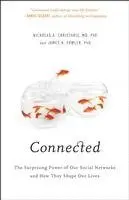
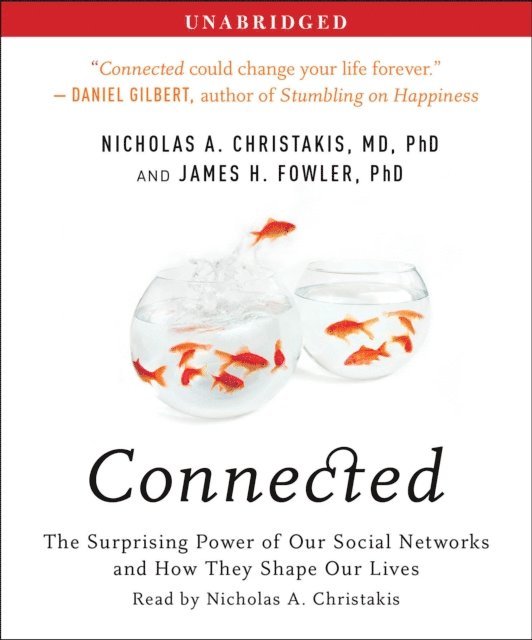
Connected: The Surprising Power of Our Social Networks and How They Shape Our Lives -- How Your Friends' Friends' Friends Affect Everything You Feel,
Häftad, Engelska, 2011
235 kr
Skickas inom 3-6 vardagar
Connected: The Surprising Power of Our Social Networks and How They Shape Our Lives
Inbunden, Engelska, 2009
384 kr
Skickas
169 kr
Skickas inom 5-8 vardagar
98 kr
Skickas inom 7-10 vardagar
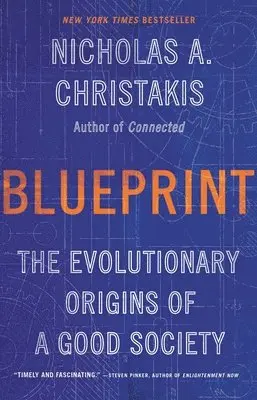
Drawing on advances in social science, evolutionary biology, genetics, neuroscience and network science, Blueprint shows how and why evolution has placed us on a humane path -- and how we are united by our common humanity. For too long, scientists have focused on the dark side of our biological heritage: our capacity for aggression, cruelty, prejudice, and self-interest. But natural selection has given us a suite of beneficial social features, including our capacity for love, friendship, cooperation, and learning. Beneath all our inventions - our tools, farms, machines, cities, nations - we carry with us innate proclivities to make a good society. In Blueprint, Nicholas A. Christakis introduces the compelling idea that our genes affect not only our bodies and behaviors, but also the ways in which we make societies, ones that are surprisingly similar worldwide. With many vivid examples -- including diverse historical and contemporary cultures, communities formed in the wake of shipwrecks, commune dwellers seeking utopia, online groups thrown together by design or involving artificially intelligent bots and even the tender and complex social arrangements of elephants and dolphins that so resemble our own - Christakis shows that, despite a human history replete with violence, we cannot escape our social blueprint for goodness. In a world of increasing political and economic polarisation, it's tempting to ignore the positive role of our evolutionary past. But by exploring the ancient roots of goodness in civilisation, Blueprint shows that our genes have shaped societies for our welfare and that, in a feedback loop stretching back many thousands of years, societies have shaped and are still shaping, our genes today.