Nicholas A. Lambert - Böcker
Visar alla böcker från författaren Nicholas A. Lambert. Handla med fri frakt och snabb leverans.
4 produkter
4 produkter
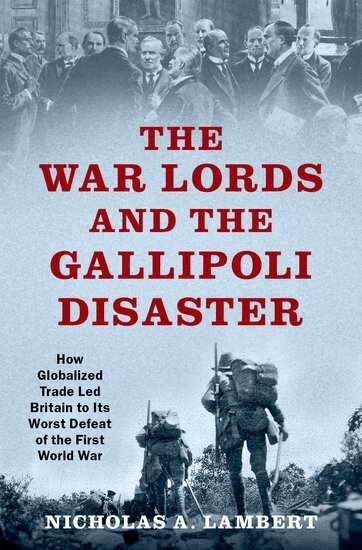
The War Lords and the Gallipoli Disaster
How Globalized Trade Led Britain to Its Worst Defeat of the First World War
Inbunden, Engelska, 2021
597 kr
Skickas inom 5-8 vardagar
An eye-opening interpretation of the infamous Gallipoli campaign that sets it in the context of global trade.In early 1915, the British government ordered the Royal Navy to force a passage of the Dardanelles Straits-the most heavily defended waterway in the world. After the Navy failed to breach Turkish defenses, British and allied ground forces stormed the Gallipoli peninsula but were unable to move off the beaches. Over the course of the year, the Allied landed hundreds of thousands of reinforcements but all to no avail. The Gallipoli campaign has gone down as one of the great disasters in the history of warfare.Previous works have focused on the battles and sought to explain the reasons for the British failure, typically focusing on First Lord of the Admiralty Winston Churchill. In this bold new account, Nicholas Lambert offers the first fully researched explanation of why Prime Minister Henry Asquith and all of his senior advisers--the War Lords--ordered the attacks in the first place, in defiance of most professional military opinion. Peeling back the manipulation of the historical record by those involved with the campaign's inception, Lambert shows that the original goals were political-economic rather than military: not to relieve pressure on the Western Front but to respond to the fall-out from the massive disruption of the international grain trade caused by the war. By the beginning of 1915, the price of wheat was rising so fast that Britain, the greatest importer of wheat in the world, feared bread riots. Meanwhile Russia, the greatest exporter of wheat in the world and Britain's ally in the east, faced financial collapse. Lambert demonstrates that the War Lords authorized the attacks at the Dardanelles to open the straits to the flow of Russian wheat, seeking to lower the price of grain on the global market and simultaneously to eliminate the need for huge British loans to support Russia's war effort. Carefully reconstructing the perspectives of the individual War Lords, this book offers an eye-opening case study of strategic policy making under pressure in a globalized world economy.
504 kr
Skickas inom 7-10 vardagar
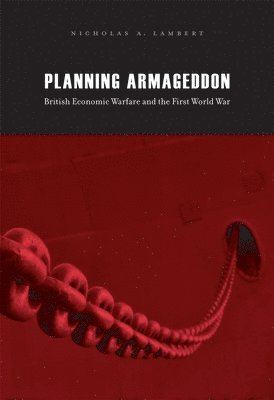
Before the First World War, the British Admiralty conceived a plan to win rapid victory in the event of war with Germany-economic warfare on an unprecedented scale.This secret strategy called for the state to exploit Britain's effective monopolies in banking, communications, and shipping-the essential infrastructure underpinning global trade-to create a controlled implosion of the world economic system.In this revisionist account, Nicholas Lambert shows in lively detail how naval planners persuaded the British political leadership that systematic disruption of the global economy could bring about German military paralysis. After the outbreak of hostilities, the government shied away from full implementation upon realizing the extent of likely collateral damage-political, social, economic, and diplomatic-to both Britain and neutral countries. Woodrow Wilson in particular bristled at British restrictions on trade. A new, less disruptive approach to economic coercion was hastily improvised. The result was the blockade, ostensibly intended to starve Germany. It proved largely ineffective because of the massive political influence of economic interests on national ambitions and the continued interdependencies of all countries upon the smooth functioning of the global trading system.Lambert's interpretation entirely overturns the conventional understanding of British strategy in the early part of the First World War and underscores the importance in any analysis of strategic policy of understanding Clausewitz's "political conditions of war."
309 kr
Skickas inom 5-8 vardagar
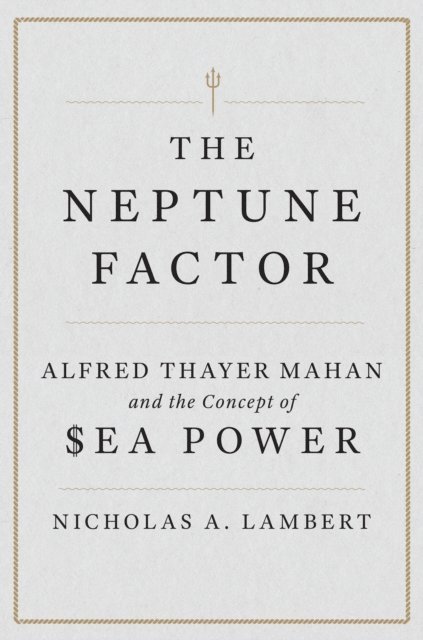
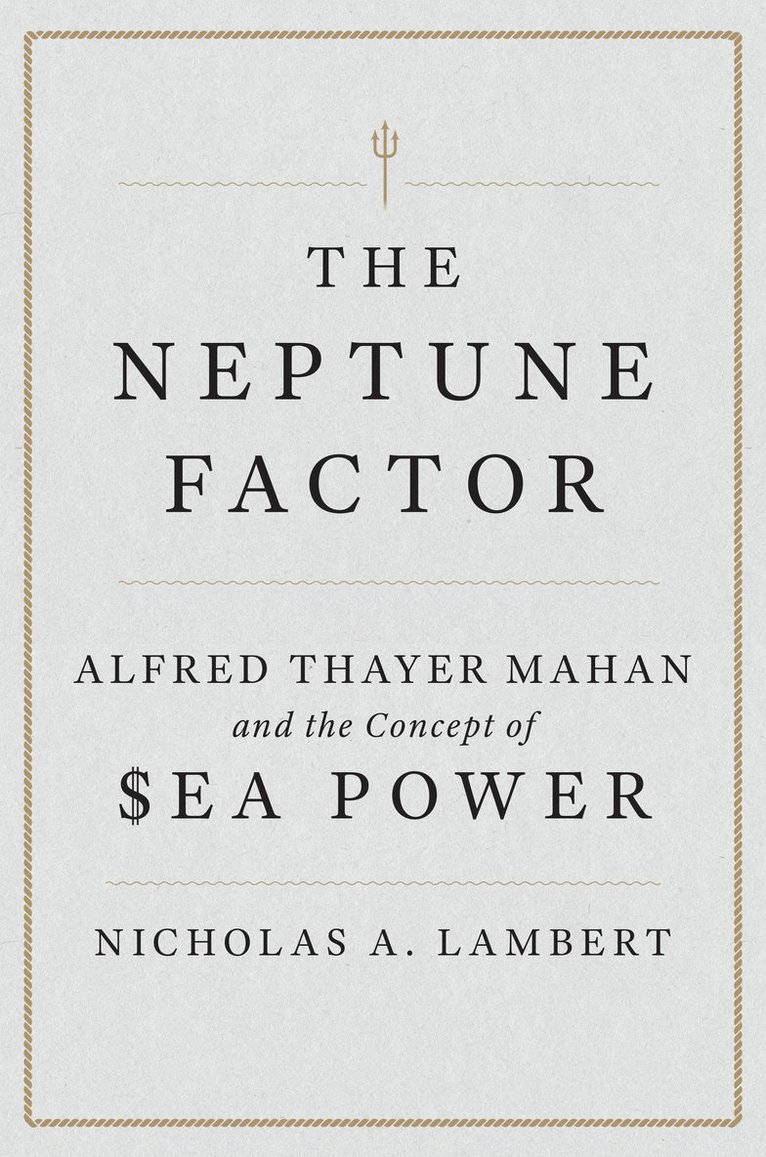
The Neptune Factor is the biography of an idea—the concept of “Sea Power,” a term first coined by Capt. A.T. Mahan and the core thread of his life’s work. His central argument was that the outcome of rivalries on the seas have decisively shaped the course of modern history. Although Mahan’s scholarship has long been seen as foundational to all systematic study of naval power, Neptune Factor is the first attempt to explain how Mahan’s definition of sea power shifted over time. Far from presenting sea power in terms of combat, as often thought, Mahan conceptualized it in terms of economics. Proceeding from the conviction that international trade carried across the world’s oceans was the single greatest driver of national wealth (and thus power) in history, Mahan explained sea power in terms of regulating access to ‘the common’ and influencing the flows of trans-oceanic trade. A nation possessing sea power could not only safeguard its own trade and that of its allies but might also endeavor to deny access to the common to its enemies and competitors. A pioneering student of what is now referred to as the first era of globalization, lasting from the late nineteenth century until the First World War, Mahan also identified the growing dependence of national economies upon uninterrupted access to an interconnected global trading system. Put simply, access to ‘the common’ was essential to the economic and political stability of advanced societies. This growing dependence, Mahan thought, increased rather than decreased the potency of sea power. Understanding the critical relationship between navies and international economics is not the only reason why Mahan’s ideas remain—or rather have once again become—so important. He wrote in, and of, a multi-polar world, when the reigning hegemon faced new challenges, and confusion and uncertainty reigned as the result of rapid technological change and profound social upheaval. Mahan believed that the U.S. Navy owed the American people a compelling explanation of why it deserved their support—and their money. His extensive, deeply informed, and highly sophisticated body of work on sea power constituted his attempt to supply such an explanation. Mahan remains as relevant—and needed—today as he was more than a century ago.
285 kr
Skickas inom 5-8 vardagar
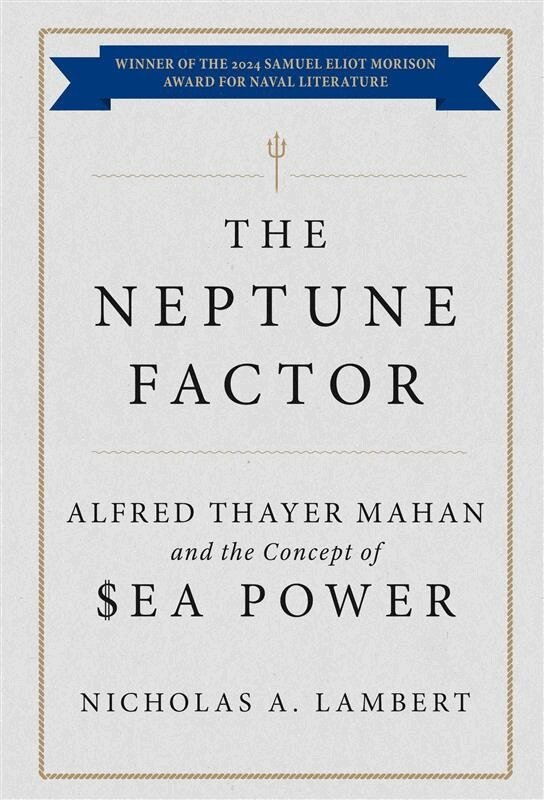
Winner of the 2024 Samuel Eliot Morison Award for Naval LiteratureThe Neptune Factor is the biography of an idea—the concept of “Sea Power,” a term first coined by Capt. A.T. Mahan and the core thread of his life’s work. His central argument was that the outcome of rivalries on the seas have decisively shaped the course of modern history. Although Mahan’s scholarship has long been seen as foundational to all systematic study of naval power, Neptune Factor is the first attempt to explain how Mahan’s definition of sea power shifted over time. Far from presenting sea power in terms of combat, as often thought, Mahan conceptualized it in terms of economics. Proceeding from the conviction that international trade carried across the world’s oceans was the single greatest driver of national wealth (and thus power) in history, Mahan explained sea power in terms of regulating access to ‘the common’ and influencing the flows of trans-oceanic trade. A nation possessing sea power could not only safeguard its own trade and that of its allies but might also endeavor to deny access to the common to its enemies and competitors. A pioneering student of what is now referred to as the first era of globalization, lasting from the late nineteenth century until the First World War, Mahan also identified the growing dependence of national economies upon uninterrupted access to an interconnected global trading system. Put simply, access to ‘the common’ was essential to the economic and political stability of advanced societies. This growing dependence, Mahan thought, increased rather than decreased the potency of sea power. Understanding the critical relationship between navies and international economics is not the only reason why Mahan’s ideas remain—or rather have once again become—so important. He wrote in, and of, a multi-polar world, when the reigning hegemon faced new challenges, and confusion and uncertainty reigned as the result of rapid technological change and profound social upheaval. Mahan believed that the U.S. Navy owed the American people a compelling explanation of why it deserved their support—and their money. His extensive, deeply informed, and highly sophisticated body of work on sea power constituted his attempt to supply such an explanation. Mahan remains as relevant—and needed—today as he was more than a century ago.