Nicholas B. Breyfogle - Böcker
Visar alla böcker från författaren Nicholas B. Breyfogle. Handla med fri frakt och snabb leverans.
8 produkter
8 produkter
761 kr
Skickas inom 10-15 vardagar
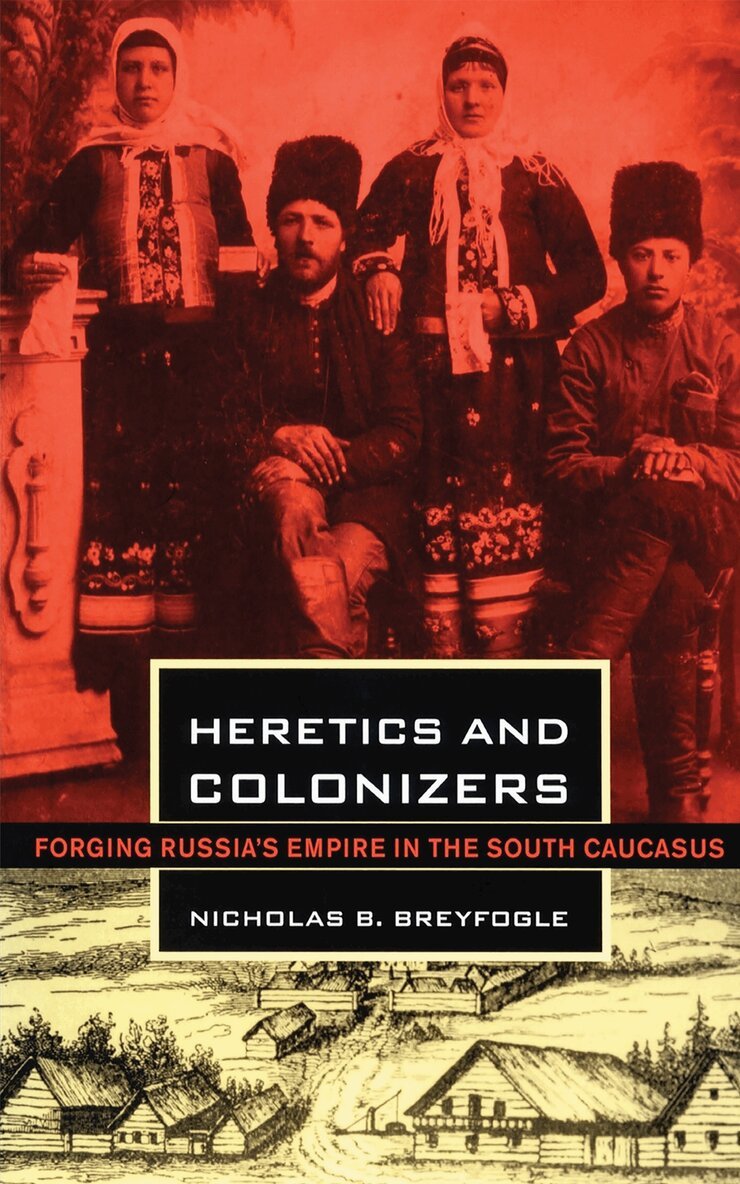
In Heretics and Colonizers, Nicholas B. Breyfogle explores the dynamic intersection of Russian borderland colonization and popular religious culture. He reconstructs the story of the religious sectarians (Dukhobors, Molokans, and Subbotniks) who settled, either voluntarily or by force, in the newly conquered lands of Transcaucasia in the nineteenth century. By ordering this migration in 1830, Nicholas I attempted at once to cleanse Russian Orthodoxy of heresies and to populate the newly annexed lands with ethnic Slavs who would shoulder the burden of imperial construction.Breyfogle focuses throughout on the lives of the peasant settlers, their interactions with the peoples and environment of the South Caucasus, and their evolving relations with Russian state power. He draws on a wide variety of archival sources, including a large collection of previously unexamined letters, memoirs, and other documents produced by the sectarians that allow him unprecedented insight into the experiences of colonization and religious life. Although the settlers suffered greatly in their early years in hostile surroundings, they in time proved to be not only model Russian colonists but also among the most prosperous of the Empire's peasants. Banished to the empire's periphery, the sectarians ironically came to play indispensable roles in the tsarist imperial agenda.The book culminates with the dramatic events of the Dukhobor pacifist rebellion, a movement that shocked the tsarist government and received international attention. In the early twentieth century, as the Russian state sought to replace the sectarians with Orthodox settlers, thousands of Molokans and Dukhobors immigrated to North America, where their descendants remain to this day.
377 kr
Skickas inom 10-15 vardagar
In Heretics and Colonizers, Nicholas B. Breyfogle explores the dynamic intersection of Russian borderland colonization and popular religious culture. He reconstructs the story of the religious sectarians (Dukhobors, Molokans, and Subbotniks) who settled, either voluntarily or by force, in the newly conquered lands of Transcaucasia in the nineteenth century. By ordering this migration in 1830, Nicholas I attempted at once to cleanse Russian Orthodoxy of heresies and to populate the newly annexed lands with ethnic Slavs who would shoulder the burden of imperial construction.Breyfogle focuses throughout on the lives of the peasant settlers, their interactions with the peoples and environment of the South Caucasus, and their evolving relations with Russian state power. He draws on a wide variety of archival sources, including a large collection of previously unexamined letters, memoirs, and other documents produced by the sectarians that allow him unprecedented insight into the experiences of colonization and religious life. Although the settlers suffered greatly in their early years in hostile surroundings, they in time proved to be not only model Russian colonists but also among the most prosperous of the Empire's peasants. Banished to the empire's periphery, the sectarians ironically came to play indispensable roles in the tsarist imperial agenda.The book culminates with the dramatic events of the Dukhobor pacifist rebellion, a movement that shocked the tsarist government and received international attention. In the early twentieth century, as the Russian state sought to replace the sectarians with Orthodox settlers, thousands of Molokans and Dukhobors immigrated to North America, where their descendants remain to this day.
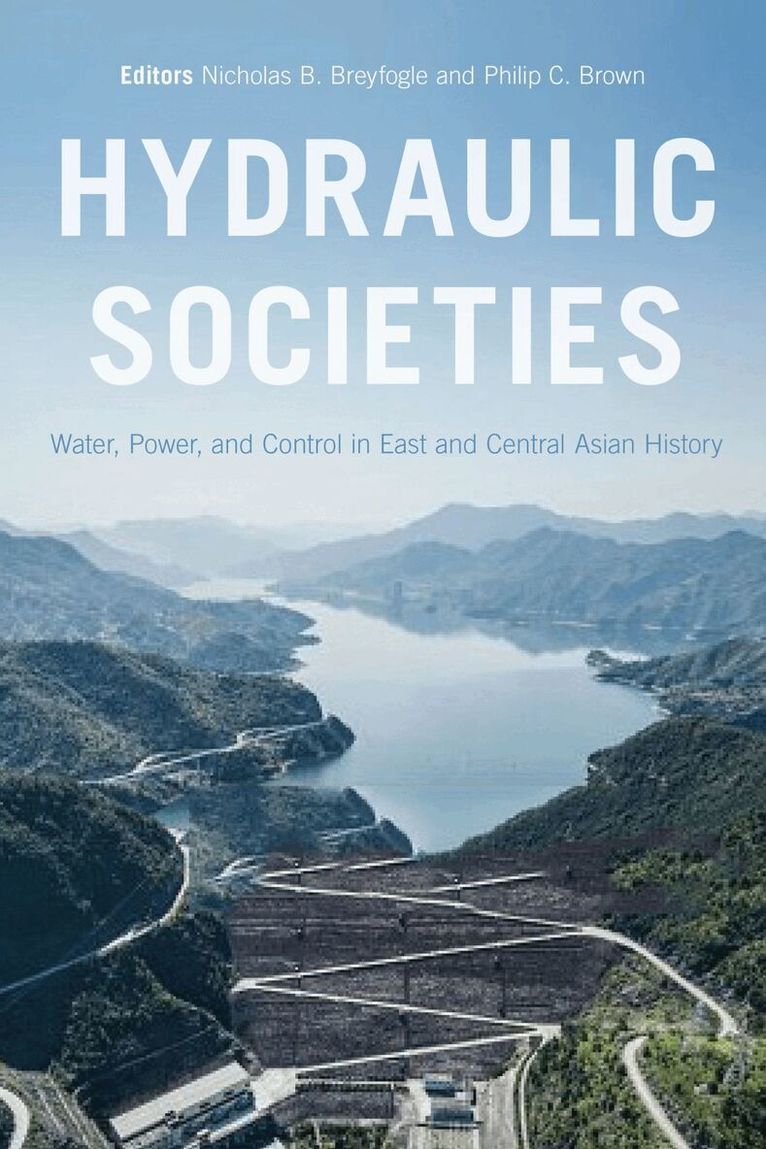
Hydraulic Societies
Water, Power, and Control in East and Central Asian History
Häftad, Engelska, 2023
426 kr
Skickas inom 7-10 vardagar
Hydraulic Societies explores the linked themes of water, power, state-building, and hydraulic control. Bringing together a range of ecological, geographical, chronological, and methodological perspectives, the essays in this book address the how humans have long harnessed water and sought to contain its destructive power for political, economic and social ends. Water defines every aspect of life and remains at the center of human activity: in irrigation and agriculture; waste and sanitation; drinking and disease; floods and droughts; religious beliefs and practices; fishing and aquaculture; travel and discovery; scientific study; water pollution and conservation; multi-purpose dam building; boundaries and borders; politics and economic life; and wars and diplomacy. From the earliest large irrigation works thousands of years ago, control over water has involved control over people, as the essays in this volume reflect. The intersections of water and political, economic, and social power historically span international as well as domestic politics and operate at scales ranging from the local to the global. The authors consider the role of water in national development schemes, water distribution as a tool of political power, international disputes over waterways and water supplies, and the place of water in armed conflicts. They explore the ways in which political power and social hierarchies have themselves been defined and redefined by water and its control, how state leaders legitimized their rule both culturally and economically through the control of water, and how water management schemes were a means to impose and refine colonial power.
396 kr
Skickas inom 7-10 vardagar
This anthology is the first sustained examination of American involvement in World War II through an environmental lens. World War II was a total and global war that involved the extraction, processing, and use of vast quantities of natural resources. The wartime military-industrial complex, the 'Arsenal of Democracy,' experienced tremendous economic growth and technological development, employing resources at a higher intensity than ever before. The war years witnessed transformations in American agriculture; the proliferation of militarized landscapes; the popularization of chemical and pharmaceutical products; a rapid increase in energy consumption and the development of nuclear energy; a remaking of the nation's transportation networks; a shift in population toward the Sunbelt and the West Coast; a vast expansion in the federal government, in conjunction with industrial firms; and the emergence of environmentalism. World War II represented a quantitative and qualitative leap in resource use, with lasting implications for American government, science, society, health, and ecology.
1 255 kr
Skickas inom 7-10 vardagar
This anthology is the first sustained examination of American involvement in World War II through an environmental lens. World War II was a total and global war that involved the extraction, processing, and use of vast quantities of natural resources. The wartime military-industrial complex, the 'Arsenal of Democracy,' experienced tremendous economic growth and technological development, employing resources at a higher intensity than ever before. The war years witnessed transformations in American agriculture; the proliferation of militarized landscapes; the popularization of chemical and pharmaceutical products; a rapid increase in energy consumption and the development of nuclear energy; a remaking of the nation's transportation networks; a shift in population toward the Sunbelt and the West Coast; a vast expansion in the federal government, in conjunction with industrial firms; and the emergence of environmentalism. World War II represented a quantitative and qualitative leap in resource use, with lasting implications for American government, science, society, health, and ecology.
277 kr
** Nominated for a NAACP Image Award **A groundbreaking collection of photographs and essays that shed new light on the history of Black America, from the Picturing Black History project. “Stunning . . . Provides fresh perspective on historical photographs and snapshots of Black life.” —NEW YORK TIMES BOOK REVIEW“An astonishing work." —Henry Louis Gates, Jr.Picturing Black History uncovers untold stories and rarely seen images of the Black experience, providing new context around culturally significant moments. This beautiful collectible volume makes a thoughtful gift and is full of rousing, vibrant essays paired with rarely seen photographs that expand our understanding of Black history.The book is a collaborative effort between Getty Images, Origins: Current Events in Historical Perspective, and the History departments at The Ohio State and Miami Universities. It informs, educates, and inspires our current moment by exploring the past, blending the breadth and depth of Getty Images’s archives with the renowned expertise of Origins contributors and The Ohio State’s and Miami’s History departments, including Daniela Edmeier, Damarius Johnson, Nicholas Breyfogle, and Steve Conn. Created by a growing collective of professional historians, art historians, Black Studies scholars, and photographers and showcasing Getty Images’s unmatched collection of photographs, Picturing Black History embraces the power of visual storytelling to relay little-known stories of oppression and resistance, perseverance and resilience, freedom, dreams, imagination, and joy within the United States and around the world.In collecting these new photographic essays, this book furthers an ongoing dialogue on the significance of Black history and Black life, sharing new perspectives on the current status of prejudice and discrimination bias with a wider audience. Picturing Black History uses the latest academic learning and scholarship to recontextualize and dispel prejudices, while uncovering, digitizing, and preserving new archival materials to amplify a more inclusive visual landscape."Picturing Black History offers a trove of both famous and unseen photos with brief, poignant accompanying essays to show not only the centrality of Black people to American history but also how African Americans used the photographer’s lens to tell their own stories. The editors, authors, and Getty images have created a beautiful book that stands on its own as a work of art, a veritable museum in print.” —Henry Louis Gates, Jr., Alphonse Fletcher University Professor, Harvard University
1 624 kr
Skickas inom 10-15 vardagar
Readings in Water History offers students a carefully curated selection of readings addressing major topics in global water history. The articles illuminate the history of humanity's relationship with water, waterways, aquatic environments, and ecologies. The text introduces readers to essential questions and themes in water history and provides a wide range of perspectives on how past societies interacted with the waters around them.Section I explores human attempts to harness water's potential and guard against its hazards. The relationship between water and early civilizations is addressed, with documents exploring ancient Mesopotamia, Egypt, and China. In Section II, students read about how humans have used water and aquatic resources as tools of generating human wealth, agriculture, industry, and creativity. Section III focuses on drinking water, sanitation, pollution, and disease. In Section IV, readings explore water as a means of leisure and a connection to the good life. The final section speaks to the interconnected nature of water, war, and diplomacy, showing how struggles and agreements have resulted over claims and use of this essential resource.Featuring an historical focus and illuminating sources, Readings in Water History is ideal for courses in environmental history.
4 149 kr
Skickas inom 3-6 vardagar