Nicholas B. Dirks - Böcker
Visar alla böcker från författaren Nicholas B. Dirks. Handla med fri frakt och snabb leverans.
9 produkter
9 produkter
2 492 kr
Skickas inom 3-6 vardagar
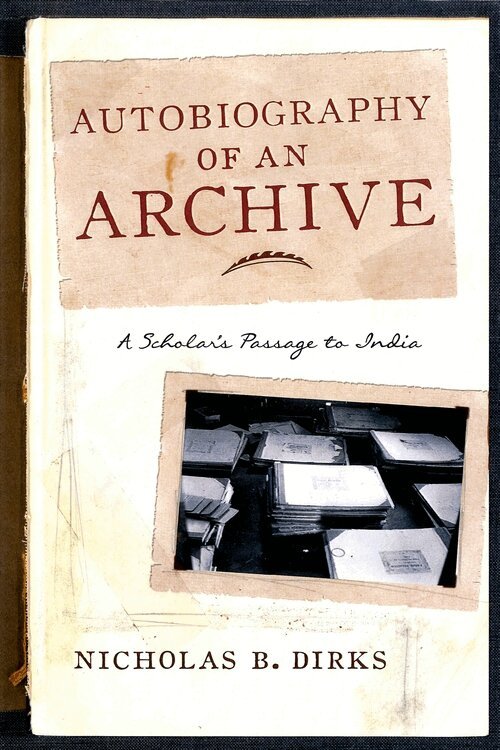
The decades between 1970 and the end of the twentieth century saw the disciplines of history and anthropology draw closer together, with historians paying more attention to social and cultural factors and the significance of everyday experience in the study of the past. The people, rather than elite actors, became the focus of their inquiry, and anthropological insights into agriculture, kinship, ritual, and folk customs enabled historians to develop richer and more representative narratives. The intersection of these two disciplines also helped scholars reframe the legacies of empire and the roots of colonial knowledge. In this collection of essays and lectures, history's turn from high politics and formal intellectual history toward ordinary lives and cultural rhythms is vividly reflected in a scholar's intellectual journey to India. Nicholas B. Dirks recounts his early study of kingship in India, the rise of the caste system, the emergence of English imperial interest in controlling markets and India's political regimes, and the development of a crisis in sovereignty that led to an extraordinary nationalist struggle.He shares his personal encounters with archives that provided the sources and boundaries for research on these subjects, ultimately revealing the limits of colonial knowledge and single disciplinary perspectives. Drawing parallels to the way American universities balance the liberal arts and specialized research today, Dirks, who has occupied senior administrative positions and now leads the University of California at Berkeley, encourages scholars to continue to apply multiple approaches to their research and build a more global and ethical archive.
330 kr
Skickas inom 7-10 vardagar
The decades between 1970 and the end of the twentieth century saw the disciplines of history and anthropology draw closer together, with historians paying more attention to social and cultural factors and the significance of everyday experience in the study of the past. The people, rather than elite actors, became the focus of their inquiry, and anthropological insights into agriculture, kinship, ritual, and folk customs enabled historians to develop richer and more representative narratives. The intersection of these two disciplines also helped scholars reframe the legacies of empire and the roots of colonial knowledge. In this collection of essays and lectures, history's turn from high politics and formal intellectual history toward ordinary lives and cultural rhythms is vividly reflected in a scholar's intellectual journey to India. Nicholas B. Dirks recounts his early study of kingship in India, the rise of the caste system, the emergence of English imperial interest in controlling markets and India's political regimes, and the development of a crisis in sovereignty that led to an extraordinary nationalist struggle.He shares his personal encounters with archives that provided the sources and boundaries for research on these subjects, ultimately revealing the limits of colonial knowledge and single disciplinary perspectives. Drawing parallels to the way American universities balance the liberal arts and specialized research today, Dirks, who has occupied senior administrative positions and now leads the University of California at Berkeley, encourages scholars to continue to apply multiple approaches to their research and build a more global and ethical archive.
369 kr
Skickas inom 7-10 vardagar
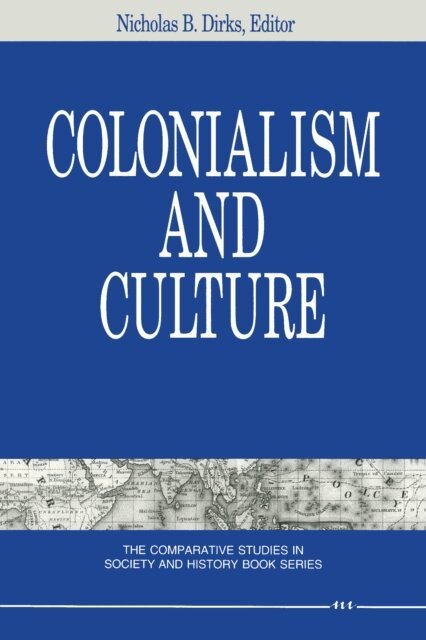
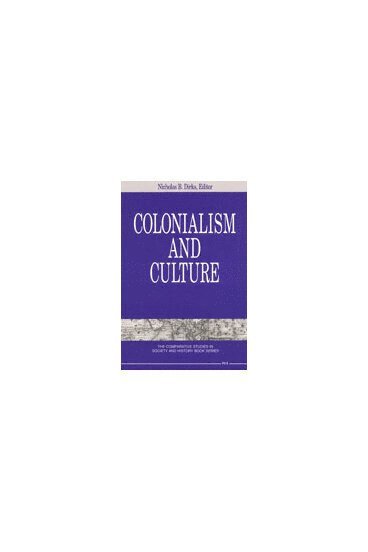
Colonialism and Culture, edited by Nicholas B. Dirks, is an insightful exploration of the intricate relationship between colonialism and cultural transformation. The book features contributions that reflect how colonialism reshaped cultural identities and expressions across the globe, and how it remains a potent force defining both historical and contemporary landscapes. Drawing on cases from different historical periods and geographic locations, the essays examine how colonial powers imposed and justified their dominance through cultural means—such as transforming local cultures into rigid categories of the "other." The impact of this cultural hegemony extended beyond the local to influence metropolitan societies, altering notions of race, nationality, and power even in the colonizers’ homelands. Essays delve into various aspects such as the role of missionary work in the Philippines, peasant resistance in Southeast Asia, labor practices in colonial Kenya, and the conceptualization of time and development in colonial India. The work encourages a reconsideration of colonialism not just as a historical occurrence but as an active component in the configuration of modern cultural and social institutions. Engaging with the intersection of power and culture, the book challenges readers to rethink traditional narratives of empire and its legacy, offering new insights into the ongoing global implications of colonial structures.
Del 39 - Cambridge South Asian Studies
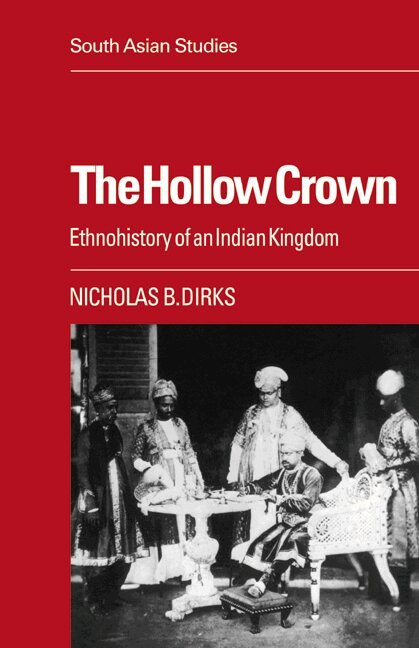
The Hollow Crown
Ethnohistory of an Indian Kingdom
Häftad, Engelska, 2007
645 kr
Skickas inom 7-10 vardagar
A pioneering piece of ethnohistory, The Hollow Crown uses a variety of interdisciplinary means to reconstruct the sociocultural history of a warrior polity in south India between the fourteenth and the twentieth centuries. Central to the book is the belief that comparative sociology has systematically denied the importance of the Indian state and obscured the political basis of Indian society by representing caste as fundamentally a religious system. In reconstructing the history of the polity that eventually became the colonial princely state of Pudukkottai, Dr Dirks therefore raises a whole series of issues concerning the methodologies of history and anthropology, the character of Tamil kingship and social organization, the relationship between politics and ritual, the impact of colonialism and 'modernization', and the dynamics of the whole last millennium of south Indian history.
266 kr
Skickas inom 7-10 vardagar
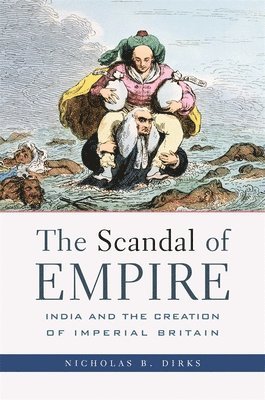
Many have told of the East India Company’s extraordinary excesses in eighteenth-century India, of the plunder that made its directors fabulously wealthy and able to buy British land and titles, but this is only a fraction of the story. When one of these men—Warren Hastings—was put on trial by Edmund Burke, it brought the Company’s exploits to the attention of the public. Through the trial and after, the British government transformed public understanding of the Company’s corrupt actions by creating an image of a vulnerable India that needed British assistance. Intrusive behavior was recast as a civilizing mission. In this fascinating, and devastating, account of the scandal that laid the foundation of the British Empire, Nicholas Dirks explains how this substitution of imperial authority for Company rule helped erase the dirty origins of empire and justify the British presence in India. The Scandal of Empire reveals that the conquests and exploitations of the East India Company were critical to England’s development in the eighteenth century and beyond. We see how mercantile trade was inextricably linked with imperial venture and scandalous excess and how these three things provided the ideological basis for far-flung British expansion. In this powerfully written and trenchant critique, Dirks shows how the empire projected its own scandalous behavior onto India itself. By returning to the moment when the scandal of empire became acceptable we gain a new understanding of the modern culture of the colonizer and the colonized and the manifold implications for Britain, India, and the world.
501 kr
Skickas inom 7-10 vardagar
The intellectual radicalism of the 1960s spawned a new set of questions about the role and nature of "the political" in social life, questions that have since revolutionized nearly every field of thought, from literary criticism through anthropology to the philosophy of science. Michel Foucault in particular made us aware that whatever our functionally defined "roles" in society, we are constantly negotiating questions of authority and the control of the definitions of reality. Such insights have led theorists to challenge concepts that have long formed the very underpinnings of their disciplines. By exploring some of the most debated of these concepts--"culture," "power," and "history"--this reader offers an enriching perspective on social theory in the contemporary moment. Organized around these three concepts, Culture/ Power/History brings together both classic and new essays that address Foucault's "new economy of power relations" in a number of different, contestatory directions.Representing innovative work from various disciplines and sites of study, from taxidermy to Madonna, the book seeks to affirm the creative possibilities available in a time marked by growing uncertainty about established disciplinary forms of knowledge and by the increasing fluidity of the boundaries between them. The book is introduced by a major synthetic essay by the editors, which calls attention to the most significant issues enlivening theoretical discourse today. The editors seek not only to encourage scholars to reflect anew on the course of social theory, but also to orient newcomers to this area of inquiry. The essays are contributed by Linda Alcoff ("Cultural Feminism versus Post-Structuralism"), Sally Alexander ("Women, Class, and Sexual Differences in the 1830s and 1840s"), Tony Bennett ("The Exhibitionary Complex"), Pierre Bourdieu ("Structures, Habitus, Power"), Nicholas B. Dirks ("Ritual and Resistance"), Geoff Eley ("Nations, Publics, and Political Cultures"), Michel Foucault (Two Lectures), Henry Louis Gates, Jr.("Authority, [White] Power and the [Black] Critic"), Stephen Greenblatt ("The Circulation of Social Energy"), Ranajit Guha ("The Prose of Counter-Insurgency"), Stuart Hall ("Cultural Studies: Two Paradigms"), Susan Harding ("The Born-Again Telescandals"), Donna Haraway ("Teddy Bear Patriarchy"), Dick Hebdige ("After the Masses"), Susan McClary ("Living to Tell: Madonna's Resurrection of the Fleshly"), Sherry B. Ortner ("Theory in Anthropology since the Sixties"), Marshall Sahlins ("Cosmologies of Capitalism"), Elizabeth G. Traube ("Secrets of Success in Postmodern Society"), Raymond Williams (selections from Marxism and Literature), and Judith Williamson ("Family, Education, Photography").
268 kr
Skickas inom 7-10 vardagar
A group of leading scholars considers the current state of cultural analysis.If culture is suspect, what of cultural theory? At a moment when culture’s traditional caretakers-humanism, philosophy, anthropology, and the nation-state-are undergoing crisis and mutation, this volume charts the tensions and contradictions in the development and deployment of the concept of culture. Skeptical of the concept of culture but fascinated with cultural forms, the authors take up diverse topics, from debates over sexuality in the contemporary United States to relations between empire, capitalism, and gender in nineteenth-century Britain; from poverty in U.S. inner cities to violence in war-torn Sri Lanka; from the operation of nostalgia on cultural practices in Japan to anthropological forms of state power in Indonesia and the writing of history in India.Linked by a common urge to think through the aesthetics and politics of particular social relations amid a variety of globalizing forces-revolution, colonialism, nationalism, and the disciplinary institutions of the academy itself-these writers contribute to the ongoing work of remapping the terrain of cultural analysis and reevaluating the stakes in such a daunting effort. Contributors: Lauren Berlant, U of Chicago; E. Valentine Daniel, Columbia U; Marilyn Ivy, Columbia U; Robin D. G. Kelley, New York U; Laura Kipnis, Northwestern U; Marjorie Levinson, U of Michigan; Gyanendra Pandey, U of Delhi; John Pemberton, Columbia U; Adela Pinch, U of Michigan; Michael Taussig, Columbia U.ISBN 0-8166-3122-0 Cloth $49.95xxISBN 0-8166-3123-9 Paper $19.95x320 pages 4 black-and-white photos, 3 figures 5 7/8 x 9 DecemberTranslation inquiries: University of Minnesota Press
325 kr
Skickas inom 7-10 vardagar
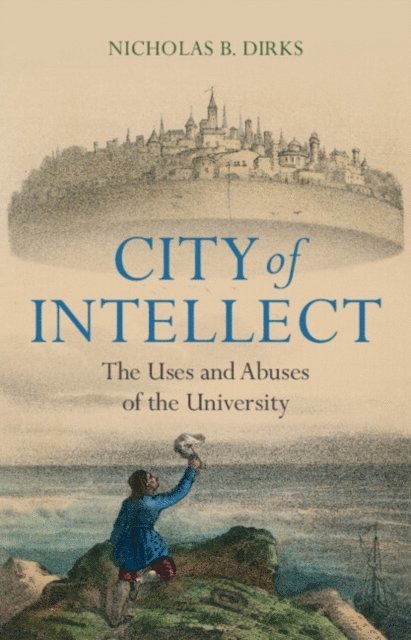
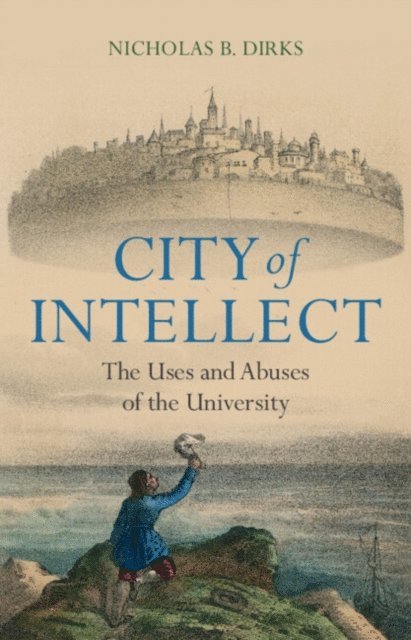
During his four years as the tenth Chancellor of Berkeley (2013-17), Nicholas B. Dirks was confronted by crises arguably more challenging than those faced by any other college administrator in the contemporary period. This thoughtfully candid book, emerging from deep reflection on his turbulent time in office, offers not just a gripping insider's account of the febrile politics of his time as Berkeley's leader, but also decades of nuanced reflection on the university's true meaning (at its best, to be an aspirational 'city of intellect'). Dirks wrestles with some of the most urgent questions with which educational leaders are presently having to engage: including topics such as free speech and campus safe spaces, the humanities' contested future, and the real cost and value of liberal arts learning. His visionary intervention - part autobiography, part practical manifesto - is a passionate cri de cœur for structural changes in higher education that are both significant and profound.
374 kr
Skickas inom 7-10 vardagar
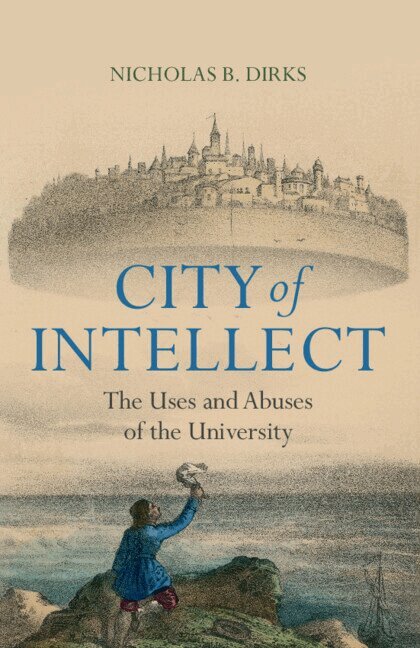
During his four years as the tenth Chancellor of Berkeley (2013-17), Nicholas B. Dirks was confronted by crises arguably more challenging than those faced by any other college administrator in the contemporary period. This thoughtfully candid book, emerging from deep reflection on his turbulent time in office, offers not just a gripping insider's account of the febrile politics of his time as Berkeley's leader, but also decades of nuanced reflection on the university's true meaning (at its best, to be an aspirational 'city of intellect'). Dirks wrestles with some of the most urgent questions with which educational leaders are presently having to engage: including topics such as free speech and campus safe spaces, the humanities' contested future, and the real cost and value of liberal arts learning. His visionary intervention - part autobiography, part practical manifesto - is a passionate cri de cœur for structural changes in higher education that are both significant and profound.