Nicholas Delbanco - Böcker
Visar alla böcker från författaren Nicholas Delbanco. Handla med fri frakt och snabb leverans.
18 produkter
18 produkter
843 kr
Skickas inom 7-10 vardagar
-- Publishers Weekly
473 kr
Skickas inom 3-6 vardagar
-- Publishers Weekly
279 kr
Skickas inom 7-10 vardagar
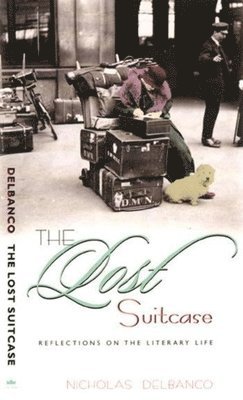
We work, each one of us, in the deep dark with no notion of what lasts. With this phrase Nicholas Delbanco reveals one of his urgent concerns: Why does a writer write? How much of his work will seem meaningful to others? In The Lost Suitcase Delbanco ruminates on the life of the writer and the significance of language as art. The title novella, a stunningly crafted story that is the book's centerpiece, takes as its central conceit a famous anecdote about Ernest Hemingway's early work: Hemingway's first wife, Hadley, going by train from their apartment in Paris to visit him in Switzerland, brought along, at his request, a suitcase full of his work-in-progress. The suitcase was stolen, and the loss was devastating for both of them as well as for their marriage. Did it also cause irreparable damage to Hemingway's career? Delbanco imagines this event and its main characters in numerous extremely inventive ways that make the narrative itself a comment on creativity, fiction, and a writer's self-awareness. In the eight reflections that surround and frame the novella, Delbanco contemplates various aspects of his craft.From the pleasure of travel writing to the travails of historical fiction, from the question of artistic judgment to that question put to the author of The Decline and Fall of the Roman Empire, Edward Gibbon ("Always scribble, scribble, scribble! Eh, Mr. Gibbon?")-Delbanco ranges far and wide through the literary landscape. By turns descriptive and prescriptive, he explores how literary virtuosity is achieved, how the writing of fiction can be taught, and the way literature functions for writer and reader equally. He reflects on his own history, his family, the standards of judgment and progress, and the ways we remember and revise what has happened to us. "Fiction is a web of lies that attempts to entangle the truth. And autobiography may well be the reverse: data tricked up and rearranged to invent a fictive self." In both form and content, The Lost Suitcase is a tradition-steeped meditation on literary art and an original foray into the world of words.
388 kr
Skickas inom 7-10 vardagar
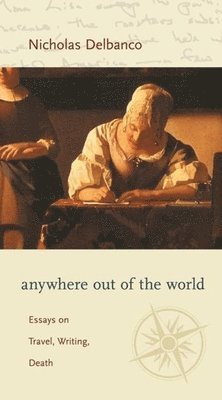
Nicholas Delbanco-who, John Updike says, "wrestles with the abundance of his gifts as a novelist the way other men wrestle with their deficiencies"-ventures forth to discover and illuminate various writers and places. In this follow-up to his acclaimed The Lost Suitcase, Delbanco weaves varied reflections to reveal a singular understanding of the relationships among literature, the past, and the world around us. Describing trips to such diverse destinations as Namibia; Afghanistan; Bellagio, Italy; and the Bellagio in Las Vegas, Delbanco conveys the wonder and the apprehension of visiting new places. However, he goes beyond commonplace travelogues, examining our desire to travel and to write and read about distant lands. In the title essay, which surveys the state of travel and travel writing in a world that has grown smaller and less strange, he explores the continuing allure of new locales and the ways in which familiar places change in our imagination over time. Delbanco's reflections on literature look to past writers and literary traditions as a way of enriching the present.Delbanco begins by asking us to reconsider society's infatuation with novelty and proposes the paradoxical notion of imitation as a source of originality. Remembering his friendships with two colorful departed figures, John Gardner and James Baldwin, and celebrating the now somewhat-and regrettably-neglected works of John Fowles and Ford Madox Ford, he pays tribute to these writers' generosity of spirit and commitment to literature. In "Strange Type," Delbanco explores his own recent brush with death. Here too, he draws on a range of subjects and reflections, describing his recovery from heart problems via a poem by Malcolm Lowry, the surprising persistence of typos despite advances in word-processing technology, and Ernest Hemingway as literary celebrity.
235 kr
Skickas
173 kr
Skickas inom 7-10 vardagar
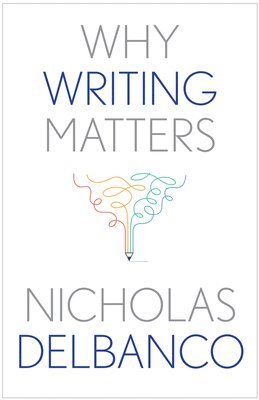
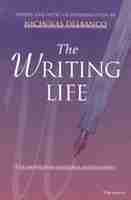
Drawing lessons from writers of all ages and writing across genres, a distinguished teacher and writer reveals the enduring importance of writing for our timeIn this new contribution to Yale University Press’s Why X Matters series, a distinguished writer and scholar tackles central questions of the discipline of writing. Drawing on his own experience with such mentors as John Updike, John Gardner, and James Baldwin, and in turn having taught such rising stars as Jesmyn Ward, Delbanco looks in particular at questions of influence and the contradictory, simultaneous impulses toward imitation and originality. Part memoir, part literary history, and part analysis, this unique text will resonate with students, writers, writing teachers, and bibliophiles.
197 kr
Skickas inom 10-15 vardagar
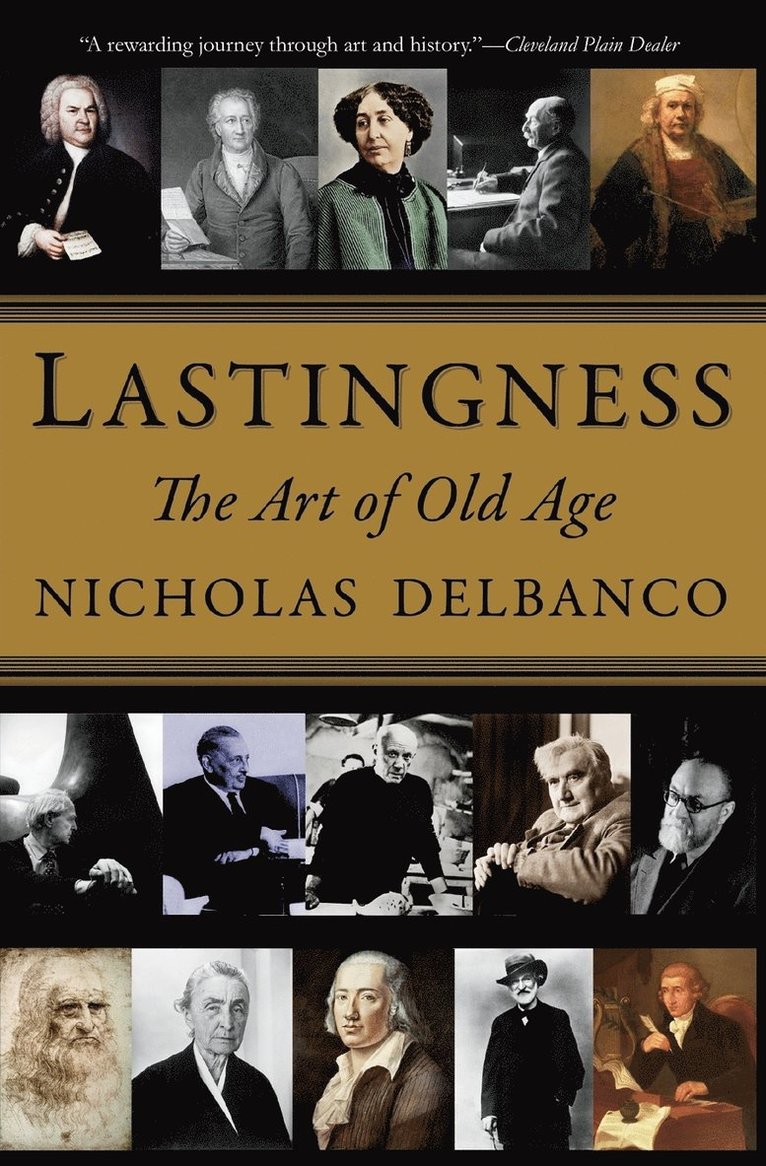
America grows older yet stays focused on its young. Whatever hill we try to climb, we're 'over' it by fifty and should that hill involve entertainment or athletics we're finished long before. However, younger may be better but it doesn't appear that youngest is best: we want our teachers, doctors, generals and presidents to have reached a certain age. In context after context and contest after contest, we're more than a little conflicted about elders of the tribe; when is it right to honour them, and when to say 'step aside'? In his new book, Nicholas Delbanco, one of America's most formidable scholars, tackles the enigma of 'lastingness,' searching for the answers to the question of why some artists' work diminishes with age and that of others reaches its peak. Both an intellectual inquiry ino the essence of aging and creativity and a personal journey of discovery, LASTINGNESS is a brilliant exploration of what determines what one needs to do to keep the habits of creation and achievement alive.
329 kr
Skickas inom 3-6 vardagar
365 kr
Skickas inom 7-10 vardagar
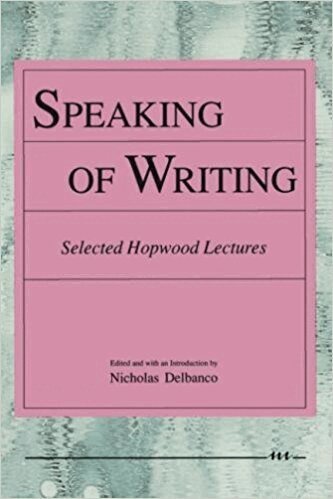
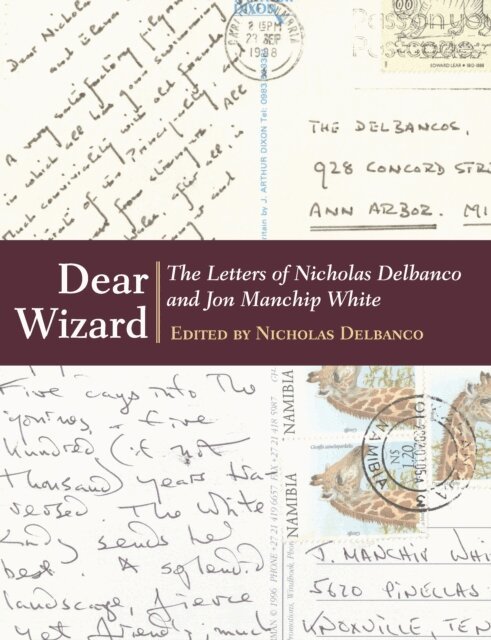
Essays on the art and craft of writing by some of the nation’s finest writers make up this rich collection, from Louise Bogan’s meditation on popular and unpopular poetry, to Saul Bellow’s assessment of the future of fiction, to Francie du Plessix Gray’s reflection on womenand Russian literature. Spanning five decades of writing, the essays address topics both timely and timeless in nature, and cover both the process and the product of writing.These essays were originally presented at the Hopwood Lecture series at the University of Michigan in conjunction with the annual awarding of the Hopwood Prizes in creative writing. The internationally recognized awards are granted by the bequest of playwright Avery Hopwood (1884-1928), who sought to encourage student work in the fields of dramatic writing, fiction, poetry, and the essay. The essays speak to the apprentice writer, finding their focus in a twinned discussion of the craft of prose and the art of poetry. The authors share an assumption that literature matters, and vitally, to the culture it reports on and sustains.
284 kr
Skickas inom 7-10 vardagar
This collection of essays does not intend to teach its readers to write, nor does it attempt to convince them to take up the pen. Rather, in their respective essays, writers William Kennedy, Robert Hass, Richard Ford, Roger Rosenblatt, Geoffrey Wolff, Diane Johnson, Louise Glück, Philip Levine, and John Barth tell us why literature matters, why it is remarkable to actively take part in advancing one's culture by writing. This volume contributes not only to our understanding of writers and their works, but also to our understanding of the culture in which we live. The essays illustrate how each of our own stories develop, how they become intertwined, how culture itself is created and perpetuated simply by the act of writing such stories.Originally part of the Hopwood Lecture series at the University of Michigan, these essays were presented in conjunction with the annual awarding of the Hopwood Prizes in creative writing. The internationally recognized awards are granted by the bequest of playwright Avery Hopwood (1884-1928), who sought to encourage student work in the fields of dramatic writing, fiction, poetry, and the essay.The volume is edited and introduced by Nicholas Delbanco, Robert Frost Collegiate Professor of English Language and Literature and Chair of the Hopwood Awards Committee, University of Michigan. He is also a novelist and author of seventeen books.
247 kr
Skickas inom 3-6 vardagar
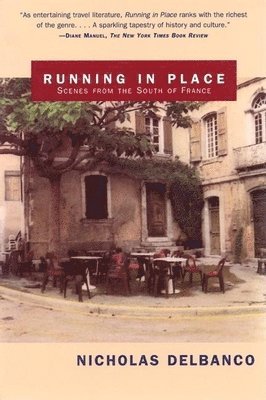
Provence: Its magnificent landscape has inspired artists and writers for centuries. In this stunning evocation of Provencal culture and history, the critically lauded novelist and essayist Nicholas Delbanco captures both the immediacy of this changing region and the time-honored traditions of its past.Born in England during the Second World War, raised in America, Delbanco spent many of the most important periods of his life in Provence. Ensconced in a farmhouse deep in the Alpes-Maritimes, writing books, he developed lasting friendships with his neighbors, including expatriate novelist James Baldwin. His narrative deals with the stages of age—from his first, carefree visits and an early love affair to his transformation into the “solid citizen” who imitates his parents while guiding his children through the streets.In 1987 Delbanco returned to Provence with his family, planning “a sentimental journey to our early haunts. It is to be, I tell myself, a chance to travel with our daughters before we drift apart, a chance to share our past with them before it proves irrecoverable.” With the mind of a historian and the eye of an artist, Delbanco gracefully weaves strands of Provencal life into scenes from his own past and present.In the precise, mellifluous language that prompted the Chicago Tribune Book World to call him “as fine a pure prose stylist as any writer living,” Delbanco provides a personal record of one of the world’s most fertile regions. He writes of the landscape of Petrarch and Laura, Cezanne and van Gogh, the Marquis de Sade and Albert Camus (“who made his home in Lourmarin because of the size of the sky”); of Provence’s thirty-two winds; and of aristocrat and peasant, cave and vineyard, restaurant and gallery, coal stoves and mimosa, cars and climbing roses, stone walls and bittersweet—describing a paradise still pure, but not immune to progress. This book will bear comparison to Hemingway’s account of France; it, too, is a moveable feast.
249 kr
Skickas inom 5-8 vardagar
188 kr
Tillfälligt slut
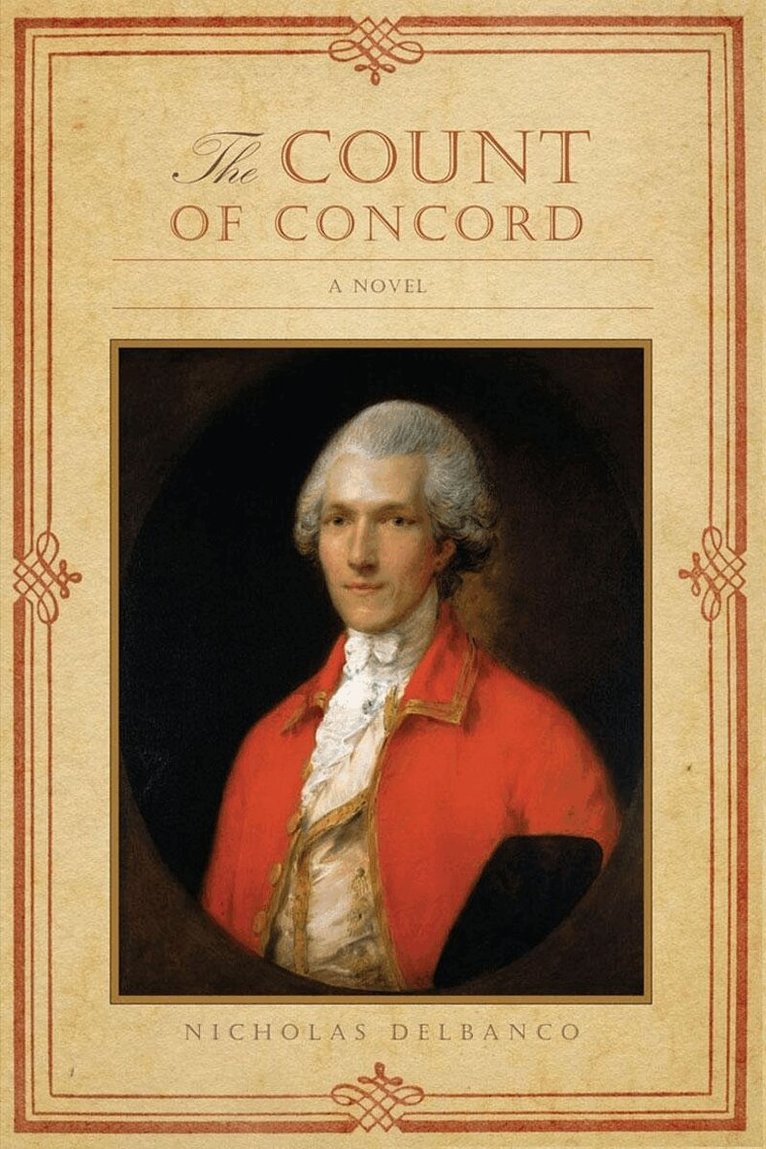
Benjamin Thompson, Count Rumford, was—as Nicholas Delbanco writes—“world famous in his lifetime,” yet now he has been “almost wholly forgotten.” Like Delbanco himself, Sally Ormsby Thompson Robinson—the narrator of this novel and the Count’s fictional, last-surviving relative—is “haunted” by one of history’s most fascinating and remarkable figures. On par with Thomas Jefferson and Benjamin Franklin, Count Rumford was, among many other things, a politician, a spy, a philanthropist, and above all, a scientist. Based on countless historical documents, including letters and essays by Thompson himself, The Count of Concord brings to life the remarkable career of Benjamin Thompson, Count Rumford.
225 kr
Skickas inom 5-8 vardagar
The collected early novels of an American master.
195 kr
Skickas inom 5-8 vardagar
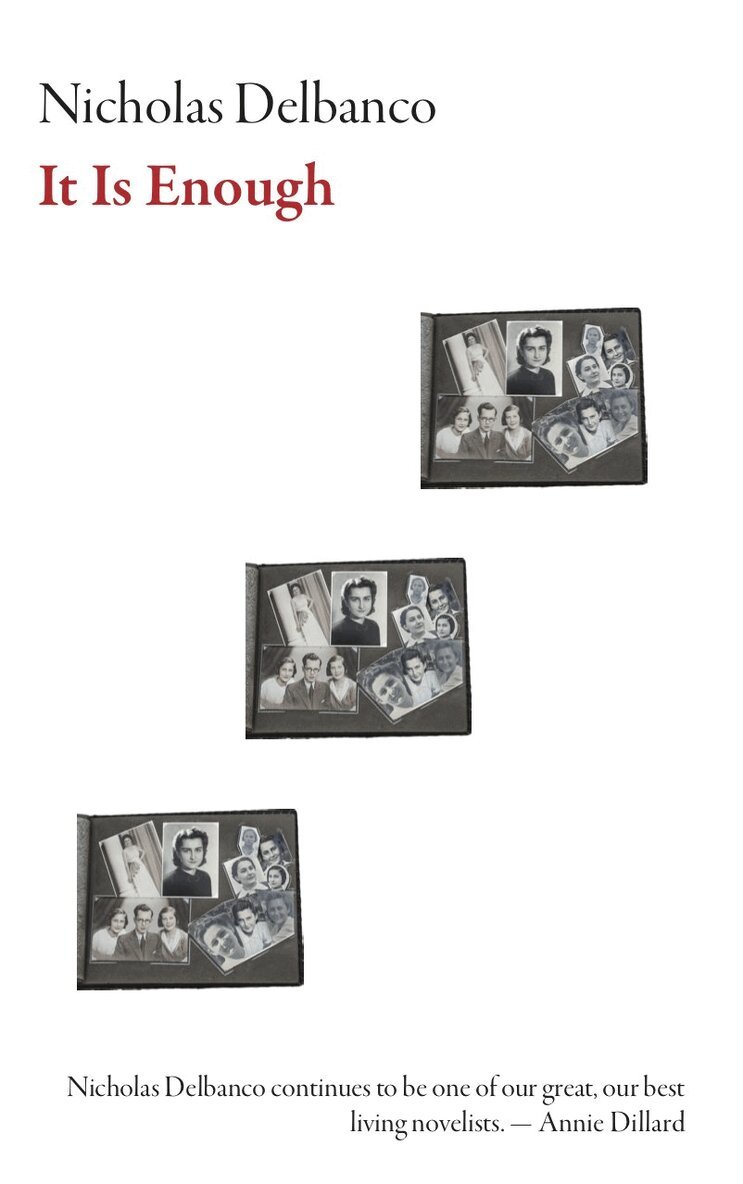
“A family album: leather-bound, thin, its pages yellow with age. There are images on every page—black and white to start with, then Kodacolor.” So begins Nicholas Delbanco’s new novel, It Is Enough, a chronicle of the German-Jewish Hochmann family, which is also a chronicle of the twentieth century and its repercussions here and now. While Frederick Hochmann, a widower, looks back on his long life from New Canaan, Connecticut, the drama of his family’s past surges to the surface. Ranging from Berlin to Berkeley, from the 1930s to the 2010s, from scenes of the greatest tenderness to the greatest callowness, It Is Enough is the work of one of the most accomplished American prose stylists since Henry James.
271 kr
Skickas inom 5-8 vardagar
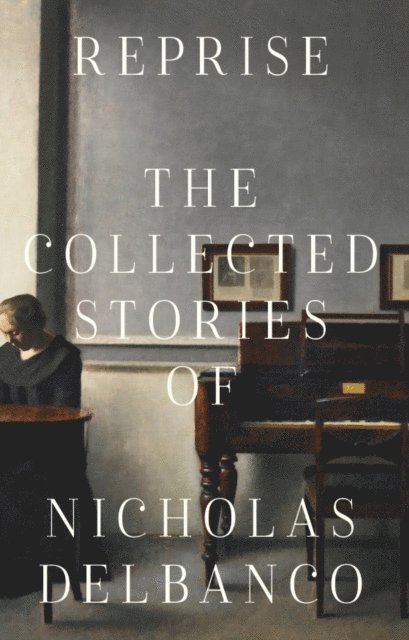
A writer of “enormous sophistication” (The New York Times), Nicholas Delbanco has established himself as an intelligent and erudite fount of American literature. Reprise collects three volumes of short stories, bringing together half a century of Delbanco’s writing for the first time.Nicholas Delbanco has been many things: a student of John Updike; a teacher of noteworthy authors like Bret Easton Ellis, Andrea Barrett, and Jesmyn Ward; and even, for a while, the next-door neighbor of James Baldwin. Across a career spanning nearly six decades, Delbanco has published more than thirty books of fiction and nonfiction and edited a dozen more. He is the recipient of numerous awards. The stories collected here represent a sort of retrospective, capturing the restless and boundlessly intelligent Nicholas Delbanco at key moments in his artistic life.With painterly eye for detail and texture, Reprise offers readers an invitation to glimpse American literature at its most elegant and graceful.
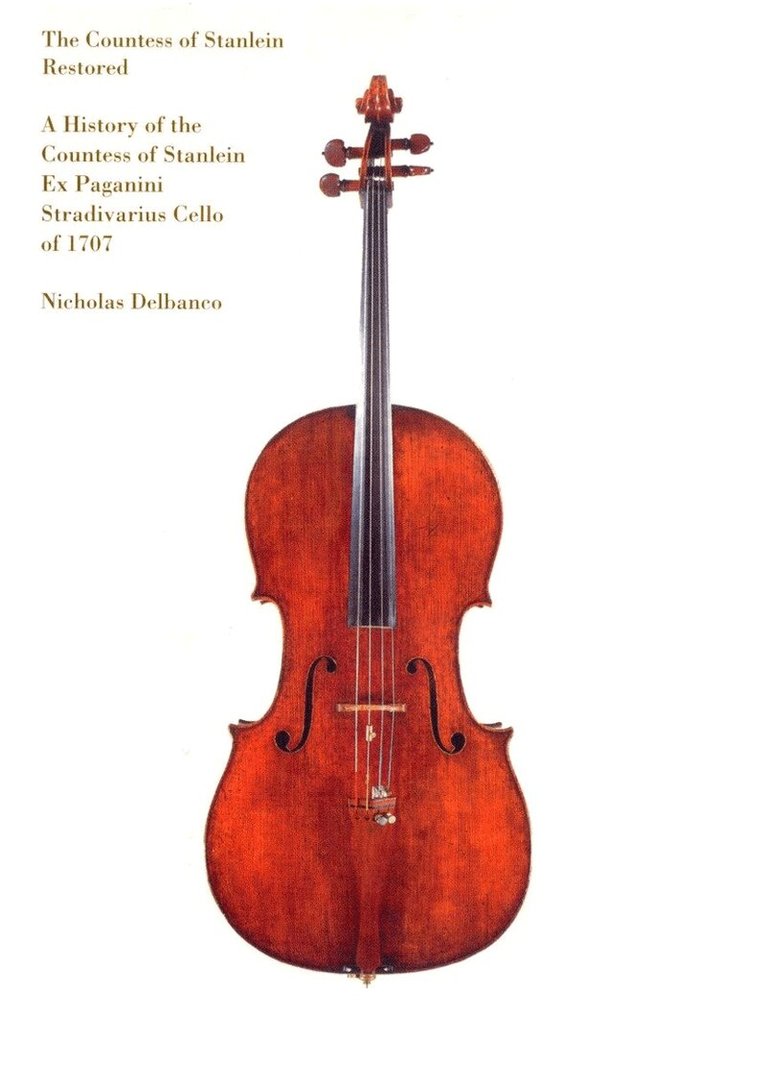
Countess of Stanlein Restored
A History of the Countess of Stanlein Ex Paganini Stradivarius Cello of 1707
Inbunden, Engelska, 2001
195 kr
Tillfälligt slut
It is a truth universally acknowledged that Antonio Stradivari of Cremona (1644-1737) was the noblest of bowed wooden stringed instrument makers. His work remains the Platonic ideal and template for contemporary 'luthiers'; present day technology may hope to match but not alter the standard of such craftsmanship. Extant examples of the master's instruments are numerous-but cellos from the 'great period' (1707-1720) are relatively few. The Countess of Stanlein-ex Paganini Stradivarius violoncello of 1707 is one of the best known in this exalted group. It has been copied often, physically dissected, discovered in a barrow on its way to a municipal dump, owned by Paganini, and applauded in hall after hall.Today the 'Stanlein' belongs to the cellist Bernard Greenhouse. In his eighties and semi-retired, he determined 'to give back something of value to the world of music that had given him so much.' In September 1998 he deposited the cello in the New York atelier of virtuoso luthier Rene Morel. The craft of instrument repair remains rooted in tradition; its practitioners belong to a quasi-mediaeval guild. Morel began a complete restoration of the instrument, a painstaking and meticulous enterprise that took him nearly two years. This book tracks that process-the intricacies, anxieties and pleasures that precede the cello's triumphal unveiling at the World Cello Congress in June 2000. Its subject is a work of art that must prove nonetheless functional, for the Countess of Stanlein-ex Paganini Stradivarius is only itself when played.
203 kr
Kommande