Nicholas Jacobs - Böcker
Visar alla böcker från författaren Nicholas Jacobs. Handla med fri frakt och snabb leverans.
4 produkter
4 produkter
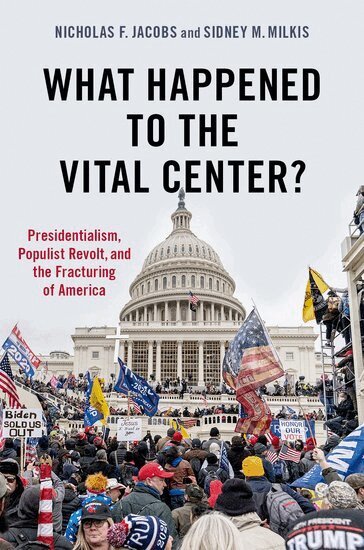
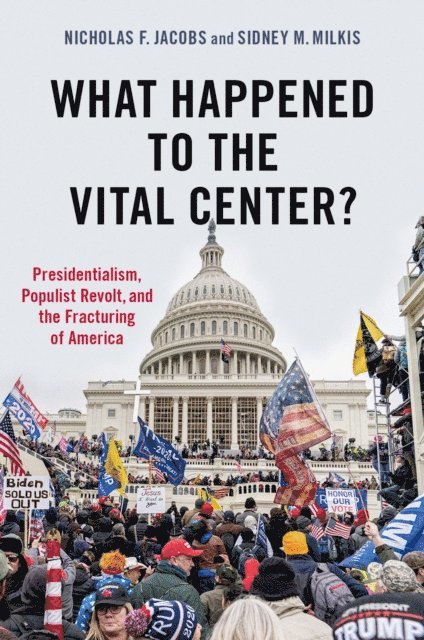
What Happened to the Vital Center?
Presidentialism, Populist Revolt, and the Fracturing of America
Inbunden, Engelska, 2022
1 304 kr
Skickas inom 5-8 vardagar
Taking the reader through a long view of American history, What Happened to the Vital Center? offers a novel and important contribution to the ongoing scholarly and popular discussion of how America fell apart and what might be done to end the Cold Civil War that fractures the country and weakens the national resolve. In What Happened to the Vital Center?, Nicholas Jacobs and Sidney Milkis tackle a foundational question within American political history: Is current partisan polarization, aggravated by populist disdain for constitutional principles and institutions, a novel development in American politics? Populism is not a new threat to the country's democratic experiment, but now insurgents intrude directly on elections and government. During previous periods of populist unrest, the US was governed by resilient parties that moderated extremist currents within the political system. This began to crumble during the 1960s, as anti-institutionalist incursions into the Democratic and Republican organizations gave rise to reforms that empowered activists at the expense of the median voter and shifted the controlling power over parties to the executive branch. Gradually, the moderating influence that parties played in structuring campaigns and the policy process eroded to the point where extreme polarization dominated and decision-making power migrated to the presidency. Weakened parties were increasingly dominated by presidents and their partnerships with social activists, leading to a gridlocked system characterized by the politics of demonization and demagoguery. Executive-centered parties more easily ignore the sorts of moderating voices that had prevailed in an earlier era. While the Republican Party is more susceptible to the dangers of populism than the Democrats, both parties are animated by a presidency-led, movement-centered vision of democracy. After tracing this history, the authors dismiss calls to return to some bygone era. Rather, the final section highlights the ways in which the two parties can be revitalized as institutions of collective responsibility that can transform personal ambition and rancorous partisanship into principled conflict over the profound issues that now divide the country. The book will transform our understanding of how we ended up in our current state of extreme polarization and what we can do to fix it.
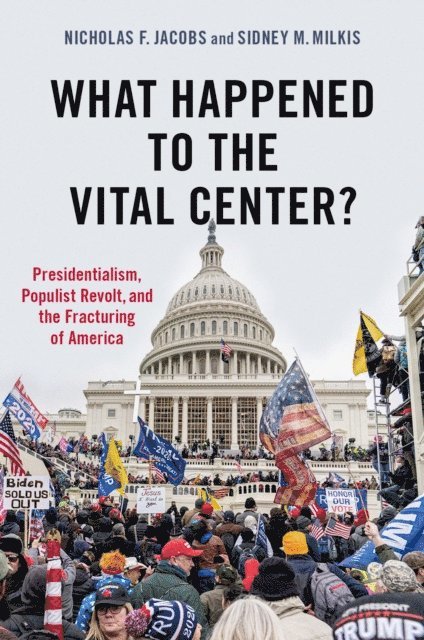
What Happened to the Vital Center?
Presidentialism, Populist Revolt, and the Fracturing of America
Häftad, Engelska, 2022
347 kr
Skickas inom 5-8 vardagar
Taking the reader through a long view of American history, What Happened to the Vital Center? offers a novel and important contribution to the ongoing scholarly and popular discussion of how America fell apart and what might be done to end the Cold Civil War that fractures the country and weakens the national resolve. In What Happened to the Vital Center?, Nicholas Jacobs and Sidney Milkis tackle a foundational question within American political history: Is current partisan polarization, aggravated by populist disdain for constitutional principles and institutions, a novel development in American politics? Populism is not a new threat to the country's democratic experiment, but now insurgents intrude directly on elections and government. During previous periods of populist unrest, the US was governed by resilient parties that moderated extremist currents within the political system. This began to crumble during the 1960s, as anti-institutionalist incursions into the Democratic and Republican organizations gave rise to reforms that empowered activists at the expense of the median voter and shifted the controlling power over parties to the executive branch. Gradually, the moderating influence that parties played in structuring campaigns and the policy process eroded to the point where extreme polarization dominated and decision-making power migrated to the presidency. Weakened parties were increasingly dominated by presidents and their partnerships with social activists, leading to a gridlocked system characterized by the politics of demonization and demagoguery. Executive-centered parties more easily ignore the sorts of moderating voices that had prevailed in an earlier era. While the Republican Party is more susceptible to the dangers of populism than the Democrats, both parties are animated by a presidency-led, movement-centered vision of democracy. After tracing this history, the authors dismiss calls to return to some bygone era. Rather, the final section highlights the ways in which the two parties can be revitalized as institutions of collective responsibility that can transform personal ambition and rancorous partisanship into principled conflict over the profound issues that now divide the country. The book will transform our understanding of how we ended up in our current state of extreme polarization and what we can do to fix it.
777 kr
Skickas inom 10-15 vardagar
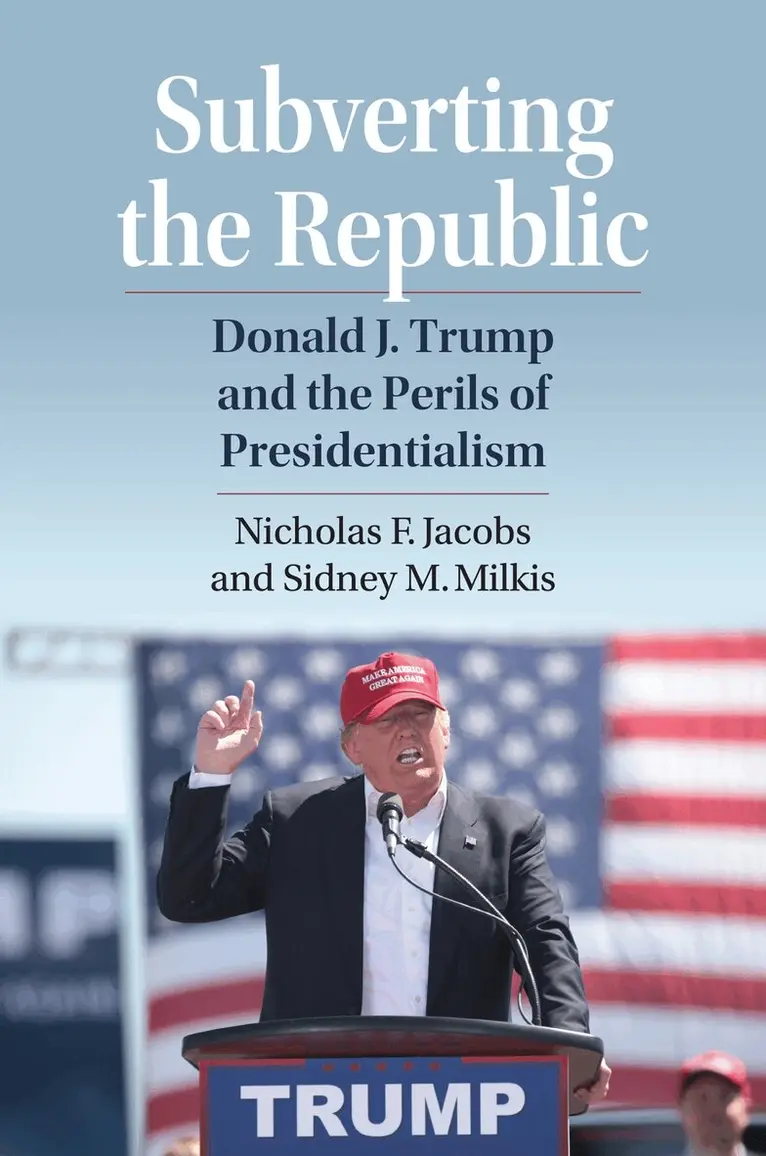
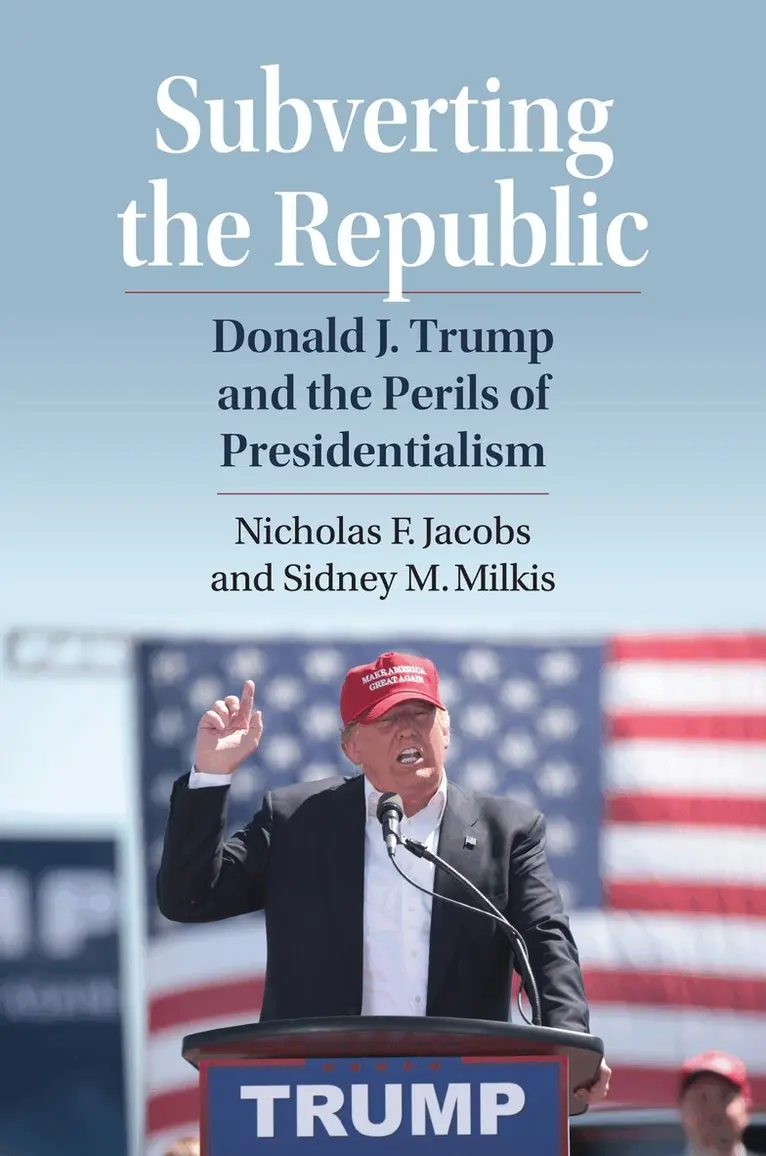
From two expert presidential scholars comes a new answer to why the Trump presidency happened: decades of partisanship and policies have centered the president as the sole focus of American government to create a treacherous system whose danger may far outlive the politics of Donald J. Trump.The election of Donald J. Trump on November 6, 2016, changed how we understand the American presidency—but this transformation was not of his own making. His unprecedented rise to power led to an administration where Trump brazenly defied established constitutional norms and institutions. Yet, as Nicholas F. Jacobs and Sidney M. Milkis reveal, Trump’s presidency was not merely a shocking departure from tradition, but a symptom of a constitutional disease that had has long afflicted the American polity. They call this condition presidentialism, a dangerous shift towards an executive-centered politics and government that places immense power in the hands of a single individual.While some scholars of American politics view the Trump presidency as a cult of personality, Jacobs and Milkis argue that his unsettling ascent to the White House was decades in the making, the result of numerous cultural, institutional, and constitutional changes. From aggressively redeploying the federal government’s administrative powers, to using the tools of the modern presidency to undertake a hostile takeover of the Republican Party, Trump’s presidency reveals the peril of a presidency-centered democracy that combines executive aggrandizement and polarizing struggles over the meaning of American identity. The disruptive features of the Trump presidency should not be viewed as an ephemeral phenomenon, nor does Donald Trump’s departure from the White House end the threat that presidentialism poses to American democracy.Subverting the Republic explains why the Trump presidency happened—and why it might happen again.
323 kr
Skickas inom 10-15 vardagar
From two expert presidential scholars comes a new answer to why the Trump presidency happened: decades of partisanship and policies have centered the president as the sole focus of American government to create a treacherous system whose danger may far outlive the politics of Donald J. Trump.The election of Donald J. Trump on November 6, 2016, changed how we understand the American presidency—but this transformation was not of his own making. His unprecedented rise to power led to an administration where Trump brazenly defied established constitutional norms and institutions. Yet, as Nicholas F. Jacobs and Sidney M. Milkis reveal, Trump’s presidency was not merely a shocking departure from tradition, but a symptom of a constitutional disease that had has long afflicted the American polity. They call this condition presidentialism, a dangerous shift towards an executive-centered politics and government that places immense power in the hands of a single individual.While some scholars of American politics view the Trump presidency as a cult of personality, Jacobs and Milkis argue that his unsettling ascent to the White House was decades in the making, the result of numerous cultural, institutional, and constitutional changes. From aggressively redeploying the federal government’s administrative powers, to using the tools of the modern presidency to undertake a hostile takeover of the Republican Party, Trump’s presidency reveals the peril of a presidency-centered democracy that combines executive aggrandizement and polarizing struggles over the meaning of American identity. The disruptive features of the Trump presidency should not be viewed as an ephemeral phenomenon, nor does Donald Trump’s departure from the White House end the threat that presidentialism poses to American democracy.Subverting the Republic explains why the Trump presidency happened—and why it might happen again.