Sidney M. Milkis – författare
Visar alla böcker från författaren Sidney M. Milkis. Handla med fri frakt och snabb leverans.
20 produkter
Can Democracy and Capitalism Be Reconciled?
Av Sidney M. Milkis, Scott C. Miller
Inbunden, 2024
1549 kr
Lägg i varukorg
In Can Capitalism and Democracy Be Reconciled?, Sidney M. Milkis and Scott C. Miller have gathered a truly eminent cast of contributors to provide a multidisciplinary examination at the intersection of capitalist economies and democratic political systems across time and space. Featuring …
Can Democracy and Capitalism Be Reconciled?
Av Sidney M. Milkis, Scott C. Miller
Häftad, 2026
328 kr
Lägg i varukorg
In Can Capitalism and Democracy Be Reconciled?, Sidney M. Milkis and Scott C. Miller have gathered a truly eminent cast of contributors to provide a multidisciplinary examination at the intersection of capitalist economies and democratic political systems across time and space. Featuring …
Can Democracy and Capitalism Be Reconciled?
Av Sidney M. Milkis, Scott C. Miller
E-bok, 2025
344 kr
Lägg i varukorg
In Can Capitalism and Democracy Be Reconciled? , Sidney M. Milkis and Scott C. Miller have gathered a truly eminent cast of contributors to provide a multidisciplinary examination at the intersection of capitalist economies and democratic political systems across time and space. Featuring …
Can Democracy and Capitalism Be Reconciled?
Av Sidney M. Milkis, Scott C. Miller
E-bok, 2025
385 kr
Lägg i varukorg
In Can Capitalism and Democracy Be Reconciled? , Sidney M. Milkis and Scott C. Miller have gathered a truly eminent cast of contributors to provide a multidisciplinary examination at the intersection of capitalist economies and democratic political systems across time and space. Featuring …
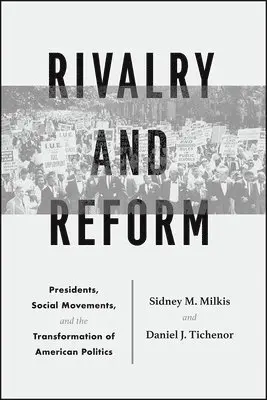
Rivalry and Reform
Presidents, Social Movements, and the Transformation of American Politics
Av Sidney M. Milkis, Daniel J. Tichenor
Häftad, 2019
384 kr
Lägg i varukorg
Few relationships have proved more pivotal in changing the course of American politics than those between presidents and social movements. For all their differences, both presidents and social movements are driven by a desire to recast the political system, often pursuing rival agendas that set …
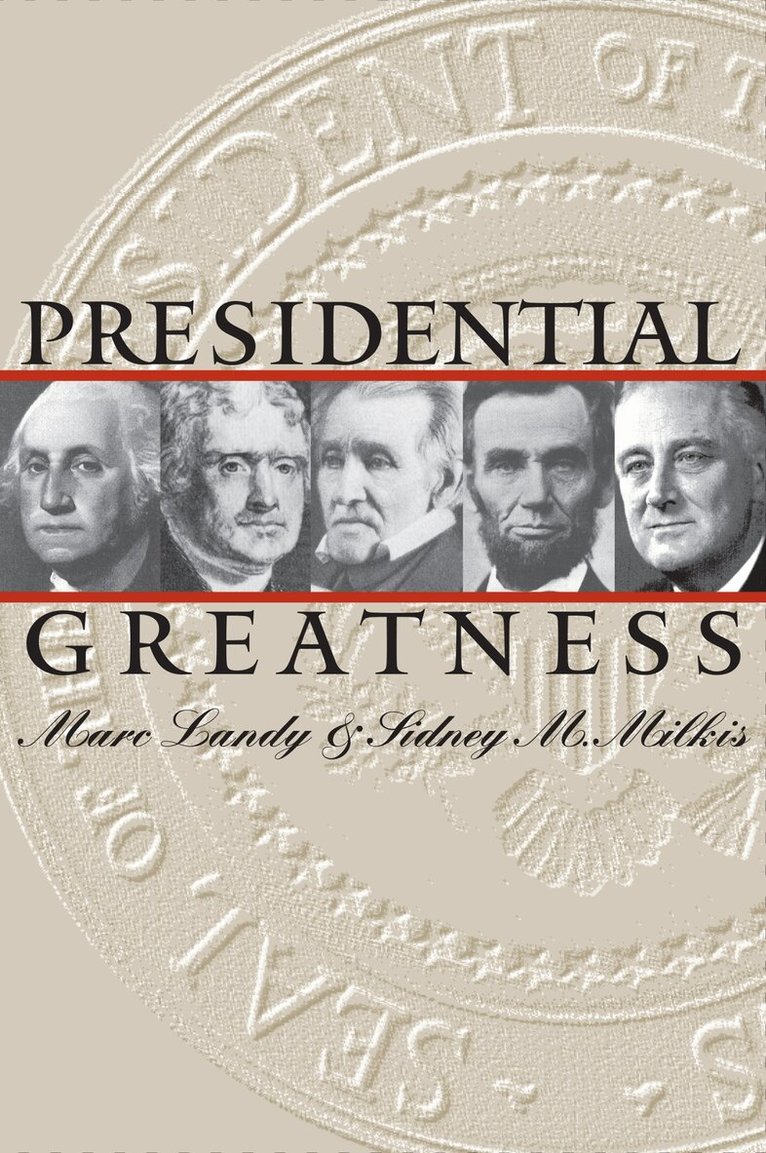
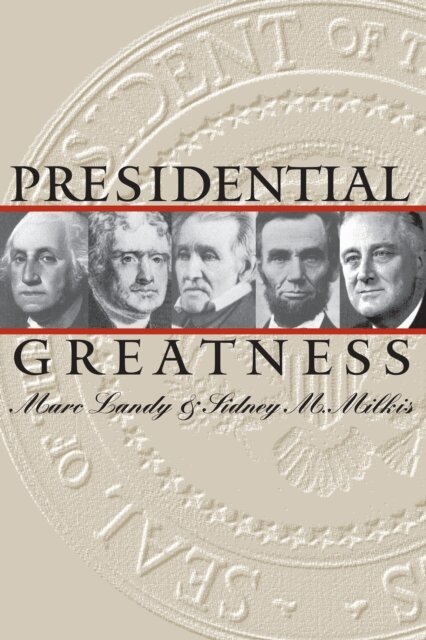
Presidential Greatness
Av Marc Landy, Sidney M. Milkis
Häftad, 2000
342 kr
Lägg i varukorg
This work argues that there has not been a truly great American President in the latter half of the 20th century. It examines five past presidencies, including Washington and Lincoln, showing what made them great and highlighting the possibilities and limitations of the office.
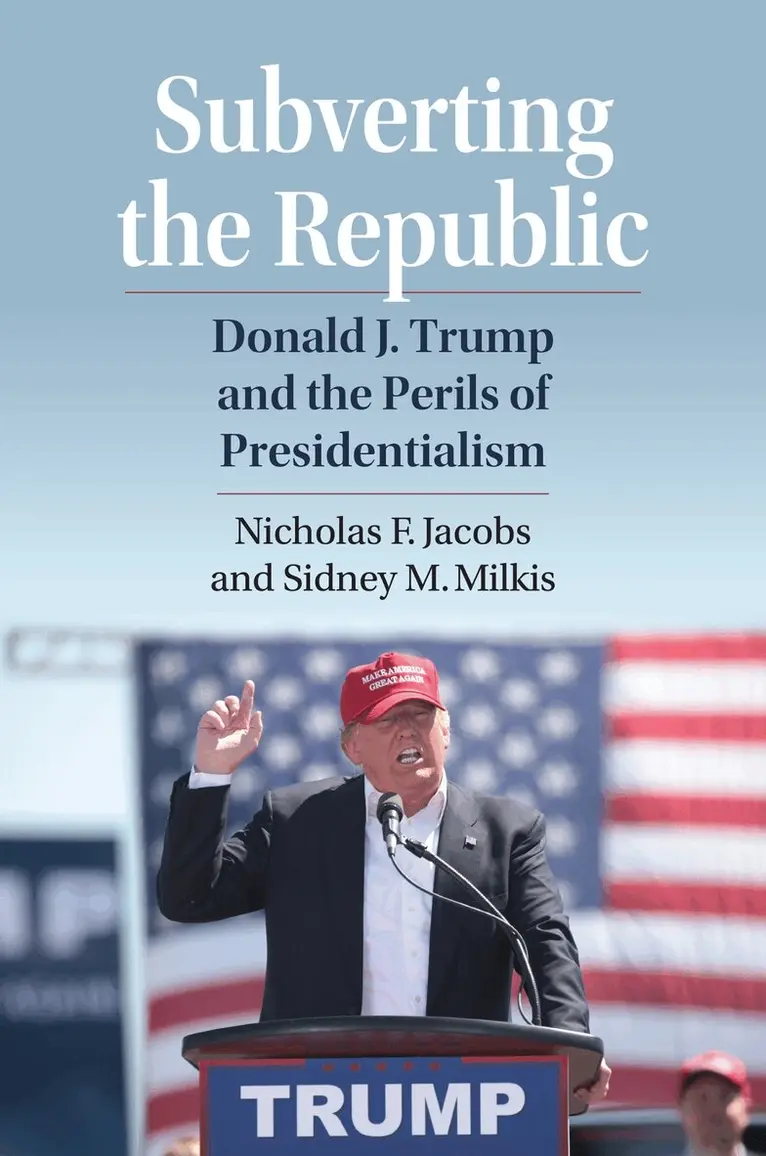
Subverting the Republic
Donald J. Trump and the Perils of Presidentialism
Av Nicholas Jacobs, Sidney M. Milkis
Inbunden, 2025
823 kr
Lägg i varukorg
From two expert presidential scholars comes a new answer to why the Trump presidency happened: decades of partisanship and policies have centered the president as the sole focus of American government to create a treacherous system whose danger may far outlive the politics of Donald J. Trump.The …
Subverting the Republic
Donald J. Trump and the Perils of Presidentialism
Av Nicholas Jacobs, Sidney M. Milkis
Häftad, 2025
342 kr
Lägg i varukorg
From two expert presidential scholars comes a new answer to why the Trump presidency happened: decades of partisanship and policies have centered the president as the sole focus of American government to create a treacherous system whose danger may far outlive the politics of Donald J. Trump.The …
Presidential Greatness
Av Sidney M. Milkis, Marc Landy
E-bok, 2025
410 kr
Lägg i varukorg
When a new president is elected in November, someone will be called to greatness. But it remains to be seen whether that call will be answered. In the wake of the Clinton scandal, the upcoming election presents an opportunity for candidates and citizens alike to reaffirm their belief that the …
Immigration
Struggling over Borders
Av David Leblang, Sidney M. Milkis
E-bok, 2019
62 kr
Lägg i varukorg
In an increasingly polarized political environment, the first year of the new president’s term will be especially challenging. With a fresh mandate, however, the first year also offers opportunities that may never come again. The First Year Project is a fascinating initiative by the Miller Center …
The Politics of Major Policy Reform in Postwar America
Av Jeffery A. Jenkins, Sidney M. Milkis
Inbunden, 2014
1211 kr
Lägg i varukorg
The Politics of Major Policy Reform in Postwar America examines the politics of recent landmark policy in areas such as homeland security, civil rights, health care, immigration and trade, and it does so within a broad theoretical and historical context. By considering the politics of major …
The Politics of Major Policy Reform in Postwar America
Av Jeffery A. Jenkins, Sidney M. Milkis
Häftad, 2014
365 kr
Lägg i varukorg
The Politics of Major Policy Reform in Postwar America examines the politics of recent landmark policy in areas such as homeland security, civil rights, health care, immigration and trade, and it does so within a broad theoretical and historical context. By considering the politics of major …
Politics of Major Policy Reform in Postwar America
Av Sidney M. Milkis, Jeffery A. Jenkins
E-bok, 2014
440 kr
Lägg i varukorg
The Politics of Major Policy Reform in Postwar America examines the politics of recent landmark policy in areas such as homeland security, civil rights, health care, immigration and trade, and it does so within a broad theoretical and historical context. By considering the politics of major …
Politics of Major Policy Reform in Postwar America
Av Sidney M. Milkis, Jeffery A. Jenkins
E-bok, 2014
431 kr
Lägg i varukorg
The Politics of Major Policy Reform in Postwar America examines the politics of recent landmark policy in areas such as homeland security, civil rights, health care, immigration and trade, and it does so within a broad theoretical and historical context. By considering the politics of major …
American Presidency
Origins and Development, 1776–2018
Av Michael Nelson, Sidney M. Milkis
E-bok, 2019
893 kr
Lägg i varukorg
The American Presidency examines the constitutional foundation of the executive office and the social, economic, political, and international forces that have reshaped it. Authors Sidney M. Milkis and Michael Nelson broadly examine the influence of each president, focusing on how these leaders have …
Progressivism and the New Democracy
Av Sidney M. Milkis, Jerome M. Mileur
Häftad, 1999
411 kr
Lägg i varukorg
A wide-ranging appraisal of the legacy of progressivism. The essays, written by a group of political scientists and historians, explore the impact of progressivism on domestic as well as foreign affairs, and on the theory as well as practice of American government and politics.
Theodore Roosevelt, the Progressive Party, and the Transformation of American Democracy
Häftad, 2009
426 kr
Tillfälligt slut
Led by Theodore Roosevelt, the Progressive Party made the 1912 campaign a passionate contest for the soul of the American people. Promoting an ambitious program of economic, social, and political reform—“New Nationalism”—that posed profound challenges to constitutional government, TR and his …
Political Parties and Constitutional Government
Remaking American Democracy
Häftad, 1999
302 kr
Tillfälligt slut
The U.S. Constitution makes no mention of political parties, yet parties began to form shortly after its ratification. Today, American democracy would not work without them. In Political Parties and Constitutional Government, Sidney Milkis explores the uneasy relationship between the Constitution …
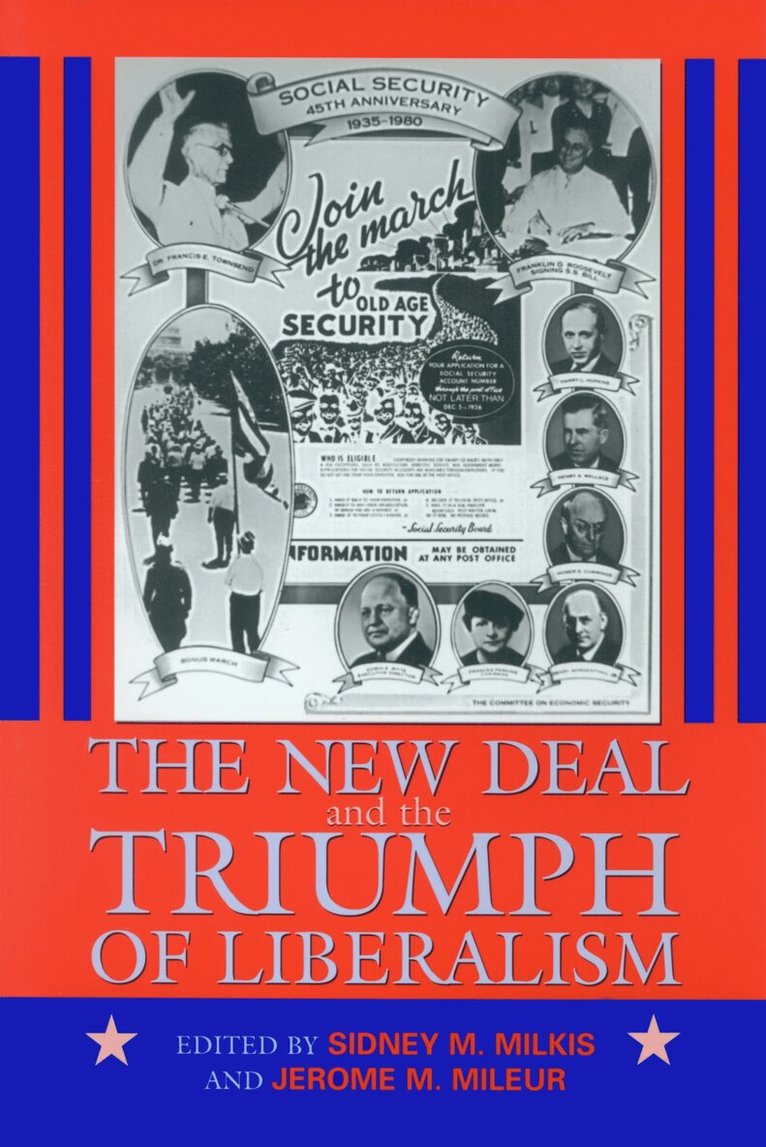
New Deal and the Triumph of Liberalism
Av Sidney M. Milkis, Jerome M. Mileur m. fl.
Häftad, 2002
411 kr
Tillfälligt slut
In this collection of essays, a group of political scientists and historians re-evaluate the legacy of the New Deal. They show how Roosevelt and his allies forged an enduring public philosophy - modern liberalism - that redefined the relationship of government and governed.
Great Society and the High Tide of Liberalism
Av Sidney M. Milkis, Jerome M. Mileur
Häftad, 2005
397 kr
Tillfälligt slut
The long era of liberal reform that began with the Progressive movement of the early twentieth century and continued with the New Deal, culminated in the 1960s with Lyndon Johnson's Great Society. Inspired by the example of his mentor, Franklin Roosevelt, Johnson sought to extend the agenda of the …