Nicholas Karn - Böcker
Visar alla böcker från författaren Nicholas Karn. Handla med fri frakt och snabb leverans.
3 produkter
3 produkter
1 505 kr
Skickas inom 7-10 vardagar
This latest addition to the English Episcopal Acta series brings together for the first time edited versions of more than 170 charters in the names of the four bishops who held the see of Ely (comprising historic Cambridgeshire) from its foundation in 1109 to 1197. These four bishops - Hervey, Nigel, Geoffrey Ridel and William de Longchamp - were amongst the most distinguished in twelfth-century England and their charters bear on many aspects of the social, economic, legal, ecclesiastical and monastic history of this period. The charters especially illustrate the position of the bishops as feudal lords, and their complex and often controversial relations with the monks of their cathedral. Of the four bishops in office before 1197, two held important secular office alongside their episcopal appointments, most notably William de Longchamp, justiciar and effective regent of England while King Richard I was absent during the Third Crusade. Acta issued in connexion with these secular offices are included in the volume, and make an important contribution to the understanding of the delegation of royal power and secular government far beyond the diocese of Ely. An extensive introduction contextualises the acta in the development of the cathedral church and the diocese of Ely.
1 461 kr
Skickas inom 7-10 vardagar
Bishops were of fundamental importance in the functioning of the medieval church, for they provided oversight of the work of the clergy and of education, of the parish system and of religious institutions of all kinds. This volume gathers together the evidence for the work of the bishops of the diocese of Ely, which comprised much of modern Cambridgeshire. It covers the early thirteenth century, and builds on an earlier volume in this series concerned with the twelfth century. The heart of this book is the edition of over 270 documents which show the work of the bishops and of the diocese. These are taken from very many archives and have never hitherto been accessible in one place; many have never been printed before or used by historians. They are accompanied by detailed commentary and references to supplementary documents elsewhere. The book also contains a substantial introduction, comprising a series of essays meant to support understanding of the documents themselves; this includes full biographies of the bishops, analysis of their administrative and domestic servants, and evaluation of the forms and types of documents in the collection. Alongside these is a long essay which examines the role of the bishops of Ely and their servants in the establishment of the University of Cambridge, which concludes that their roles have been much exaggerated. The edition and introduction are accompanied by detailed and extensive indexes to aid the user.
1 193 kr
Skickas inom 7-10 vardagar
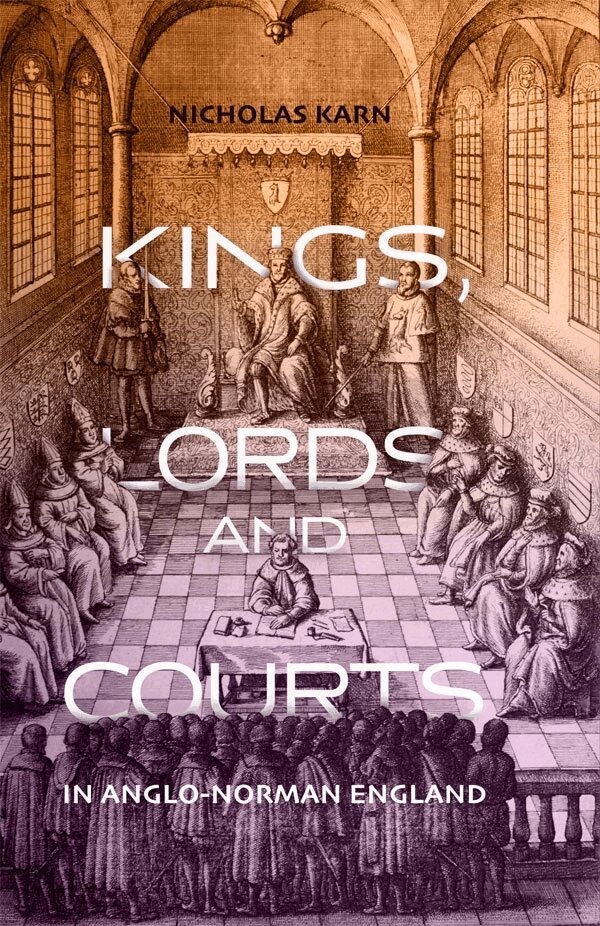
First study of the origins of the lordship courts that dominated the lives of the peasantry of medieval England.About the year 1000, hundreds and shires were the dominant and probably the only local assemblies for doing legal and other business in England. However, this simple pattern did not last long, for lords established separate courts which allowed them to manage and discipline their dependents without external interference, and therefore to intensify and redefine their claims over their dependents. These can be seen clearly by the early twelfth century, and were the basis from which the later manorial courts, courts leet and honour courts originated. The appearance of these courts has long been recognised; what is novel about this book is that it shows how they came into being. It argues that lordship courts ultimately originated through subtracting business from the public courts of Anglo-Saxon England, not from the rights inherent in land ownership. It also shows how and when royal justices appeared for the first time as a response to these changes, and how the earliest generation of judges differed from their successors in their roles and functions, which has considerable consequences for how we understand the changing roles of justices in shaping English law. Overall, the changing pattern of assemblies and courts helped to redefine lordship, peasant status and royal authority, and to expectations about how business should be transacted, with widespread implications across Anglo-Norman society, culture and politics