
Nico Israel - Böcker
Visar alla böcker från författaren Nico Israel. Handla med fri frakt och snabb leverans.
3 produkter
3 produkter
552 kr
Tillfälligt slut
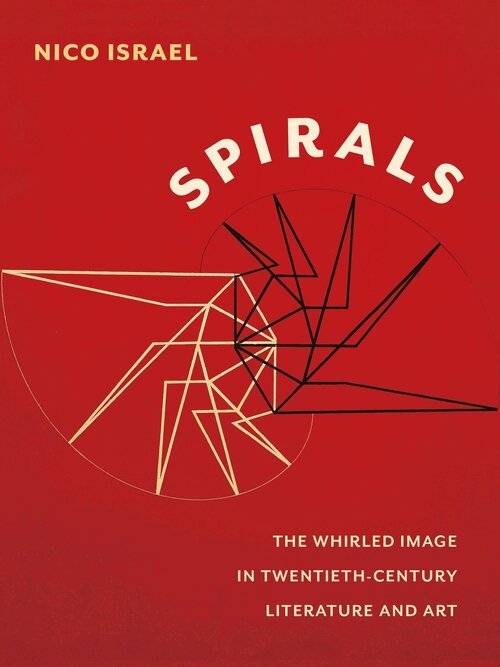
In this elegantly written and beautifully illustrated book, Nico Israel reveals how spirals are at the heart of the most significant literature and visual art of the twentieth century. Juxtaposing the work of writers and artists-including W. B. Yeats and Vladimir Tatlin, James Joyce and Marcel Duchamp, and Samuel Beckett and Robert Smithson-he argues that spirals provide a crucial frame for understanding the mutual involvement of modernity, history, and geopolitics, complicating the spatio-temporal logic of literary and artistic genres and of scholarly disciplines. The book takes the spiral not only as its topic but as its method. Drawing on the writings of Walter Benjamin and Alain Badiou, Israel theorizes a way of reading spirals, responding to their dual-directionality as well as their affective power. The sensations associated with spirals--flying, falling, drowning, being smothered-reflect the anxieties of limits tested or breached, and Israel charts these limits as they widen from the local to the global and recoil back.Chapters mix literary and art history to explore 'pataphysics, Futurism, Vorticism, Dada and Surrealism, "Concentrisme," minimalism, and entropic earth art; a coda considers the work of novelist W. G. Sebald and contemporary artist William Kentridge. In Spirals, Israel offers a refreshingly original approach to the history of modernism and its aftermaths, one that gives modernist studies, comparative literature, and art criticism an important new spin.
631 kr
Skickas inom 3-6 vardagar
In this elegantly written and beautifully illustrated book, Nico Israel reveals how spirals are at the heart of the most significant literature and visual art of the twentieth century. Juxtaposing the work of writers and artists-including W. B. Yeats and Vladimir Tatlin, James Joyce and Marcel Duchamp, and Samuel Beckett and Robert Smithson-he argues that spirals provide a crucial frame for understanding the mutual involvement of modernity, history, and geopolitics, complicating the spatio-temporal logic of literary and artistic genres and of scholarly disciplines. The book takes the spiral not only as its topic but as its method. Drawing on the writings of Walter Benjamin and Alain Badiou, Israel theorizes a way of reading spirals, responding to their dual-directionality as well as their affective power. The sensations associated with spirals--flying, falling, drowning, being smothered-reflect the anxieties of limits tested or breached, and Israel charts these limits as they widen from the local to the global and recoil back.Chapters mix literary and art history to explore 'pataphysics, Futurism, Vorticism, Dada and Surrealism, "Concentrisme," minimalism, and entropic earth art; a coda considers the work of novelist W. G. Sebald and contemporary artist William Kentridge. In Spirals, Israel offers a refreshingly original approach to the history of modernism and its aftermaths, one that gives modernist studies, comparative literature, and art criticism an important new spin.
871 kr
Skickas inom 10-15 vardagar
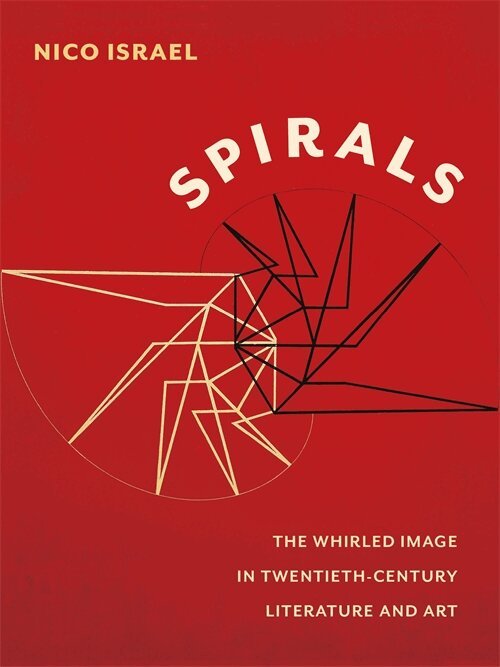
Outlandish addresses geographical displacement as a lived experience in the twentieth century, as a predicament of writing, and as a problem for theory. It focuses on the work of three transnational writers from diverse backgrounds working in different genres: Joseph Conrad, the Ukrainian-born Polish novelist and storywriter living in Britain at the turn of the century; Theodor W. Adorno, the German-Jewish philosopher and sociologist transplanted to Los Angeles during the Second World War; and Salman Rushdie, the Indian-born British novelist and journalist, recently released from the peculiar conditions of his notorious houseless arrest.The author argues that Conrad, Adorno, and Rushdie emblematize significant shifts over the course of the century, from a modernist expression of almost universal deracination, to a post-Auschwitz disarticulation of home and subjectivity, to an emergent conceptualization of displacement in terms of migrancy, hybridity, and flow. He theorizes a mode of reading between exile and diaspora—two fundamentally different descriptions of displacement—and allows the "outlandish" writing of these three figures to complicate this seemingly continuous trajectory.Drawing on texts from literary theory, philosophy, psychoanalysis, anthropology, and geography, the author explores what he calls the "rhetoric of displacement"—the struggle to assert identity out of place. He reads this writing predicament against the backdrop of the century's salient economic and technological changes, political upheavals, and mass migrations. In doing so, he draws attention to those aspects of exile and diaspora that have remained insufficiently considered: their relation to nationalism and colonialism, to authority and institutionality, and, above all, to broader questions of subjectivity, "race," location, and language, as these concepts themselves subtly change over the course of the century.