Nicola Miller - Böcker
Visar alla böcker från författaren Nicola Miller. Handla med fri frakt och snabb leverans.
5 produkter
5 produkter
Del 1 - Cambridge Russian Paperbacks
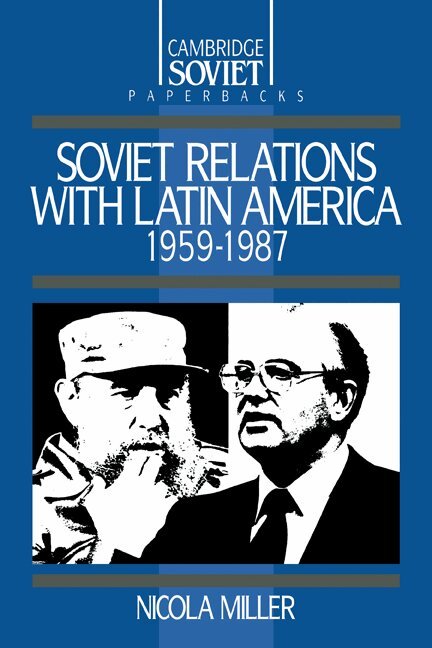
Soviet Relations with Latin America, 1959-1987
Häftad, Engelska, 1989
428 kr
Skickas inom 7-10 vardagar
This book was first published in 1989. The Soviet presence and purposes in Latin America are a matter of great controversy, yet no serious study was hitherto combined with a regional perspective (concentrating on the nature and regional impact of Soviet activity on the ground) and diplomatic analysis, examining the strategic and ideological factors that influence Soviet foreign policy. Nicola Miller's lucid and accessible survey of Soviet-Latin American relations over the past quarter-century demonstrates clearly that existing, heavily 'geo-political' accounts distort the real nature of Soviet activity in the area, closely constrained by local political, social and geographical factors. In a broadly chronological series of case-studies Dr Miller argues that, American counter-influence apart, enormous physical and communicational barriers obstruct Soviet-Latin American relations and that the lack of economic complementarity imposes a natural obstacle to trading growth: even Cuba, often cited as 'proof' of Soviet designs upon the area, is only an apparent exception.
412 kr
Skickas inom 7-10 vardagar
An enlightening account of the entwined histories of knowledge and nationhood in Latin America—and beyondThe rise of nation-states is a hallmark of the modern age, yet we are still untangling how the phenomenon unfolded across the globe. Here, Nicola Miller offers new insights into the process of nation-making through an account of nineteenth-century Latin America, where, she argues, the identity of nascent republics was molded through previously underappreciated means: the creation and sharing of knowledge.Drawing evidence from Argentina, Chile, and Peru, Republics of Knowledge traces the histories of these countries from the early 1800s, as they gained independence, to their centennial celebrations in the twentieth century. Miller identifies how public exchange of ideas affected policymaking, the emergence of a collective identity, and more. She finds that instead of defining themselves through language or culture, these new nations united citizens under the promise of widespread access to modern information. Miller challenges the narrative that modernization was a strictly North Atlantic affair, demonstrating that knowledge traveled both ways between Latin America and Europe. And she looks at how certain forms of knowledge came to be seen as more legitimate and valuable than others, both locally and globally. Miller ultimately suggests that all modern nations can be viewed as communities of shared knowledge, a perspective with the power to reshape our conception of the very basis of nationhood.With its transnational framework and cross-disciplinary approach, Republics of Knowledge opens new avenues for understanding the histories of modern nations—and the foundations of modernity—the world over.
250 kr
Skickas inom 7-10 vardagar
An enlightening account of the entwined histories of knowledge and nationhood in Latin America—and beyondThe rise of nation-states is a hallmark of the modern age, yet we are still untangling how the phenomenon unfolded across the globe. Here, Nicola Miller offers new insights into the process of nation-making through an account of nineteenth-century Latin America, where, she argues, the identity of nascent republics was molded through previously underappreciated means: the creation and sharing of knowledge.Drawing evidence from Argentina, Chile, and Peru, Republics of Knowledge traces the histories of these countries from the early 1800s, as they gained independence, to their centennial celebrations in the twentieth century. Miller identifies how public exchange of ideas affected policymaking, the emergence of a collective identity, and more. She finds that instead of defining themselves through language or culture, these new nations united citizens under the promise of widespread access to modern information. Miller challenges the narrative that modernization was a strictly North Atlantic affair, demonstrating that knowledge traveled both ways between Latin America and Europe. And she looks at how certain forms of knowledge came to be seen as more legitimate and valuable than others, both locally and globally. Miller ultimately suggests that all modern nations can be viewed as communities of shared knowledge, a perspective with the power to reshape our conception of the very basis of nationhood.With its transnational framework and cross-disciplinary approach, Republics of Knowledge opens new avenues for understanding the histories of modern nations—and the foundations of modernity—the world over.
278 kr
Skickas inom 7-10 vardagar
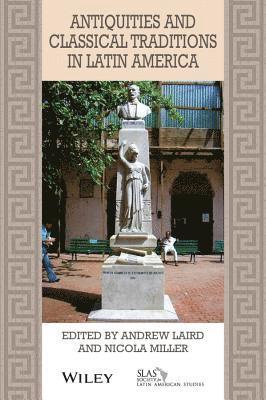
This collection is the first concerted attempt to explore the significance of classical legacies for Latin American history – from the uses of antiquarian learning in colonial institutions to the currents of Romantic Hellenism which inspired liberators and nation-builders in the nineteenth and twentieth centuries. Discusses how the model of Roman imperialism, challenges to Aristotle’s theories of geography and natural slavery, and Cicero’s notion of the patria have had a pervasive influence on thought and politics throughout the Latin American regionBrings together essays by specialists in art history, cultural anthropology and literary studies, as well as Americanists and scholars of the classical traditionShows that appropriations of the Greco-Roman past are a recurrent catalyst for change in the AmericasCalls attention to ideas and developments which have been overlooked in standard narratives of intellectual history
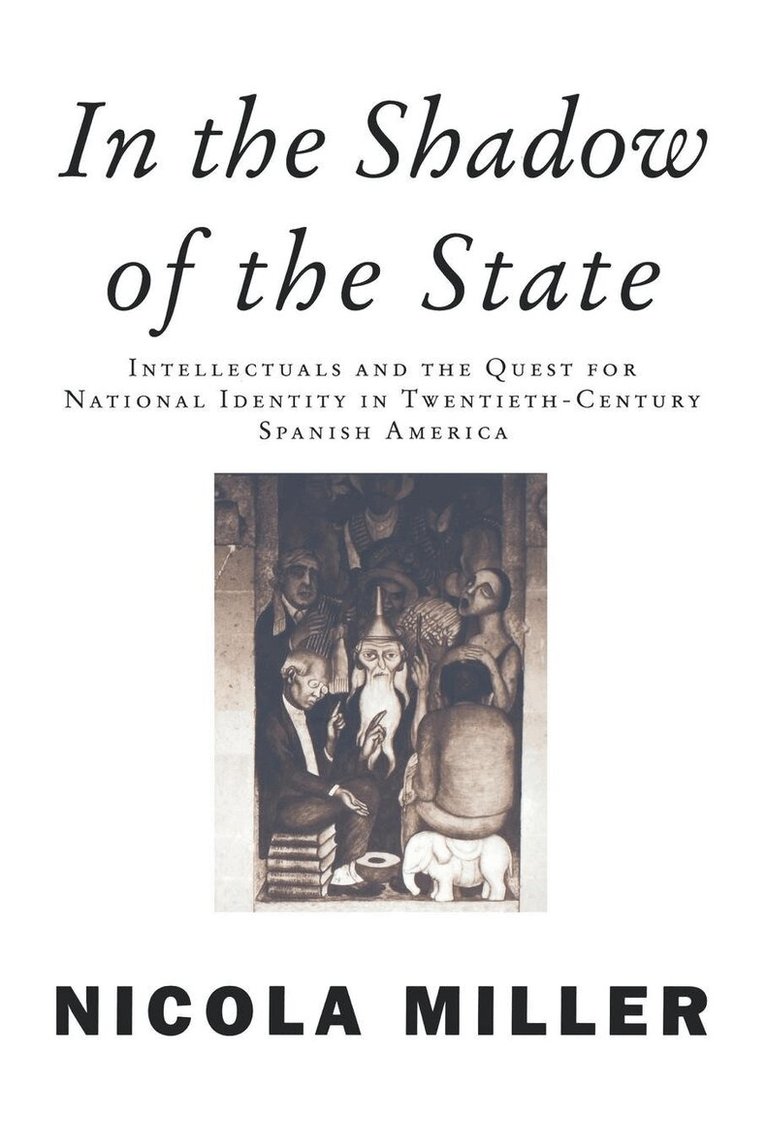
In the Shadow of the State
Intellectuals and the Quest for National Identity in Twentieth-Century Spanish America
Häftad, Engelska, 1999
276 kr
Skickas inom 3-6 vardagar
Carlos Fuentes once observed that to be a Spanish American intellectual was to fulfill the roles, by default, of "a tribune, a member of parliament, a labor leader, a journalist, a redeemer of his society." Such statements reflect the view that the region's intellectuals have often acted as substitutes for the structures of a civil society.An alternative view casts Spanish American intellectuals in a far more reactionary role. Here, it is suggested that the elaboration of inert popular stereotypes such as the stoic Indian and the heroic gaucho has resulted in an infinite postponement of authentic cultural identity, and a perpetuation, aided by intellectuals, of a social order in which popular demands were either ignored or repressed.In the context of this debate, this book explores the roles played by intellectuals in the creation of popular national identities in twentieth-century Spanish America, and seeks to identify the factors which lie behind two such contrasting evaluations of their contribution. Ranging across the intellectual centers of Argentina, Chile, Cuba, Mexico and Peru, it illustrates vividly the diversity and evolution of intellectual life in the region. Particular attention is paid to the idea of peripheral modernity and its influence on intellectual activity, as well as to the contributions made by intellectuals to the three major strands in debates on popular national identity: bi-culturalism, anti-imperialism and history.