1 660 kr
Kommande
1 660 kr
Kommande
3 306 kr
Skickas
2 975 kr
Skickas inom 11-20 vardagar
3 344 kr
Läs direkt efter köp
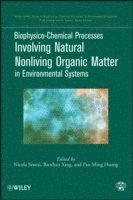
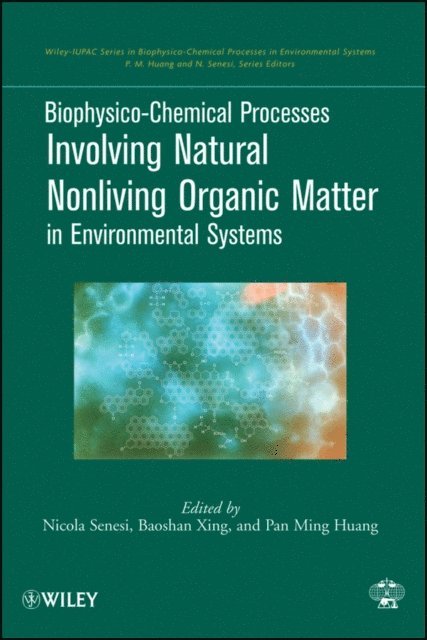
Bringing together world-renowned researchers to explore natural nonliving organic matter (NOM) and its chemical, biological, and ecological importance, Biophysico-Chemical Processes Involving Natural Nonliving Organic Matter in Environmental Systems offers an integrated view of the dynamics and processes of NOM. This multidisciplinary approach allows for a comprehensive treatment encompassing all the formation processes, properties, reactions, environments, and analytical techniques associated with the latest research on NOM.
After briefly outlining the historical background, current ideas, and future prospects of the study of NOM, the coverage examines:
The formation mechanisms of humic substances
Organo-clay complexes
The effects of organic matter amendment
Black carbon in the environment
Carbon sequestration and dynamics in soil
Biological activities of humic substances
Dissolved organic matter
Humic substances in the rhizosphere
Marine organic matter
Organic matter in atmospheric particles
In addition to the above topics, the coverage includes such relevant analytical techniques as separation technology; analytical pyrolysis and soft-ionization mass spectrometry; nuclear magnetic resonance; EPR, FTIR, Raman, UV-visible adsorption, fluorescence, and X-ray spectroscopies; and thermal analysis. Hundreds of illustrations and photographs further illuminate the various chapters.
An essential resource for both students and professionals in environmental science, environmental engineering, water science, soil science, geology, and environmental chemistry, Biophysico-Chemical Processes Involving Natural Nonliving Organic Matter in Environmental Systems provides a unique combination of the latest discoveries, developments, and future prospects in this field.
3 892 kr
Läs direkt efter köp
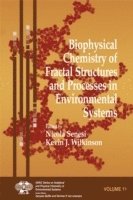
Biophysical Chemistry of Fractal Structures and Processes in Environmental Systems.
Disorder appears to predominate in natural and environmental systems, e.g. star constellations, clouds, coastlines, trees and snowflakes. In the natural environment, there is a great need to quantitatively describe complex physicochemical systems and processes. By their very nature, environmental systems are prefect candidates for quantitative description using fractal dimensions. Indeed, fractal geometry is a powerful approach of the quantitative description of complex, highly irregular and random systems, the processes that lead to the formation of such disordered systems and the physical behaviour that results from such apparent disorder.
Biophysical Chemistry of Fractal Structures and Processes in Environmental Systems aims to provide the scientific community with a novel and valuable approach based on fractal geometry concepts. A number of important properties and processes are examined in diverse environmental systems. For example, this volume examines how the fractal approach has been applied to better understand the structure and reactivity of flocs, sediments, soils, microorganism, and humic substances. the book will be of great use to scientists and engineers looking for the fundamental knowledge necessary to solve practical environmental problems.
Topics covered include:
An introduction to the study of environmental fractalsFractal geometry, fragmentation processes and multifractal measuresMethods and techniques for the fractal analysis of environmental systemsFractal structures and mechanisms in coagulation/flocculation processes in environmental systemsFractal approaches to adsorption/desorption processes on environmental surfacesThe application of fractals in the study of humic materialsFractal geometry and microorganisms in the environmentFractal geometry of aerosol particlesThis comprehensive volume is aimed at graduate students, scientists, researchers and professionals involved in fundamental and applied studies in environmental sciences, with emphasis on environmental analytical chemistry, biochemistry and physical chemistry.
The IUPAC Series on Analytical and Physical Chemistry of Environmental Systems provides the scientific community with a critical evaluation of important physicochemical structures and reactions in environmental systems, as well as the analytical techniques required to study them. The series is aimed at promoting rigorous analysis and understanding of the physicochemical functioning of environmental systems.
2 684 kr
Skickas inom 5-8 vardagar
3 108 kr
Läs direkt efter köp
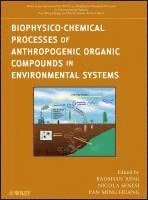
By virtue of complex nature of the interactions of AOCs with different environmental components and matrixes, no single available technique and instrument is satisfactory yet for determining their fate, transport, availability, and risk in the environment. In order to fully understand the biophysico-chemical interactions and processes of AOCs in the environment, it is critical to know chemical, physical and biological properties of AOCs and their analytical techniques. The book is unique because of its multidisciplinary approach as it provides a comprehensive and integrated coverage of biophysico-chemical reactions and processes of AOCs in various environments, associated analytical techniques, and restoration of natural environments contaminated by AOCs.
Impact on the Terrestrial Ecosystem
6 061 kr
Skickas inom 5-8 vardagar
6 412 kr
Skickas
3 116 kr
Läs direkt efter köp
By virtue of complex nature of the interactions of AOCs with different environmental components and matrixes, no single available technique and instrument is satisfactory yet for determining their fate, transport, availability, and risk in the environment. In order to fully understand the biophysico-chemical interactions and processes of AOCs in the environment, it is critical to know chemical, physical and biological properties of AOCs and their analytical techniques. The book is unique because of its multidisciplinary approach as it provides a comprehensive and integrated coverage of biophysico-chemical reactions and processes of AOCs in various environments, associated analytical techniques, and restoration of natural environments contaminated by AOCs.
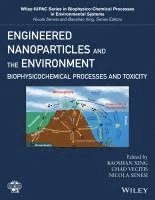
Biophysicochemical Processes and Toxicity
2 290 kr
Skickas inom 5-8 vardagar
2 666 kr
Läs direkt efter köp
2 650 kr
Läs direkt efter köp
2 596 kr
Skickas inom 5-8 vardagar
2 918 kr
Läs direkt efter köp
Provides a state-of-the-art overview of research in soil biogeochemical processes and strategies for greenhouse gas mitigation under climate change
Food security and soil health for the rapidly growing human population are threatened by increased temperature and drought, soil erosion and soil quality degradation, and other problems caused by human activities and a changing climate. Because greenhouse gas emission is the primary driver of climate change, a complete understanding of the cycles of carbon and major nutritional elements is critical for developing innovative strategies to sustain agricultural development and environmental conservation.
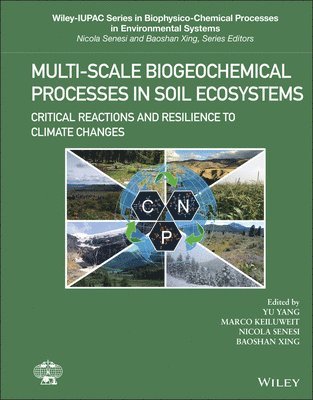
Multi-Scale Biogeochemical Processes in Soil Ecosystems: Critical Reactions and Resilience to Climate Changes is an up-to-date overview of recent research in soil biogeochemical processes and applications in ecosystem management. Organized into three parts, the text examines molecular-scale processes and critical reactions, presents ecosystem-scale studies of ecological hotspots, and discusses large-scale modeling and prediction of global biogeochemical cycles. Part of the Wiley - IUPAC Series on Biophysico-Chemical Processes in Environmental Systems, this authoritative volume:
Provides readers with a systematic and interdisciplinary approach to sustainable agricultural development and management of soil ecosystems in a changing climate Features contributions from an international team of leading scientists Examines topics such as soil organic matter stabilization, soil biogeochemistry modeling, and soil responses to environmental changes Discusses strategies for mitigating greenhouse gas emission and improving soil health and ecosystems resilience Includes an introduction to working across scales to project soil biogeochemical responses to climatic changeMulti-Scale Biogeochemical Processes in Soil Ecosystems: Critical Reactions and Resilience to Climate Changes is essential reading for scientists, engineers, agronomists, chemists, biologists, academic researchers, consultants, and other professionals whose work involves the nutrient cycle, ecosystem management, and climate change.
2 926 kr
Läs direkt efter köp
Provides a state-of-the-art overview of research in soil biogeochemical processes and strategies for greenhouse gas mitigation under climate change
Food security and soil health for the rapidly growing human population are threatened by increased temperature and drought, soil erosion and soil quality degradation, and other problems caused by human activities and a changing climate. Because greenhouse gas emission is the primary driver of climate change, a complete understanding of the cycles of carbon and major nutritional elements is critical for developing innovative strategies to sustain agricultural development and environmental conservation.
Multi-Scale Biogeochemical Processes in Soil Ecosystems: Critical Reactions and Resilience to Climate Changes is an up-to-date overview of recent research in soil biogeochemical processes and applications in ecosystem management. Organized into three parts, the text examines molecular-scale processes and critical reactions, presents ecosystem-scale studies of ecological hotspots, and discusses large-scale modeling and prediction of global biogeochemical cycles. Part of the Wiley - IUPAC Series on Biophysico-Chemical Processes in Environmental Systems, this authoritative volume:
Provides readers with a systematic and interdisciplinary approach to sustainable agricultural development and management of soil ecosystems in a changing climate Features contributions from an international team of leading scientists Examines topics such as soil organic matter stabilization, soil biogeochemistry modeling, and soil responses to environmental changes Discusses strategies for mitigating greenhouse gas emission and improving soil health and ecosystems resilience Includes an introduction to working across scales to project soil biogeochemical responses to climatic changeMulti-Scale Biogeochemical Processes in Soil Ecosystems: Critical Reactions and Resilience to Climate Changes is essential reading for scientists, engineers, agronomists, chemists, biologists, academic researchers, consultants, and other professionals whose work involves the nutrient cycle, ecosystem management, and climate change.