Nicolas P. Retsinas – författare
Visar alla böcker från författaren Nicolas P. Retsinas. Handla med fri frakt och snabb leverans.
10 produkter
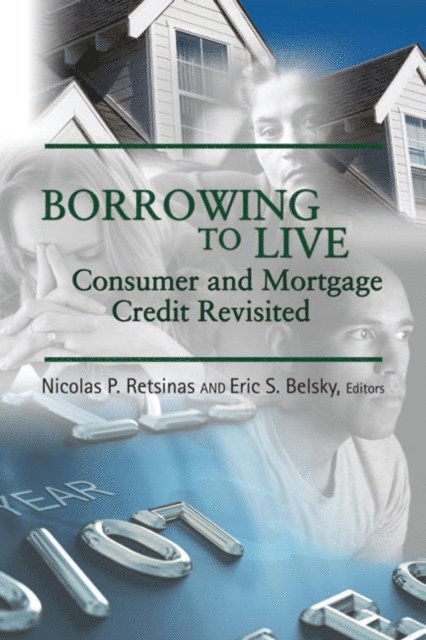
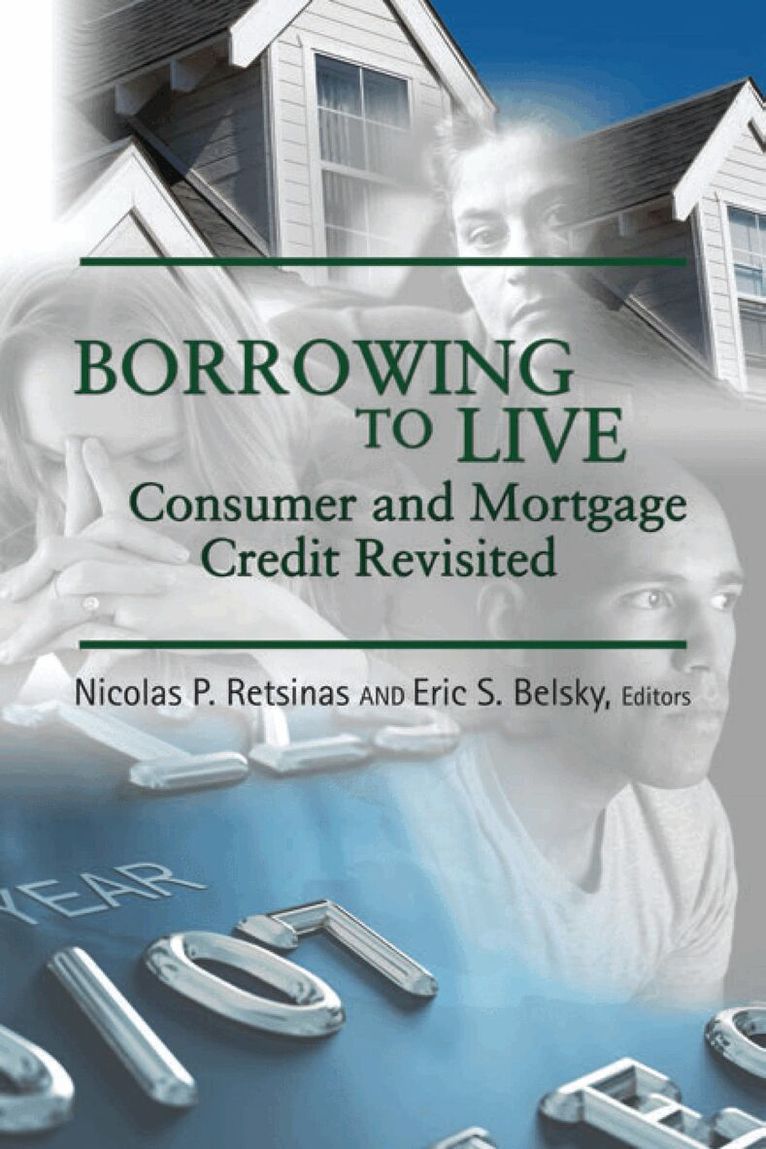
Borrowing to Live
Consumer and Mortgage Credit Revisited
Av Nicolas P. Retsinas, Eric S. Belsky
E-bok, 2009
482 kr
Lägg i varukorg
Americans are awash in debt, and the U.S. economy is in trouble. Credit undergirds daily life more than everit has become one of the defining aspects of American life, and the ramifications are becoming clearer by the day. The already considerable damage from a depressed housing market has been …
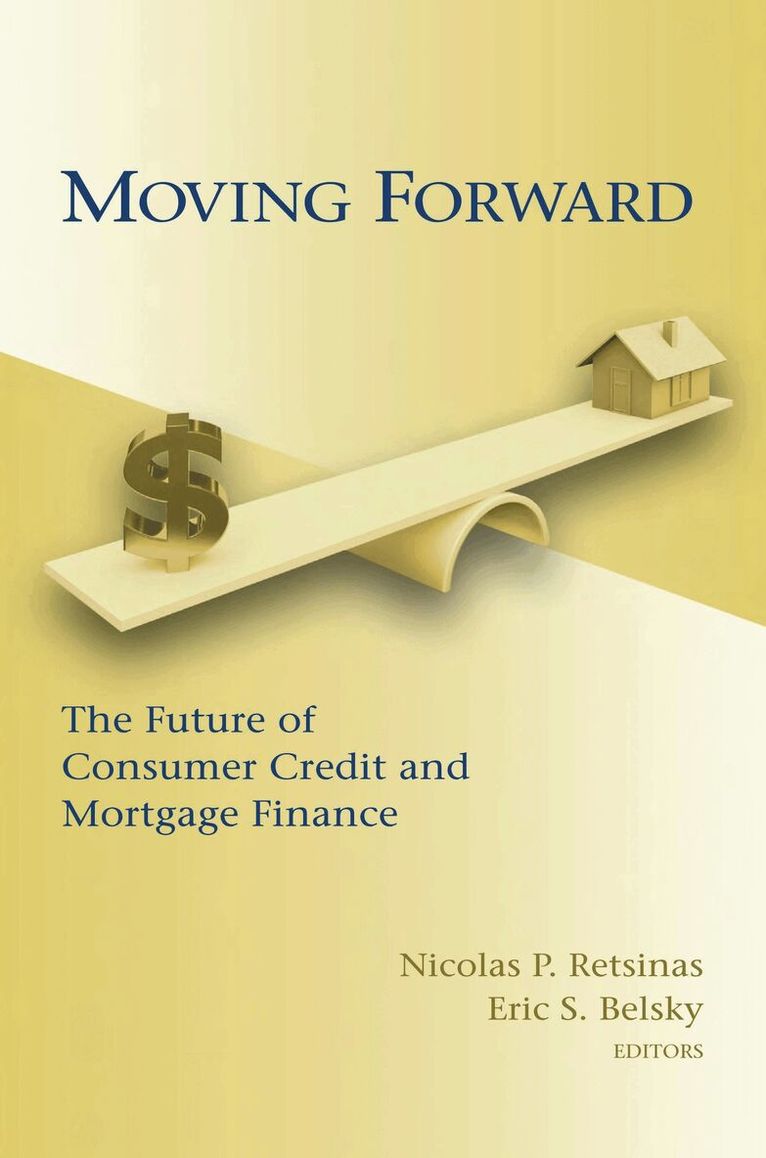
Moving Forward
The Future of Consumer Credit and Mortgage Finance
Av Nicolas P. Retsinas, Eric S. Belsky
Häftad, 2011
471 kr
Lägg i varukorg
The recent collapse of the mortgage market revealed fractures in the credit market that have deep roots in the system's structure, conduct, and regulation. The time has come for a clear-eyed assessment of what happened and how the system should be strengthened and restructured. Such reform will …
Moving Forward
The Future of Consumer Credit and Mortgage Finance
Av Nicolas P. Retsinas, Eric S. Belsky
E-bok, 2011
514 kr
Lägg i varukorg
The recent collapse of the mortgage market revealed fractures in the credit market that have deep roots in the system's structure, conduct, and regulation. The time has come for a clear-eyed assessment of what happened and how the system should be strengthened and restructured. Such reform will …
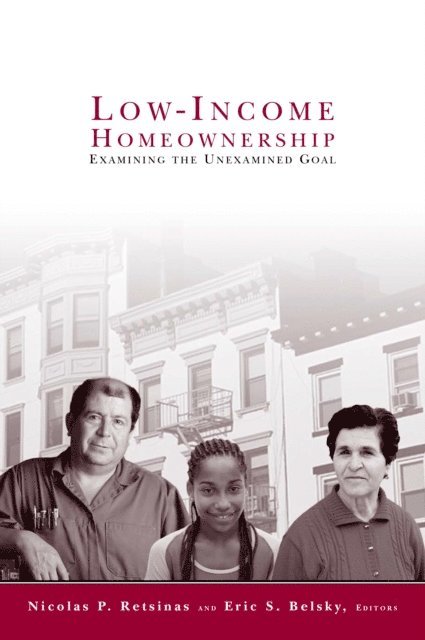
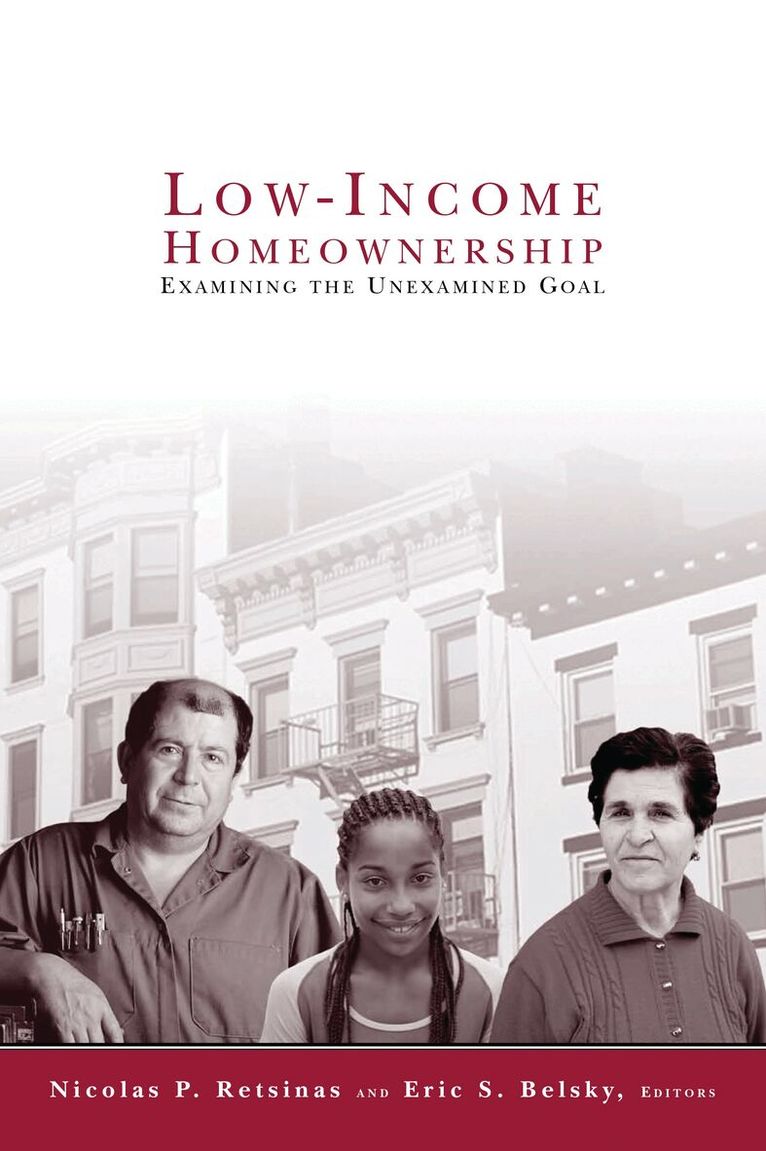
Low-Income Homeownership
Examining the Unexamined Goal
Av Nicolas P. Retsinas, Eric S. Belsky
E-bok, 2004
390 kr
Lägg i varukorg
A Brookings Institution Press and Harvard University Joint Center for Housing Studies publication A generation ago little attention was focused on low-income homeownership. Today homeownership rates among under-served groups, including low-income households and minorities, have risen to record …
Low-Income Homeownership
Examining the Unexamined Goal
Av Nicolas P. Retsinas, Eric S. Belsky
Häftad, 2002
373 kr
Lägg i varukorg
A Brookings Institution Press and Harvard University Joint Center for Housing Studies publicationA generation ago little attention was focused on low-income homeownership. Today homeownership rates among under-served groups, including low-income households and minorities, have risen to record …
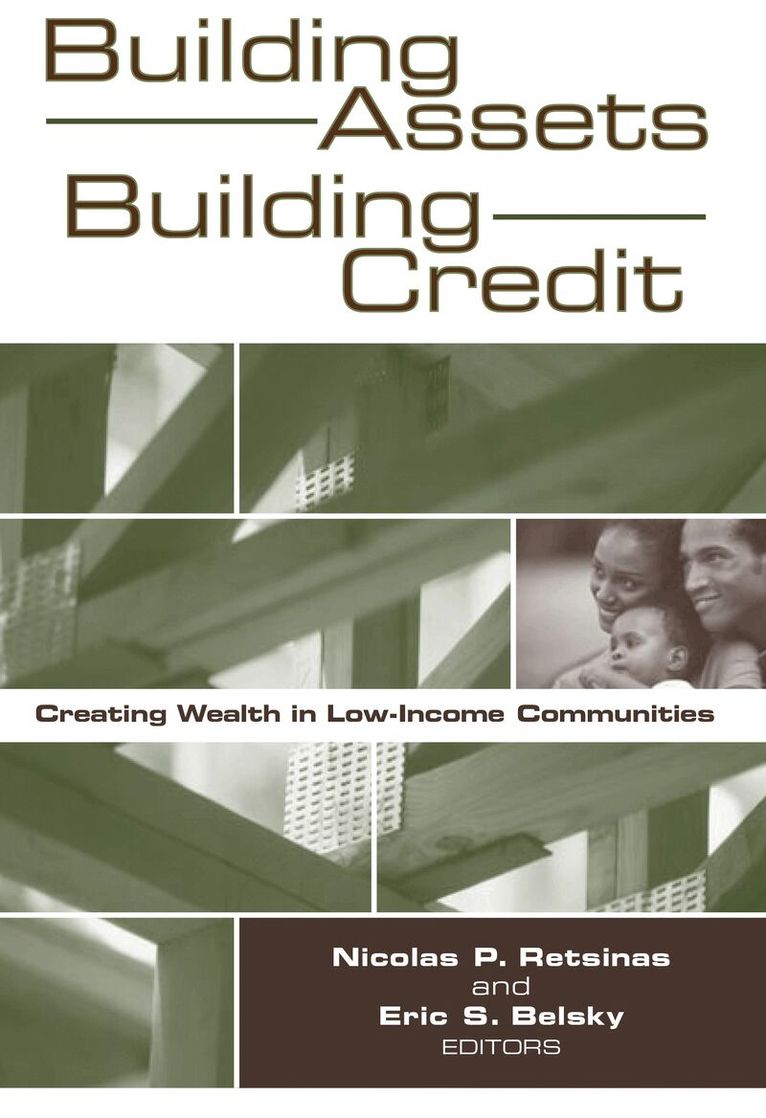
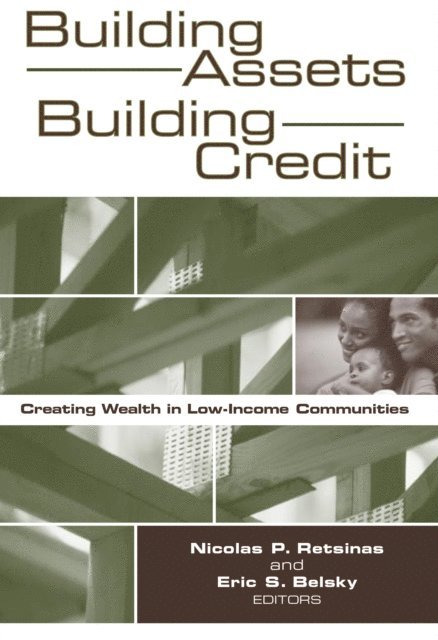
Building Assets, Building Credit
Creating Wealth in Low-Income Communities
Av Nicolas P. Retsinas, Eric S. Belsky
Häftad, 2005
373 kr
Lägg i varukorg
Poor people spend their money living day to day. How can they accumulate wealth? In the United States, homeownership is often the answer. Homes not only provide shelter but also are assets, and thus a means to create equity. Mortgage credit becomes a crucial factor. More Americans than ever now …
Revisiting Rental Housing
Policies, Programs, and Priorities
Av Nicolas P. Retsinas, Eric S. Belsky
Häftad, 2008
458 kr
Lägg i varukorg
Rental housing is increasingly recognized as a vital housing option in the United States. Government policies and programs continue to grapple with problematic issues, however, including affordability, distressed urban neighborhoods, concentrated poverty, substandard housing stock, and the unmet …
Revisiting Rental Housing
Policies, Programs, and Priorities
Av Nicolas P. Retsinas, Eric S. Belsky
E-bok, 2008
482 kr
Lägg i varukorg
Rental housing is increasingly recognized as a vital housing option in the United States. Government policies and programs continue to grapple with problematic issues, however, including affordability, distressed urban neighborhoods, concentrated poverty, substandard housing stock, and the unmet …
Borrowing to Live
Consumer and Mortgage Credit Revisited
Av Nicolas P. Retsinas, Eric S. Belsky
Häftad, 2008
458 kr
Lägg i varukorg
Americans are awash in debt, and the U.S. economy is in trouble. Credit undergirds daily life more than everit has become one of the defining aspects of American life, and the ramifications are becoming clearer by the day. The already considerable damage from a depressed housing market has been …
Building Assets, Building Credit
Creating Wealth in Low-Income Communities
Av Nicolas P. Retsinas, Eric S. Belsky
E-bok, 2006
414 kr
Lägg i varukorg
Poor people spend their money living day to day. How can they accumulate wealth? In the United States, homeownership is often the answer. Homes not only provide shelter but also are assets, and thus a means to create equity. Mortgage credit becomes a crucial factor. More Americans than ever now …