Nicolas Poppe - Böcker
Visar alla böcker från författaren Nicolas Poppe. Handla med fri frakt och snabb leverans.
4 produkter
4 produkter
1 013 kr
Skickas inom 7-10 vardagar
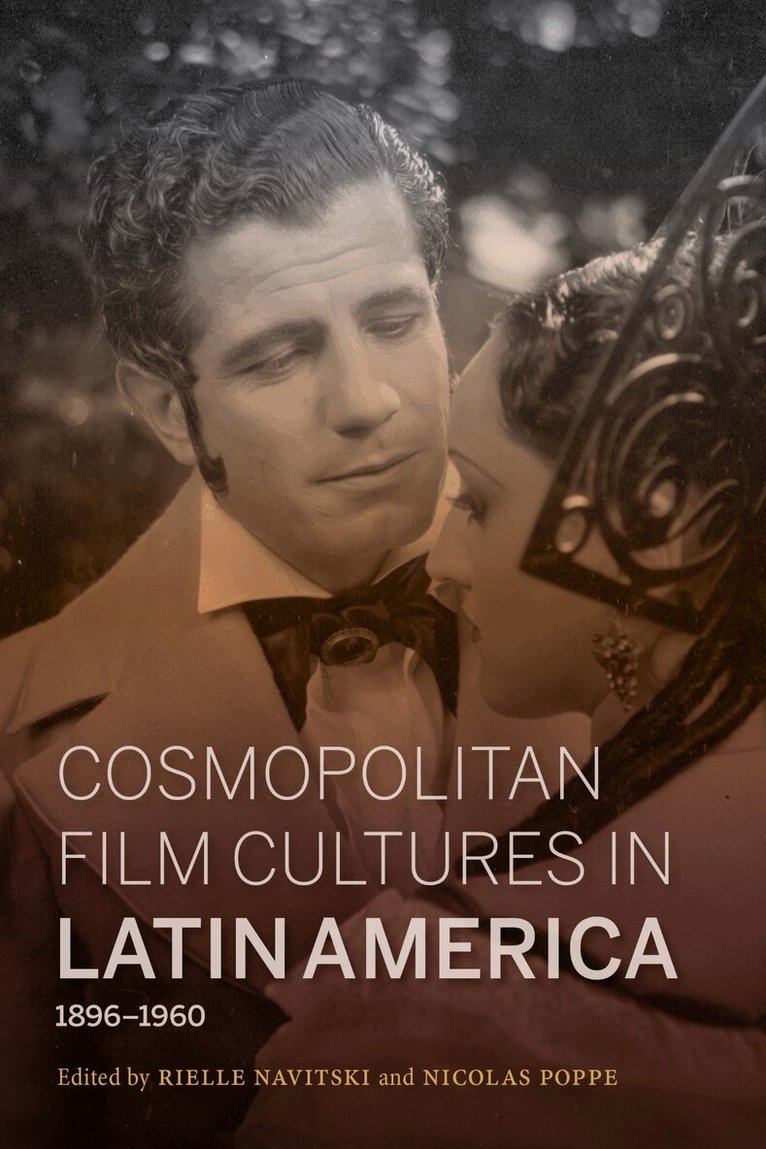
Cosmopolitan Film Cultures in Latin America examines how cinema forged cultural connections between Latin American publics and film-exporting nations in the first half of the twentieth century. Predating today's transnational media industries by several decades, these connections were defined by active economic and cultural exchanges, as well as longstanding inequalities in political power and cultural capital. The essays explore the arrival and expansion of cinema throughout the region, from the first screenings of the Lumière Cinématographe in 1896 to the emergence of new forms of cinephilia and cult spectatorship in the 1940s and beyond. Examining these transnational exchanges through the lens of the cosmopolitan, which emphasizes the ethical and political dimensions of cultural consumption, illuminates the role played by moving images in negotiating between the local, national, and global, and between the popular and the elite in twentieth-century Latin America. In addition, primary historical documents provide vivid accounts of Latin American film critics, movie audiences, and film industry workers' experiences with moving images produced elsewhere, encounters that were deeply rooted in the local context, yet also opened out onto global horizons.
440 kr
Skickas inom 7-10 vardagar
Cosmopolitan Film Cultures in Latin America examines how cinema forged cultural connections between Latin American publics and film-exporting nations in the first half of the twentieth century. Predating today's transnational media industries by several decades, these connections were defined by active economic and cultural exchanges, as well as longstanding inequalities in political power and cultural capital. The essays explore the arrival and expansion of cinema throughout the region, from the first screenings of the Lumière Cinématographe in 1896 to the emergence of new forms of cinephilia and cult spectatorship in the 1940s and beyond. Examining these transnational exchanges through the lens of the cosmopolitan, which emphasizes the ethical and political dimensions of cultural consumption, illuminates the role played by moving images in negotiating between the local, national, and global, and between the popular and the elite in twentieth-century Latin America. In addition, primary historical documents provide vivid accounts of Latin American film critics, movie audiences, and film industry workers' experiences with moving images produced elsewhere, encounters that were deeply rooted in the local context, yet also opened out onto global horizons.
Alton's Paradox
Foreign Film Workers and the Emergence of Industrial Cinema in Latin America
Inbunden, Engelska, 2021
1 499 kr
Skickas inom 3-6 vardagar
Uses extensive archival research to explore the manifold contributions of foreign film workers to emerging film industries in Latin America from the 1930s to early 1940s.Alton's Paradox builds upon extensive archival and primary research, but uses a single text as its point of departure-a 1934 article by the Hungarian American cinematographer John Alton in the Hollywood-published International Photographer. Writing from Argentina, Alton paradoxically argues of cine nacional, "The possibilities are enormous, but not until foreign technicians will take the matter in their hands and with foreign organization will there be local industry." Nicolas Poppe argues that Alton succinctly articulates a line of thought commonly held across Latin America during the early sound period but little explored by scholars: that foreign labor was pivotal to the rise of national film industries. In tracking this paradox from Hollywood to Mexico to Argentina and beyond, Poppe reconsiders a series of notions inextricably tied to traditional film historiography, including authorship, (dis)continuation, intermediality, labor, National Cinema, and transnationalism. Wide-angled views of national film industries complement close-up analyses of the work of José Mojica, Alex Phillips, Juan Orol, Ángel Mentasti, and Tito Davison.
Alton's Paradox
Foreign Film Workers and the Emergence of Industrial Cinema in Latin America
Häftad, Engelska, 2022
384 kr
Skickas
Uses extensive archival research to explore the manifold contributions of foreign film workers to emerging film industries in Latin America from the 1930s to early 1940s.Alton's Paradox builds upon extensive archival and primary research, but uses a single text as its point of departure-a 1934 article by the Hungarian American cinematographer John Alton in the Hollywood-published International Photographer. Writing from Argentina, Alton paradoxically argues of cine nacional, "The possibilities are enormous, but not until foreign technicians will take the matter in their hands and with foreign organization will there be local industry." Nicolas Poppe argues that Alton succinctly articulates a line of thought commonly held across Latin America during the early sound period but little explored by scholars: that foreign labor was pivotal to the rise of national film industries. In tracking this paradox from Hollywood to Mexico to Argentina and beyond, Poppe reconsiders a series of notions inextricably tied to traditional film historiography, including authorship, (dis)continuation, intermediality, labor, National Cinema, and transnationalism. Wide-angled views of national film industries complement close-up analyses of the work of José Mojica, Alex Phillips, Juan Orol, Ángel Mentasti, and Tito Davison.