
Nicole Scicluna – författare
Visar alla böcker från författaren Nicole Scicluna. Handla med fri frakt och snabb leverans.
3 produkter
3 produkter
427 kr
Skickas inom 5-8 vardagar
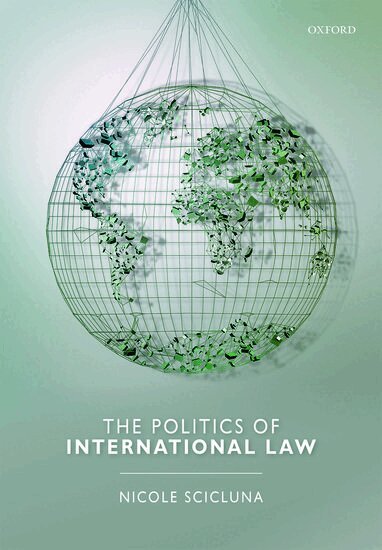
The Politics of International Law offers an introduction to the role of law in contemporary international affairs. Through a case study-driven analysis of topics such as human rights, the use of force, international environmental law, international trade law, international criminal justice and the right to self-determination, the book explains the interaction between law and politics in the world today, demonstrating that one cannot be understood without the other.The book is divided into two parts. Part I introduces contemporary international law with a focus on constitutive legal principles such as sovereignty, territorial integrity and the legal equality of states. Through these introductory chapters, students are encouraged to take a holistic view of the processes and actors that drive international affairs, and explore the fascinating paradox that while international law is largely created through political processes, it also constitutes the environment in which international politics is practiced.Part II builds on the foundations laid in Part I to analyze contemporary controversies in international law and politics. Chapters focus on a number of substantive issue areas, including international environmental law, international economic law, human rights law, self-determination and secession, the law governing the use of force, and international criminal justice.This book is written to impart on readers a deepened understanding of both the possibilities and limits of international law as a tool for structuring relations in the world.Digital Formats and ResourcesAlso available as an e-book with functionality, navigation features, and links that offer extra learning support
406 kr
Skickas inom 10-15 vardagar
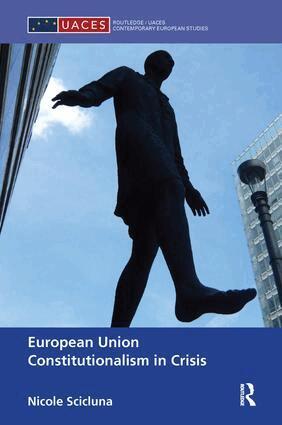
Several years after the first Greek bailout, the integration project of the European Union faces an interlocking set of political, economic, legal and social challenges that go to the very core of its existence. Austerity is the order of the day, and citizens in both debtor and creditor states increasingly turn to the political movements of the far left and right, anti-politics and street protests to vent their frustration.This book demonstrates the limits of constitutionalism in the EU. It explores the ‘twin crises’ - the failure of the Constitutional Treaty in 2005 and the more recent Eurozone crisis - to illuminate both the possibilities and pitfalls of the integration project. It argues that European integration overburdened law in an attempt to overcome deep-seated political deficiencies. It further contends that the EU shifted from an unsuccessful attempt at democratisation via politicisation (the Constitutional Treaty), to an unintended politicisation without democratisation (the Eurozone crisis) only a few years later. The book makes the case that this course is unsustainable and threatens the goal of European unity.This text will be of key interest to students and scholars in the fields of EU studies, EU law, democracy studies, constitutional studies and international relations.
1 256 kr
Skickas inom 10-15 vardagar
Several years after the first Greek bailout, the integration project of the European Union faces an interlocking set of political, economic, legal and social challenges that go to the very core of its existence. Austerity is the order of the day, and citizens in both debtor and creditor states increasingly turn to the political movements of the far left and right, anti-politics and street protests to vent their frustration.This book demonstrates the limits of constitutionalism in the EU. It explores the ‘twin crises’ - the failure of the Constitutional Treaty in 2005 and the more recent Eurozone crisis - to illuminate both the possibilities and pitfalls of the integration project. It argues that European integration overburdened law in an attempt to overcome deep-seated political deficiencies. It further contends that the EU shifted from an unsuccessful attempt at democratisation via politicisation (the Constitutional Treaty), to an unintended politicisation without democratisation (the Eurozone crisis) only a few years later. The book makes the case that this course is unsustainable and threatens the goal of European unity.This text will be of key interest to students and scholars in the fields of EU studies, EU law, democracy studies, constitutional studies and international relations.