Nikolai Filatov - Böcker
Visar alla böcker från författaren Nikolai Filatov. Handla med fri frakt och snabb leverans.
5 produkter
5 produkter
1 593 kr
Skickas inom 10-15 vardagar
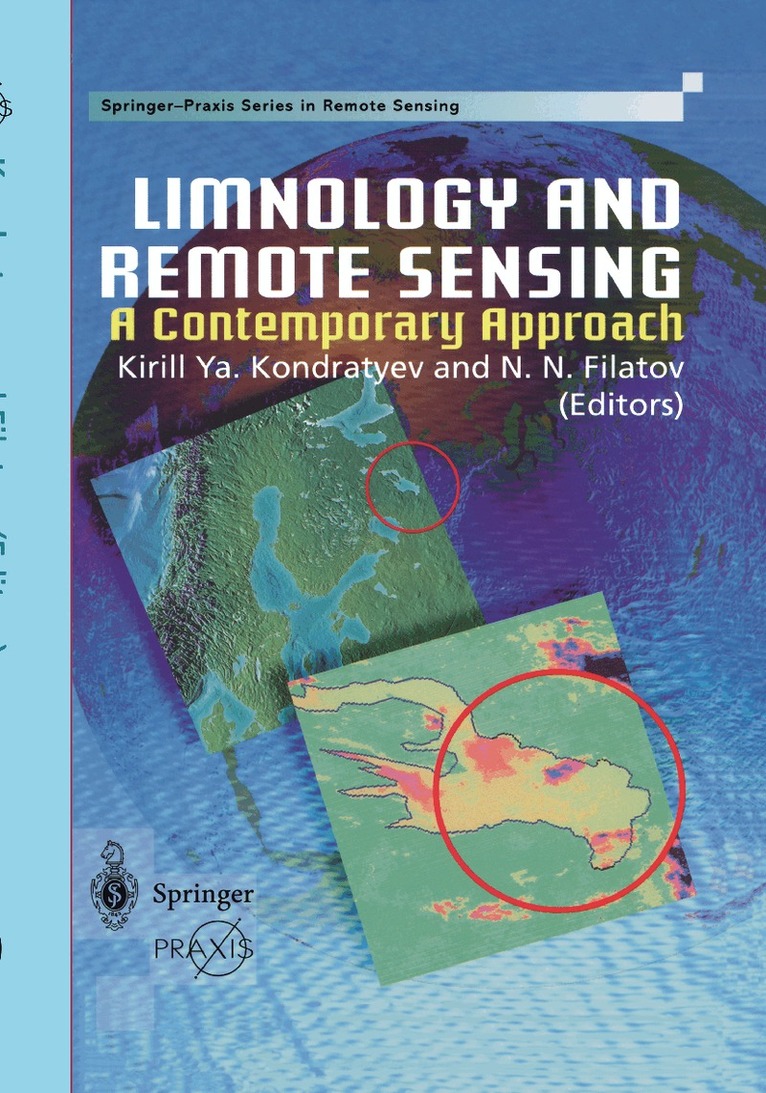
Diminishing water resources are becoming of increasing concern because in many countries the sources of drinking water are close to being exhausted. Therefore, there is an urgent need to study and assess the various components of global water resources, of which freshwater lakes are one of the most important. This book discusses contemporary limnological problems on a local, regional and global scale with special emphasis on the application of remote-sensing techniques to monitor lake dynamics, thermodynamics, biodynamics and water quality. An interactive approach is used to assess various processes from both the numerical modelling and observational standpoints. The authors recommend a combined use of in situ and remote-sensing data, giving a specific comparative analysis of the lakes of north-western Russia and the American Great Lakes as an illustration. The role of GIS is discussed and emphasised.
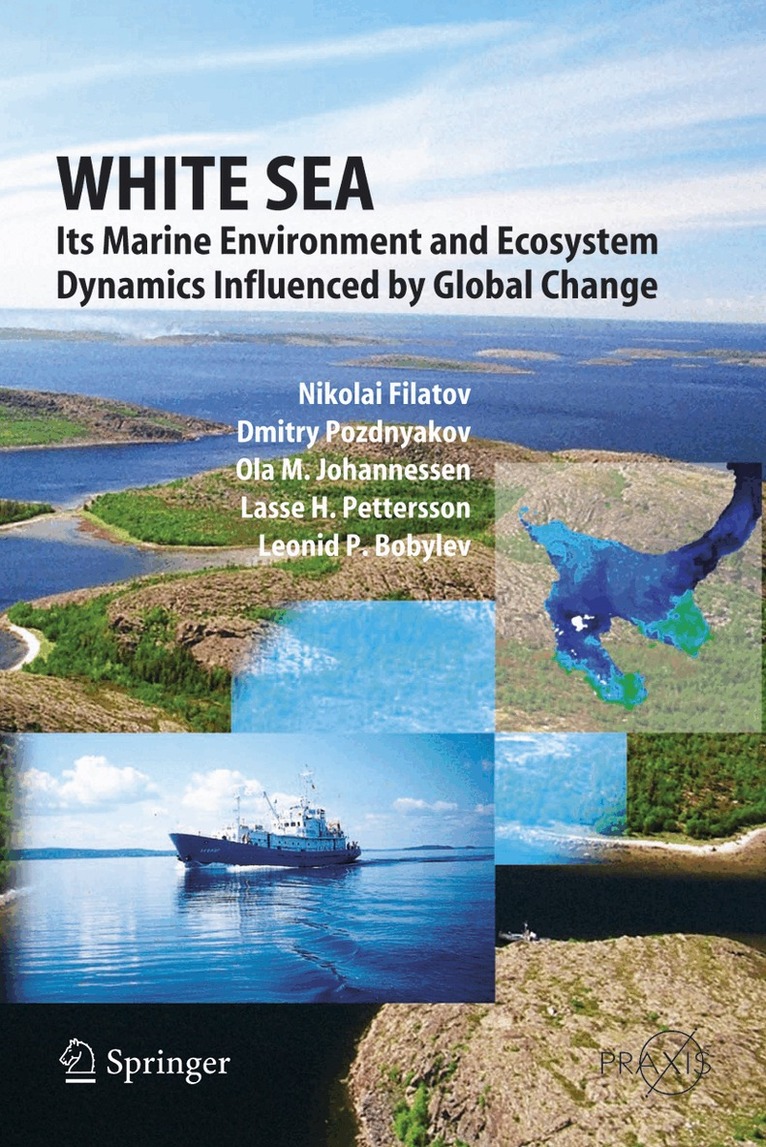
White Sea
Its Marine Environment and Ecosystem Dynamics Influenced by Global Change
Inbunden, Engelska, 2005
2 121 kr
Skickas inom 10-15 vardagar
This unique book written by Russian and Norwegian scientists is an analysis of studies based on extensive data analysis and numerical modelling simulations of the White Sea and provides a quantitative assessment of vulnerability of the White Sea marine ecosystems of future anthropogenic and, to some extent, climate change forcing. The authors address a wide range of issues, including geographical position and the paleogeological background of the White Sea Basin. They provide the most recent data on the White Sea bathymetry, examine the White Sea ecosystem profile, and provide extensive historical marine and riverine data records. An integrated assessment of the state of the ecology, vulnerability and sustainability of the White Sea is presented. They look specifically at the applications of satellite Earth observation (remote sensing) oceanographic investigations into changes in regional physical oceanography and ecology, provide extensive coverage of the problems of multi-faceted data assimilation in ocean modelling and conclude with a look at the present state of the art and future developments in this area of nature conservation.
1 593 kr
Skickas inom 10-15 vardagar
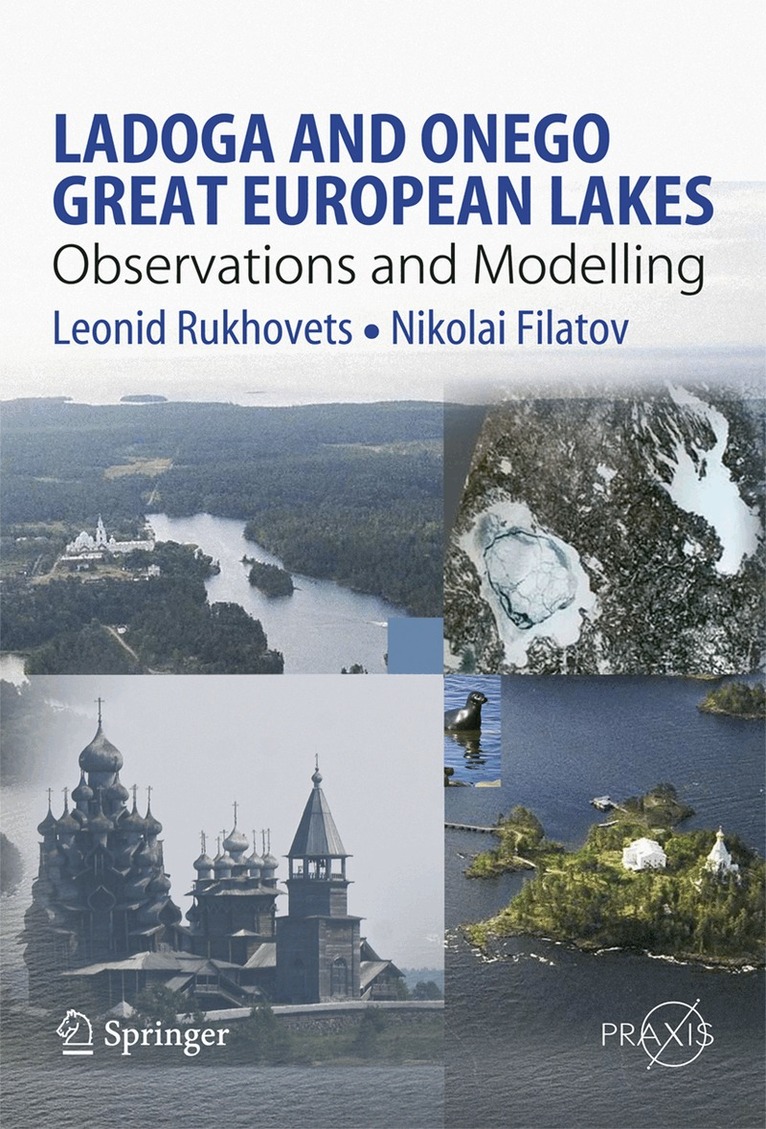
Lakes Ladoga and Onego are the greatest lakes in Europe. With a surface area of 17891 km2 and a volume of 902 km3, the former is one of the top fifteen world’s freshwater lakes and is only slightly smaller than Lake Ontario. Lake Onego’s surface area is 9600 km2 and it has a volume of 292 km3. The watershed of Lake Ladoga (258000 km2) extends through Northwestern European Russia and the eastern part of Finland, including the large Lakes Ilmen and Saimaa, and together these Great European Lakes are an important link in the Caspian-Baltic-White Sea waterway system. Their ecological state affects the water quality of the Neva River, the Gulf of Finland and the Baltic Sea. Thus any changes affect the operational use, environmental protection and management of water resources of a wide area and concern such issues as drinking, recreation, transport and energy.The anthropogenic impact on the Lake Onego ecosystem is mostly determined by the sewage waters of the Petrozavodsk and Kondopoga industrial centres, while the river inflow makes the most impact on Lake Ladoga. Although the anthropogenic stress on the water ecosystems of the Great European Lakes has decreased over the last 15 years, there has been some simultaneous evidence of global warming. There is not enough current data to identify the climate-induced changes in lake ecosystems, but there is proof that the main cause of lacustrine ecosystem changes is determined by anthropogenic factors.
White Sea
Its Marine Environment and Ecosystem Dynamics Influenced by Global Change
Häftad, Engelska, 2010
2 121 kr
Skickas inom 10-15 vardagar
This unique book written by Russian and Norwegian scientists is an analysis of studies based on extensive data analysis and numerical modelling simulations of the White Sea and provides a quantitative assessment of vulnerability of the White Sea marine ecosystems of future anthropogenic and, to some extent, climate change forcing. The authors address a wide range of issues, including geographical position and the paleogeological background of the White Sea Basin. They provide the most recent data on the White Sea bathymetry, examine the White Sea ecosystem profile, and provide extensive historical marine and riverine data records. An integrated assessment of the state of the ecology, vulnerability and sustainability of the White Sea is presented. They look specifically at the applications of satellite Earth observation (remote sensing) oceanographic investigations into changes in regional physical oceanography and ecology, provide extensive coverage of the problems of multi-faceted data assimilation in ocean modelling and conclude with a look at the present state of the art and future developments in this area of nature conservation.
1 593 kr
Skickas inom 10-15 vardagar
Lakes Ladoga and Onego are the greatest lakes in Europe. With a surface area of 17891 km2 and a volume of 902 km3, the former is one of the top fifteen world’s freshwater lakes and is only slightly smaller than Lake Ontario. Lake Onego’s surface area is 9600 km2 and it has a volume of 292 km3. The watershed of Lake Ladoga (258000 km2) extends through Northwestern European Russia and the eastern part of Finland, including the large Lakes Ilmen and Saimaa, and together these Great European Lakes are an important link in the Caspian-Baltic-White Sea waterway system. Their ecological state affects the water quality of the Neva River, the Gulf of Finland and the Baltic Sea. Thus any changes affect the operational use, environmental protection and management of water resources of a wide area and concern such issues as drinking, recreation, transport and energy.The anthropogenic impact on the Lake Onego ecosystem is mostly determined by the sewage waters of the Petrozavodsk and Kondopoga industrial centres, while the river inflow makes the most impact on Lake Ladoga. Although the anthropogenic stress on the water ecosystems of the Great European Lakes has decreased over the last 15 years, there has been some simultaneous evidence of global warming. There is not enough current data to identify the climate-induced changes in lake ecosystems, but there is proof that the main cause of lacustrine ecosystem changes is determined by anthropogenic factors.